
Why Roses Stop Blooming in Midsummer Heat: Heat Dormancy
Key takeaways
- Above about 85°F, many roses pause blooming and shift energy into survival, a normal heat dormancy.
- Deep, consistent watering and mulch help; heavy feeding or pruning during heatwaves adds stress.
- Blooms usually return as temperatures moderate, often with a stronger fall display.
Your roses exploded with flowers in spring, then July arrived and the show stopped. The bushes look green and alive, but no new buds form, and the few that appear drop before opening.
If this sounds familiar, your roses are almost certainly not sick. They are hot.
Roses are tough plants, but flowers are expensive to make. When heat peaks and water runs short, the plant makes a smart trade: it stops blooming and protects its roots and core structure until conditions improve.
This article explains what heat dormancy is, what high temperatures do inside the rose, the hormonal reason spent blooms shut down reblooming, and how to help your roses ride out the heat.
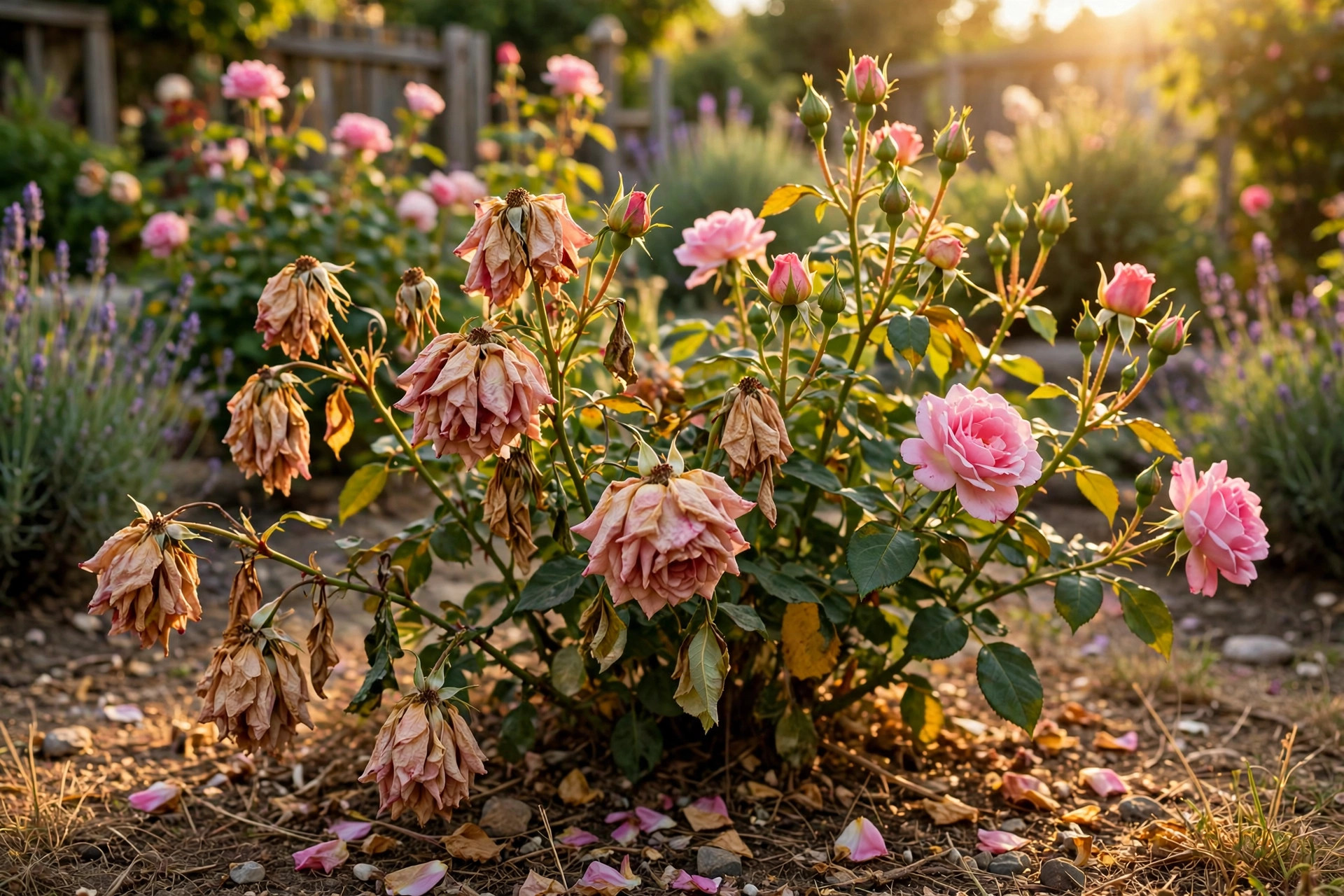
Rose bushes pausing under summer heat: fewer blooms, but the plants are protecting themselves. Illustration: Rive News.
Image Credits: Original illustration, Rive News
Heat dormancy: your rose is not dying
Think of heat dormancy as the summer version of hibernation. When temperatures climb past 90°F, many roses shift into a low-power mode to protect themselves. Growth slows, new buds stop forming, and leaves may look dull or slightly limp.
The plant is conserving energy and water until cooler weather returns.
Gardenia's rose guide notes that a midsummer flowering pause in hot inland gardens does not necessarily indicate disease or poor nutrition. It is normal behavior, especially for modern repeat-flowering varieties that will bloom again once temperatures become more favorable.
The big mistake gardeners make is treating a heat-slowed rose like a sick one. Extra fertilizer, more frequent shallow watering, and aggressive pruning during a heatwave can all add stress to a plant that is already coping. The best move is to stay calm and keep care simple and steady.
Once temperatures drop in late summer or early fall, roses usually perk right back up. New buds form and blooming returns, sometimes producing a stronger fall display than the spring one. In California, many rose gardeners report their best blooms in October and November, long after summer stress has passed.
What 90-degree heat does to a rose
Roses start to struggle when temperatures exceed 85°F, according to Epic Gardening, and the stress compounds as the mercury climbs. In Texas summers, where temperatures soar well above 100°F, roses shift into full survival mode: all energy goes toward staying alive rather than producing flowers.
Flowers are a plant's most resource-hungry project. Each bloom takes serious amounts of water and energy to grow, open, and maintain.
When water is scarce and heat is high, the plant shuts down non-essential functions, and flowers sit at the top of that list. Buds may form but never open; some drop off before they get started.
Hot, dry air pulls moisture from leaf edges faster than roots can replace it, even in watered gardens. Signs of heat stress include wilting, leaf drop, and leaf scorch, the crispy brown or yellow edges that look alarming but are usually cosmetic. Like plants that wilt in heat despite watering, roses can look thirsty when the real problem is transpiration outpacing uptake.
Pests pile on during the same window. Spider mites and thrips both thrive in hot, dry weather and can finish off buds that the heat has already weakened, so a quick check of leaf undersides is worthwhile in midsummer.
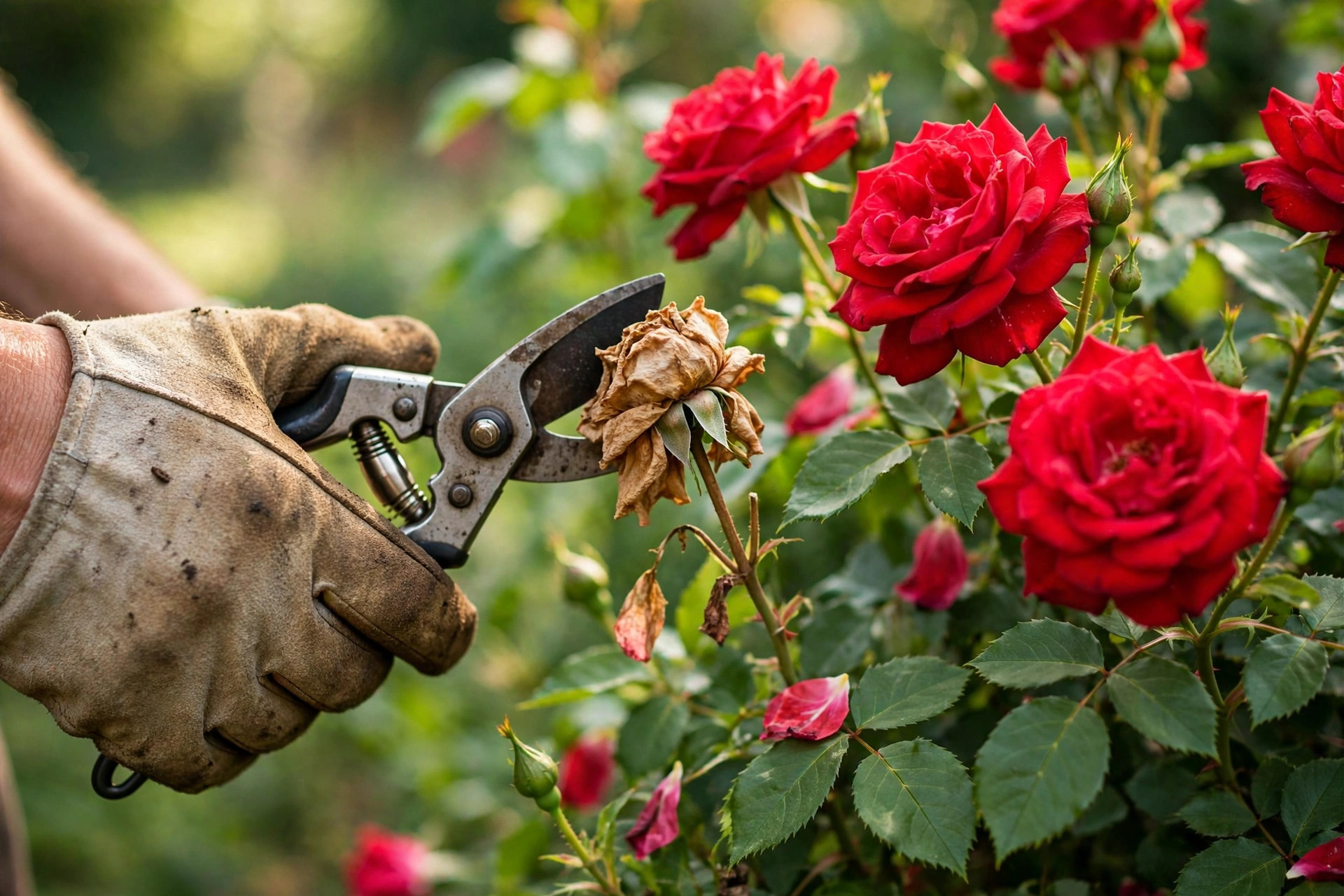
Deadheading spent blooms tells the rose to keep trying instead of setting seed. Illustration: Rive News.
Image Credits: Original illustration, Rive News
The hormones behind the pause
There is a second reason roses stop blooming, and it has nothing to do with temperature. Every rose flower is programmed to produce seeds after blooming. If spent flowers are left on the bush, they form hips, the seed pods behind each faded bloom.
Once hips develop, the plant releases hormones, particularly gibberellins and abscisic acid, that signal reproductive completion. Those hormones tell the plant to slow flower production and redirect energy toward maturing the seeds. From the plant's perspective, the goal was never beauty; it was reproduction, and the job is done.
Removing spent blooms before hips mature, a practice called deadheading, interrupts that signal. Snip the faded flower just above a leaflet with five leaflets, and you are effectively telling the plant to try again. The rose responds by pushing out new buds and, eventually, new flowers.
In hot climates where heat already stresses the plant, leaving spent blooms on adds an unnecessary second burden.
Timing matters in fall: stop deadheading about six to eight weeks before your first expected frost so the rose can set hips and enter winter dormancy naturally.
How to help roses through the heat
Water deep, not often. Let the water soak six to eight inches into the soil so it reaches the roots where it counts.
Shallow daily sprinkling just wets the surface and evaporates in the heat. Soaking the root zone slowly and thoroughly is far more helpful than light daily watering.
Mulch to moderate soil temperature. A two to three inch layer of organic mulch keeps roots cooler and slows evaporation. Avoid heavy feeding during heatwaves: pushing new growth when the plant is trying to rest wastes its reserves.
Hold off on aggressive pruning until the heat breaks. A light shaping cut is fine, but hard pruning in peak summer forces the plant to spend energy it is trying to save. Afternoon shade helps in the hottest zones; even a shade cloth over the worst of the western sun can keep buds opening.
Variety choice matters for the long term. If your summers are consistently brutal, plant heat-tolerant varieties. Knock Out, Belinda's Dream, and Katy Road Pink are proven performers where heat suppresses the summer flushes of fussier hybrid teas.
Frequently asked questions
Is my rose dead or just dormant from heat?
Scratch a stem: green tissue underneath means alive. Dormant roses keep green canes and firm buds even when they stop flowering. Brittle, brown-throughout canes signal real trouble.
Should I fertilize roses during a heatwave?
No. Fertilizer pushes new growth that the plant cannot support in extreme heat. Maintain water and mulch, and resume feeding when temperatures moderate and new growth restarts.
When will my roses start blooming again?
On healthy repeat-flowering varieties, blooms usually return as temperatures drop in late summer or early fall. Many gardeners in warm climates get their best display in October and November.
Do all roses stop blooming in summer heat?
No. Once-blooming old garden roses flower on their own schedule regardless, and some modern varieties keep pushing through heat. But most repeat-flowering roses take a midsummer pause where temperatures consistently exceed 90°F.
The bottom line
Roses stop blooming in midsummer heat because they are making a good decision: flowers cost water and energy the plant needs for survival. Heat dormancy is normal, temporary, and best met with deep watering, mulch, and patience rather than fertilizer and shears. Keep deadheading, let fall do its work, and the blooms will be back.
Latest in Gardening
- Why plants wilt in heat even when watered
- Why your hydrangea will not bloom
- Why lettuce bolts in summer heat
Subscribe for one clear gardening explainer a week: plant science without the guesswork.
Related stories
What Is Companion Planting and Does It Work?
Marigolds work as a nematode cover crop, but the basil flavor claim failed repeated tests. An honest evidence review of what companion
Determinate vs. indeterminate tomatoes: growth, pruning, and harvest differences
Determinate tomatoes grow to a set size and ripen all at once, while indeterminate types vine all season. That one difference shapes
How to improve clay soil for gardening
Gypsum will not fix ordinary clay soil, say extension experts. What actually works: 2 to 3 inches of compost, mulch, better drainage,