
Why soil dries on top but stays wet below
By Rive News / Research desk | Rive News / Published October 26, 2026 at 9:00 AM PKT
Key takeaways
- The top inch of soil dries first because sun, wind, and air pull water out of it fastest.
- Wet soil below does not mean the plant has enough water; roots in the dry layer still suffer.
- A 2 to 3 inch mulch layer plus slow, deep watering usually fixes the split.
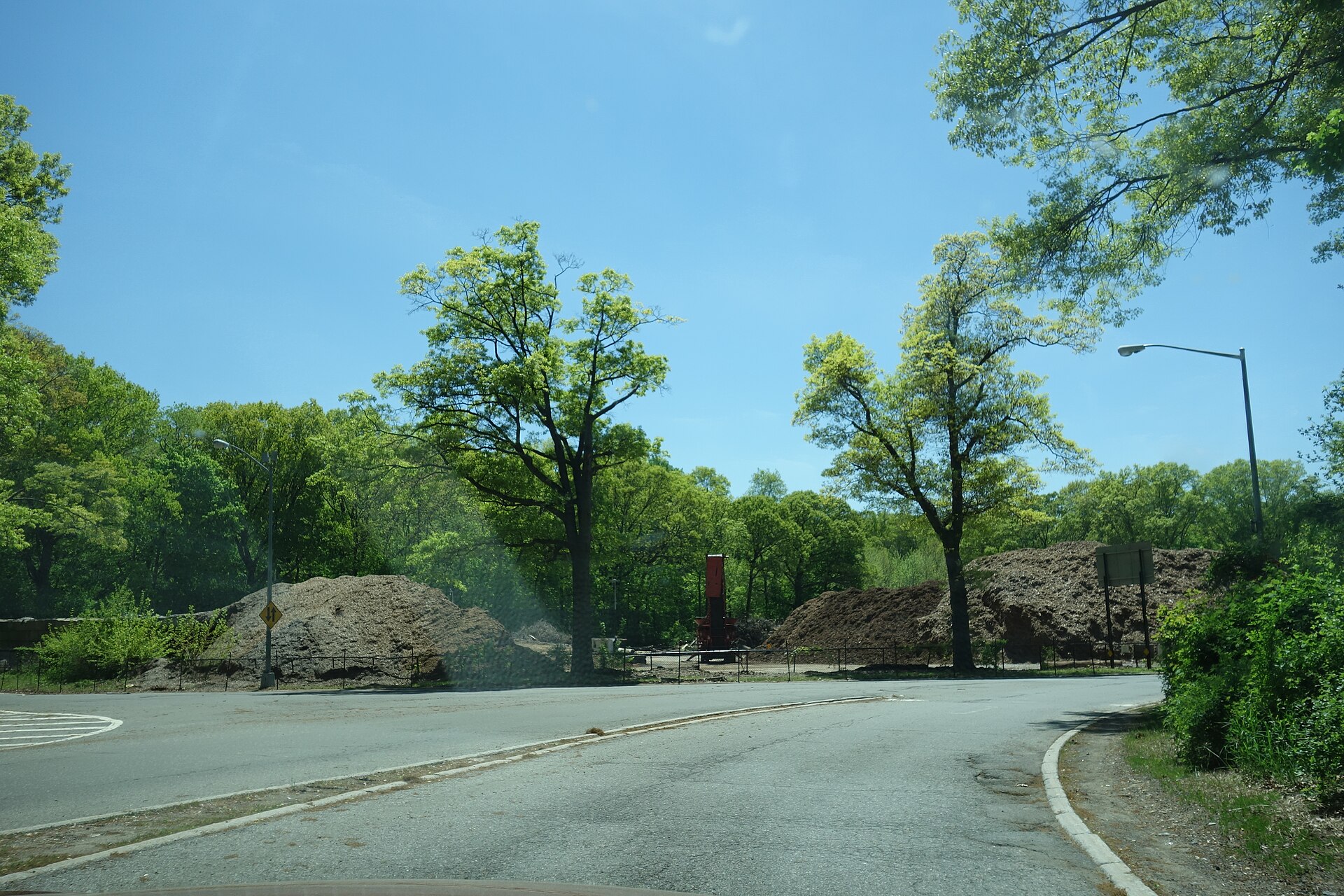
[A mulch yard stocked with wood chip mulch, the material most gardeners spread over beds to slow surface drying.] Photograph: Wikimedia Commons contributor
Image Credits: Wikimedia Commons
Soil that is dry on top and wet below is not a contradiction. It is what happens when the surface of a bed loses water to the air faster than water moves back up from below. The top inch or two of soil sits in direct contact with sun, wind, and dry air.
Deeper soil is shaded by the soil above it, so it dries far more slowly.
This article explains why the surface dries first, how to tell whether the pattern is harmless or a warning sign, and how mulch, watering depth, and drainage work together to fix it. It covers the evaporation split, the watering mistakes that make it worse, the mulch fix, and the drainage problems that can hide underneath.
Why the surface dries first
Evaporation works from the outside in. Sunlight heats the soil surface, wind carries moist air away from it, and dry air pulls more water out of the exposed pores. The soil a few inches down is protected from all three forces by the layer above it.
That is why a bed can look bone dry at noon while a finger pushed 3 inches down comes out damp.
Soil texture changes the speed of this process. Sandy soil has large pores, so water drains through it fast and the surface dries quickly. Clay soil holds water tightly in small pores, so its surface can crust over while the soil below stays soggy.
Compost-rich soil sits in between: it holds water like a sponge and releases it slowly, which keeps the moisture gradient gentler from top to bottom.
A surface crust can make the split look worse than it is. When rain or a hose hits bare soil hard, fine particles settle into a thin seal. That seal slows the next watering from soaking in, so water runs off or pools while the layer just below stays wet from the last soak.
Breaking the crust with a fork and covering the bed stops the cycle from repeating.
The watering mistake behind most cases
Short, frequent watering is the most common cause of a dry top and wet bottom that never quite resolves. A light sprinkle wets the top inch, which then evaporates within hours. The plant responds by growing roots near the surface, where water appears most often.
Those shallow roots then dry out first, so the plant wilts even though deeper soil is moist.
The fix is to water less often but more deeply. A slow soak that reaches 6 to 8 inches down encourages roots to grow downward, where moisture lasts longer between waterings. A simple check works: push a finger or a thin stick 3 inches into the soil an hour after watering.
If only the top inch is damp, the watering was too light. If the soil is wet at 3 inches and just moist at the surface the next morning, the depth is about right.
Watering time matters too. Watering in the morning gives plants the day to use the water before the cooler night slows evaporation. Watering in the heat of the day loses more to evaporation before it soaks in.
Drip lines and soaker hoses help because they deliver water slowly at soil level instead of spraying it into the air.
How mulch closes the gap
Mulch works by putting a protective layer between the soil surface and the air. According to West Virginia University Extension agent Candace DeLong, writing in "The Magic of Mulching," mulching "reduces watering needs by preventing evaporation of water from the soil surface." The same guide recommends straw laid in a thick 2 to 3 inch layer as one affordable option.
The University of California's Backyard Gardener guide gives the same depth range and adds a spacing rule: keep a clear perimeter of 4 inches around the base of each plant so mulch does not rot the crown or invite disease. University of Missouri Extension horticulturist David Trinklein recommends maintaining 2 to 4 inches of organic mulch to keep soil cool, promote root growth, and curb moisture loss.
Mulch also breaks the upward wicking of water. In bare soil, water creeps up through tiny pores toward the surface and evaporates. A mulch layer interrupts that path, so moisture stays in the root zone instead of migrating to the surface and vanishing.
As organic mulch breaks down, it adds organic matter that improves soil structure and water-holding capacity over seasons, not just weeks.
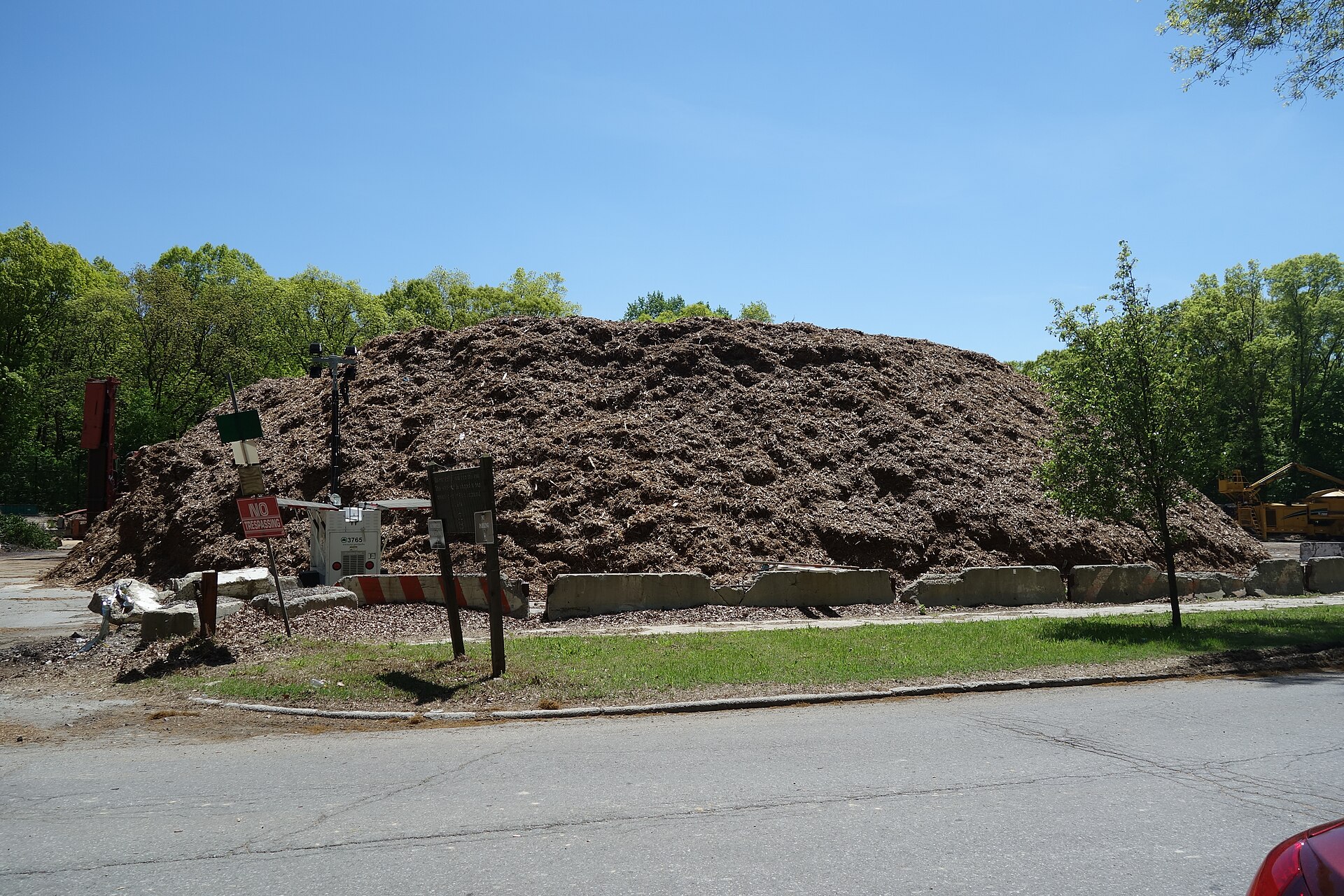
[More mulch piles waiting to be spread, showing the coarse wood chip texture that shades soil and slows evaporation.] Photograph: Wikimedia Commons contributor
Image Credits: Wikimedia Commons
When wet below is actually a drainage problem
Sometimes the split is not evaporation at all. It is poor drainage. If the soil below stays wet for days after watering while the surface dries, water may be trapped by a compacted layer, a clay pan, or a pot with no drainage holes.
Roots sitting in that trapped water can rot, even while the plant looks thirsty on top.
A few checks separate the two cases. Dig a small hole 6 inches deep after watering and watch how fast it drains. If water still sits in the hole hours later, drainage is the problem, not evaporation.
In containers, lift the pot: a heavy pot that never lightens between waterings is holding too much water. In beds, forking compacted soil and mixing in compost opens channels so excess water can move down and out.
Hydrophobic soil is a third case. Peat-based potting mixes and very dry organic soils can repel water once they dry out completely. Water beads on the surface and runs off while the inside of the root ball stays dry, which is the reverse of the usual pattern but looks similar from above.
Soaking the pot in a tray of water for 20 to 30 minutes usually re-wets it.
A simple routine that keeps moisture even
Start by checking moisture at root depth, not at the surface. Push a finger 2 to 3 inches into the soil before deciding to water. If it feels moist at that depth, wait.
If it feels dry, water slowly until the moisture reaches 6 inches down.
Next, mulch bare beds to a depth of 2 to 3 inches, keeping mulch a few inches clear of stems and trunks. Top the layer up when it thins below about 2 inches, since decomposed mulch stops shading the soil. Finally, water in the morning with a slow method, and check drainage once a season by watching how a test hole empties.
Gardeners who follow this routine usually find the dry-top pattern fades within a week or two. The surface may still dry between waterings, and that is fine. What matters is that moisture at root depth stays steady, so roots do not swing between wet and dry every day.
Frequently asked questions
Should I water when only the top of the soil is dry?
Not always. Check 2 to 3 inches down first. If the soil is moist at that depth, the plant usually has enough water, and adding more can keep the lower layer soggy.
Does mulch stop soil from drying out completely?
No. Mulch slows surface evaporation and keeps the root zone moist longer, but it does not replace watering. In a long dry spell, even mulched beds need a deep soak.
Why is my potted plant dry on top but wet at the bottom?
Pots with poor drainage or a compacted mix trap water at the base. Check that drainage holes are open, and let the pot drain fully after watering instead of leaving it in a saucer of water.
How deep should water reach when I water the garden?
Aim for 6 to 8 inches for most garden beds. That depth reaches the bulk of the roots and lasts longer between waterings than a shallow sprinkle.
The bottom line
A dry surface over wet soil is usually normal physics: the top layer meets sun and wind, while deeper soil stays sheltered. It becomes a problem only when shallow watering trains roots upward, when a crust blocks soaking, or when poor drainage traps water below. Mulch at 2 to 3 inches, slow deep watering, and a quick drainage check fix most cases.
Judge water by what you feel at root depth, not by how the surface looks.
Tags: soil moisture, mulch, watering, garden soil
Rive News's research desk covers everyday science and practical how-to topics, summarising public sources for general readers.
Related
- Mulch vs. compost: what each does and when to use it
- How to tell overwatering from underwatering with the finger test
- How to improve clay soil for gardening
- Why plants wilt in heat even when the soil is moist
Subscribe for one practical explainer each morning.
Rive News publishes general information explainers; claims are attributed to the public sources listed above.
Related stories
What Is Companion Planting and Does It Work?
Marigolds work as a nematode cover crop, but the basil flavor claim failed repeated tests. An honest evidence review of what companion
Determinate vs. indeterminate tomatoes: growth, pruning, and harvest differences
Determinate tomatoes grow to a set size and ripen all at once, while indeterminate types vine all season. That one difference shapes
How to improve clay soil for gardening
Gypsum will not fix ordinary clay soil, say extension experts. What actually works: 2 to 3 inches of compost, mulch, better drainage,