
Why some plants flower only at night in home gardens
By Rive News / Research desk | Rive News / Published October 27, 2026 at 9:00 AM PKT
Key takeaways
- Night flowering is mainly a pollination strategy: the flower opens when its moth, bat, or beetle pollinators are active.
- Pale or white petals and strong scent replace bright colour at night, because scent and pale surfaces carry better in low light.
- Heat and dry air also push some desert plants to night flowering, when cooler air protects delicate petals and saves water.
A white moonflower flower in bloom. Photograph: the moonflower scene
Image Credits: Wikimedia Commons
Some plants flower only at night because their best chance of being pollinated comes after dark. A flower is a plant's invitation to a pollinator, and that invitation works best when it matches the pollinator's working hours. For night bloomers, the visitors are moths, bats, and some beetles, so the flower opens at dusk, releases scent through the night, and often closes by morning.
This article explains why some plants flower only at night, including how pollinators shape the timing, why the flowers look pale and smell strong, how the plant knows when night has come, and which well-known species follow this pattern.
Pollination is the main reason
Day flowers compete for bees, butterflies, and other daytime visitors. Night flowers avoid that crowd by opening for a different shift.
A moth that feeds at night will visit a flower that is open and scented at night, and it will carry pollen between flowers of the same species as it feeds. Over many generations, plants whose flowers matched moth activity left more seeds than plants that opened at the wrong hour.
Bats play the same role in warmer regions, especially in Central and South America. Bat-pollinated flowers tend to be larger and sturdier, with plenty of nectar, because a bat is a much bigger visitor than a moth.
Beetles and some flies also visit night flowers, drawn more by scent than by colour. The shared pattern is timing: the flower and the pollinator must be active at the same hour, or pollination fails.
That timing also reduces competition for pollinators. A plant that opens at night does not need to outshine dozens of day flowers for a bee's attention. It only needs to be the clearest signal in the dark, which is why scent matters more than colour for these species.
Why pale petals and strong scent
Colour is nearly useless in low light. Red and purple petals that stand out in daylight disappear at dusk, while white and pale petals reflect moonlight and starlight and stay visible. Night flowers therefore tend to be white, cream, or pale yellow, not because gardeners prefer those colours, but because pollinators can find them.
Scent carries where sight cannot. Night flowers often release volatile scent compounds in a peak between dusk and dawn, timed to the hours when moths are searching.
A moth follows a scent trail upwind to its source, much as a day pollinator follows a colour signal. The stronger and more distinctive the scent, the easier the flower is to find in the dark.
Nectar fits the same logic. Night flowers often produce generous nectar, because a moth or bat working in cooler air spends more energy per visit than a bee working in warm daylight.
A rich reward keeps the visitor returning to the same species, which improves pollination. The long floral tubes found in many night flowers also match the long tongues of hawk moths, which feed while hovering.
Heat, water, and delicate petals
Pollination is the main driver, but heat and water add pressure in hot, dry climates. A delicate flower opened under strong sun loses water fast and can wilt before a pollinator arrives. Opening at night, when temperatures are lower and humidity is slightly higher, protects the petals and keeps nectar from drying out.
That is one reason many night bloomers come from arid regions. Cacti and succulents that live in deserts face the harshest daytime conditions, so a night bloom is a way to flower without paying the full daytime water cost. The trade-off is a short bloom: many night flowers last a single night, because the plant invests heavily in one brief, intense display rather than a long, slow one.
The famous Queen of the Night, Epiphyllum oxypetalum, follows that pattern. Its large white flowers open for one night only, filling the air with scent before wilting by dawn. Gardeners who grow it often stay up to watch the bloom, because missing that night means waiting for the next flowering.
How a plant knows it is night
Plants track light with light-sensitive proteins called phytochromes, which respond to the changing balance of red and far-red light at dusk. As daylight fades, the signal shifts, and the plant's internal clock, its circadian rhythm, triggers changes in the cells at the base of the petals. Those hinge cells take up or release water, which makes the petals unfold or fold.
Temperature and humidity add fine-tuning. A cool evening after a warm day, or a rise in humidity at dusk, can help the petals open fully.
That is why the same plant may open a little earlier on a hot, still evening than on a cool, windy one. The clock sets the rough hour, and the weather sets the exact moment.
Day length also shapes the season of flowering, which is the subject of the related guide on how day length triggers flowering. Night bloomers still need the right season to form buds. The night-opening habit decides the hour of opening, not the month of flowering, and both signals must line up for a successful bloom.
Well-known night bloomers
Moonflower, Ipomoea alba, is one of the most reliable examples. Its large white flowers open at dusk and close by morning, and its scent is strongest in the evening. Evening primrose, in the genus Oenothera, opens in the evening for moths, and its flowers are a familiar sight in evening gardens.
Flowering tobacco, Nicotiana, releases scent at night from long floral tubes that suit moth tongues. Four o'clocks, Mirabilis, open in late afternoon and stay open into the night. Night-blooming jasmine, often called Raat Rani, releases a sweet, musky scent at night to attract moths, which feed on its nectar and carry pollen between flowers.
These species share the same toolkit, even though they come from different plant families. Pale petals, strong evening scent, nectar suited to night visitors, and a short bloom are repeated again and again, because they solve the same problem: being found in the dark by the right visitor.
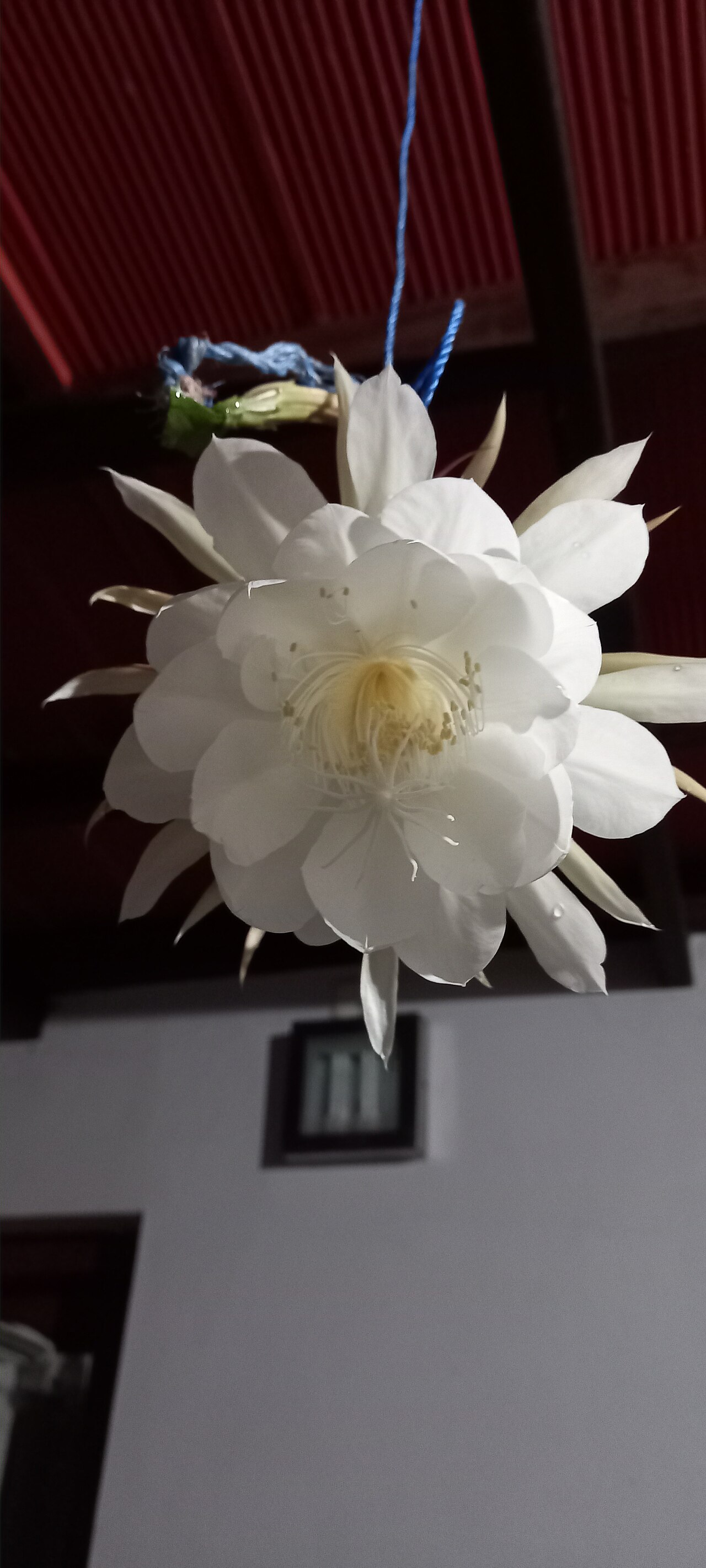
A Queen of the Night flower in bloom. Photograph: the night flower scene
Image Credits: Wikimedia Commons
Growing night flowers at home
Night flowers suit a spot where people sit in the evening, because scent near a seat is noticed while scent at the far end of a garden is not. Pale flowers also show up better against dark foliage, so pairing them with silver or pale-leaved plants helps them read at dusk. A sheltered, warm corner holds evening heat and lets scent linger longer than an exposed, windy spot.
Light at night can disturb the timing. Bright garden lights left on all night may confuse the plant's light signals and reduce the display, so lights near night bloomers are best kept low or on a timer. Watering in the morning, rather than late at night, also keeps foliage drier and reduces disease risk.
For growers, the related guide on why plants lean toward the window explains the light-tracking response in general, and the guide on why herbs die on windowsills shows how indoor light and air differ from outdoor conditions. Both help explain why a night bloomer may behave differently indoors than in a garden bed.
The bottom line
Some plants flower only at night because their pollinators work at night, and the flower has evolved to meet them: pale petals that show in low light, scent that carries in the dark, and nectar that rewards a night visitor. Heat and water savings in dry climates reinforce the habit, while an internal clock and light sensors set the hour. The result is a brief, intense bloom that trades a long display for a much better chance of being pollinated.
Tags: night flowers, pollinators, plant biology
The Rive News research desk writes plain-English explainers from published research and public sources, with claims tied to named studies where the evidence matters.
Related
- How day length triggers plants to flower
- Why plants lean toward the window
- Why herbs die on windowsills yet thrive outside
Subscribe for one research-backed gardening explainer each week.
Rive News standards: claims are attributed to public sources, and no invented study, quote, or statistic appears in this article.
Related stories
What Is Companion Planting and Does It Work?
Marigolds work as a nematode cover crop, but the basil flavor claim failed repeated tests. An honest evidence review of what companion

Determinate vs. indeterminate tomatoes: growth, pruning, and harvest differences
Determinate tomatoes grow to a set size and ripen all at once, while indeterminate types vine all season. That one difference shapes

How to improve clay soil for gardening
Gypsum will not fix ordinary clay soil, say extension experts. What actually works: 2 to 3 inches of compost, mulch, better drainage,