
How Do You Tell When Sweetcorn Is Ready to Pick? A Milk-Stage Guide
Key takeaways
- Sweetcorn is ready at the milk stage, about 20 days after the first silks appear: pierce a kernel and harvest when the juice runs milky white.
- Silks that are dark brown to black, plump full ears, and kernels full-sized to the tip all point to harvest time.
- Clear juice means wait, milky juice means pick, and thick or absent juice means the ear has gone starchy.
Sweetcorn has one ideal eating moment. Pick it too early and the kernels are watery and bland. Pick it too late and the sugars have already turned to starch, leaving a tough, doughy bite.
The good news is that the plant tells you exactly when that moment arrives.
This article explains how to tell when sweetcorn is ready to pick, including how to count the days from silk, how to read the silks and the ear, how to do the milk-stage kernel test, and how to time your harvest so every cob lands at peak sweetness.
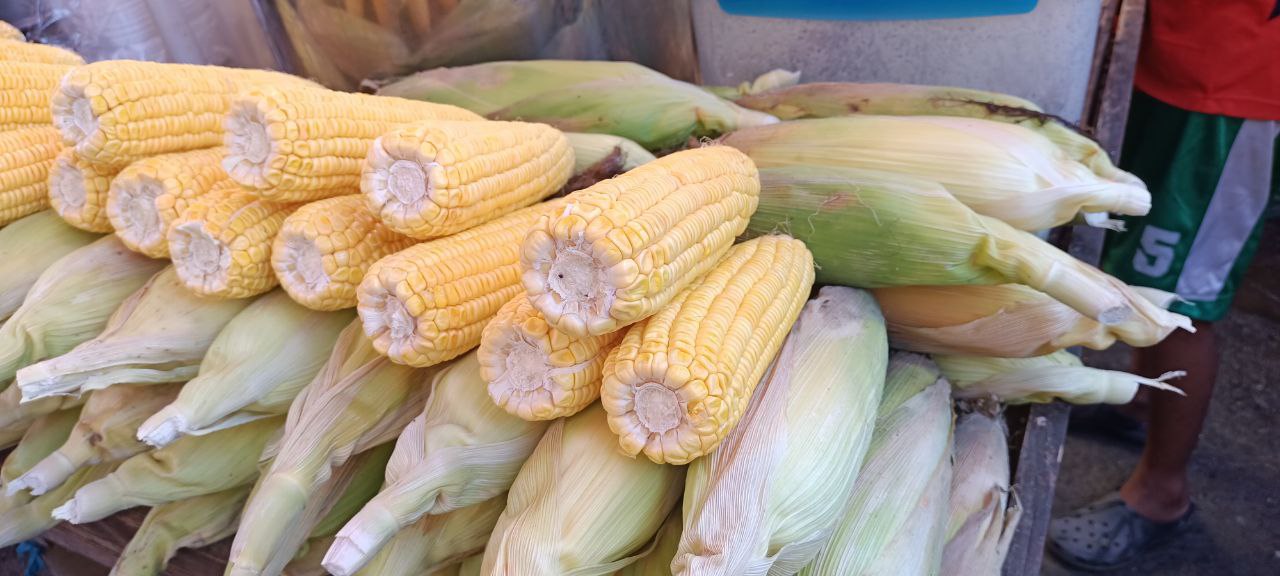
Freshly picked raw sweetcorn ears. Photograph: Bim24/Wikimedia Commons
Start with the calendar: count about 20 days from silk
The single most useful number in sweetcorn harvesting is twenty. Sweetcorn is generally ready for harvest about 20 days after the first silks appear, according to Clemson Extension. Mississippi State University Extension puts the window at 17 to 25 days from the first silk, while Iowa State University Extension narrows it to roughly 18 to 23 days.
Weather shifts that window. Prime maturity can arrive in 15 days or less if day and night temperatures are exceptionally warm, Iowa State notes. Cool, dull weather stretches the wait.
Utah State University Extension gives a 15 to 22 day range. It advises starting harvest when 70 percent of the ears in the patch are in the right condition.
So the calendar method is simple: note the date when you first see silks emerging from the ear tips, then start checking your patch around day 17. The day count gets you to the right week. The tests below pin down the exact day.
Read the silks and the ear from the outside
Before you touch a single kernel, look at the outside of the ear. The best outside indicator is silk colour, according to Mississippi State University Extension: when the silks have turned very dark brown to black, the ear is close. At the milk stage, Iowa State adds, the silks are brown and dry at the ear tip.
Corn silks start out pale, almost blonde, and each one is attached to a single kernel. Once pollination finishes, they wither and darken. That is why dark, brittle silk is such a reliable signal: it means pollination completed and the kernels have had time to fill.
Next, feel the ear through the husk. University of Illinois Extension educator Elizabeth Wahle told Morning Ag Clips that at optimum harvest maturity, tips should be full and the unhusked ears should feel firm to the touch.
The husk itself should still be green. If the ear feels pointy and thin at the tip, the kernels have not filled out yet.
Virginia Tech Extension lists the full outside checklist: husk still green, silks dry-brown, kernels full size, and yellow or white colour reaching the tip of the ear. When all four line up, it is time for the decisive test.
Do the milk-stage kernel test
The milk-stage test is the gold standard, and it takes ten seconds. Gently peel back the husk an inch or two near the tip of the ear and puncture a single kernel with your thumbnail. What comes out tells you exactly where the ear stands.
If the liquid is clear and watery, the corn is immature. Cover the ear back up with its husk and test again in a couple of days.
If the liquid is milky white, the ear has reached the milk stage and is ready to pick. If there is no sap at all, or the juice is thick and doughy, you are too late and the ear will taste starchy rather than sweet.
This reading matches the biology. At the milk stage, the endosperm inside the kernel is still liquid and the pericarp, the skin of the kernel, is still tender, Mississippi State explains.
Kernels then pass through pre-milk, milk, early dough, and dough stages, Utah State notes. At the dough stage the sugars change to starch and the kernels become tough.
Test one ear per variety or planting, since the whole patch tends to mature together. Test a mid-ear kernel rather than one at the very tip, since tip kernels lag behind.
If the test ear is milky, harvest the patch, but check a few ears before you strip the row. The upper ear on a plant usually matures one or two days before the lower one, according to Iowa State.

Rows of sweetcorn plants filling out in the field. Photograph: Derek Ramsey/Wikimedia Commons
Why the window is so short
Sweetcorn does not wait around. Once the milk stage arrives, the ear stays in prime condition for only a short time, especially in heat. If daytime temperatures are consistently above 86 degrees Fahrenheit, Utah State warns, sweet corn may only stay in prime condition for 1 to 2 days.
The reason is chemistry. The moment the ear is picked, and even before, sugars in the kernels convert to starch. Clemson Extension puts it bluntly: sweet corn loses sugar from the kernel rapidly at high temperatures.
Heat accelerates the process while the ear is still on the stalk, and it accelerates it further after picking. Corn is a sun-hungry crop, and like every plant it responds strongly to light, the same response that explains why plants grow towards light.
But once the milk stage passes, warmth works against sweetness rather than for it.
Variety matters too. Sugary-enhanced types hold their sweetness a few days longer than old-fashioned sugary types, while supersweet types hold up longest of all.
If your seed packet names the variety type, use it to set expectations. A supersweet patch gives you a wider, more forgiving window.
The practical takeaway: during a hot spell, check the patch daily once the silks darken. A two-day delay can turn a milky ear into a doughy one.
What to do on picking day
Harvest in the morning, when it is cool. Harvest to Table, a garden harvesting guide, recommends picking early in the day when ears are sweetest, because heat of the day drives rapid conversion of natural sugars to starch. Picking in the morning gives you the sweetest possible ear straight off the stalk.
Harvest by grasping the ear and pulling downward while twisting your wrist to snap it off the stalk, the method Utah State Extension recommends. Pick the ears that pass the outside checks first, and use the thumbnail test on any you are unsure about.
Chill or cook the ears as soon as you can. Even under optimal conditions, sweet corn can be stored for only about five days, Clemson notes, and it loses sweetness with each day of storage.
Drying and delay also concentrate and change flavour compounds, which is the same reason herbs lose flavour when dried. For the sweetest result, get picked corn into cold water or the fridge within the hour.
If you have more than you can eat, blanch and freeze the surplus the same day. Sweetcorn freezes well, and a same-day freeze locks in far more of the milk-stage sweetness than the fridge ever could.

A corn field after the ears have been picked. Photograph: RTBoughner/Wikimedia Commons
Frequently asked questions
Can I pick sweetcorn without peeling back the husk?
The outside checks get you close but not certain. Dark brown silks, firm full ears, and green husks all suggest readiness, yet silks can dry at different rates in dry or humid weather.
The thumbnail test is the only confirmation. Peel back just an inch of husk, test one kernel, and the ear tells you the truth.
What happens if I pick sweetcorn too early?
Immature ears have small diameters, poor tip fill, and kernels that are watery and lacking in sweetness, according to Elizabeth Wahle of the University of Illinois Extension. If your thumbnail test shows clear liquid, wait two or three days and test again. Patience costs nothing here.
What happens if I pick sweetcorn too late?
Late ears turn starchy and tough as sugars convert during the dough stage. The thumbnail test shows thick, pasty juice or none at all. Overripe ears are still edible, but they cook up chewy rather than tender and juicy.
Why are some ears only half filled?
Poor tip fill usually means pollination failed on those kernels, often because of heat stress, drought during pollination, or a thin stand of plants catching little pollen. Keep the patch well watered during pollination and kernel fill. Patchy ears are one of the common quirks of vegetable growing, the garden equivalent of carrots that grow forked sometimes.
Does the whole plant ripen at once?
Not quite. The upper ear usually matures one or two days before the lower ear, Iowa State notes. Check each ear on its own merits and harvest in two passes if needed rather than stripping the plant in one go.
The bottom line
Count about 20 days from the first silks, watch for dark brown to black silks and firm, full ears, then confirm with the thumbnail test: milky juice means harvest day. Pick in the cool of the morning and eat or chill the ears fast, because sweetness fades with every hour on the counter. Get those four steps right and you will catch every cob at its peak.
Image Credits: Wikimedia Commons / Bim24, RTBoughner, Derek Ramsey
Latest in Gardening
Get a weekly gardening tip in your inbox. Subscribe to the Rive News newsletter.
Related stories
What Is Companion Planting and Does It Work?
Marigolds work as a nematode cover crop, but the basil flavor claim failed repeated tests. An honest evidence review of what companion

Determinate vs. indeterminate tomatoes: growth, pruning, and harvest differences
Determinate tomatoes grow to a set size and ripen all at once, while indeterminate types vine all season. That one difference shapes

How to improve clay soil for gardening
Gypsum will not fix ordinary clay soil, say extension experts. What actually works: 2 to 3 inches of compost, mulch, better drainage,