
How to calm a racing heart after a nightmare
By Rive News / Research desk | Rive News / Published October 24, 2026 at 9:00 AM PKT
This article is for general information only and is not medical advice; talk to a clinician about any symptoms.
Key takeaways
- A nightmare wakes the body in fight-or-flight mode: adrenaline surges, so the heart pounds even though the dream is over.
- A slow exhale drives the vagus nerve and lowers heart rate; the 4-7-8 or box-breathing patterns both use this.
- The 5-4-3-2-1 grounding exercise pulls attention to the present room and stops the mental replay loop.
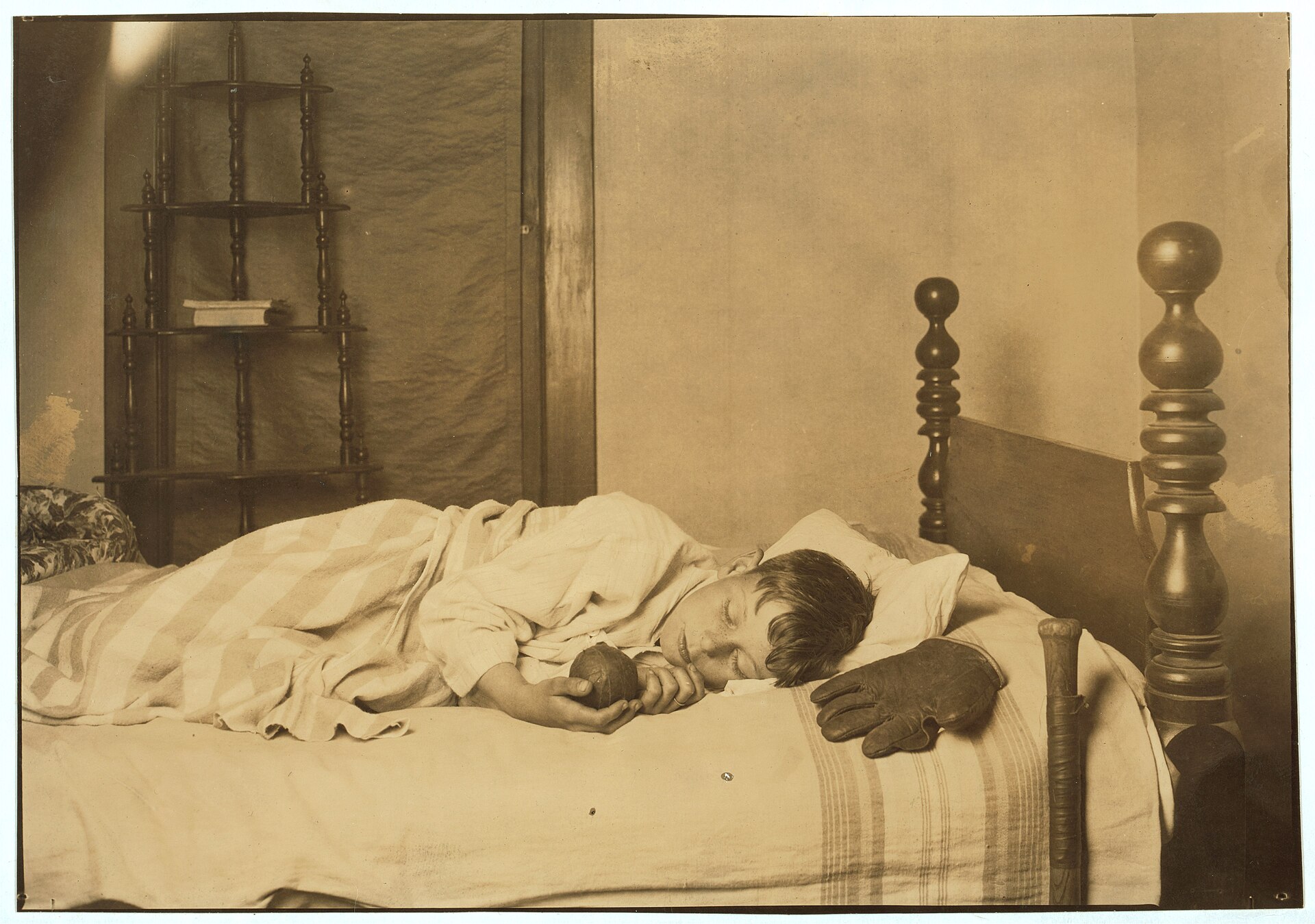
[A child asleep in bed in a dark, quiet room. Waking from a nightmare leaves the body in fight-or-flight mode even though the dream is over. Photograph: Library of Congress collection]
Image Credits: Wikimedia Commons
A nightmare does not end when you open your eyes. The dream is over, but your body is still running the emergency program: adrenaline in the blood, heart pounding, breathing fast.
You know you are safe. Your nervous system has not caught up yet.
This article explains why the heart races after a bad dream, the breathing sequence that slows it down, the 5-4-3-2-1 grounding exercise, and a short cool-down routine for getting back to sleep.
Why your heart pounds after the dream ends
Nightmares trigger the same sympathetic nervous system response as a real threat. During a vivid bad dream, the brain signals danger, the adrenal glands release adrenaline and cortisol, and the heart rate climbs. Waking up interrupts the dream, not the chemistry.
That is why the racing heart feels so unfair. Your thinking brain knows the bedroom is safe, but the stress hormones circulating in your blood take minutes to clear. The heart keeps beating fast because it is still responding to the chemical message the dream sent.
Rapid, shallow breathing makes it worse. Fast breathing tells the brainstem that danger is still present, which keeps the sympathetic system switched on. The way out is to flip that signal deliberately: slow the breath, and the nervous system follows.
This is also why lying still and waiting rarely works well. Doing nothing leaves the body in its alarm state. A deliberate routine gives the nervous system the all-clear signal it is waiting for.
The breathing sequence: slow the exhale
The fastest lever you have is your breath, specifically the exhale. A long, controlled exhale stimulates the vagus nerve, the longest cranial nerve in the body, which runs from the brainstem through the heart and digestive tract. Stimulating it shifts the body from sympathetic fight-or-flight mode toward parasympathetic rest mode.
Stuart Sandeman, founder of Breathpod, describes the mechanism plainly: "Deep slowing the breath is key. When we slow the breath down, we are telling the brain there is no threat." Slower breathing, he explains, activates the parasympathetic response, and the vagus nerve acts to lower the heart rate.
Two patterns work well for this moment.
The 4-7-8 pattern, developed by physician Andrew Weil from pranayama breathing, uses an exhale twice as long as the inhale.
Inhale quietly through the nose for 4 counts, hold for 7, then exhale through the mouth for 8 with a soft whoosh.
Repeat for three or four cycles, which takes under 90 seconds. The extended exhale is what forces the heart rate down.
Box breathing, also called four-square breathing, uses equal counts: inhale 4 seconds, hold 4, exhale 4, hold empty 4.
The TheraNear review of the technique notes that Navy SEALs, athletes, and trauma surgeons use it for rapid tactical calm. It recommends six to eight 16-second cycles, about two minutes total.
Either pattern works. Pick the one you can remember at 3 a.m.
Keep the breaths smooth rather than forceful. Gasping or straining keeps the body alarmed. Gentle and slow is the whole point.

[Slow, deliberate breathing and grounding exercises engage the parasympathetic nervous system and lower heart rate. Photograph: unknown photographer]
Image Credits: Wikimedia Commons
The grounding step: prove the room is safe
Breathing slows the body, but the mind may still be replaying the dream. The 5-4-3-2-1 grounding technique interrupts that replay by anchoring attention in the present room.
Cleveland Clinic integrative medicine physician Melissa Young explains it this way: "Anxiety and worry are usually about what might happen in the future, or what happened in the past, not what is happening right now. Grounding techniques like 5-4-3-2-1 bring you into the present moment."
The exercise is simple. Notice five things you can see, four things you can feel or touch, three things you can hear, two things you can smell, and one thing you can taste.
Young notes that the numbers are just a frame for your thoughts. The point is engaging the senses systematically so attention moves into the present.
Do it slowly, in the dark if the light feels harsh. Feel the sheet, hear the fan, notice the faint smell of your pillow. By the time you reach one taste, the dream has usually lost its grip.
The body follows where attention goes, and right now attention is in a quiet room, not the nightmare.
This pairs naturally with breathing. Some people run one 4-7-8 cycle, then one grounding round, then repeat.
There is no required order. Use whichever one your body responds to first.
The cool-down routine: reset for sleep
Once the heart has slowed, a short routine helps the body transition back to sleep instead of snapping back to alertness.
Sit up for a minute or two. Splash cool water on your face or hold a cool cloth to your forehead. The mammalian dive reflex, triggered by cold water on the face, adds another vagus-nerve nudge toward calm.
Keep lights low or off.
Drink a small glass of water. Nightmare wake-ups often come with a dry mouth and a stomach that growls with adrenaline. Water and a neutral signal help.
Avoid your phone: bright screens and news feeds re-activate the alert brain you just calmed.
If the room feels hot, cool it down. A cooler room supports the natural drop in core body temperature that sleep requires. Some people find that changing into a dry shirt helps, since stress sweating leaves the first one damp.
Then lie back down and do one final slow-breathing round with a longer exhale than inhale. If sleep does not return within 20 minutes, get up and do something quiet and boring in dim light, like reading a dull book.
Lying awake rehearsing the nightmare trains the brain to associate the bed with alarm. For ongoing trouble falling asleep, a structured plan for falling asleep covers timing and environment in more depth.

[A calm night scene over water. A cool, dim room helps the body settle back toward sleep after a bad dream. Photograph: unknown photographer]
Image Credits: Wikimedia Commons
When a racing heart needs a clinician
Most post-nightmare racing hearts settle within minutes once the adrenaline clears. But some patterns deserve medical attention rather than breathing exercises.
See a clinician if the pounding comes with chest pain or pressure, fainting or near-fainting, severe shortness of breath, or a pulse that stays very fast or irregular long after waking. If nightmares happen several nights a week for months, or if you avoid sleep because of them, that is also worth raising with a doctor or sleep specialist.
Breathing and grounding are coping tools for an alarmed-but-healthy body. They are not substitutes for evaluation when the heart itself may be the problem.
FAQ
How long does the racing heart last after a nightmare?
Usually a few minutes. Adrenaline clears from the blood in roughly that time once the threat signal stops. Slow breathing shortens the window by actively switching the nervous system toward rest mode.
Is box breathing or 4-7-8 better after a nightmare?
Both lower heart rate through the same mechanism: a slow exhale stimulating the vagus nerve. Box breathing is simpler to remember under stress; 4-7-8 adds the longer exhale, which is the strongest calming component. Use whichever you can do without thinking.
Why do I feel shaky after a nightmare?
Adrenaline prepares muscles for action, so trembling is the body burning off that readiness. It fades as the hormones clear. Slow breathing and the cool-down routine above help it pass faster.
Can grounding stop nightmares from coming back?
Grounding calms the aftermath; it does not prevent the next nightmare. For frequent nightmares, clinicians use techniques like imagery rehearsal therapy, where you rewrite the dream's ending while awake. That is a conversation for a therapist, not a breathing exercise.
The bottom line
A racing heart after a nightmare is your body's alarm system finishing its cycle, not a sign the danger was real. Slow the exhale to engage the vagus nerve, run the 5-4-3-2-1 grounding exercise to anchor in the present room, and cool down before trying to sleep again.
If the pounding comes with pain, faintness, or happens almost every night, talk to a clinician. Otherwise, two minutes of deliberate calm is usually all the all-clear signal your body needs.
Tags: nightmares, anxiety, breathing exercises, sleep
Rive News's research desk covers sleep science, stress physiology, and health explainers.
Related
- Why does your heart rate stay elevated after exercise?
- How to sleep on a plane when you cannot fall asleep
- Why Your Stomach Growls When You Are Hungry
Get one health explainer in your inbox every week. Subscribe to the Rive News newsletter.
This article follows the Rive News research standards: named sources, verifiable numbers, no invented quotes. Corrections: [email protected].
Related stories
ADHD linked to fourfold dementia risk in Pitt study of 187,000 adults
Adults with ADHD face four times the risk of dementia, a University of Pittsburgh study of 187,000 adults published in JAMA Psychiatry

Why Do Athletes Get Cramps Despite Drinking Water?
Muscle cramps strike even well-hydrated athletes because sweat drains electrolytes that plain water cannot replace. Here is why water alone

Do bananas actually prevent muscle cramps?
A medium banana has 422 mg of potassium, but the evidence says it cannot stop cramps. Here is what the research shows, and what actually