
Why eyes water when you yawn: pressure and drainage
By Rive News / Research desk | Rive News / Published October 27, 2026 at 9:00 AM PKT
This article is for general information only and is not medical advice; talk to a clinician about any symptoms.
Key takeaways
- Yawning contracts facial muscles that squeeze the lacrimal glands, pushing extra tears onto the eye surface.
- The same contraction briefly blocks tear drainage, so tears pool and spill over instead of draining away.
- The effect is normal and short-lived, clearing once the face relaxes after the yawn.
A man mid-yawn, eyes squeezed shut as facial muscles contract. Photograph: Jaroslaw Jablonski
Image Credits: Wikimedia Commons
Your eyes are coated at all times by a thin film of tears. That film comes from lacrimal glands above each eye and keeps the surface moist, clear, and protected.
When you yawn, the muscles of your face contract hard, squeezing those glands and briefly blocking the drains that normally carry tears away. The result is a small spillover: watery eyes that clear once the yawn ends.
This article explains why your eyes water when you yawn, including how tears are made and drained, what a yawn does to that system, why the effect varies, and when watery eyes are worth checking.
How tears are made and drained
Tears are made all the time, not only when you cry. The lacrimal glands sit just above each eye and release fluid that lubricates the surface, washes away debris, and helps keep vision clear.
Blinking spreads that fluid evenly across the eye. Excess fluid then drains through two tiny openings at the inner corner of the eye, called the superior and inferior lacrimal puncta, and travels down into the nose.
That drainage route is why crying often gives you a runny nose. The eye and the nose share one plumbing system, so extra tears end up in the nasal cavity.
What a yawn does to the tear system
A yawn is a full-face event. The jaw drops wide, the cheeks pull tight, and the ring-shaped muscle around each eye, the orbicularis oculi, squeezes the eyelids shut.
That contraction does two things at once. First, it presses on the lacrimal glands and forces a small burst of tears out, like squeezing a wet sponge.
Karin Biggs, an adjunct professor who teaches anatomy at Washington State University, put it plainly: "When we yawn we are contracting all the muscles in our face. We are just squeezing the tears out of the gland and out of the tubes because we have squeezed all of our face at once."
Second, the same squeeze narrows or closes the drainage openings. With the exits briefly blocked and extra fluid arriving, tears have nowhere to go but over the lower lid and down the cheek.
A piece carried by The Hindu from the New York Times News Service describes the same pairing: yawning increases tear secretion through muscular tension on the glands while simultaneously damming up the drainage system, so the film builds into what it calls a small waterfall of tears.
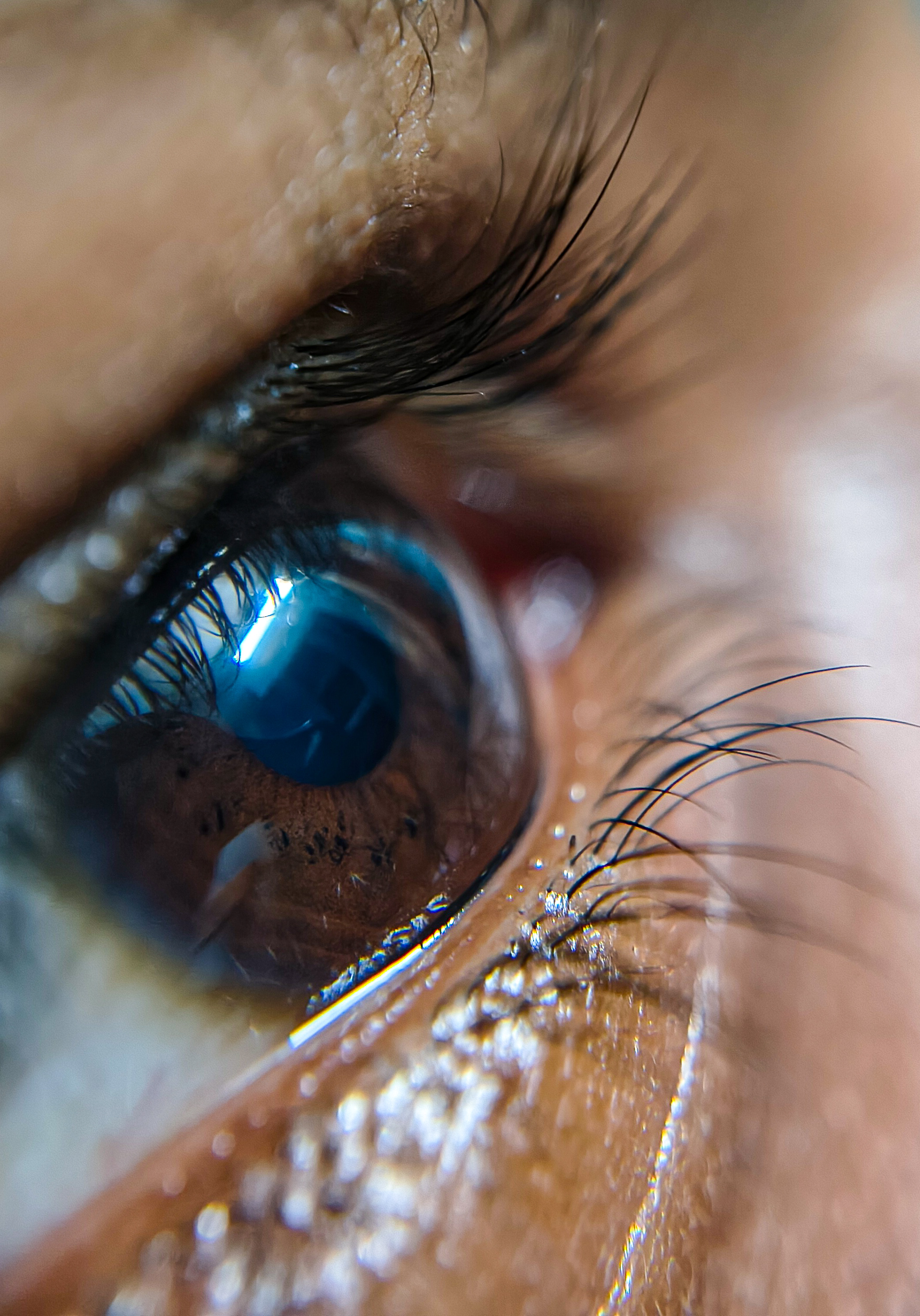
A close view of a human eye, showing the surface that tears keep moist. Photograph: Shyamli Kashyap
Image Credits: Wikimedia Commons
Why it does not happen every time
Not every yawn produces visible tears. A small yawn uses less force, so the squeeze on the glands and drains is gentler and the normal drainage keeps up.
Hydration, air dryness, and how tired your facial muscles are can all shift the result. A big, jaw-cracking yawn after a long day is more likely to spill over than a small one.
Age and eye health play a part too. People who already produce fewer basal tears, or who wear contact lenses, may notice the spillover more or less than others, since the starting fluid level differs.
The human face has 43 muscles, according to Biggs, and a yawn recruits many of them at once. That is why the same spillover can show up with sneezing or hard laughing, which also scrunch the face.
Yawning, tears, and the runny nose
Because tears drain into the nose, a bout of yawning can leave you sniffing as well as wiping your eyes. The fluid that cannot drain during the yawn itself resumes its route once the muscles relax.
This is reflex tearing, not emotional crying. Reflex tears respond to physical stimulation and surface protection, while emotional tears follow a different trigger, even though both use the same glands and drains.
The same shared plumbing explains why a blocked tear duct changes the picture. When drainage is narrowed by swelling or a blockage, even an ordinary yawn can produce more spillover than usual, because the exit was already tight.
That distinction matters for interpreting the symptom. Watery eyes during a yawn say something about face mechanics, not about mood.
When to get watery eyes checked
Watery eyes that appear only with yawning and clear within seconds are a normal mechanical side effect. Persistent watering, pain, redness, discharge, or vision changes are a different matter and deserve a clinician's attention.
Watering that affects one eye only, or that comes with swelling around the tear duct, can point to a blocked drainage system rather than a yawn. A clinician can check the puncta and ducts directly.
This article is for general information only and is not medical advice; talk to a clinician about any symptoms.
Frequently asked questions
Is it normal for eyes to water when you yawn?
Yes. The effect comes from facial muscles squeezing the tear glands and briefly blocking drainage, and it clears once the yawn ends. Most people notice it at least sometimes.
Why do some people tear up more than others?
The strength of the yawn, face anatomy, and how much fluid the glands are producing all vary from person to person. A stronger yawn produces a stronger squeeze and more spillover.
Can yawning make your nose run too?
Yes, because tears normally drain into the nasal cavity. A yawn can delay that drainage, then release the backlog, which is why you may sniff after a big yawn.
Does watering when you yawn mean something is wrong with your eyes?
On its own, no. It is a mechanical side effect of the yawn. Watering that persists, hurts, or comes with other symptoms is worth having checked.
The bottom line
Your eyes water when you yawn because a yawn is a squeeze: facial muscles press the tear glands while pinching the drains shut. Extra fluid arrives just as the exit narrows, so tears spill over until the face relaxes.
Nothing needs fixing when the watering lasts seconds and clears on its own. If watering persists or comes with pain or vision changes, have a clinician take a look.
Tags: eyes, yawning, human body
Rive News is a research desk covering everyday science, home, health, and money topics in plain language.
Related
- Why Do We Cry Emotional Tears Differently Than Onion Tears
- Why do eyes get dry when staring at screens
- Why Do My Eyes Feel Dry and Gritty in the Morning?
- Why Do We Get Brain Freeze From Cold Drinks?
Subscribe for one plain-language explainer each morning.
Rive News publishes research-desk explainers; corrections are noted on the article page.
Related stories
ADHD linked to fourfold dementia risk in Pitt study of 187,000 adults
Adults with ADHD face four times the risk of dementia, a University of Pittsburgh study of 187,000 adults published in JAMA Psychiatry

Why Do Athletes Get Cramps Despite Drinking Water?
Muscle cramps strike even well-hydrated athletes because sweat drains electrolytes that plain water cannot replace. Here is why water alone

Do bananas actually prevent muscle cramps?
A medium banana has 422 mg of potassium, but the evidence says it cannot stop cramps. Here is what the research shows, and what actually