
Why fast food leaves you hungry again so soon
By Rive News / Research desk | Rive News / Published October 28, 2026 at 9:00 AM PKT
Key takeaways
- A fast food meal can be high in calories yet low in the protein, fibre and volume that keep fullness signals going.
- Refined carbohydrates raise blood sugar fast, and the fall that follows can switch hunger back on within an hour or two.
- Eating quickly, drinking calories and skipping fibre each shorten satiety for a separate reason.
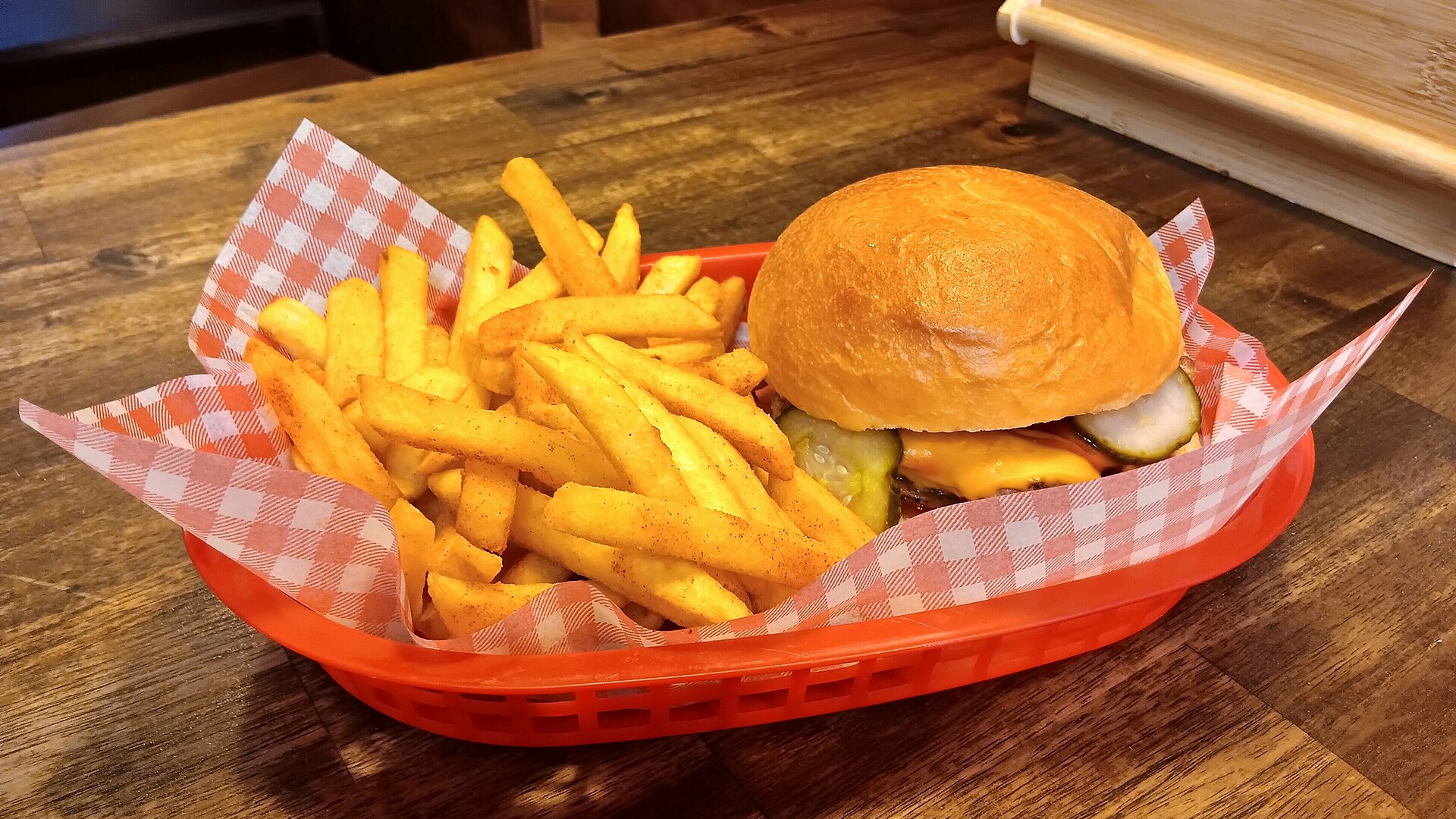
[A burger and fries served as a typical fast food meal.] Photograph: fast food meal
Image Credits: Wikimedia Commons
Fast food hunger is a composition problem, not a calorie mystery. A meal can deliver a full day's worth of energy in one sitting and still leave you checking the fridge an hour later, because fullness depends on what the food is made of, how much space it takes up, and how fast you eat it.
This article explains why fast food leaves you hungry again so soon, including blood sugar swings, satiety hormones, low fibre and volume, and eating speed.
What fast food usually contains
A typical fast food meal is built around refined flour, fried potatoes, sugary drinks and processed meat. Those ingredients share two traits: they are energy-dense and they digest quickly.
Refined carbohydrates break down into glucose fast. Janet Seiber, a registered dietitian at BlueCross BlueShield of Tennessee, told WellTuned that foods higher in refined carbohydrates and simple sugars can make people hungrier after eating them, naming white bread, sugary cereals, pastries and fruit juices as examples.
Protein and fibre do the opposite job. They slow digestion and stretch the stomach for longer, which keeps fullness signals firing. A meal short on both can pass through the stomach quickly even when its calorie count looks large.
Salt and flavourings add a third wrinkle. A salty, highly flavoured meal can leave you thirsty, and thirst is easy to mistake for hunger. A glass of water before reaching for a second helping is a cheap test of which signal you are actually feeling.
Blood sugar rises fast, then falls
The glycemic index (GI) rates foods by how quickly they raise blood sugar. Glucose itself scores 100 on that scale, while fat scores zero, according to a review of appetite research published in Appetite and summarised on ScienceDirect.
High-GI foods are absorbed rapidly in the gut, so blood glucose climbs sharply. The pancreas answers with insulin, which moves glucose into cells. When the response overshoots, blood sugar can dip below where it started, a pattern sometimes called reactive hypoglycaemia.
That dip matters because the brain tracks falling glucose as a cue to eat. Several studies cited in the same review found that high-GI foods increased hunger and later food intake across the day compared with low-GI foods.
This is why a sugary drink with a white-bread burger can feel less filling than a smaller meal built on whole grains, beans or vegetables. The first meal spikes and crashes. The second releases glucose gradually.
Satiety hormones need the right triggers
Fullness is not a single switch. It is a set of gut hormones, including CCK, GLP-1 and PYY, that are released in response to protein, fibre and fats, according to Nutrition•pro's summary of research including Aukan and colleagues (2022) in Appetite.
A meal low in those triggers produces a weaker hormonal response. The stomach empties sooner, the hormonal "enough" message fades sooner, and hunger returns sooner.
Volume plays its own role. Stretch receptors in the stomach wall respond to physical bulk, not calories.
A large salad stretches the stomach more than a small, calorie-dense burger, even if the burger contains more energy. Fast food portions are often compact for their calories, so the stretch signal is weak relative to the energy eaten.
Liquid calories are the extreme case. A sugary drink adds hundreds of calories with almost no chewing, no bulk and a fast glucose rise. It barely registers in the satiety system at all.
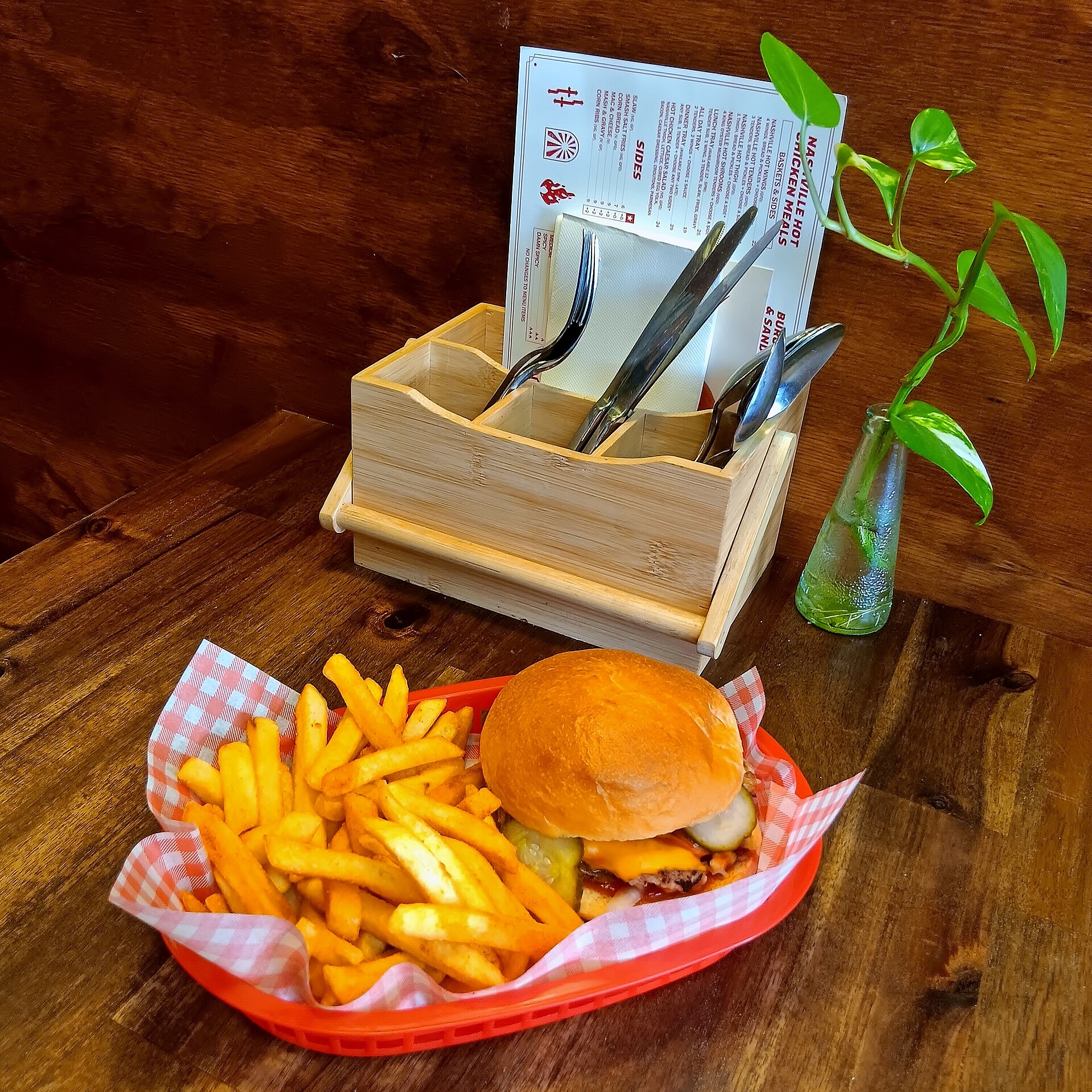
[A burger and fries served as a fast food meal.] Photograph: fast food meal
Image Credits: Wikimedia Commons
Eating speed cuts the signal short
It takes time for gut hormones to reach the brain. Eating a meal in five minutes can finish before those signals arrive, so the brain registers "done" only after the plate is empty.
Fast food is designed for speed: soft textures, little chewing, food eaten in the car or at a counter. That design works against the body's timing.
Slowing down does not require a ritual. Putting the fork down between bites, chewing properly and giving the meal 20 minutes before deciding whether you are still hungry lets the hormonal signals catch up with what you have already eaten.
Why this is not just about willpower
Hunger after fast food is often framed as a character flaw. The physiology says otherwise. A meal that spikes glucose, skips fibre and protein, arrives in a small volume and is eaten fast is doing four separate things that shorten satiety.
That also means the fix is not one change. Adding protein to a refined-carb meal helps. Adding fibre helps for a different reason.
Slowing down helps for a third. Each mechanism is independent, so stacking two or three changes beats relying on any single one.
What makes a meal stay with you longer
The pattern from the research is consistent, and it is practical rather than exotic.
- Protein at each meal, such as eggs, beans, lentils, fish or yoghurt, gives CCK and PYY something to respond to.
- Fibre above 2 grams per serving counts as a good source on a nutrition label, according to Seiber, while 5 grams or more counts as high fibre.
- Whole grains, vegetables and legumes release glucose slowly and add bulk without adding much energy.
- Water with the meal, rather than a sugary drink, avoids a second glucose spike on top of the food.
None of this turns fast food into a health food. It explains why two meals with similar calories can feel so different an hour later, and which lever to pull when the next meal needs to last.
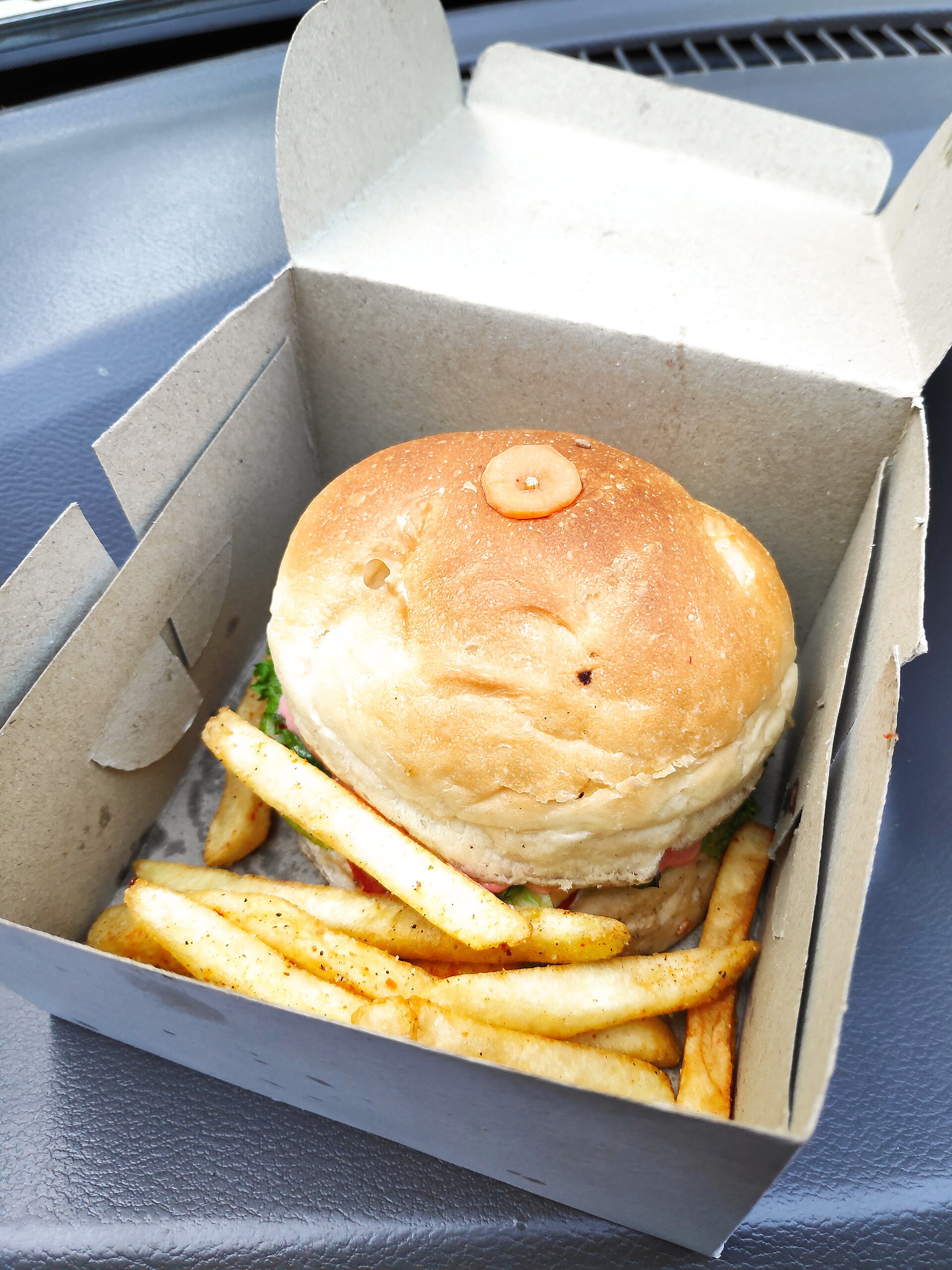
[A burger with a portion of French fries.] Photograph: burger and fries
Image Credits: Wikimedia Commons
Why do I feel hungry an hour after a burger?
A burger on a white bun with fries and a sugary drink combines fast-digesting carbohydrates, low fibre and liquid calories. Blood sugar rises quickly and can fall again within one to two hours, reactivating hunger even though the meal was high in calories.
Does protein really keep you full longer?
Yes, in the sense that protein triggers satiety hormones such as CCK, GLP-1 and PYY more strongly than refined carbohydrate alone. Pairing carbohydrate foods with a protein or healthy fat source keeps most people full longer than the carbohydrate on its own.
Is it hunger or thirst after salty food?
It can be either, and salty meals make the confusion likely. Drinking a glass of water and waiting 15 minutes is a simple way to test whether the urge fades before eating more.
Can eating slowly actually help?
Eating slowly gives gut-to-brain fullness signals time to arrive. Finishing a meal before those signals register is one reason fast meals feel less satisfying than the same food eaten at a slower pace.
The bottom line
Fast food leaves you hungry again soon because it is engineered, intentionally or not, to do the opposite of what keeps people full: fast glucose, little fibre, little protein, small volume and fast eating. Each factor shortens satiety on its own, and a typical meal combines several at once.
The practical response is equally plain. Build meals around protein and fibre, choose slower carbohydrates, drink water instead of sugary drinks, and give fullness signals time to arrive. This article is for general information only and is not medical advice; talk to a clinician about any symptoms.
The Rive News research desk writes plain-language explainers from published sources, with no invented experts or first-hand claims.
Related
- How banks make money on free checking accounts
- Why banks hold your check deposits for days
- How compound interest works in a savings account
- What a credit card grace period is and how it saves you money
Subscribe to the Rive News newsletter for one plain-language explainer each morning.
Rive News publishes explainers from verifiable public sources; corrections are noted on the article page.
Related stories
ADHD linked to fourfold dementia risk in Pitt study of 187,000 adults
Adults with ADHD face four times the risk of dementia, a University of Pittsburgh study of 187,000 adults published in JAMA Psychiatry
Why Do Athletes Get Cramps Despite Drinking Water?
Muscle cramps strike even well-hydrated athletes because sweat drains electrolytes that plain water cannot replace. Here is why water alone
Do bananas actually prevent muscle cramps?
A medium banana has 422 mg of potassium, but the evidence says it cannot stop cramps. Here is what the research shows, and what actually