
Why your fingers go numb in cold weather
By Rive News / Research desk | Rive News / Published October 29, 2026 at 9:00 AM PKT
Key takeaways
- Cold makes the small arteries in your fingers narrow so your body can keep heat around its core, which reduces warm blood flow to your hands.
- Numbness, whitening, then tingling on rewarming points to Raynaud's phenomenon, where that narrowing overshoots normal levels.
- As many as 1 in 10 people may have some form of Raynaud's, and it is more common in women and in colder climates.
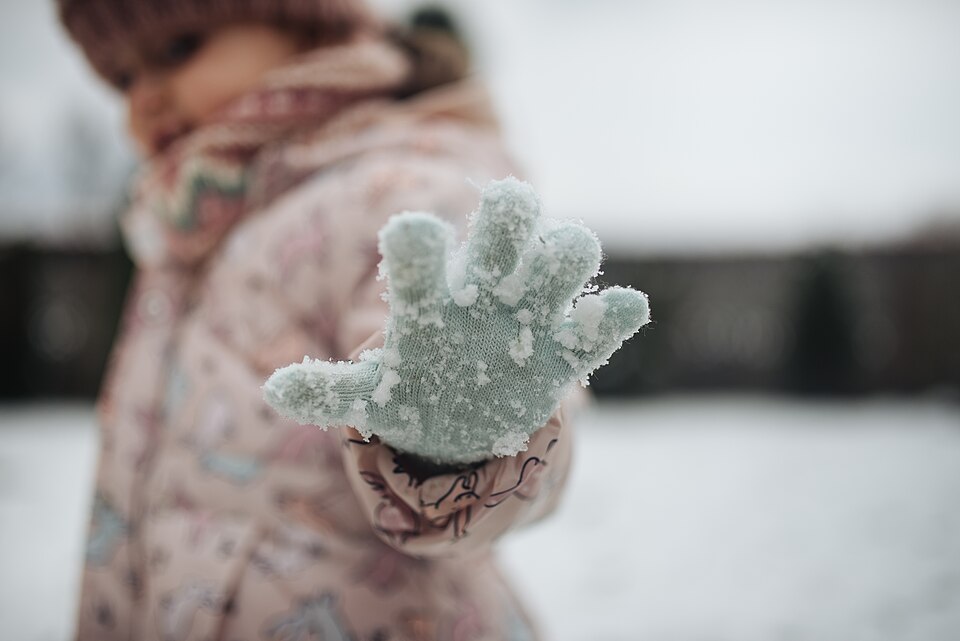
[A young child in a winter coat and hat.] Photograph: a child in winter clothing
Image Credits: Wikimedia Commons
Fingers going numb in cold weather means losing feeling in your fingertips after time outside, sometimes with the skin turning white or blue. It happens because cold changes how blood flows to your hands. In most people the change is mild and reverses with warming, while in others it overshoots and becomes a named condition.
This article explains the normal narrowing of blood vessels in the cold, the stronger version seen in Raynaud's phenomenon, what rewarming feels like, and which patterns are worth raising with a clinician.
What cold does to blood flow in your hands
Your body treats heat as a resource to protect. When the air turns cold, it narrows the small arteries that carry blood to the skin of your hands and feet. That narrowing moves blood away from the surface and toward the core, where the vital organs sit.
The process is called vasoconstriction, and it is a normal defense. Fingers are far from the core and have a large surface for their size, so they feel the effect first. Less warm blood reaches them, the skin cools, and feeling dulls.
Nerves in the fingers also conduct signals more slowly when cold. That adds to the numb feeling even before blood flow drops far. Gloves slow the heat loss, but they cannot stop the internal narrowing once your core temperature starts to fall.
Once you come back inside, the arteries widen again and warm blood returns. Feeling usually comes back as the tissue warms, sometimes with tingling or a prickling ache. That tingling is the nerves waking up as blood flow and temperature recover.
When narrowing overshoots: Raynaud's phenomenon
Raynaud's phenomenon is the name for narrowing that goes further and faster than normal. The Mayo Clinic describes it as smaller blood vessels that supply blood to the skin narrowing in response to cold or stress, limiting blood flow in a spasm called vasospasm. Fingers and toes are the usual sites, though the nose, lips, and ears can be affected too.
During an attack, the skin usually turns pale first, then often blue as oxygen-poor blood lingers. The fingers feel cold and numb. When the spasm ends and blood returns, the skin turns red, and the area may throb, tingle, or swell.
Mayo Clinic notes that the return of blood flow after warming can take 15 minutes. That figure helps explain why the discomfort lingers after you are already indoors. The attack itself often lasts about 15 minutes, according to WebMD, though the exact length varies from person to person.
Harvard Health adds the history behind the name. The condition is named after the French physician who first described it in 1862. For some people, reaching into a refrigerator or standing in air conditioning is enough to trigger it, which shows how small the temperature change can be.
How common it is, and who gets it
The Arthritis Foundation reports that as many as 1 in 10 people may have some form of Raynaud's disease. That is a rough estimate, not a precise count, since mild cases often go unreported. It still puts the condition well beyond a rare curiosity.
Primary Raynaud's, the form with no underlying disease behind it, is the more common type. It usually begins before age 30 and is more common in women and among people who live in cold climates, according to the Arthritis Foundation. Harvard Health agrees that it tends to first appear in the late teens or early 20s and affects women much more frequently than men.
Secondary Raynaud's happens alongside another health problem and tends to be more serious. The MSD Manual lists connective tissue diseases such as lupus, rheumatoid arthritis, and systemic sclerosis among the linked conditions. Atherosclerosis, underactive thyroid, and certain medicines that narrow blood vessels can also play a role.
Emotional stress can trigger attacks in the same way cold does, because stress activates the sympathetic nervous system. The MSD Manual notes that anything stimulating that system, particularly cold but also strong emotion, can cause the arteries to constrict. That overlap explains why some people notice attacks at stressful moments indoors, not just outdoors in winter.
Why fingers, and why the colour changes
Fingers show the effect so clearly because their blood supply runs through very small arteries near the surface. When those arteries narrow, the change in skin colour is visible within minutes. Toes behave the same way for the same reason.
The colour sequence follows the blood. White means little blood is reaching the skin at all. Blue means the blood present has given up much of its oxygen while moving slowly.
Red means fresh, oxygen-rich blood is flowing back in, often faster than usual as the vessels reopen.
Thumbs are often spared in primary Raynaud's, according to Yale Medicine, which doctors sometimes use as a clue when sorting the primary form from other problems. The pattern is not a rule for every person, but it is one of the details clinicians look for.
It is also worth separating this from ordinary cold hands. Everyone's hands get cold in winter, and feeling returns steadily with warming. Raynaud's differs in the sharp colour change, the clear boundary between affected and unaffected skin, and the tingling or pain that follows rewarming.
Warming up safely, and what to watch
Warming cold hands slowly is the sensible approach. Move indoors, put on dry gloves or mittens, and let the hands warm in the air or against your own body. Warm water can help if it is comfortably warm rather than hot, since numb skin cannot judge temperature well.
Avoid sudden harsh heat on numb fingers, and avoid rubbing them hard. The goal is steady rewarming, not a shock to tissue that has had little blood flow. If feeling does not return, or if the skin stays pale or develops sores, that is a reason to seek care promptly.
Patterns worth raising with a clinician include attacks that affect only one hand, sores on the fingertips, or attacks that have become more frequent and painful over time. Secondary Raynaud's can signal an underlying condition, so a new pattern in an adult deserves a conversation rather than a guess.
Smoking also matters here, since nicotine narrows blood vessels further. The MSD Manual lists avoiding smoking among the steps that may help, alongside keeping warm. Repeated vibration from tools such as jackhammers is another linked exposure, according to the Arthritis Foundation.
This article is for general information only and is not medical advice; talk to a clinician about any symptoms.
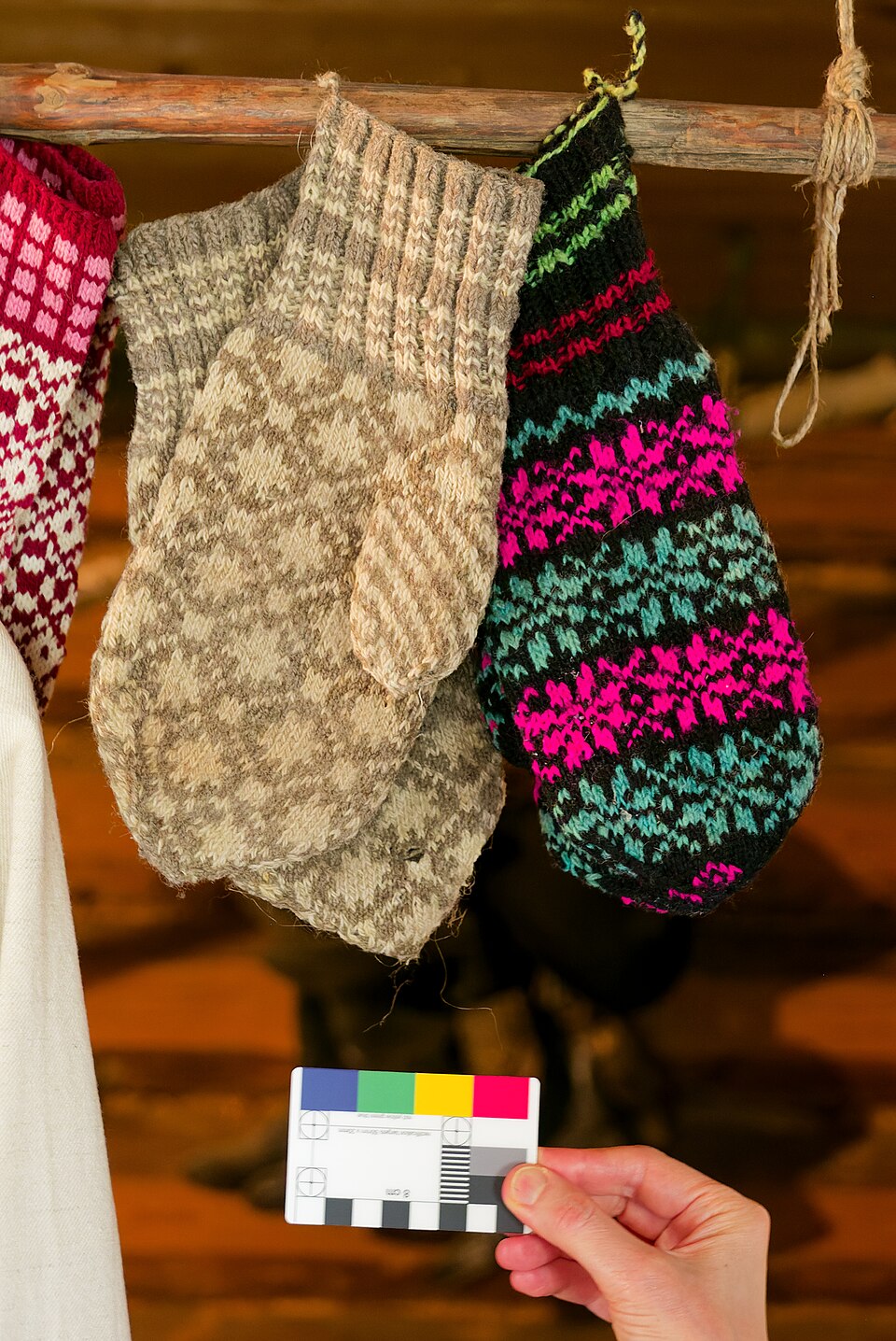
[A pair of beige mittens.] Photograph: beige mittens
Image Credits: Wikimedia Commons
Frequently asked questions
Is numb fingers in the cold always Raynaud's?
No. Normal vasoconstriction dulls feeling in cold weather for everyone, and it reverses steadily with warming. Raynaud's is suggested by the sharper pattern of whitening, blue colour, numbness, and tingling on rewarming.
Why do fingers tingle when they warm up?
Tingling marks the return of blood flow and the rewarming of cold nerves. Mayo Clinic describes numb, prickly feeling or stinging pain upon warming as a typical part of the pattern.
Can stress alone trigger numb fingers?
Yes, in people with Raynaud's. Stress activates the same nervous system branch that cold does, and the MSD Manual notes that strong emotion can trigger constriction of the small arteries.
Do gloves prevent the numbness completely?
Gloves slow heat loss and reduce attacks, but they cannot fully stop the internal vessel narrowing once your core cools. Mittens tend to keep fingers warmer than gloves, since the fingers share warmth inside one space.
The bottom line
Cold narrows the small arteries in your fingers so your body can protect its core heat, and that narrowing dulls feeling. In Raynaud's phenomenon the narrowing overshoots, producing white then blue fingers, numbness, and tingling that can take 15 minutes to settle after warming.
As many as 1 in 10 people may have some form of it, most often the milder primary type. Warm up steadily, keep your hands and core warm, and raise new or worsening patterns with a clinician rather than diagnosing them yourself.
Tags: cold weather, circulation, Raynaud's
Rive News is a research desk that explains everyday questions using published sources, with no individual author persona behind its articles.
Related
- Why your fingers swell in hot weather and when to worry
- Why do fingers wrinkle in water like prunes?
- Why do you get a runny nose in cold weather?
- Why does your foot fall asleep and tingle when it wakes up?
Subscribe for one plain-English explainer like this in your inbox each morning.
Rive News follows a standards note: facts are sourced from public pages, claims carry attribution, and corrections are made openly when a source is corrected.
Related stories
ADHD linked to fourfold dementia risk in Pitt study of 187,000 adults
Adults with ADHD face four times the risk of dementia, a University of Pittsburgh study of 187,000 adults published in JAMA Psychiatry
Why Do Athletes Get Cramps Despite Drinking Water?
Muscle cramps strike even well-hydrated athletes because sweat drains electrolytes that plain water cannot replace. Here is why water alone
Do bananas actually prevent muscle cramps?
A medium banana has 422 mg of potassium, but the evidence says it cannot stop cramps. Here is what the research shows, and what actually