
Why your fingers swell in hot weather and when to worry
By Rive News / Research desk | Rive News / Published October 27, 2026 at 9:00 AM PKT
This article is for general information only and is not medical advice; talk to a clinician about any symptoms.
Key takeaways
- Heat widens blood vessels near the skin so the body can shed warmth, and extra fluid can leak into finger tissue.
- Gravity and stillness make swelling worse, which is why hands puff up after long, hot, inactive hours.
- Heat swelling usually fades after cooling down, but one-sided or lingering swelling deserves a clinician's attention.
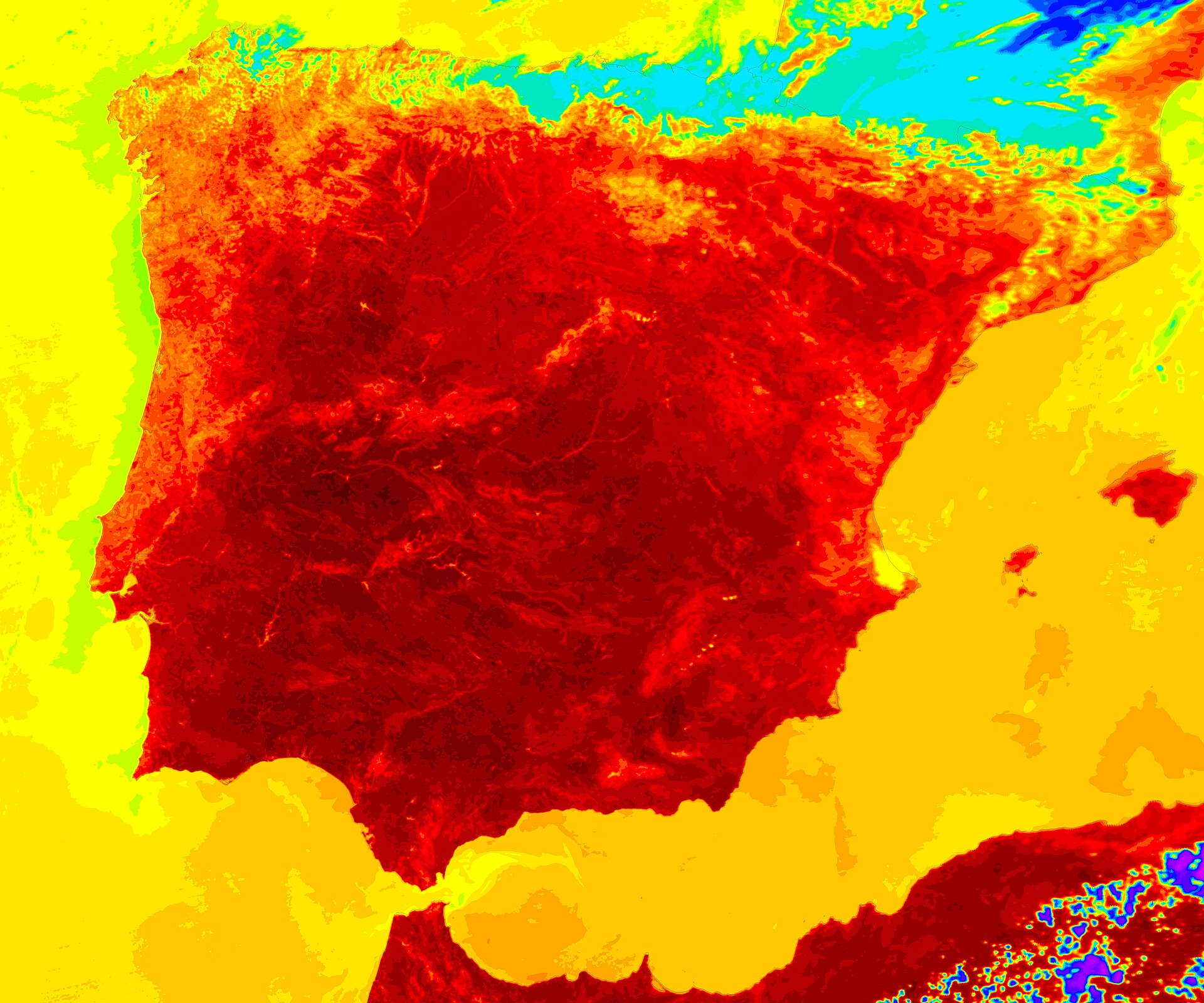
Strong summer sun during a heatwave, the kind of weather that triggers heat swelling. Photograph: 2004 summer heatwave in Spain
Image Credits: Wikimedia Commons
Fingers swell in hot weather because the body cools itself by widening blood vessels, and that widening lets fluid seep into the surrounding tissue. Doctors call this pattern heat edema, and it is one of the milder heat-related responses. Rings feel tight, fingers feel stiff, and the swelling usually fades once the body cools down.
The process is normal thermoregulation working as designed, with an uncomfortable side effect. This article explains how heat turns into swollen fingers, why some people notice it more than others, what usually helps, and which patterns are worth getting checked.
What heat edema is
Heat edema is swelling of the hands, feet, or ankles caused by heat. Kaiser Permanente's health encyclopedia puts it plainly: "It is not uncommon for the feet or hands to become swollen when a person sits or stands for a long time in a hot environment." The same entry notes that this swelling is called heat edema.
The key detail is that the swelling is a fluid-balance effect, not an injury. No tissue is damaged, and nothing is broken or torn. Fluid that normally stays inside small blood vessels moves into the spaces between cells, and the tissue holds it until the balance shifts back.
That is why the swelling feels soft and puffy rather than hard or hot to the touch.
Heat edema differs from the swelling of an allergic reaction or an insect sting, which tends to appear quickly in one spot. Heat swelling builds gradually over hours, affects both hands or both feet more often than one side, and tracks with the heat itself: it arrives on hot days and eases when the weather cools or the person cools down.
How heat turns into swollen fingers
Cooling starts with blood vessels. When core temperature rises, the body sends more blood toward the skin so heat can escape into the air. The vessels widen, a process called vasodilation, and blood flow near the surface increases.
Skin flushing on a hot day is the visible sign of this shift.
Wider vessels change fluid pressure. With more blood flowing into the tiny vessels near the skin, pressure inside those vessels rises, and some fluid is pushed through the vessel walls into the tissue around them. In the fingers, there is little room for extra fluid, so even a small amount makes rings tight and bending stiff.
Gravity adds to the effect. Fluid pools in the lowest parts of the body, so standing or sitting still for hours concentrates swelling in the feet and ankles. The hands swell too, especially when they hang at the sides during a walk or dangle during a long, still afternoon.
Movement helps because flexing the hands and walking pumps fluid back toward the centre of the body.
Sweating plays a supporting role. Heavy sweating loses water and salt, and the body responds by holding on to salt and water more tightly to protect blood volume. That conservation step can leave tissues holding extra fluid overall.
The combination of widened vessels, gravity, and fluid retention is why a hot, still day produces the puffiest fingers.
Why some people notice it more
Older adults have a higher risk of heat edema, according to Kaiser Permanente's entry, especially when other conditions affect circulation. Blood vessels lose some of their tone with age, and the systems that balance fluid become less precise, so the same heat produces more visible swelling.
People visiting a hot climate from a colder one also have a higher risk, for a related reason. The body adapts to heat over days to weeks, improving its sweating and circulation responses. Before that adaptation, the cooling system works harder and less efficiently, and swelling shows up more easily.
New arrivals on holiday are a classic case: the first hot days bring puffy hands that settle as the trip goes on.
Salt balance matters as well. Kaiser Permanente notes that if salt loss is less than normal, the higher salt level draws fluid into the hands and legs. Eating very salty food while sweating little, or drinking large amounts of plain water without food after heavy sweating, can both shift this balance.
Neither habit is dangerous on its own for most people, but both can nudge swelling up or down on a hot day.
What usually helps
Cooling down is the main fix, because heat edema follows heat. Moving into shade or air conditioning, removing rings before the hands swell further, and resting with the hands raised on a pillow all help fluid drain back toward the centre of the body. Gentle movement, such as opening and closing the hands or taking a short walk, also helps once the worst heat has passed.
Drinking water near a beach, one of the simple steps that helps on a hot day. Photograph: Drinking water near Ammoudi Beach
Image Credits: Wikimedia Commons
Drinking normally matters more than forcing fluids. Regular sips of water through the day, plus normal meals that replace salt, keep fluid balance steadier than either dehydration or sudden large volumes of water. Tight rings, watches, and bracelets are worth removing early on a hot day, since a ring that is merely snug in the morning can become hard to remove by evening.
Compression garments and diuretic tablets are sometimes suggested online for swelling, but they are not general-purpose fixes for heat edema and can cause problems if the swelling has another cause. For ordinary heat swelling, cooling, elevation, and movement are the sensible steps, and anything beyond that belongs in a conversation with a clinician.
When swelling deserves a check
Most heat swelling fades within hours of cooling down and is gone by the next morning. Patterns that break that pattern are worth attention. Swelling in only one hand or one leg, swelling that stays for days after the heat has passed, or swelling that comes with pain, redness, or warmth in one limb does not fit the usual heat-edema picture.
Swelling that appears with breathlessness, chest discomfort, or a large and sudden weight gain also falls outside the heat explanation. So does swelling that keeps returning in cool weather. These patterns can have many causes, and sorting them out needs a clinician rather than a home remedy.
The point is not to alarm anyone with ordinary summer puffiness, but to keep the boundary clear: heat edema tracks heat, affects both sides, and fades with cooling.
People who take regular medication for blood pressure, heart, or kidney conditions should be especially careful about assuming new swelling is just heat. Some medicines affect fluid balance, and a clinician can tell whether a medicine, the heat, or something else is driving the change.
How heat swelling differs from other swelling
It helps to compare heat edema with its neighbours. Swelling after standing all day shares the gravity mechanism but does not need heat; it appears in cool weather too and fades overnight with rest. Swelling from an injury is local, painful, and tied to a clear event.
Swelling from an infection is usually warm, red, and tender in one spot.
Heat edema sits apart because of its timing. It follows heat exposure, builds over hours, and eases with cooling. People who notice their feet swelling after standing all day in cool weather are seeing the gravity part without the heat part, which is why the two patterns respond to slightly different fixes.
Frequently asked questions
How long does heat swelling in the fingers last?
For most people it fades within hours of cooling down and is gone by the next morning. Swelling that lasts several days after the heat has passed does not fit the usual pattern and is worth getting checked.
Does drinking more water stop fingers swelling in heat?
Drinking normally helps, but forcing large volumes of water does not reliably prevent swelling and can disturb salt balance. Regular sips through the day plus normal meals work better than sudden large drinks.
Why do my rings feel tight only in summer?
Rings feel tight in summer because heat widens blood vessels and extra fluid collects in finger tissue. The same ring fits normally in cool weather because that fluid shift is not happening.
Is heat swelling dangerous?
Ordinary heat edema is usually mild and temporary. One-sided swelling, swelling with pain or redness, swelling with breathlessness, or swelling that does not fade after cooling are the patterns that need medical attention.
The bottom line
Swollen fingers in hot weather are usually heat edema: the body widens blood vessels to shed heat, fluid leaks into finger tissue, and gravity and stillness add to the pooling. Cooling down, raising the hands, moving gently, and drinking normally usually settle it. The swelling to watch is the kind that breaks the pattern: one-sided, painful, lingering, or paired with other symptoms.
That kind deserves a clinician, not a home fix.
Tags: heat edema, swollen fingers, hot weather health, vasodilation
Rive News is a research desk covering practical science and everyday questions, writing from published sources rather than personal experience.
Related
- Why do feet swell after standing all day?
- Why do your hands swell during long runs?
- Can dehydration cause cramps the day after exercise?
- Why do fingers wrinkle in water like prunes?
Subscribe to Rive News for one practical explainer like this each day.
Rive News publishes general information from public sources. Corrections are welcome and will be noted on the article.
Related stories
ADHD linked to fourfold dementia risk in Pitt study of 187,000 adults
Adults with ADHD face four times the risk of dementia, a University of Pittsburgh study of 187,000 adults published in JAMA Psychiatry
Why Do Athletes Get Cramps Despite Drinking Water?
Muscle cramps strike even well-hydrated athletes because sweat drains electrolytes that plain water cannot replace. Here is why water alone
Do bananas actually prevent muscle cramps?
A medium banana has 422 mg of potassium, but the evidence says it cannot stop cramps. Here is what the research shows, and what actually