
Why Do Feet Swell After Standing All Day?
Key takeaways
- Standing still lets gravity pool fluid in the feet and ankles.
- Calf muscles act as a pump, so movement and breaks reduce swelling.
- Swelling in one leg, or with pain, redness, or breath trouble, needs prompt care.

Feet swell after standing all day because fluid gathers in the lowest tissues of the body. Doctors call this swelling edema, which means a buildup of extra fluid. Gravity pulls fluid downward, and the feet and ankles sit at the bottom of the slope.
This article explains why feet swell after standing all day, including the fluid and calf-pump mechanism, everyday factors that make swelling worse, warning signs that point to something more serious, and habits that help.
The mechanism: gravity, fluid, and the calf pump
Blood travels down to the feet with ease and must climb back up to the heart against gravity. The veins in the legs carry that return trip, helped by one-way valves and by the squeezing action of the calf muscles. Each step squeezes the deep veins and pushes blood upward.
Doctors sometimes call this the calf muscle pump.
Standing still idles the pump. The valves still work, but without movement, blood and fluid move slowly. Fluid then leaks from tiny blood vessels into nearby tissues faster than the veins and lymph vessels can carry it away.
The result is puffy feet and ankles by evening.
Harvard Health describes the same process in plain terms. Prolonged standing or sitting, especially in hot weather, can cause excess fluid to accumulate in the feet, ankles, and lower legs. Heat widens blood vessels, which makes leakage easier, so a hot shift on hard floors swells feet more than a cool one.
The swelling often fades overnight. Lying down removes the gravity gradient, and the body reabsorbs the pooled fluid. Shoes that fit in the morning can feel tight by evening for the same reason.
If the swelling vanishes overnight and returns with standing, the pattern fits the simple gravity explanation.
Everyday factors that make swelling worse
Several ordinary factors add to the pool. A salty meal the day before makes the body hold water. Tight socks, boots, or stockings squeeze the lower leg and slow the return of blood.
Extra body weight adds pressure on the leg veins. All of these are common, and all are listed by Mayo Clinic among the causes of mild swelling in both legs.
Stillness matters as much as standing. A long drive, a flight, or a day at a desk can swell feet the same way, since the calf pump rests either way. Harvard Health advises people on long trips to stand up and walk around often, ideally once an hour.
If getting up is not possible, flexing the feet and lower legs while seated helps the veins move blood back toward the heart.
Pregnancy also causes leg swelling, since the uterus presses on a major vein returning blood from the legs. Hormone shifts add fluid retention too. This article does not cover pregnancy care in detail, and pregnant readers should raise new or sudden swelling with their clinician.
Muscles react to long static days in other ways too, covered in our guide on why muscles shake after a hard workout.
When swelling signals something more serious
Most swelling after a long shift is harmless and fades with rest. Some patterns deserve prompt medical attention, and knowing them matters more than any home remedy.
Harvard Health advises calling a doctor at once for pain, redness, or heat in a swollen area, an open sore, shortness of breath, or swelling of only one limb. Swelling in one leg only can signal a blood clot in that leg. Breath trouble with swelling can signal fluid in the lungs or a clot that has traveled.
Mayo Clinic adds a second set of red flags. Swelling paired with shortness of breath, abdominal swelling, or high blood pressure needs evaluation. Mayo Clinic vascular specialist Robert McBane lists potentially serious causes that include blood clots, lymphatic problems, liver or kidney disease, thyroid problems, sleep apnea, malnourishment, and heart failure.
These cannot be sorted out by appearance alone.
Medicines can also cause swelling. Harvard Health names nifedipine, steroids, and nonsteroidal anti-inflammatory drugs as examples. Mayo Clinic adds calcium channel blockers and corticosteroids.
Anyone who notices swelling after starting a new medicine should tell the clinician who prescribed it rather than stopping the drug alone.
Skin over a swollen area grows more fragile with time, according to Harvard Health. Cuts, scrapes, and burns there heal more slowly and infect more easily. Protecting swollen feet from pressure, injury, and extreme temperatures is part of basic care.
What helps day to day
Movement is the strongest habit. Short walking breaks restart the calf pump. Shifting weight, rising onto the toes, and flexing the ankles all help during shifts where walking away is hard.
Supportive shoes with cushioning reduce fatigue on hard floors, though no shoe removes the gravity effect on its own.
Elevation helps after the shift. Mayo Clinic suggests lying down with the legs elevated for an hour or two a day for mild edema. Harvard Health advises raising the legs above the level of the heart when not short of breath.
A few pillows under the calves while resting does the job.
Salt and fluids matter in the background. Mayo Clinic lists minimizing salt intake among the steps for mild edema. Harvard Health notes that a low-salt diet usually helps and that drinking too much fluid should be avoided.
Neither source prescribes a fluid target, since needs differ by person and climate.
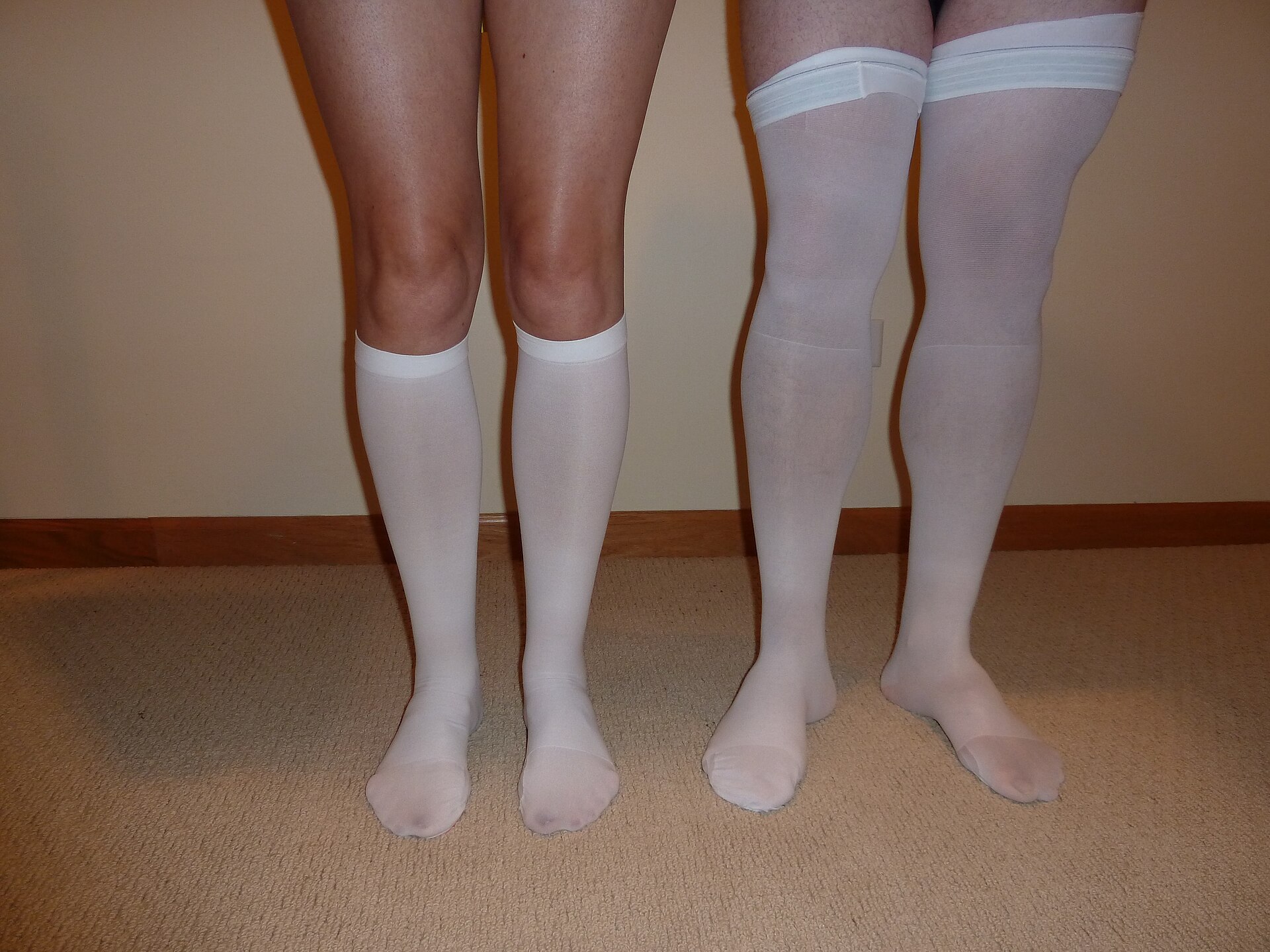
Compression stockings help some people. Mayo Clinic lists them as a step for mild edema, and Harvard Health recommends support stockings for mild swelling from venous insufficiency. They squeeze the lower leg gently and slow fluid pooling.
They should fit well, and people with artery problems or skin trouble should ask a clinician before using them.
Long screen days bring their own strain, covered in our guide on why eyes feel dry after staring at screens.
What to expect at a clinician visit
A clinician starts with an exam and questions about both legs, other symptoms, medicines, and recent travel or illness. Harvard Health notes that a urine test can show whether the kidneys are losing protein. Blood tests, a chest X-ray, and an electrocardiogram, known as an EKG, may also be done.
The goal is to find the cause, since treatment follows it. Mayo Clinic notes that mild edema without a worrisome cause may be managed with weight loss, exercise, leg elevation, less salt, compression stockings, or a change of medicine. When the cause is a heart, kidney, liver, thyroid, or vein problem, treatment targets that condition.
A clinician may prescribe a low dose of a diuretic, a water pill that removes fluid by increasing urination.
Bring useful details to the visit. Note whether one leg or both swell, when the swelling started, which medicines are in use, and whether breath trouble, chest pain, or skin changes came with it. A short note beats a memory test in the exam room.
Frequently asked questions
Is swollen feet after work normal?
Often, yes. Long standing, heat, salt, and stillness pool fluid in the feet, and the swelling usually fades overnight. New swelling, swelling in one leg only, or swelling with pain, redness, or breath trouble needs prompt care.
How can I tell edema from a sprain or injury?
Edema from standing usually affects both feet, feels puffy rather than sharply painful, and leaves a dent when pressed gently for a few seconds. An injury usually follows a twist or blow, hurts in one spot, and may bruise. When in doubt, get the painful leg checked.
Do compression socks really help?
They help many people with mild swelling by squeezing the lower leg and slowing fluid pooling. Fit matters, and they work best paired with movement breaks and elevation. People with artery disease or fragile skin should ask a clinician first.
Should I drink less water to reduce swelling?
Not on your own. Harvard Health advises avoiding excess fluid, but cutting water too far can cause other problems. Salt intake and movement usually matter more.
A clinician can give a fluid target that fits the individual case.
Outlook
Feet that swell after standing all day usually reflect gravity, fluid, and an idle calf pump rather than a disease. Movement breaks, elevation, less salt, and supportive footwear keep most cases small. Other everyday body responses have straightforward explanations too, such as what happens to your body when you hold your breath.
The warning signs matter more than the swelling itself.
One-sided swelling, pain, redness, heat, open sores, or breath trouble all mean same-day care. When swelling keeps returning, changes pattern, or comes with other symptoms, a clinician visit settles the question.
This article is for general information, not medical advice.
Tags: foot health, edema, standing, circulation
Latest in Health
- Why pressing your tongue helps a brain freeze
- What happens to your body when you skip breakfast
- Why muscles shake after a hard workout
Subscribe for one practical health explainer each week.
Related stories

ADHD linked to fourfold dementia risk in Pitt study of 187,000 adults
Adults with ADHD face four times the risk of dementia, a University of Pittsburgh study of 187,000 adults published in JAMA Psychiatry

Why Do Athletes Get Cramps Despite Drinking Water?
Muscle cramps strike even well-hydrated athletes because sweat drains electrolytes that plain water cannot replace. Here is why water alone

Do bananas actually prevent muscle cramps?
A medium banana has 422 mg of potassium, but the evidence says it cannot stop cramps. Here is what the research shows, and what actually