
What Happens in Your Body When You Hold Your Breath
Key takeaways
- The urge to breathe comes mostly from rising carbon dioxide, not from running out of oxygen.
- Most people can hold their breath for 30 seconds to 2 minutes, and pushing past that raises real risks.
- Holding your breath underwater alone is dangerous, since blackout can strike without warning.
This article is for general information, not medical advice.
Breathing runs on autopilot
You do not have to think about breathing. Your body handles it automatically, day and night, awake or asleep. Holding your breath works against that design.
The moment you stop, two gases start moving in the wrong directions: oxygen in your blood begins to fall, and carbon dioxide begins to build, because you normally clear that gas by breathing out.
What follows is a chain reaction with a clear order. The first strong signal is not low oxygen. It is rising carbon dioxide.
Understanding that order explains why the urge to breathe feels so powerful, why trained divers can hold their breath far longer than beginners, and why holding your breath underwater carries a hidden danger.
This article explains what happens in your body when you hold your breath, minute by minute, and where the line sits between a harmless pause and a genuine risk.
The two gases that drive everything
Breathing is a gas exchange. Each inhale brings oxygen into the lungs, where it passes into the blood. Each exhale carries carbon dioxide out.
Your cells use oxygen to make energy, and carbon dioxide is the waste product of that process.
When you hold your breath, the exchange stops but the chemistry continues. Cells keep using oxygen and keep making carbon dioxide. Blood oxygen falls slowly.
Blood carbon dioxide rises faster. That imbalance is what your brain monitors.
WebMD explains that the first thing that happens when you hold your breath is that oxygen levels decrease, then carbon dioxide levels increase. After just a minute or two, cells start to behave differently than they normally would, and that shift can affect all of your organs.
Why the urge to breathe feels so strong
Here is the surprise most people miss. The discomfort you feel is not caused by low oxygen. It is caused by rising carbon dioxide.
Carbon dioxide crosses the blood-brain barrier. As it builds, it changes the chemistry around the brainstem, which houses the breathing control centers. The brain notices that change and increases the urge to inhale and exhale.
That signal grows harder to ignore with every passing second.
At around 30 seconds to 2 minutes, the diaphragm starts to contract involuntarily. Healthline describes the stomach rapidly convulsing and contracting in that window, because the diaphragm is trying to force a breath. Those contractions feel alarming, but they are the body doing its job.
The breathing reflex is one of the strongest reflexes you have, and it is designed to override your decision to keep holding.
The timeline, second by second
Times vary by person, fitness, and lung size. The pattern below follows the approximate timeline Healthline lays out.
In the first 30 seconds, you may feel relaxed. You close your eyes and tune out the world. Blood oxygen is still near normal.
Carbon dioxide has begun to rise, but the urge to breathe stays mild.
From 30 seconds to 2 minutes, discomfort builds. Your lungs feel tight. The urge to breathe grows sharp.
The diaphragm starts its involuntary contractions. Most healthy adults can comfortably hold their breath for 30 to 90 seconds, according to Medical News Today, as cited by Reader's Digest. WebMD puts the safe range for most people at 1 to 2 minutes.
From 2 to 3 minutes, the diaphragm contractions strengthen. You may feel lightheaded as carbon dioxide climbs and the amount of oxygenated blood reaching the brain drops. Concentration slips.
Decision-making dulls. Coordination worsens.
From 3 to 5 minutes, lightheadedness deepens. Confusion can set in. Your body is now short of oxygen in a way that affects the brain directly.
Beyond 5 to 6 minutes, muscles may begin to shake as they contract without control. Holding your breath at this point can become dangerous. If you keep going, you can faint, have a seizure, or injure your brain, WebMD warns.
On land, fainting means you fall, and the fall itself can injure you. Underwater, the stakes are far higher.
What happens when you finally breathe again
When you release the hold, breathing rate and depth jump. That is the compensatory response. Chemoreceptors in the brain and in the carotid arteries and aortic arch detect the gas imbalance and drive the respiratory centers to work harder.
You breathe fast and deep, flushing out carbon dioxide and pulling fresh oxygen in.
The recovery is usually quick. Within a few breaths, the carbon dioxide clears, and the chemistry around the brainstem returns toward normal. If you felt dizzy, it should pass as oxygen delivery recovers.
If dizziness, confusion, or chest discomfort lingers, seek medical help rather than waiting it out.
Why fainting underwater is different
Fainting on land is bad enough. Fainting underwater can be fatal. The danger has a name: shallow water blackout, also called hypoxic blackout.
Here is how it happens. A swimmer or diver hyperventilates before going under, blowing off extra carbon dioxide. That delays the urge to breathe, because the urge depends on carbon dioxide.
Oxygen keeps falling quietly in the background. The swimmer feels fine, then loses consciousness without warning, because the oxygen ran out before the carbon dioxide alarm fired. Reader's Digest cites a study in the European Journal of Applied Physiology finding that divers who hyperventilate or exercise before going underwater have slower carbon dioxide rises, putting them at risk of passing out before feeling the need to come up for air.
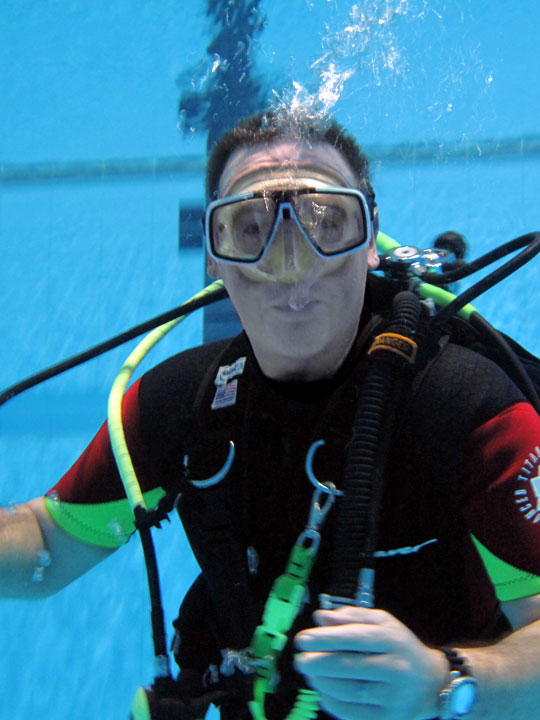
Once unconscious underwater, the body gasps automatically. That gasp can pull water into the lungs. WebMD warns that holding your breath too long underwater, especially while alone, can lead to fainting while still underwater, even in shallow water.
The rule is plain: never hold your breath underwater alone, and never hyperventilate to extend a dive.
How trained divers hold their breath so long
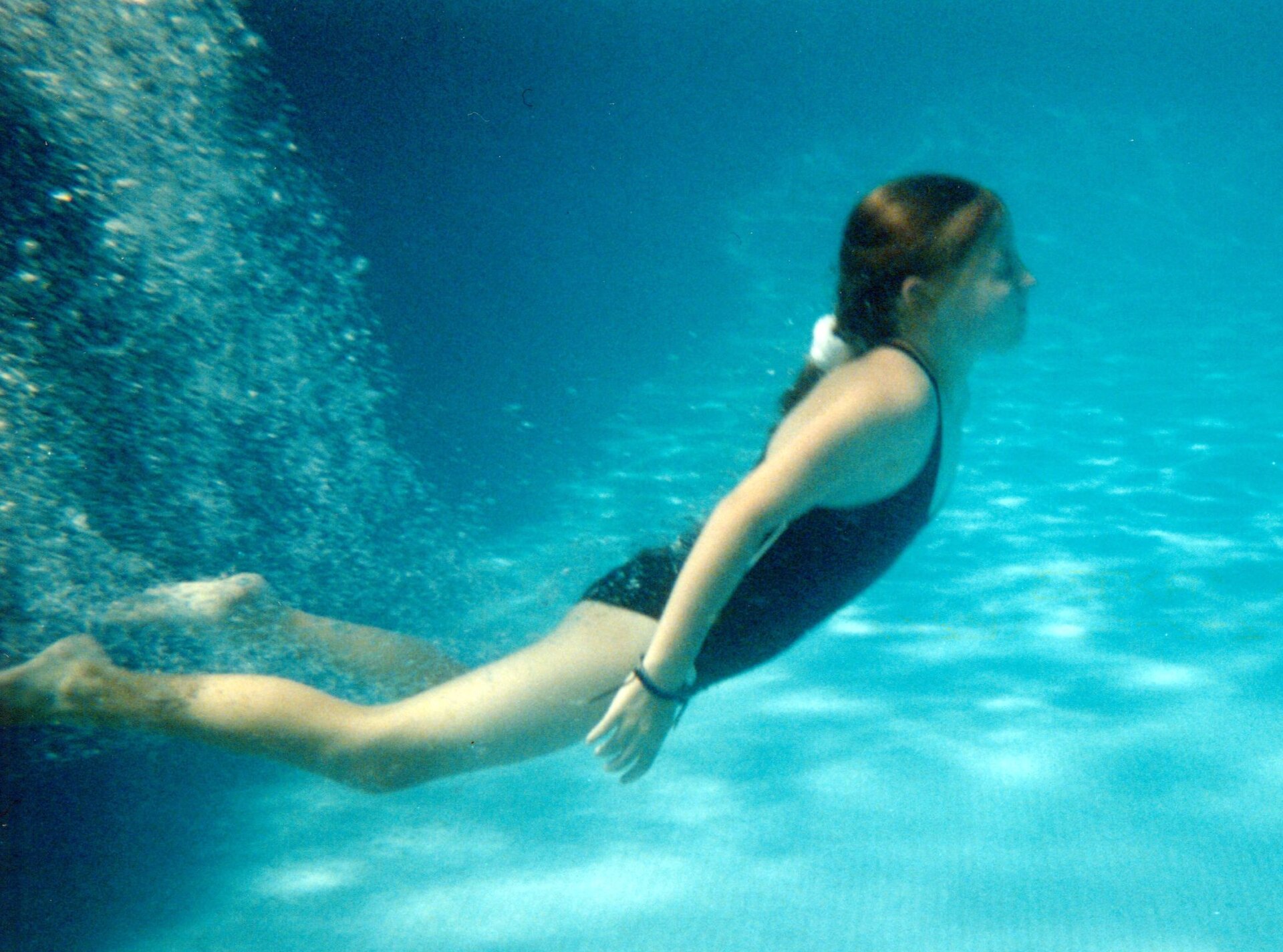
Elite free divers can hold their breath for many minutes, far beyond the average. They train their bodies to tolerate higher carbon dioxide levels, slow their heart rate, and use oxygen more efficiently. They also train mental control, staying still and calm so the body burns oxygen slowly.
The records show how far training can go. WebMD reports that Spanish free diver Aleix Segura Vendrell held his breath for 24 minutes and 3.45 seconds on February 28, 2016. Healthline cites Guinness World Records for Budimir Sobat of Croatia, who reached 24 minutes and 37.36 seconds in March 2021. Those attempts involved breathing pure oxygen beforehand, which loads the body with extra oxygen. Without pure oxygen beforehand, the longest recorded hold is 11 minutes and 34 seconds, according to WebMD.
Those numbers come with heavy supervision, medical checks, and years of training. They are not targets. For most people, the safe ceiling is far lower, and WebMD advises against holding beyond 2 minutes without experience, especially underwater.
Some populations show natural adaptations. WebMD notes that Bajau people in Southeast Asia, who dive for hours each day, have spleens about 50 percent larger than usual. The larger spleen stores more oxygen-rich blood cells, which supports longer dives.
Highland populations show different adaptations to thin air. Those are lifelong, population-level traits, not tricks a casual swimmer can copy.
Can holding your breath help you
Short breath holds appear in several breathing practices. Some breathing exercises that involve holding for several seconds form part of relaxation routines, WebMD notes. Some techniques may lower inflammation, though the evidence is early, and animal studies suggest possible brain tissue effects that remain far from proven in people.
The honest picture is mixed. Brief, calm breath holds during breathing exercises are a normal part of many wellness practices. Long holds, competitive holds, and underwater holds are a different category with real risk.
If you want to practice, keep holds short, stay on land, stay seated or lying down, and stop at the first sign of dizziness. Never practice alone in water.
People with heart, lung, or blood pressure conditions should be careful. Holding your breath too long can cause the heart to beat irregularly and can damage the kidneys and liver, WebMD warns. If you have a condition that affects breathing or circulation, talk to a clinician before trying any breath-hold practice.
The same caution applies to anyone who has fainted, seized, or felt chest pain during breath holding.
Warning signs to stop at once
Stop holding your breath and breathe normally if you notice any of these: dizziness, lightheadedness, tingling, confusion, blurred vision, chest discomfort, or a racing or irregular heartbeat. Do not try to push through them. They are signals that the gas balance has shifted too far.
If someone near you passes out from holding their breath, act fast. WebMD advises that if they are not breathing, start CPR and call emergency services. If they are breathing and not injured, lay them on their back and raise their legs at least a foot in the air.
If they do not wake up after a minute, call emergency services. If the blackout happened in water, get them out of the water first, then follow the same steps.
FAQ
How long can most people hold their breath?
Most healthy adults manage 30 seconds to 2 minutes. Comfortable holds run 30 to 90 seconds for many people. Anything beyond 2 minutes needs training and supervision.
Why do I feel the urge to breathe if I still have oxygen?
The urge comes mainly from rising carbon dioxide, not falling oxygen. Carbon dioxide changes the chemistry around the brainstem, which triggers the breathing reflex.
Is it safe to hold your breath underwater?
Brief holds in a supervised pool are part of normal swimming. Long holds, hyperventilating before a dive, and holding your breath alone underwater are dangerous because of shallow water blackout.
Can you die from holding your breath?
On land, fainting usually restarts breathing automatically. Underwater, an unconscious gasp can pull water into the lungs, which can be fatal. Long holds can also cause seizures and brain injury.
Outlook
Holding your breath sets off a clear chain: carbon dioxide rises, the brainstem demands air, the diaphragm contracts, and then oxygen falls far enough to cloud thinking and finally cause blackout. The urge to breathe is a protection system, not a weakness. Respect it, keep breath holds short and on land, and never hold your breath alone underwater.
If you want to build breath control, do it slowly, with supervision, and stop at the first warning sign.
Tags: breathing, breath holding, physiology, health explainer
Latest in Health
- Why your muscles shake after a hard workout
- Why your eyes feel dry after staring at screens
- Does pressing your tongue help brain freeze
- Why feet swell after standing all day
Subscribe for one practical health explainer in your inbox each week.
Related stories

ADHD linked to fourfold dementia risk in Pitt study of 187,000 adults
Adults with ADHD face four times the risk of dementia, a University of Pittsburgh study of 187,000 adults published in JAMA Psychiatry

Why Do Athletes Get Cramps Despite Drinking Water?
Muscle cramps strike even well-hydrated athletes because sweat drains electrolytes that plain water cannot replace. Here is why water alone

Do bananas actually prevent muscle cramps?
A medium banana has 422 mg of potassium, but the evidence says it cannot stop cramps. Here is what the research shows, and what actually