
Why you get a headache after skipping a meal
By Rive News / Research desk | Rive News / Published October 28, 2026 at 9:00 AM PKT
This article is for general information only and is not medical advice; talk to a clinician about any symptoms.
Key takeaways
- A skipped meal lets blood sugar dip, and the brain, which runs on glucose, responds by activating pain pathways.
- Stress hormones released to restore blood sugar widen blood vessels, which can stimulate pain-sensitive nerves around the brain.
- Hunger headaches usually ease within about 30 minutes of eating, according to Healthline, and dehydration makes them more likely.
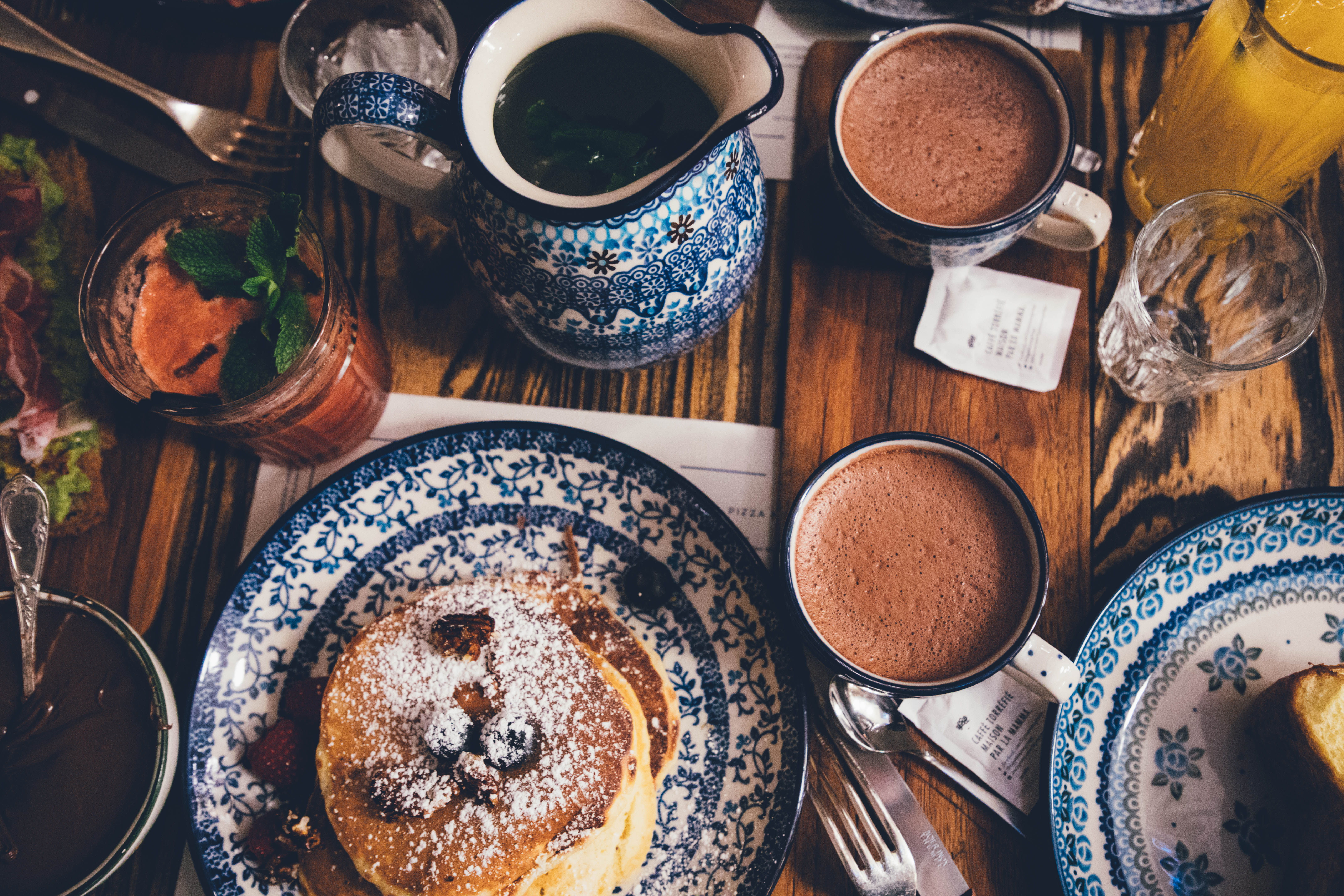
[A breakfast table set with pancakes, a reminder that a missed meal can leave blood sugar low by midday.] Photograph: breakfast table photo
Image Credits: Wikimedia Commons
A headache after a skipped meal is common enough to have its own name: a hunger headache. It usually starts as a dull ache across the forehead or at the sides of the head, and it often fades once you eat. The mechanism is straightforward, but it involves more than an empty stomach.
This article explains what happens in the body when a meal is skipped, including blood sugar, stress hormones, dehydration, and the other triggers that can ride along with hunger.
What a hunger headache feels like
Healthline describes hunger headaches as closely resembling tension headaches. The usual pattern is dull pain, a feeling of pressure across the forehead or the sides of the head, and tension in the neck and shoulders. Some people also notice sensitivity to light or sound, fatigue, and trouble concentrating.
As the delay lengthens, other signs of low blood sugar can join in: dizziness, shakiness, feeling cold, stomach pain, and fatigue. These tend to arrive gradually. The headache often comes first, and the other symptoms follow if eating is delayed further.
For people prone to migraine, hunger can act as a trigger rather than just a cause of a dull ache. Healthline notes that being hungry can trigger migraine attacks in some people, which is a different and more intense pattern than a standard hunger headache.
Blood sugar is the main mechanism
The brain runs almost entirely on glucose, the sugar carried in the blood. When you skip a meal, the body first draws on stored glucose to keep levels steady. If the gap stretches on, those stores run down and blood sugar begins to dip.
Apollo Hospitals describes the chain in simple steps. Fasting or skipping meals leads the body to use stored glucose. As levels drop, the body releases hormones such as cortisol and adrenaline to maintain energy.
If blood sugar falls too low, the brain, which depends on glucose, comes under stress, and that stress activates pain pathways, producing a headache. Eating restores blood sugar and usually relieves the ache.
For people with diabetes, doctors define low blood sugar, or hypoglycemia, as a level under 70 milligrams per decilitre, or 4 millimoles per litre, according to ZOE's guide. In people without diabetes, true hypoglycemia is rare, but a rapid fall in blood sugar, or a fall below the level the body is used to, can still produce symptoms.
Stress hormones widen blood vessels
The hormones released to rescue blood sugar do more than mobilize stored energy. Cortisol and adrenaline also cause blood vessels to dilate, increasing blood flow in an attempt to deliver more oxygen and nutrients to the brain. That dilation can stimulate pain-sensitive nerves in the meninges, the layers of tissue around the brain, and the result is felt as a headache.
Glucose shortage may also disturb the production of neurotransmitters such as serotonin and dopamine, which help regulate pain perception. When their production is disrupted, pain thresholds can fall, so discomfort that might otherwise go unnoticed registers more strongly.
This is why the headache often feels like pressure or a tight band rather than a sharp pain. It reflects a broad vascular and chemical shift, not a single blocked vessel or injured tissue.
Dehydration rides along
Skipping a meal often means skipping fluids too, especially at breakfast, when food and drink usually arrive together. Dehydration is itself a common headache cause: when fluid is low, the thin layers of tissue around the brain can tighten and press on pain receptors, Healthline notes.
That makes a skipped meal a double hit. Blood sugar dips and fluid intake drops at the same time, and both routes converge on the same pain-sensitive structures. Drinking water when a hunger headache starts is a reasonable first step alongside eating, though water alone will not restore blood sugar.
Caffeine withdrawal can join in
For regular coffee or tea drinkers, a skipped meal can also mean a skipped caffeine dose. Caffeine withdrawal headaches typically begin 12 to 24 hours after the last dose, so a missed morning coffee may not explain a midday ache on its own. But when a skipped breakfast also delays the first caffeine of the day, withdrawal can add to the blood-sugar headache later in the afternoon.
The pattern is worth noticing because it changes the fix. If the headache reliably follows a missed coffee rather than a missed meal, the trigger is different, and regular timing of caffeine matters more than food timing.
Muscle tension and stress complete the picture
Hunger is also a stressor. Low blood sugar triggers the body's stress response, and stress tightens the muscles of the neck, shoulders, and scalp. That tension feeds back into the headache, which is one reason hunger headaches feel so similar to tension headaches.
Skipping meals on a stressful day therefore tends to produce a worse headache than skipping a meal on a calm one. The two stressors stack: metabolic stress from low glucose plus psychological stress from the day, both converging on the same muscles and pain pathways.
What usually helps, and what to watch
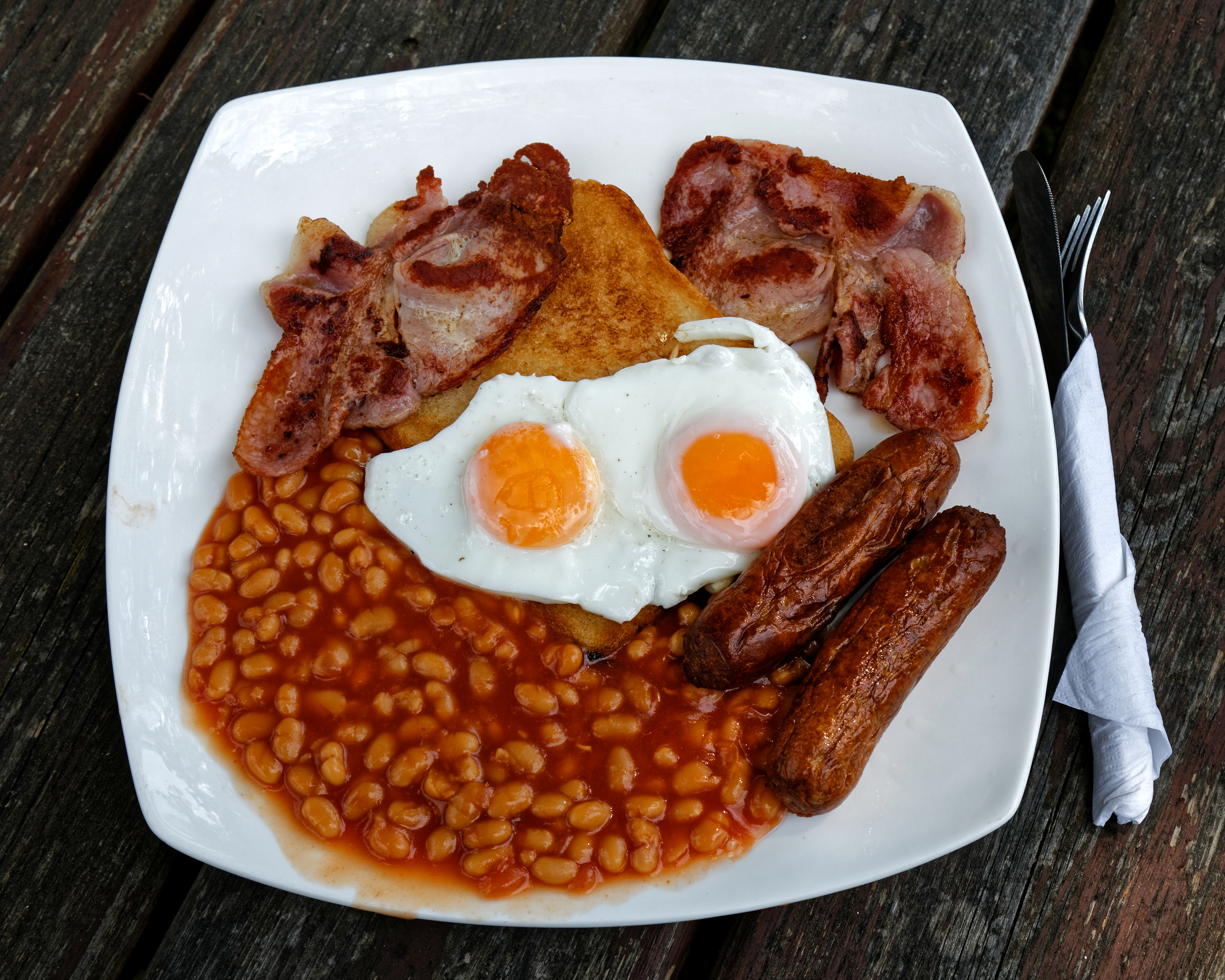
[A full breakfast, the kind of balanced meal that steadies blood sugar after a skipped one.] Photograph: full breakfast photo
Image Credits: Wikimedia Commons
Healthline reports that hunger headache symptoms tend to resolve within about 30 minutes of eating. That window is a useful check: if food and water reliably clear the headache within half an hour, the hunger mechanism fits. If the headache persists for hours after eating, something else is likely involved.
Cleveland Clinic dietitian Beth Czerwony advises eating at regular intervals and balancing meals with lean protein, such as chicken, fish, eggs, or tofu, along with whole grains or complex carbohydrates like brown rice, quinoa, sweet potatoes, or whole-wheat bread. That combination keeps blood sugar steadier than a meal of refined carbohydrates alone, which can spike glucose and then crash it.
ZOE's guide makes the same point in general terms: pair carbohydrates with protein and healthy fats, and keep a consistent meal schedule. Small, balanced snacks every few hours help people who cannot sit down to full meals, especially on active days.
One warning sign deserves emphasis. Healthline advises seeking immediate medical attention if a headache is severe and sudden and comes with weakness on one side of the face, numbness in the arms, or slurred speech, since that pattern can indicate a stroke.
A hunger headache is dull and gradual. A sudden, severe headache with neurological signs is a different situation entirely.
How long after skipping a meal does a headache start?
There is no fixed timetable, since it depends on the last meal, activity level, and individual metabolism. Hunger headaches typically build gradually as blood sugar dips, rather than striking suddenly. The ache often appears a few hours after a missed meal and worsens the longer eating is delayed.
Why does eating fix a hunger headache so fast?
Eating restores blood sugar, which switches off the stress-hormone response and lets blood vessels return to normal tone. Healthline reports symptoms usually resolve within about 30 minutes of eating, which matches the time needed for glucose to reach the brain and for the vascular response to settle.
Can skipping meals trigger a migraine?
Yes, for people prone to migraine, hunger is a recognized trigger. A migraine triggered by hunger tends to be more intense and longer lasting than a standard hunger headache, and it may come with nausea or sensitivity to light and sound. Keeping regular meal times is a common preventive step for those people.
Is it low blood sugar or dehydration?
Often it is both. Skipping a meal usually means skipping fluids too, and both low glucose and dehydration activate pain-sensitive structures around the brain. Drinking water and eating a balanced meal together covers both routes, which is why the combination works better than either alone.
The bottom line
A headache after a skipped meal usually comes from a dip in blood sugar. The brain depends on glucose, and when levels fall, stress hormones are released, blood vessels widen, and pain pathways activate. Dehydration, caffeine timing, and muscle tension can all add to the ache.
Eating a balanced meal usually clears it within about 30 minutes. Keeping regular meal times, pairing carbohydrates with protein, and drinking enough fluid through the day are the practical steps that keep it from returning. A headache that is sudden, severe, or comes with weakness, numbness, or slurred speech needs urgent medical attention, not a snack.
Tags: headache, blood sugar, nutrition, migraine
Rive News is a research desk that writes explainers from public sources and clinical guidance.
Related
- Why stress gives you a headache
- Why do you feel tired after eating a big meal?
- Why does your stomach growl when you are hungry?
- What happens to your body when you skip breakfast?
Subscribe to the Rive News newsletter for one practical explainer each week.
Standards: facts are drawn from the public sources listed above; no claim here is based on unpublished testing.
Related stories
ADHD linked to fourfold dementia risk in Pitt study of 187,000 adults
Adults with ADHD face four times the risk of dementia, a University of Pittsburgh study of 187,000 adults published in JAMA Psychiatry

Why Do Athletes Get Cramps Despite Drinking Water?
Muscle cramps strike even well-hydrated athletes because sweat drains electrolytes that plain water cannot replace. Here is why water alone
Do bananas actually prevent muscle cramps?
A medium banana has 422 mg of potassium, but the evidence says it cannot stop cramps. Here is what the research shows, and what actually