
Why Stress Gives You a Headache and How to Ease It
Key takeaways
- Stress is the most commonly reported trigger for tension-type headaches, which feel like a tight band around the head.
- Sustained muscle tension plus a lowered pain threshold turns everyday strain into head pain.
- Most stress headaches are episodic, but 15 or more headache days a month for three months counts as chronic.

A hard day ends with a dull ache across your forehead, or a tight band of pressure around your head. You did not hit your head. You did not catch a cold.
You were just stressed, and now your head hurts.
The link is real, and it is one of the clearest in headache medicine. Stress is the most commonly reported trigger for tension-type headaches, the most common type of headache. The pain comes from a chain of events that stress sets in motion: muscles tighten, the pain system grows more sensitive, and stress hormones keep the whole process going.
This article explains why stress gives you a headache, including the three pathways involved, how to tell a tension-type headache from a migraine, and what helps in the moment and over the long term. This article is for general information, not medical advice.
What a stress headache feels like
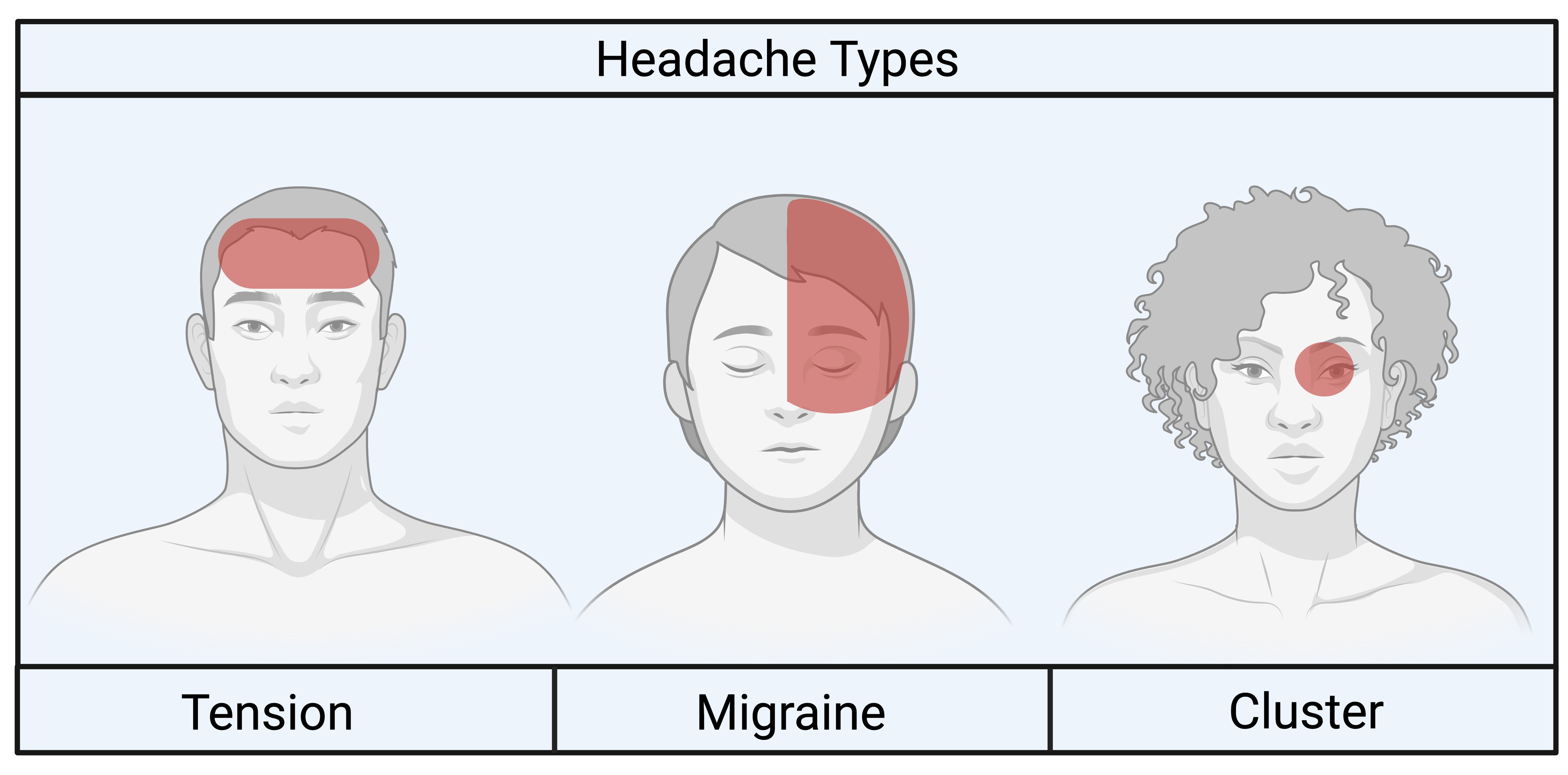
A tension-type headache, the kind most often tied to stress, has a recognizable pattern. The Mayo Clinic lists its symptoms as dull, aching head pain, a feeling of tightness or pressure across the forehead or on the sides and back of the head, and tenderness in the scalp, neck, and shoulder muscles.
The pain is usually mild to moderate, and it sits on both sides of the head rather than one. It does not pulse or throb the way a migraine often does. Physical activity does not make it worse, which is one of the features that separates it from migraine.
Nausea and vomiting are uncommon with it, and sensitivity to light or sound, when it appears, is usually mild.
Episodes vary in length. An episodic tension-type headache can last from 30 minutes to a week, according to the Mayo Clinic. Frequent episodic headaches occur on fewer than 15 days a month for at least three months.
When headaches occur on 15 or more days a month for at least three months, they are classed as chronic.
That last line matters, because the step from episodic to chronic is where stress headaches do their real damage. Chronic tension-type headache lasts hours and may be constant. It is linked to persistent stress and to conditions such as anxiety and depression, which both feed the cycle and are fed by it.
Tension-type headache is common enough to be a public health issue. Reviews of headache research put its lifetime prevalence at 46 to 78 percent, and it is the most prevalent neurological disorder worldwide. Because it is so common, it accounts for more missed work days than migraine, even though each episode is usually less severe.
Pathway one: muscles that never switch off
The first pathway is mechanical. Stress raises muscle tone in the head, neck, and shoulders. The trapezius, the large muscle across the top of the shoulders, the sternocleidomastoid at the side of the neck, and the small suboccipital muscles at the base of the skull all tighten under stress.
This is not the brief squeeze of lifting something heavy. It is a low-level contraction that can last for hours. Sustained contraction squeezes local blood vessels, which reduces blood flow to the muscle.
Less blood means less oxygen and a buildup of metabolic byproducts. Pain receptors in the tissue, called nociceptors, respond to those changes and start firing.
The scalp bears the result. The tightened muscles pull on the fascial sheets that run across the scalp, and the pain spreads into a dull, pressing ache. That is why a stress headache feels like a band around the head rather than a sharp point of pain.
The jaw often joins in. Many people clench their teeth when stressed, sometimes without noticing. The masseter, one of the strongest muscles in the body relative to its size, can generate large forces during clenching.
The temporalis muscle, which sits over the temple, tightens at the same time. Temple tenderness, morning jaw soreness, and headaches that worsen during concentration are all signs that clenching is part of the picture.
Posture adds to the load. A person under stress tends to hunch over a desk, jut the chin forward, and hold the shoulders high. That forward head posture strains the neck muscles further, and sustained neck postures from reading or driving are known to bring on episodes.
Pathway two: a pain system turned up too high
Muscle tension alone does not explain every stress headache. The second pathway runs through the nervous system itself. Stress lowers the threshold at which pain registers, a process called central sensitization.
In plain terms, the volume knob on pain gets turned up. Triggers that would normally pass unnoticed, a skipped meal, a bright screen, a poor night of sleep, start producing real pain. The nervous system becomes more responsive to signals from the head and neck, and the brain reads ordinary input as painful.
Research on chronic stress and headaches, published in the journal Biomedicines, describes how prolonged stress drives this change. Sustained stress activates the body's stress systems, and over time the central nervous system becomes more responsive to pain. The trigeminal system, which carries pain signals from the head and face, is especially involved.
This pathway explains a frustrating feature of stress headaches: they can keep going after the stressful event ends. The muscles may have relaxed, but the sensitized pain system keeps firing. Headaches can then be triggered by smaller and smaller stressors, which is one reason episodic headaches can drift toward chronic ones if the stress stays high.
The same mechanism helps explain why stress headaches and migraine often travel together. People with frequent tension-type headaches can also have migraines, and the two share the sensitization pathway. Treating the stress does not cure migraine, but lowering the background level of sensitization can reduce how often attacks arrive.

Pathway three: stress hormones and the fight-or-flight response
The third pathway is chemical. Stress activates the fight-or-flight response, which releases hormones such as cortisol and adrenaline. In short bursts, these hormones are useful.
They sharpen attention and ready the body for action. When stress drags on for weeks, they cause problems.
Cortisol, released during sustained stress, sensitizes pain receptors over time. The Biomedicines review notes that prolonged activation of the stress-hormone system, known as the HPA axis, leads to elevated cortisol, neuroinflammation, and heightened pain sensitivity. People with chronic pain often show altered cortisol patterns, such as low baseline levels with exaggerated responses to new stress.
Mayo Clinic psychologist Dr Craig Sawchuk has described how stress shows up in the body: "We may experience it in our stomach. Our sleep gets disrupted. We feel a lot more tense.
" Headaches are one of the ways that tension makes itself felt.
What helps in the moment
When a stress headache is already under way, the goal is to break the cycle: relax the muscles, calm the pain system, and remove the triggers that are feeding it.
Step away from the screen. These small steps address the secondary triggers that a sensitized pain system turns into pain.
Roll your neck gently. A few minutes of slow, deliberate movement can undo hours of unconscious tension.
Pain relievers have a place, but they need care. Overuse of painkillers can itself cause headaches, a condition called medication overuse headache. It is a frequent complication for people with chronic tension-type headache who rely heavily on painkillers.
If you need painkillers more than a couple of days a week, talk to a clinician rather than increasing the dose.
What lowers the frequency over time
Breaking the pattern matters more than treating each headache. The habits that reduce stress headaches are not glamorous, but they work on all three pathways at once.
Regular movement is the strongest single lever. Exercise lowers muscle tension, improves sleep, and calms the stress response. It does not need to be intense.
A daily walk, a stretching routine, or a few sessions a week of any activity you enjoy will do.
When to see a doctor
Most stress headaches are not dangerous, but some headache patterns need medical attention. See a doctor promptly if any of these apply.
Seek care if headaches become frequent, meaning 15 or more days a month for three months or more. That is the line for chronic tension-type headache, and treatment gets more complex once the pattern is established.
Seek care urgently for a sudden, severe headache unlike any you have had before, a headache after a head injury, or a headache with fever, stiff neck, confusion, weakness, vision changes, or trouble speaking. Those features can signal conditions that need emergency treatment.
Also see a doctor if headaches keep you from work or daily life, if painkillers are needed most days, or if a new headache pattern starts after age 50. A clinician can check for other causes, review medicines, and discuss options that go beyond painkillers, such as physical therapy or preventive treatment.
FAQ
Can stress cause a headache every day?
Yes. Under chronic stress, tension-type headaches can become daily. When headaches occur on 15 or more days a month for at least three months, they are classed as chronic.
Daily headaches deserve a medical check, because the pattern is harder to reverse the longer it runs.
Is a stress headache the same as a migraine?
No. A stress headache is usually a tension-type headache: dull, pressing pain on both sides of the head, without nausea or visual disturbance. Migraine pain is more often throbbing and one-sided, with nausea and light sensitivity.
The two can occur in the same person.
Outlook
Stress gives you a headache through three linked routes. Muscles in the head, neck, and shoulders tighten and stay tight. The pain system grows more sensitive, so smaller triggers produce real pain.
Stress hormones keep the whole process running.
The good news is that the same three routes respond to the same fixes. Movement, steady sleep, breaks, and deliberate relaxation all work on the muscles, the pain system, and the hormones at once. For most people, those habits cut both the frequency and the severity of stress headaches.
When headaches become frequent, long-lasting, or severe, or when they come with worrying symptoms, it is a good idea to see a doctor. This article is for general information, not medical advice.
Tags: stress, headache, tension headache, health
Latest in Health
- Why Do You Get Déjà Vu and What Causes It
- Why Your Voice Sounds Different in Recordings
- Why You Feel Tired After Eating a Big Meal
- Why You Get a Runny Nose in Cold Weather
Subscribe for one clear explainer a day, with sources you can check.
Related stories

ADHD linked to fourfold dementia risk in Pitt study of 187,000 adults
Adults with ADHD face four times the risk of dementia, a University of Pittsburgh study of 187,000 adults published in JAMA Psychiatry

Why Do Athletes Get Cramps Despite Drinking Water?
Muscle cramps strike even well-hydrated athletes because sweat drains electrolytes that plain water cannot replace. Here is why water alone

Do bananas actually prevent muscle cramps?
A medium banana has 422 mg of potassium, but the evidence says it cannot stop cramps. Here is what the research shows, and what actually