
Why You Get Déjà Vu and What Causes It
Key takeaways
- Déjà vu is a false feeling of familiarity, not a real memory, and about two-thirds of people have felt it.
- The feeling starts when a familiarity signal fires in the temporal lobe without a matching memory.
- Occasional déjà vu is usually a sign of a healthy brain, but frequent episodes deserve a medical check.
Déjà vu is the eerie sense that a brand-new moment has happened before. You walk into a cafe you have never visited, and for a few seconds it feels like you have sat at that exact table, heard that exact song, and watched that exact scene play out. You know it cannot be true, yet the feeling is hard to shake.
The phrase comes from French and means "already seen." A French philosopher named Émile Boirac coined the term in 1876. The experience itself is far older than the word, and far more common than most people assume. About two-thirds of people report having felt déjà vu at least once, according to BBC Science Focus.
This article explains why you get déjà vu and what causes it, including the brain regions involved, the leading theories, why it peaks in young adults, and when it is worth raising with a doctor.
What déjà vu actually is
Déjà vu is a mismatch between two brain systems. One system tells you that a situation feels familiar. A second system checks that feeling against your real memories.
During déjà vu, the first system fires, the second finds nothing to back it up, and a third system notices the clash. The result is that strange, uncanny sensation.
The episode is usually brief. Most last only a few seconds, then fade as quickly as they arrived. People often remember the feeling long after the moment itself is gone, because the clash between familiarity and knowledge is so striking.
It helps to separate déjà vu from a real memory. A real memory brings details with it: where you were, who was there, what happened next. Déjà vu brings the feeling of remembering without any of the content.
That missing content is the clue that the feeling is false.
The same split shows up in a stronger form called déjà vécu, which means "already lived." In that state, a person genuinely believes a new situation has happened before and may act on that belief, for example by switching off a news broadcast they think they have already seen. Déjà vécu appears in some people with dementia, and it is far more disruptive than ordinary déjà vu.
Which parts of the brain are involved
Three brain regions do most of the work in déjà vu. Each one handles a different part of the process, and the feeling arises from how they interact.
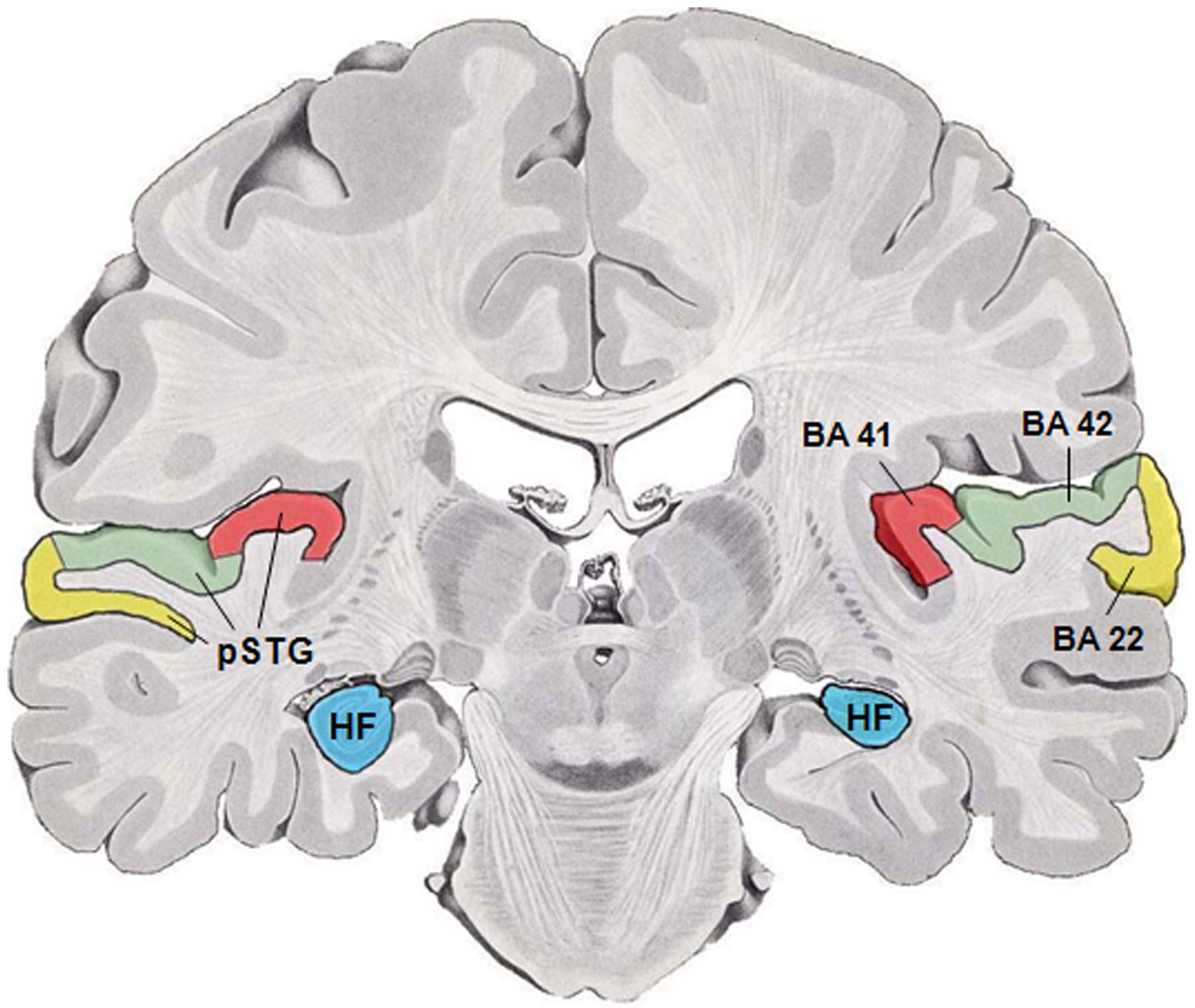
The perirhinal cortex, a small region in the temporal lobe, registers familiarity. When something in your surroundings resembles a scene you have met before, this region can send a familiarity signal. The resemblance may be loose.
A similar layout, a similar voice, or a similar pattern of events can be enough.
The hippocampus, another temporal lobe structure, handles context and recall. Its job is to find the memory that matches the familiarity signal. During déjà vu, it comes up empty.
There is no matching memory, because the situation is genuinely new.
The frontal cortex then steps in as the checker. Areas such as the anterior cingulate cortex and the medial prefrontal cortex notice the mismatch between the familiarity signal and the missing memory. Psychologists call this step metacognitive awareness.
It is your brain catching its own error in real time.
Brain-imaging work supports this picture. When researchers simulated déjà vu in a lab using memory games, the frontal areas tied to this monitoring process showed greater activity. The feeling of "I have been here before" comes with a simultaneous sense that something is off, and that second part is the frontal cortex doing its job.
The leading theories for why it happens
Researchers do not agree on a single cause, but a few theories have the strongest support. They all describe the same basic failure: familiarity fires without recall.
The divided-attention theory starts with distraction. You glance at a scene while your attention is elsewhere, and your brain stores a weak, half-formed trace of it. Moments later, you look at the same scene with full attention.
The brain reads the weak trace as familiarity, but it cannot find a conscious memory to explain it. The scene feels old, even though you first saw it seconds ago.
A second theory points to a timing glitch. Signals from different parts of the brain may arrive slightly out of sync, so the brain processes the same moment twice. The second pass feels like a repeat.
This idea fits with the brief, flickering quality of most episodes.
A third explanation involves the way the brain matches patterns. Everyday scenes share building blocks: a window on the left, a counter in the middle, a doorway at the back. When a new scene shares enough blocks with an old one, the familiarity system can fire on the pattern alone.
The hippocampus then fails to supply the original scene, and the mismatch registers as déjà vu.
Stress and tiredness can make all of these more likely. When you are worn out or under pressure, memory systems work less cleanly, and false familiarity signals slip through more often. That is one reason déjà vu tends to cluster during busy or tiring periods of life, such as travel, exam seasons, or a move to a new city.
Why déjà vu peaks in young adults
Déjà vu is not spread evenly across a lifetime. People begin to report it around the age of five, according to research described by Dr O'Connor, a psychologist who studies the phenomenon. Reports rise through the teenage years and peak in the early to mid-20s.
After that, episodes become less common.
The pattern may reflect how hard the brain's memory systems are working at each stage of life. Young adults are constantly meeting new places, new people, and new routines. Their familiarity systems fire often, and their error-checking systems are sharp enough to notice the mismatch.
Both halves are needed for déjà vu: the false signal and the awareness that it is false.
As people age, the frontal cortex processes that catch these errors become less efficient. The familiarity signal may still fire, but the brain is less likely to flag it as an error. The result is fewer reported episodes, not necessarily fewer glitches.
When déjà vu can signal something else
For most people, déjà vu is harmless. Dr O'Connor has described it as a sign of a healthy brain and mind, because it shows the brain's checking system is active. It spots an error and corrects it.
There are exceptions, and they are worth knowing. People with temporal lobe epilepsy sometimes experience prolonged déjà vu just before a seizure. In that setting, the feeling lasts longer than the usual few seconds and may come with other symptoms, such as a strange taste, a rising feeling in the stomach, or a brief loss of awareness.
Déjà vu that happens several times a week, lasts unusually long, or comes with confusion or other neurological symptoms is a reason to see a doctor. A clinician can check whether the episodes are the ordinary kind or part of a pattern that needs investigation. Most checks end with reassurance, but the visit is worth making when the pattern changes.
It also helps to keep a simple note of what happened. Write down the date, how long the feeling lasted, and anything that came with it, such as tiredness, stress, or a missed night of sleep. That record makes the conversation with a doctor much easier.
What to do when it happens
There is no need to fight déjà vu or chase it away. The episode passes on its own, usually within seconds. A few habits can make the moments easier to ride out.
Pause and notice what is around you. The feeling fades faster when you stop trying to force a memory to appear. Remind yourself that the sensation is a known brain quirk, not evidence that you have lived the moment before.
For people who get déjà vu often, the same habits that support memory in general can help: steady sleep, regular meals, and breaks during long stretches of focused work. None of these will switch déjà vu off, and none of them needs to. The goal is a brain that is rested enough to keep its signals clean.
FAQ
Is déjà vu a sign of a memory problem?
No, not in its usual form. Occasional déjà vu suggests the brain's error-checking system is working. It spots a false familiarity signal and labels it as wrong.
A memory problem would more often show up as forgetting real events, not as brief false familiarity.
Young children may not have the words for it, so they may describe it as a funny feeling or a dream that came true.
Why does déjà vu feel so convincing?
The familiarity signal comes from a real brain region doing a real job. The perirhinal cortex fires as if the scene is known. The conviction comes from that signal, and the doubt comes from the frontal cortex catching the error a moment later.
The two feelings arrive almost together, which is what makes the moment so odd.
Should I worry if I get déjà vu every week?
Frequent episodes are worth mentioning to a doctor, especially if they last longer than a few seconds or come with other symptoms. Most cases turn out to be ordinary, but a clinician can rule out conditions such as temporal lobe epilepsy. A short note of dates and durations will help the appointment.
Outlook
Déjà vu is one of the brain's more charming errors. A familiarity signal fires, the memory check comes up empty, and the frontal cortex catches the mismatch. The whole sequence takes seconds, and it leaves behind a feeling that is hard to forget precisely because it is so strange.
For most people, the occasional episode is a sign that the brain's monitoring systems are working as they should. If the pattern changes, if episodes become frequent or unusually long, or if other symptoms appear, it is a good idea to see a doctor and describe what has been happening. This article is for general information, not medical advice.
Tags: déjà vu, memory, brain, neuroscience
Latest in Health
- Why Stress Gives You a Headache
- Why Your Voice Sounds Different in Recordings
- Why You Feel Tired After Eating a Big Meal
- Why We Get Motion Sickness in Cars but Not Always in Trains
Subscribe for one clear explainer a day, with sources you can check.
Related stories

ADHD linked to fourfold dementia risk in Pitt study of 187,000 adults
Adults with ADHD face four times the risk of dementia, a University of Pittsburgh study of 187,000 adults published in JAMA Psychiatry

Why Do Athletes Get Cramps Despite Drinking Water?
Muscle cramps strike even well-hydrated athletes because sweat drains electrolytes that plain water cannot replace. Here is why water alone

Do bananas actually prevent muscle cramps?
A medium banana has 422 mg of potassium, but the evidence says it cannot stop cramps. Here is what the research shows, and what actually