
Why Do We Get Motion Sickness in Cars but Not Always on Trains?
Key takeaways
- Motion sickness comes from a mismatch between what the eyes see and what the inner ear feels.
- Cars bring sharp turns, stops, and screen use that widen the mismatch, while trains move more smoothly.
- Sitting where you can see the road or track ahead, facing forward, and avoiding reading usually help.

Many people feel fine on a train and queasy in a car. The difference is real, and it has a clear cause. Motion sickness comes from a conflict between the senses, and cars create that conflict more often than trains do.
The pattern is not absolute. Some people feel sick on trains, and some feel fine in cars. Seating, screens, road shape, and each person's sensitivity all shift the odds.
Understanding the mechanism makes the difference easier to manage.
This article explains what motion sickness is, why cars trigger it more often, why trains are usually gentler, why trains can still cause sickness, and what helps on either form of transport.
What motion sickness is
Motion sickness is the nausea, dizziness, and discomfort that can come with travel by car, train, plane, or boat. HealthLink BC lists the common symptoms: a general feeling of illness, nausea, vomiting, headache, and sweating. Symptoms usually go away soon after the motion stops.
The cause is a mismatch between the senses. The inner ear, the eyes, and the sensory nerves each report on movement. When one part of that balance-sensing system says the body is moving and another part says it is not, the brain gets conflicting signals.
That conflict is what triggers sickness.
HealthLink BC gives a clear example. In the cabin of a moving ship, the inner ear may sense the motion of waves, but the eyes see no movement. The same conflict runs the other way too: in video games or flight simulators, the eyes see motion while the body feels none.
Children from 5 to 12 years old, women, and older adults get motion sickness more than others, according to HealthLink BC. It is rare in children younger than 2. The condition does not cause long-term problems, but it can make travel miserable for people who suffer from it often.
Why cars trigger it so often
Cars are a perfect setup for sensory conflict. A passenger in the back seat often looks at a phone, a book, or the still interior of the car. The eyes report a stable scene.
At the same time, the inner ear feels every turn, brake, and bump. The brain receives two stories that do not match.
Car motion is also jerky. Cars speed up, slow down, turn corners, and stop for traffic in patterns that are hard to predict. Each sudden change sends a fresh burst of signals from the inner ear.
The brain must resolve a new mismatch every few seconds.
Seating makes it worse. Back-seat passengers have a narrow view of the road ahead, and they often cannot see the horizon. They also sit where the motion feels stronger and where the driver's next move is hardest to anticipate.
The driver, who can see the road and predict each turn, rarely gets carsick.
Reading in a car is one of the strongest triggers. To read, the eyes must stay fixed on a page that moves with the car. The vestibular system in the inner ear keeps reporting real motion.
The conflict peaks, and nausea often follows. The same problem applies to phones, tablets, and handheld games.
Why trains are usually gentler
Trains move on fixed rails with smoother, more predictable motion. Acceleration is gradual, braking is planned, and the route follows gentle curves rather than sharp turns. The inner ear receives a steadier signal, which gives the brain an easier job.
Trains also give the eyes better information. Large windows and long sightlines let passengers see the countryside moving past. The eyes and the inner ear then agree: the body is moving, and the world outside is moving past.
That agreement is exactly what the brain needs to stay comfortable.
The greater mass of a train helps too. A heavy vehicle absorbs bumps and vibration better than a light car. There is less high-frequency shaking, and the ride feels steadier.
Passengers can also move around, face forward, and choose seats with a clear view, all of which reduce the mismatch.
The pattern shows up in everyday experience. A passenger who feels sick in the back of a car on a winding road often feels fine reading a newspaper on a smooth intercity train. The vehicle changed, and with it the sensory bargain.

Why trains can still make people sick
Trains are gentler, not harmless. Some people do get sick on trains, and several factors explain why. A train with frequent stops, sharp curves, or older rolling stock can sway and jerk enough to trigger symptoms.
Sitting backward makes it worse, since the eyes see the world moving the wrong way relative to the body's sense of motion.
Reading on a train can also trigger sickness, just as in a car. The eyes fix on a still page while the inner ear feels the train's motion. The conflict returns, even though the ride is smooth.
Looking at a screen with the head down has the same effect.
High-speed tilting trains deserve a note. These trains lean into curves, which keeps passengers comfortable in their seats but can confuse the senses. The body feels upright in the cabin while the eyes see the outside world swinging.
That mismatch is strongly nauseating for some passengers, and it shows that smoothness alone is not enough when vision and balance disagree.
What the driver effect teaches
The driver effect is one of the clearest clues to how motion sickness works. Drivers almost never get carsick in their own cars. They see the road, they anticipate each turn, and they control the motion.
Their brains get matching signals: the eyes see the turn coming, and the inner ear feels it happen.
Passengers lack that anticipation. They cannot predict the next brake or turn, so each one arrives as a surprise. The brain must resolve a mismatch it did not see coming.
This is why sitting in the front seat helps. The front passenger sees more of the road and can anticipate motion almost like the driver.
What helps in a car
The best step is to look at the road ahead. Fix the gaze on a distant point, such as the horizon or a far stretch of road. HealthLink BC advises car passengers to sit in the front seat and avoid reading or watching videos.
Both steps cut the sensory conflict at its source.
Keep the head as still as possible. Rest it against the headrest and avoid turning to talk to back-seat passengers. Head movements inside a moving vehicle add extra signals from the inner ear, and they make the mismatch worse.
Fresh air helps many people. Open a window slightly or run the vents. Avoid strong odours, including air fresheners and food smells, since they can push mild nausea over the edge.
Avoid alcohol and heavy meals before travel, and skip eating during short trips.
If nausea starts, stop reading and look up. Breathe calmly, look into the distance, and ventilate the cabin. On a long journey, a short break outside the car often helps the feeling subside.
HealthLink BC notes that symptoms are hard to stop once they start, so prevention beats treatment.
What helps on a train
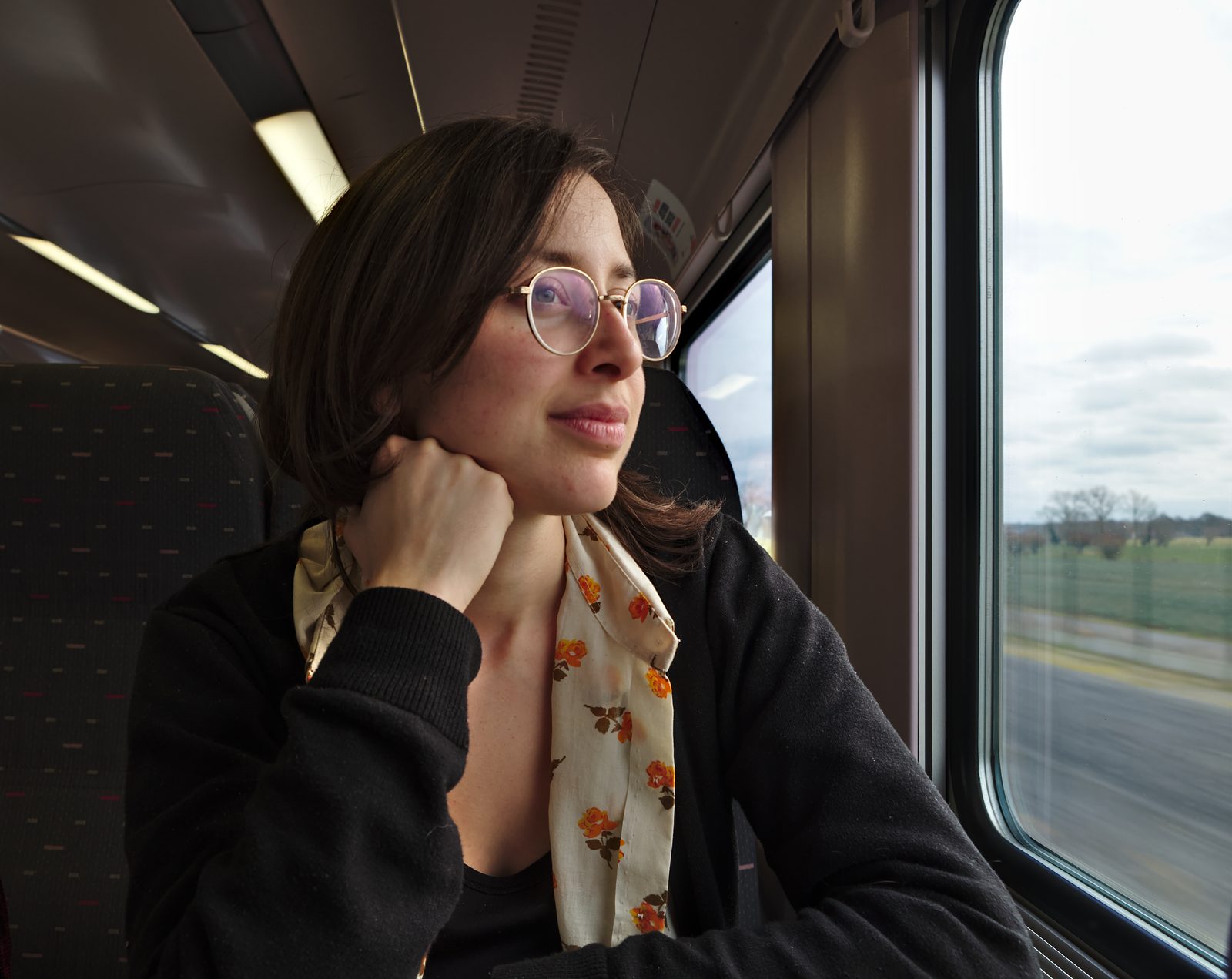
Face forward and pick a seat with a clear window view. A forward-facing seat with sight of the track ahead gives the eyes and inner ear matching information. Avoid sitting backward if you are prone to sickness, and avoid windowless middle sections when a window seat is available.
Put the book or phone away if nausea starts. Even on a smooth train, reading locks the eyes onto a still page while the body moves. Look out of the window at the passing scenery instead.
The distant view is the best anchor for the senses.
A note on electric cars
Some passengers report more nausea in electric cars, a question that circulated after a BBC report in October 2026. Doctissimo UK, reporting on that discussion, urges caution: testimonials exist, but the available data do not prove that electric cars cause more motion sickness.
Several hypotheses have been raised. Electric cars are quieter, so there are fewer sound and vibration cues about speed. Acceleration can feel brisker, and regenerative braking can feel different from a petrol car's braking.
Each of these could shift the sensory picture for a sensitive passenger.
The mechanism is the same either way: a conflict between what the eyes see and what the inner ear feels. A smooth driver who anticipates acceleration and braking can reduce jolts, while a winding route with a passenger absorbed in a phone can promote nausea in any car. The vehicle type matters less than the sensory bargain inside it.
Frequently asked questions
Why does the driver never get carsick?
The driver sees the road, anticipates each turn, and controls the motion. The eyes and the inner ear send matching signals, so the brain has no conflict to resolve. A front-seat passenger who watches the road gets part of the same benefit.
Why does reading make motion sickness worse?
Reading fixes the eyes on a still page while the inner ear reports motion. The brain receives two opposite reports at once. Looking up and fixing on the horizon brings the two signals back into agreement.
Can children outgrow motion sickness?
Many children become less sensitive as they grow, though some adults stay prone. HealthLink BC notes that motion sickness is most common in children from 5 to 12 years old and rare under age 2. Keeping trips short, avoiding screens, and using a front view helps in the meantime.
Should you take medicine before travel?
Some people use over-the-counter options for long trips. This article does not recommend a specific product. Talk to a pharmacist or clinician about whether anything suits you, and ask about timing and side effects before the journey.
Outlook
Motion sickness in cars but not on trains comes down to the quality of the sensory bargain. Cars deliver jerky, unpredictable motion with a narrow view and frequent screen use, while trains offer smoother, steadier motion with a wide view of the world going past. The brain prefers agreement between the eyes and the inner ear, and trains give it that agreement more often.
The practical fix is the same in both: face forward, watch the world ahead, keep the head steady, and put the book or phone away when nausea starts. If episodes are very frequent, intense, or hard to manage despite these steps, seek advice from a pharmacist or clinician.
This article is for general information, not medical advice.
Tags: motion sickness, cars, trains, travel health
Latest in Health
- Why You Get a Runny Nose in Cold Weather
- Why You Get Deja Vu and What Causes It
- Why Your Voice Sounds Different in Recordings
- Why You Feel Tired After Eating a Big Meal
Subscribe for weekly health explainers that stick to what the evidence shows.
Related stories

ADHD linked to fourfold dementia risk in Pitt study of 187,000 adults
Adults with ADHD face four times the risk of dementia, a University of Pittsburgh study of 187,000 adults published in JAMA Psychiatry

Why Do Athletes Get Cramps Despite Drinking Water?
Muscle cramps strike even well-hydrated athletes because sweat drains electrolytes that plain water cannot replace. Here is why water alone

Do bananas actually prevent muscle cramps?
A medium banana has 422 mg of potassium, but the evidence says it cannot stop cramps. Here is what the research shows, and what actually