
What is phantom phone vibration and why does it happen
By Rive News / Research desk | Rive News / Published October 25, 2026 at 9:00 AM PKT
Key takeaways
- Phantom phone vibration is the false feeling that a phone buzzed when no notification arrived.
- A 2010 survey of medical staff found 68% had felt it, and a later meta-analysis put overall prevalence at 56%.
- Habit and attention explain most cases: a brain trained to expect buzzes mistakes ordinary skin signals for one.

[A man using a smartphone outdoors, the kind of daily use that trains the brain to expect a buzz.] Photograph: the smartphone user
Image Credits: Wikimedia Commons
This article is for general information only and is not medical advice; talk to a clinician about any symptoms.
Phantom phone vibration is the sensation that a mobile phone is buzzing against the body when it is not. The phone may be silent, switched off, or sitting in another room, yet the feeling is vivid enough that the person reaches for it. Researchers call this phantom vibration syndrome, and the related false sense of hearing a ringtone is called phantom ringing.
The feeling is not a fault in the phone. It is a misreading by the brain, which spends the day sorting real touch signals from background noise. When a person expects a buzz, the brain lowers its threshold for calling a signal a buzz, and ordinary sensations get promoted into false alarms.
This article explains what phantom vibration is, how common it is, why habit and attention produce it, who feels it most, and what studies found about making it stop.
What phantom vibration feels like
Phantom vibration usually feels like a short buzz against the thigh, hip or chest, exactly where the phone normally sits. Some people feel a single pulse, others a longer tremor. The sensation passes in seconds, and checking the phone shows no call, message or notification.
The experience differs from a real vibration in one key way: nothing triggered it. A real buzz starts with the phone's motor. A phantom buzz starts with the body's own signals, such as fabric shifting, a muscle twitch or the pressure of a pocket seam, which the brain then labels as a phone vibration.
Researchers define the phenomenon in plain terms. In a 2012 framing cited across later studies, phantom phone signals are the false sensation or belief that a mobile phone is vibrating, ringing or giving a notification when no such signal has occurred. That definition covers both vibration and ringing, and it treats the event as perceptual rather than mechanical.
How common is it
Phantom vibration is common, not rare. The best-known early study surveyed medical staff at an academic medical centre and was published in the BMJ in 2010. Michael B.
Rothberg and colleagues invited 232 staff members, and 176 responded. Of the 169 who answered the key question, 115 reported having felt phantom vibrations, which is 68%, with a 95% confidence interval from 61% to 75%.
The same study found that 13% of those who felt phantom vibrations experienced them daily. Most of those affected, 68 out of 112, first noticed the feeling after carrying a device for between one month and one year. That timing points to learning: the feeling builds as carrying the phone becomes a habit.
Later research broadened the picture. A meta-analysis pooling 36 studies with 21,637 participants put the overall prevalence of phantom phone signals at 56.02%. Within that total, phantom vibrations at 71.98% were more common than phantom ringing at 57.94%.
A separate study of medical students in Puducherry, India, found 44.9% had either phantom vibration or ringing, with vibration at 27.9% and ringing at 21.2%. The numbers vary by group and method, but every large sample finds the feeling widespread.
Why the brain invents a buzz
The leading explanation is signal detection, not damage. The skin constantly sends the brain touch signals: cloth moving, muscles contracting, pressure changing as you walk.
Most of the time the brain ignores these as background. But when a person waits for messages, the brain watches that channel closely, and it starts treating borderline signals as hits.
Habit strengthens the effect. A phone that buzzes dozens of times a day trains an association between a spot on the body and a buzz.
After enough repetitions, the association fires on its own, the way a familiar song can start playing in your head without a speaker. The pocket itself becomes a cue, which is why the feeling usually strikes where the phone normally rests.
Attention adds a second push. People who are anxious, busy or expecting an important message monitor their phones more closely, and that monitoring lowers the bar for a false alarm.
A study of medical interns found 78% felt phantom vibrations even before a stressful internship began, and both vibration and ringing rose sharply during the internship's long hours and on-call duties, then fell afterwards. Stress did not create the mechanism, but it turned up its volume.
One useful comparison comes from the wider literature on non-psychotic sensory experiences. Researchers writing in Neuropsychiatric Disease and Treatment note that phantom vibration and ringing may be described as hallucinations but are not psychoses.
The brain mislabels a real skin signal; it does not invent a voice or a vision. That distinction matters because it keeps the phenomenon in the range of normal perception quirks rather than illness.
Who feels it most
Four factors stood out in the Rothberg study. Occupation mattered: residents reported phantom vibrations more than attending physicians. Device location mattered: a breast pocket was linked to more phantom vibrations than a belt clip.
Hours carried mattered: each extra six hours of carrying raised the likelihood. And frequent use of vibrate mode mattered: the more often the phone sat on vibrate, the more often false buzzes appeared.
The pattern is consistent. The more a person's day revolves around waiting for a buzz, the more the brain rehearses that buzz.
Medical staff on call, students awaiting results and workers whose jobs run through messaging all sit in the high-exposure group. The meta-analysis also found an association with stress, with an odds ratio of 2.31, and with digital addiction measures at 2.13, while finding no consistent link to other mental health or personality traits.
Age and sex show a smaller role. The meta-analysis found similar prevalence in men at 49.1% and women at 50.46%. Younger samples dominate the research, with a mean age of 22.70 years across the pooled studies, so the numbers describe young heavy users best and should not be stretched to every age group.
What studies found about stopping it
Rothberg's team asked participants what they had tried, and the answers are worth reporting as study findings rather than promises. Of those who felt phantom vibrations, 39% were able to stop them. Three strategies appeared: taking the device off vibrate mode, changing where the device was carried, and using a different device, with reported success rates of 75%, 63% and 50% respectively.
Those numbers come from a small survey, and the differences between strategies were not statistically strong. Still, they fit the mechanism neatly.
Each strategy breaks one link in the chain: sound replaces vibration as the alert, a new pocket breaks the skin association, and a different device changes the cue. Reducing time on vibrate mode also reduces the training that builds the habit.
A simpler way to think about it is threshold. Anything that makes the brain less watchful for a buzz, or makes the buzz signal itself clearer and rarer, should cut false alarms.
Checking the phone less often, keeping it off the body during focused work, and letting non-urgent notifications wait all push in that direction. None of this is medical treatment, and a person with persistent or distressing sensory symptoms should speak to a clinician rather than self-diagnosing.
As Rothberg and colleagues concluded, "Phantom vibration syndrome is common among those who use electronic devices." The sentence has held up well. Fifteen years of follow-up studies have not made the feeling rare or strange; they have made it ordinary, measurable and largely explained.
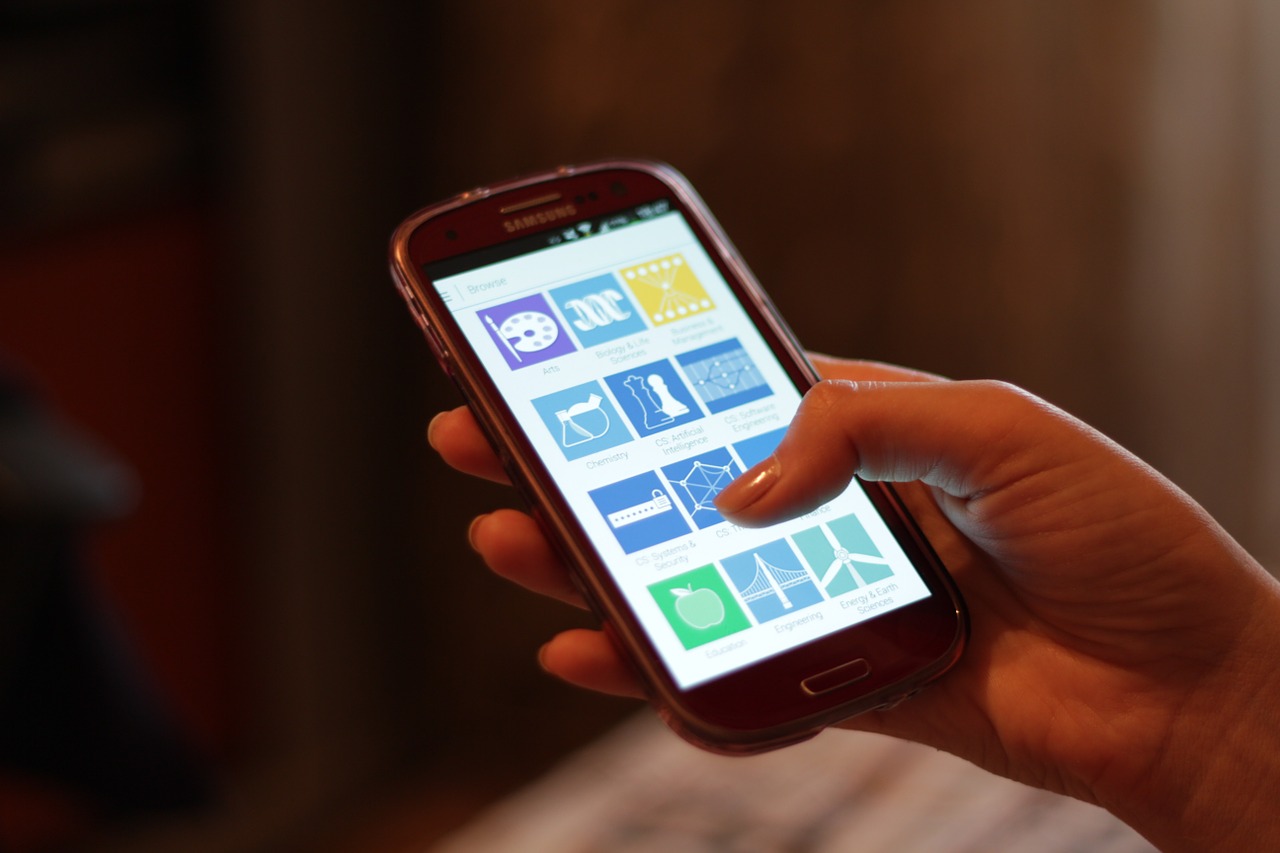
[A smartphone in use, the device at the centre of the habit loop.] Photograph: the smartphone
Image Credits: Wikimedia Commons
Frequently asked questions
Is phantom vibration a sign of a mental health problem?
Research does not treat it that way. Studies describe it as a perceptual misreading linked to habit, attention and expectation, and one review notes it is not a psychosis.
The meta-analysis found an association with stress but no consistent link to other mental health traits. Persistent or distressing symptoms still deserve a clinician's view, since this article cannot assess any individual.
Why does it happen in the same pocket every time?
That pocket is where the brain learned to expect the buzz. Repeated pairing of that spot with real vibrations builds an association, so borderline skin signals from that area get labelled as buzzes. Moving the phone to a different spot breaks the pairing, which is why changing location helped some participants in the Rothberg study.
Does turning vibrate off help?
In the Rothberg survey, taking the device off vibrate mode had the highest reported success rate, at 75%, among those who tried a strategy. The sample was small, so treat that as a promising lead rather than a guarantee. It fits the mechanism: fewer vibration alerts mean less training for false ones.
Can phantom ringing happen too?
Yes. Phantom ringing is the false sense of hearing a ringtone, and it appears less often than phantom vibration: 57.94% against 71.98% in the pooled meta-analysis. Both rise with heavy phone use and with periods of waiting for calls or messages.
The bottom line
Phantom phone vibration happens because a brain trained by daily buzzes starts calling ordinary skin signals by the wrong name. It is common, with 68% of medical staff in the landmark 2010 survey and 56% across a later pool of 36 studies reporting the feeling, and it tracks closely with hours carried, vibrate mode use and attention. Breaking the habit loop, by changing alert settings or where the phone sits, helped a share of study participants, and the feeling itself is best understood as a normal quirk of an attentive brain rather than a broken phone or a broken mind.
Tags: phantom vibration, smartphones, attention
Rive News is a research desk that writes plain-language explainers from public sources, with no individual author persona behind the byline.
Related
- Eye Floaters: What They Are and Why We Get Them
- Why You Get Déjà Vu and What Causes It
- Why Do You Feel Dizzy When You Stand Up Too Fast
- How to Fall Back Asleep After Waking Up at 3am
Subscribe to Rive News for one practical explainer each morning.
Rive News follows a standards footer: facts are checked against named public sources, and corrections are published when a source is shown to be wrong.
Related stories
ADHD linked to fourfold dementia risk in Pitt study of 187,000 adults
Adults with ADHD face four times the risk of dementia, a University of Pittsburgh study of 187,000 adults published in JAMA Psychiatry

Why Do Athletes Get Cramps Despite Drinking Water?
Muscle cramps strike even well-hydrated athletes because sweat drains electrolytes that plain water cannot replace. Here is why water alone

Do bananas actually prevent muscle cramps?
A medium banana has 422 mg of potassium, but the evidence says it cannot stop cramps. Here is what the research shows, and what actually