
Why Do You Feel Dizzy When You Stand Up Too Fast
Key takeaways
- Standing pulls blood toward your legs, and a slow pressure correction briefly starves the brain of blood, which feels like dizziness.
- Doctors define orthostatic hypotension as a drop of 20 points systolic or 10 points diastolic within three minutes of standing.
- Rise slowly, pause before walking, and drink fluids. Seek care for fainting or dizziness that keeps happening.

This article is for general information, not medical advice.
You stand up, the room tilts, and for a few seconds the floor feels unsure. Then it passes, and you carry on. That brief spell has a clear physical cause, and it starts with gravity.
This article explains what happens to your blood pressure when you stand, why the brain notices the change so fast, what makes the spell more likely, and when the pattern deserves a check with a clinician.
What standing does to your blood
When you stand, gravity pulls blood downward into your legs and lower belly. Less blood returns to the heart for a moment, so the heart pumps a little less out with each beat. Blood pressure dips, and the brain, which sits at the top of the system, gets slightly less blood for a few seconds.
That dip is normal. The body expects it and corrects for it at once. The spell you feel is the short gap between the dip and the correction.
When the correction is fast, you feel nothing. When it lags, you feel dizzy.
Mayo Clinic puts it plainly: gravity causes blood pressure to drop after you stand, and for most people the lightheaded feeling lasts only a few seconds and usually is not a serious problem. The key word is most. The same feeling can also signal a pattern worth tracking.
The correction reflex, step by step
The correction runs through the autonomic nervous system, the part of your wiring that handles jobs without conscious thought. Sensors in the neck and chest, called baroreceptors, detect the pressure change as soon as you stand. They send a signal that tightens blood vessels and speeds up the heart.
Tighter vessels push blood back upward. A faster heart keeps the flow going while the vessels adjust. Together, these two moves restore pressure and keep blood reaching the brain.
The whole loop runs in seconds, and you never notice it when it works well.
Several things can slow the loop down. Dehydration lowers blood volume, so there is less blood to move around. A hot shower or a hot room widens blood vessels, which works against the tightening step.
A large meal diverts blood toward digestion. Age can dull the reflex, and some medicines blunt it as well.
When it has a name: orthostatic hypotension
Doctors use the term orthostatic hypotension, also called postural hypotension, for a pressure drop that crosses a clear line. The standard definition is a fall of at least 20 mmHg in the top number, systolic pressure, or at least 10 mmHg in the bottom number, diastolic pressure, within three minutes of standing.
Occasional dizziness after standing is not the same as this condition. Orthostatic hypotension means the pressure stays lower than normal for as long as you keep standing, and symptoms ease once you sit or lie down. The symptom list goes beyond dizziness, and Mayo Clinic names vision changes, ringing in the ears, leg weakness, and neck and shoulder pain.
The causes split into a few groups. Low fluid volume from dehydration or illness is one. Medicines that lower blood pressure, including some drugs for blood pressure, prostate problems, and mood, are another.
Nerve and heart conditions can interfere with the reflex itself, including Parkinson disease and diabetes. If you take regular medicine and notice a new pattern of dizziness, that is worth raising with your care team rather than stopping any drug on your own.
Why the brain notices so fast
The brain is a demanding organ. It uses a large share of the oxygen the blood carries, and it keeps almost no reserve. A brief fall in blood flow changes how it works within seconds.
That is why the first signs are dizziness, blurred vision, or a sense of warmth, rather than pain.
Fainting is the stronger version of the same story. If blood flow falls far enough, the brain briefly shuts down the systems that keep you upright, and you drop to the floor. Lying flat removes the gravity problem, so blood flow returns and consciousness comes back.
A fall during a faint carries its own risk of injury, which is why repeated fainting always deserves prompt care.
It helps to separate this from other kinds of dizziness. A spinning room, known as vertigo, usually points to an inner ear problem rather than a pressure drop. Dizziness that starts with a cold or an infection often clears with the illness, and knowing the difference between a cold and the flu helps you describe the illness around it.
Knowing the difference between a virus and bacteria will not diagnose dizziness, but it can help you describe the illness around it to a clinician. Dizziness that follows standing, fades when you sit, and repeats is the pattern that fits a pressure story.
What helps, day to day
Small habits change the physics in your favor. Mayo Clinic advises rising slowly, moving in stages from lying to sitting to standing. When you stand, wait 30 seconds before walking.
That pause gives the correction reflex time to finish its work.
Fluids help because blood volume matters. Mayo Clinic suggests drinking plenty of fluids and keeping a water bottle handy. Salt helps some people retain fluid, but the same advice warns that people who sometimes have high blood pressure should ask their doctor how much salt fits their case.
Alcohol widens blood vessels and can make the problem worse, so skipping it helps.
Meals matter too. If pressure drops after eating, smaller low-carbohydrate meals can help, along with a glass of water at each meal. Hot drinks can worsen symptoms for some people.
Regular movement helps as well, because exercise supports circulation and the muscle tone that pushes blood upward.
Compression stockings help by squeezing the legs gently and keeping blood from pooling there. Mayo Clinic also describes a simple muscle move for the moment symptoms hit: cross the thighs in a scissors fashion and squeeze the legs together, which pushes blood from the legs toward the heart. Raising the head of the bed on blocks of 3 inches or 4 inches can reduce symptoms during the day for some people.
When to seek care
A single brief spell after standing, with a clear trigger such as dehydration or a hot shower, is common. A pattern is different. Seek care if dizziness happens often, if you faint, if symptoms last more than a few seconds, or if they come with chest pain, a racing or irregular heartbeat, or shortness of breath.
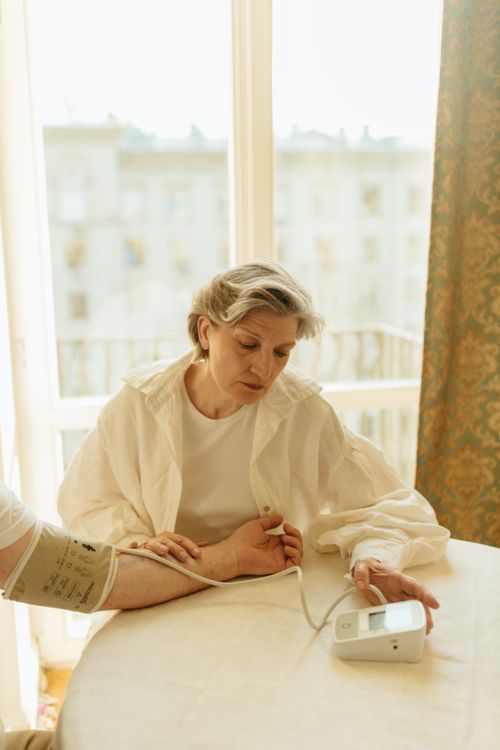
A clinician will usually measure blood pressure while you lie down and again after you stand, and will ask about medicines, fluids, and recent illness. That paired reading is the core of the check, because it catches the drop in action. Bring a short note of when spells happen, what you were doing just before, and which medicines you take.
That record makes the visit far more useful than a vague report of feeling dizzy.
Sleep and general health play a supporting role. Poor sleep does not cause a pressure drop by itself, but exhaustion makes any symptom feel worse and harder to judge. If nights are part of the picture, it can help to understand what happens in the brain when you cannot fall asleep.
Outlook
Most dizzy spells on standing are brief, harmless, and fixable with slower movements and enough fluids. The body has a fast correction system for exactly this problem, and a short lag in that system explains the spell. When the pattern repeats, when you faint, or when new medicines line up with the symptoms, a clinician can measure the drop and find the cause.
Rise slowly, pause before walking, and treat fainting as a signal to get checked.
Tags: dizziness, blood pressure, orthostatic hypotension, health
Latest in Health
- Difference Between a Cold and the Flu
- Difference Between a Virus and Bacteria
- What Happens in the Brain When You Cannot Fall Asleep
- Difference Between Good and Bad Cholesterol in Simple Terms
Subscribe for one practical health explainer each week.
Related stories

ADHD linked to fourfold dementia risk in Pitt study of 187,000 adults
Adults with ADHD face four times the risk of dementia, a University of Pittsburgh study of 187,000 adults published in JAMA Psychiatry

Why Do Athletes Get Cramps Despite Drinking Water?
Muscle cramps strike even well-hydrated athletes because sweat drains electrolytes that plain water cannot replace. Here is why water alone

Do bananas actually prevent muscle cramps?
A medium banana has 422 mg of potassium, but the evidence says it cannot stop cramps. Here is what the research shows, and what actually