
What happens in your brain when you cannot fall asleep
Key takeaways
- Falling asleep needs your brain to power down, and an alert system stuck on high blocks that shift.
- A racing mind is often hyperarousal: stress chemistry and busy thinking keep the brain in daytime mode.
- Forcing sleep makes it worse, because effort switches on the same problem-solving brain that blocks sleep.
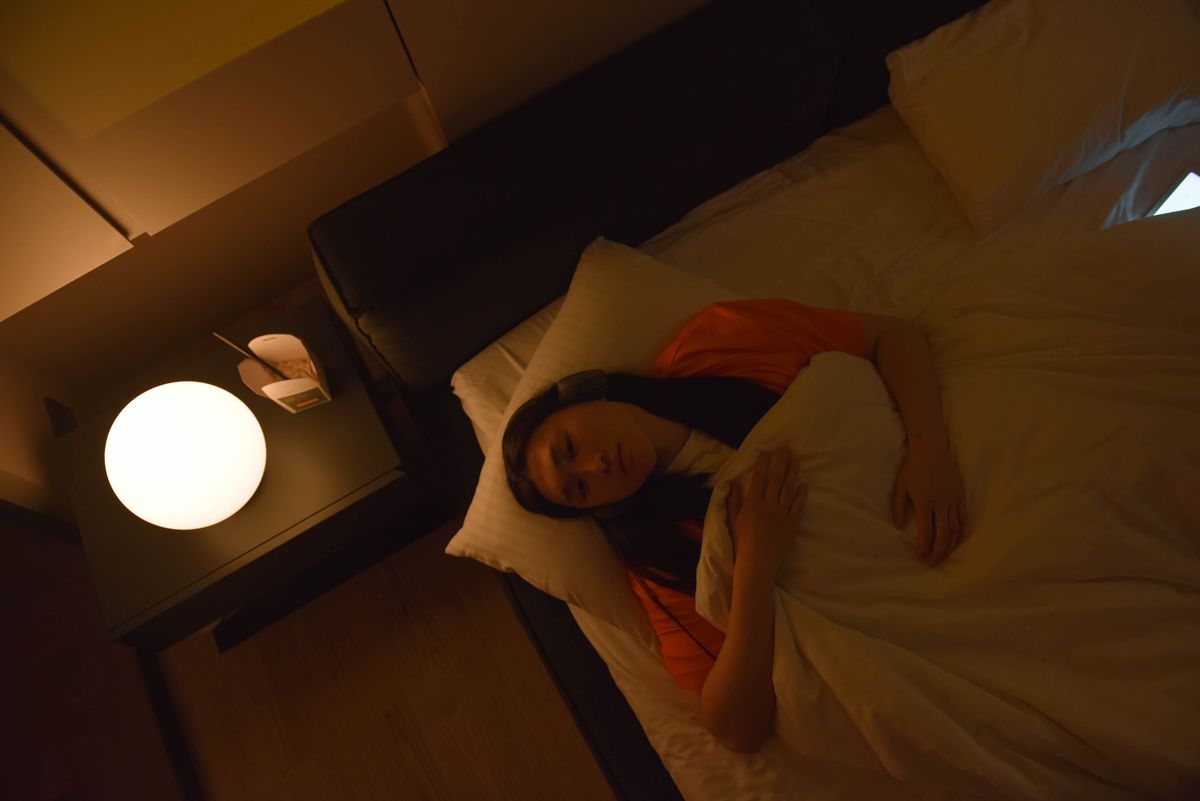
Lying awake at night feels like a simple failure. Your body is tired, the room is dark, and sleep should arrive. Instead, your mind replays the day, plans tomorrow, and checks the clock.
The more you want sleep, the further away it moves.
That loop has a name in sleep science: hyperarousal. Your brain stays in a state of alert when it should be winding down. This article explains what happens in your brain when you cannot fall asleep, why the harder you try the worse it gets, and what actually breaks the loop.
This article is for general information, not medical advice. If poor sleep is affecting your daily life, talk to a clinician.
Sleep needs your brain to power down
Falling asleep is not a passive collapse. It is an active shift. Your brain has to turn down alertness, slow its rhythm, and hand control to sleep systems.
Body temperature drops, heart rate eases, and muscles relax. When that shift happens smoothly, you drift off without noticing.
NHS inform describes the sleep cycle as a series of stages that repeat through the night. Light sleep gives way to deeper sleep, then to dreaming sleep, and one full cycle takes around an hour and a half. A good night usually includes four or five cycles.
You cannot jump straight to deep sleep. You have to pass through the doorway of light sleep first, and that doorway only opens when alertness drops.
Two forces govern that doorway. Sleep pressure builds the longer you are awake, like hunger building between meals. The body clock, or circadian rhythm, sets the timing, telling you to be alert by day and sleepy by night.
When both line up, sleep comes easily. When alertness stays high, it can overrule both, and you lie awake even though you are exhausted.
Hyperarousal keeps the brain in daytime mode
Hyperarousal means your alert system stays switched on past bedtime. Stress hormones such as cortisol and adrenaline keep heart rate up, muscles tense, and attention sharp. That chemistry evolved for real danger, when staying alert kept you alive.
At 2 a. m. , it has no danger to fight, so it turns on your thoughts instead.
One sign of hyperarousal is the racing mind. Thoughts chain together in step-by-step sequences: what you said in a meeting, what you must do tomorrow, what could go wrong. Research described by Business Standard found that people with insomnia showed more of this sequential thinking at night, as if their brains failed to downshift from goal-directed thought to the loose, drifting thinking that comes before sleep.
Another sign is body tension that will not release. You may feel a hum of restlessness in your chest or stomach, a jaw that stays clenched, or a startle at small noises. Your body is prepared for action while you are lying still.
Sleep researchers call the result "wired but tired": sleep pressure is high, yet the arousal system still behaves as if you need to stay alert.
Your brain chemistry shifts when sleep fails
Brain chemistry also changes in people with long-term insomnia. One well-known study, published in the journal Sleep and reported by ScienceDaily, found that GABA, the brain's main calming signal, was reduced by nearly 30 percent in adults who had lived with primary insomnia for more than six months. GABA quiets activity across many brain areas and helps the brain shut down.
Dr John Winkelman of Brigham and Women's Hospital, who led the study, said the finding suggests overactivity is present not only in thoughts and emotions but at the level of the nervous system itself. In plain terms, the brain's brakes are weaker while its accelerator stays pressed. Chronic insomnia, meaning symptoms that last at least a month, affects about 10 percent of adults in industrialized countries, according to the same report.
Low GABA is one piece of the picture, not the whole story. Stress hormones, habits, and learned associations all feed the same loop. That is why a single fix, like a new pillow or a supplement, rarely solves persistent sleeplessness on its own.
The bedroom becomes part of the problem
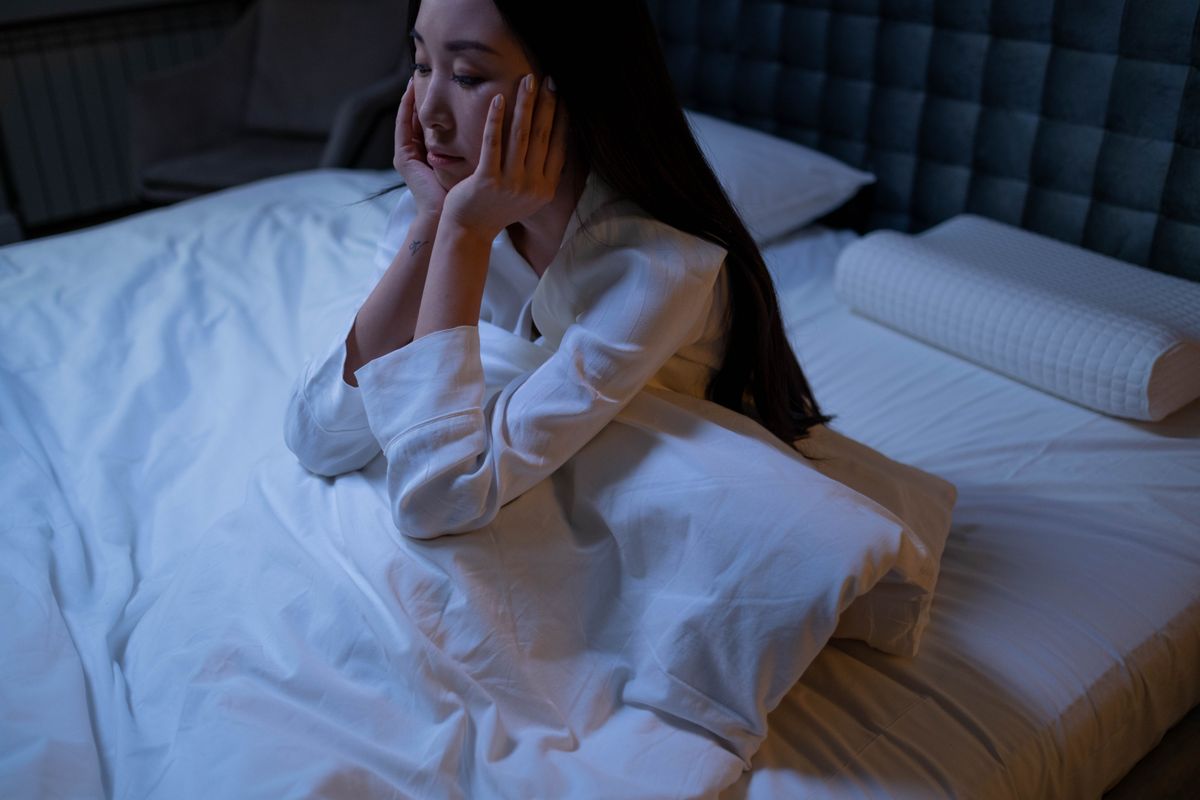
When sleepless nights repeat, the brain starts to link the bed with being awake. NHS inform describes how this happens. If you lie awake night after night, or spend long stretches in bed scrolling, worrying, or working, your brain begins to associate being in bed with being awake.
That association then makes it harder to relax the next night.
Clock-watching feeds the same loop. Checking the time again and again raises anxiety about how little sleep you will get. Worry about tomorrow's tiredness then adds fresh alertness, which pushes sleep further away.
NHS inform calls this a self-fulfilling prophecy: expecting a bad night changes what you do, and what you do makes the bad night more likely.
The bedroom itself can become a trigger. Some people feel fine in the living room in the evening but grow tense the moment they enter the bedroom and the lights go out. That is not imagination.
It is learned association, the same process that makes a song bring back a memory. The brain has learned that bed means alert struggle, and it acts on that lesson before you have chosen anything.
Why trying harder backfires
Effort is the enemy of sleep. Trying to force sleep switches on problem-solving mode, which is a form of alertness. Your brain cannot solve a problem and fall asleep at the same time.
Each failed attempt adds frustration, and frustration adds arousal.
This is the cruel core of the racing-brain loop. You notice you are awake, you worry about being awake, the worry keeps you awake, and the extra wakefulness confirms the worry. The loop runs on attention.
The more you monitor sleep, the more your brain treats sleep as a task to perform, and performance needs alertness.
Sleep scientists point out that you cannot will yourself to sleep the way you will yourself to lift a weight. Sleep arrives when you stop trying to produce it and let the shift happen. That sounds vague, but it has a practical shape: get out of the effort loop instead of fighting inside it.
What breaks the loop
The first step is to stop treating the bed as a place to struggle. If you have been awake and frustrated for a while, get up, go to another dim room, and do something calm and boring until you feel sleepy. Reading a dull book or listening to quiet radio works better than scrolling a bright phone, which feeds your brain fresh stimulation.
Return to bed only when sleepiness returns.
The second step is to give worries a home outside bedtime. Set aside ten minutes earlier in the evening to write down tomorrow's tasks and any looping thoughts. This "worry time" moves planning out of the dark hours.
When a thought returns at night, you can remind yourself it is already written down for morning.
The third step is to rebuild the bed-sleep link. Keep a steady wake time, even on weekends, so your body clock stays anchored. Use the bed for sleep, not for work, news, or long phone sessions.
Keep the room dark, cool, and quiet. These habits do not force sleep, but they remove the obstacles that keep the alert system switched on.
People with persistent insomnia sometimes need structured help. NHS inform's guide uses ideas from cognitive behavioural therapy, which targets the thoughts and habits that keep sleep problems going. If sleep troubles last weeks, affect your mood or work, or come with snoring, pain, or low mood, speak to a clinician rather than pushing through alone.
The same applies if you notice dizziness when you stand up fast or other new physical symptoms alongside poor sleep, since those deserve their own check.
Outlook
A racing mind at night is not a character flaw. It is an alert system doing its job at the wrong hour, held in place by chemistry, habit, and attention. The way out is not more effort but less: break the loop, move the worry, and let sleep arrive on its own terms.
If you try these steps for a couple of weeks with no change, or if daytime fatigue is getting worse, talk to a clinician about next steps.
Tags: sleep, insomnia, brain, health
Latest in Health
- Why you feel dizzy when you stand up fast
- The difference between a cold and the flu
- What actually stops hiccups
- The difference between a virus and bacteria
Subscribe to the Rive News newsletter for one practical health explainer each week.
Related stories

ADHD linked to fourfold dementia risk in Pitt study of 187,000 adults
Adults with ADHD face four times the risk of dementia, a University of Pittsburgh study of 187,000 adults published in JAMA Psychiatry

Why Do Athletes Get Cramps Despite Drinking Water?
Muscle cramps strike even well-hydrated athletes because sweat drains electrolytes that plain water cannot replace. Here is why water alone

Do bananas actually prevent muscle cramps?
A medium banana has 422 mg of potassium, but the evidence says it cannot stop cramps. Here is what the research shows, and what actually