
Why Does Your Skin Itch After a Hot Shower?
Key takeaways
- Hot water strips sebum, the natural oil that seals moisture into your skin, leaving the barrier cracked and leaky.
- Heat also prompts mast cells to release histamine, the same itch chemical behind allergic reactions, which fires up nerve endings.
- Turning the temperature down, shortening showers, and moisturizing within minutes of drying off solves the problem for most people.
You step out of a long, steaming shower feeling relaxed. Ten minutes later, your legs and back start prickling. There is no rash, no bug bites, no new soap.
Just a maddening itch that scratching barely dents.
This article explains why your skin itches after a hot shower, including the barrier damage hot water causes, the histamine response heat triggers, the two named conditions that mimic it, and the simple changes that stop it for most people.
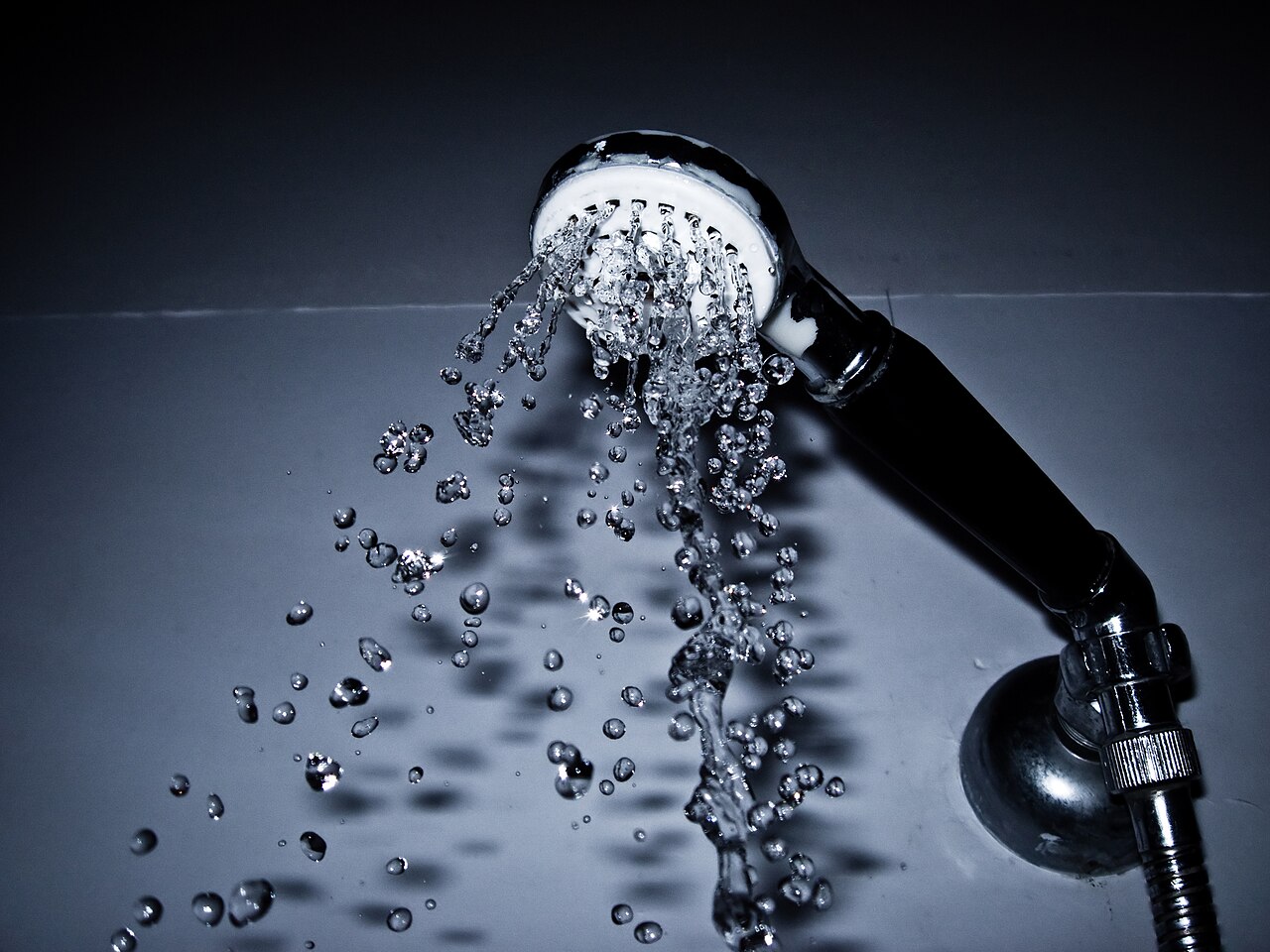
Water sprays from a showerhead in a high-speed photograph. Hot water feels good in the moment, but it dissolves the protective oils in your skin's outer layer. Photograph: JovanCormac
Image Credits: Wikimedia Commons / JovanCormac
Hot water strips the oils that seal your skin
Your skin's outer layer, the stratum corneum, works like a brick wall. The bricks are flattened skin cells called corneocytes. The mortar between them is a lipid mixture of ceramides, cholesterol, and fatty acids, plus a film of sebum, the natural oil your glands produce.
This mortar keeps moisture locked in and irritants out.
Hot water and soap break that mortar down. Surfactants in soap are designed to dissolve fats, and your skin's protective lipid layer is chemically similar enough to get caught in the same process. Heat speeds it up, because lipids dissolve faster in hot water than in lukewarm water.
A long, very hot shower therefore removes noticeably more of this protective layer than a shorter, cooler one.
Once the mortar is gone, moisture escapes rapidly. Dermatologists call this transepidermal water loss, and it is the direct cause of the tight, dry feeling that shows up within minutes of toweling off. According to the American Academy of Dermatology, as reported by Ubie Health, over-stripping these oils leads to a compromised skin barrier and increased moisture loss.
Dry skin, or xerosis, is the single most common reason people itch after showering.
The itch itself needs one more ingredient. A damaged barrier triggers a mild local inflammatory response, which prompts mast cells in the skin to release histamine. That is the same signaling compound behind the itch in hives and allergic reactions.
Post-shower itching therefore behaves less like simple dryness and more like a low-grade allergic response, because biochemically, that is closer to what is happening.
Heat releases histamine, your body's itch chemical
The second half of the story is temperature. When your core body temperature rises under hot water, mast cells in the skin degranulate and release histamine. Histamine travels to nearby nerve endings and activates H1 receptors, which your brain interprets as itching.
Happy Cappy's dermatology-reviewed guide explains the chain: histamine opens gaps between vessel-lining cells, plasma leaks into the dermis, blood flow increases, and nerve stimulation produces itch.
Some people are more sensitive to this cascade than others. Heat also sensitizes C-fibers, the slow-conducting nerve fibers linked specifically to itching. Once sensitized, they fire more easily, which is why the itching often peaks a few minutes after you step out, when your skin is warming back up rather than while you are still under the spray.
People with eczema, or atopic dermatitis, sit at the sharp end of both mechanisms. Research has identified reduced production of filaggrin, a protein essential for building and maintaining the skin's lipid barrier, in eczema-prone skin. The barrier starts out structurally weaker, so a hot shower does disproportionate damage.
Running shower water in a bathroom. A rough washcloth, loofah, or vigorous towel-drying adds friction on top of heat damage and makes the itching worse. Photograph: Curpharar
Image Credits: Wikimedia Commons / Curpharar
Two named conditions that mimic ordinary shower itch
Most post-shower itching is dry skin plus histamine. Two diagnosable conditions produce similar symptoms and are worth knowing about, because they change what helps.
Cholinergic urticaria is a reaction to rising body temperature and sweating. A hot shower, exercise, or even emotional stress can trigger small, short-lived, intensely itchy welts. Dr. David Lang of the Cleveland Clinic describes it as a hypersensitive skin reaction to warmth and sweating. The key clue is visible: tiny bumps that fade within an hour or so. The trigger is the temperature increase itself, which stimulates nerve fibers to release acetylcholine, which then acts on mast cells to release histamine.
Aquagenic pruritus is itching that begins within minutes of contact with water of any temperature, from a shower, bath, pool, or even sweat, without any visible rash. The Cleveland Clinic notes it does not cause hives or a rash. A true allergy to hot water, in the strict immunological sense, does not exist, according to immunologists at Curex, because water is not an allergen and cannot trigger IgE-mediated hypersensitivity. But the reactions people feel are real physical responses, not imagined.
When itching after a shower deserves a doctor
For most people, post-shower itching is a plumbing problem: barrier damage plus heat, fixed by changing the shower routine. See a doctor if the pattern is persistent, intense, or new. Three red flags stand out.
First, intense itching after every water contact that antihistamines or routine changes do not touch. Second, itching accompanied by visible changes: widespread hives, swelling, or cracked, bleeding skin. Third, itching that arrives alongside systemic symptoms like fatigue or flushing.
In rare cases, persistent water-triggered itching is an early sign of polycythemia vera, a bone marrow disorder in which the body produces too many red blood cells. That association is uncommon, but it is why doctors take unexplained aquagenic pruritus seriously instead of dismissing it as dry skin.
This article is an explainer for general information only and is not medical advice. If itching persists, spreads, or disrupts your sleep, talk to a clinician rather than self-treating.
How to shower without the itch
The fix follows directly from the two causes. Reduce the heat, and rebuild the barrier.
Turn the dial down to lukewarm. You do not need cold showers; water that feels comfortably warm rather than steaming protects your lipid layer while still feeling like a shower. Keep it short, ideally under ten minutes, because stripping damage accumulates with time.
Long showers in winter, when indoor air is already dry, are the worst combination.
Go easy on soap. Wash where you need it, and skip the full-body lather with harsh cleansers. Pat dry instead of scrubbing with the towel.
Then moisturize within three minutes of drying off, while the skin still holds some water. Creams and ointments seal better than thin lotions because they contain more oil.
If the itch still flares, a cool compress calms it, and an over-the-counter second-generation antihistamine such as cetirizine or loratadine can blunt the histamine signal, according to dermatology guidance summarized by Happy Cappy. Neither replaces fixing the routine. Fragrance-free products reduce the chance of irritation on an already compromised barrier.
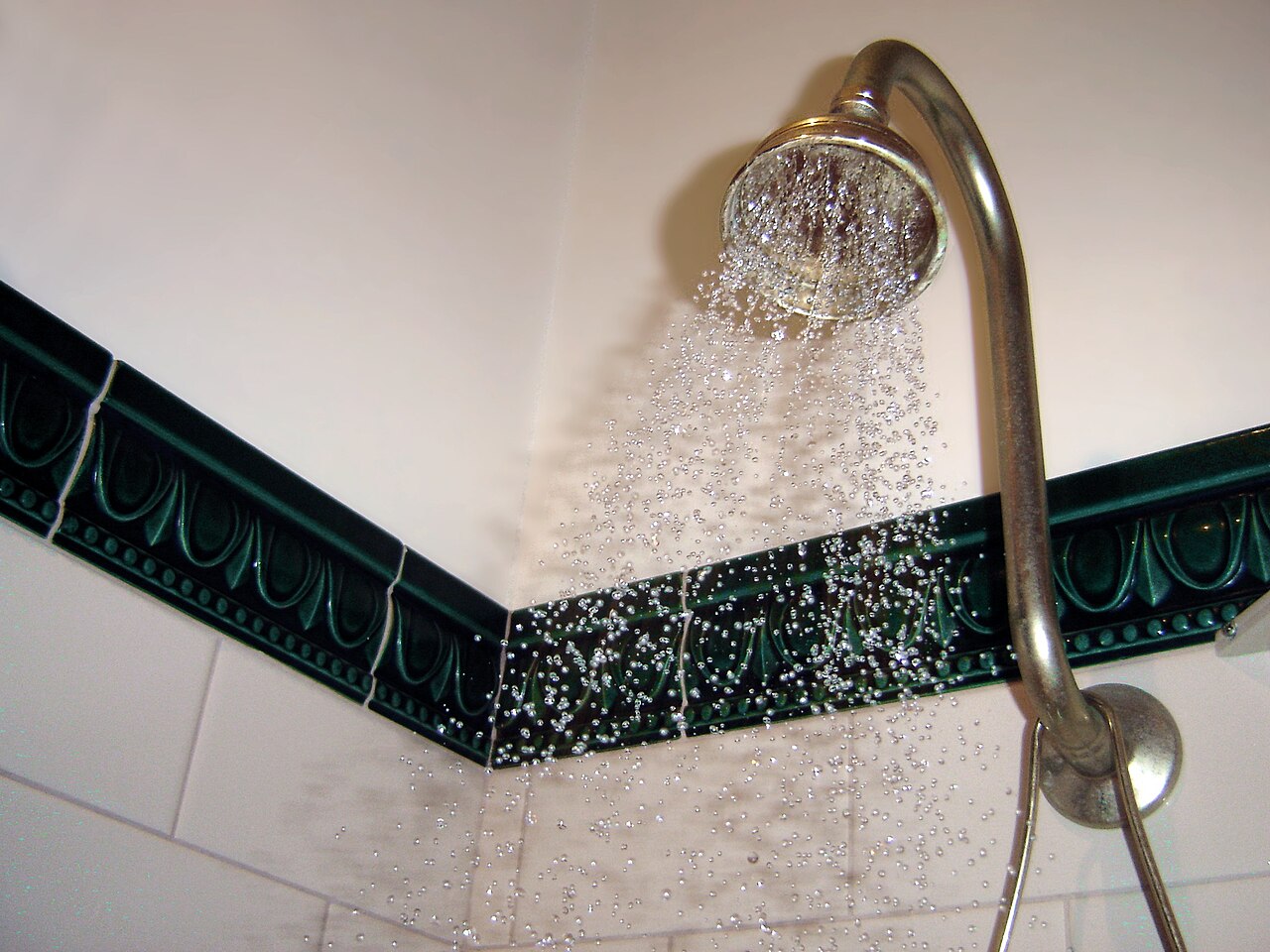
A close-up of a showerhead. Shorter, cooler showers strip far less of the skin's natural oil film than long, steaming ones. Photograph: Wikimedia Commons contributor
Image Credits: Wikimedia Commons
Why does the itch start after I dry off, not in the shower?
The peak usually hits minutes after toweling off. That is when transepidermal water loss spikes as exposed skin meets dry air, and when the histamine cascade triggered by heat reaches the nerve endings. In the shower, water is still on the skin and masking both effects.
Does cold water cause the same problem?
Cold water strips far less oil, so it rarely causes this pattern. Very cold water can dry some skin types, but the lipid-dissolving effect scales with heat. Lukewarm is the practical middle ground most dermatologists recommend.
Why do only my legs itch after a shower?
Legs have fewer oil glands than the face and scalp, so their barrier is thinner to begin with. Shins are the classic trouble spot. Arms and the torso usually have more sebum and recover faster.
Can a water filter fix post-shower itch?
It can help if your tap water is the irritant rather than the heat. Chlorine and hard-water minerals bother some people, and shower filters reduce chlorine. But most post-shower itching comes from temperature and barrier stripping, so a filter is a secondary fix, not the first one.
Outlook
Post-shower itching looks mysterious but runs on ordinary plumbing: heat dissolves your skin's oil mortar, moisture escapes, and mast cells answer with histamine. For the vast majority of people, cooler water, shorter showers, and prompt moisturizing end it. Keep a notebook for a week if the problem lingers; a clear pattern of timing, temperature, and products gives a doctor far more to work with than "my skin itches sometimes.
" And treat persistent, water-triggered itching that resists routine changes as a reason to book an appointment, not a quirk to live with.
Related reading: why wounds itch while they heal and what night leg cramps have in common with restless legs.
Latest in Health
- Why wounds itch while they heal
- Why your scalp hurts when you move a tight ponytail
- Night leg cramps: causes, relief, and prevention
- Why you cough more lying down with a cold
Get one clear health explainer like this in your inbox every week. Subscribe to the Rive News newsletter.
Image Credits: Wikimedia Commons / JovanCormac, Curpharar
Related stories
ADHD linked to fourfold dementia risk in Pitt study of 187,000 adults
Adults with ADHD face four times the risk of dementia, a University of Pittsburgh study of 187,000 adults published in JAMA Psychiatry

Why Do Athletes Get Cramps Despite Drinking Water?
Muscle cramps strike even well-hydrated athletes because sweat drains electrolytes that plain water cannot replace. Here is why water alone

Do bananas actually prevent muscle cramps?
A medium banana has 422 mg of potassium, but the evidence says it cannot stop cramps. Here is what the research shows, and what actually