
Why Wounds Itch While They Heal: The Biology of Repair
Key takeaways
- A healing wound itches mainly because mast cells release histamine and inflammatory cytokines that stimulate itch-sensing nerve fibers.
- Regrowing nerves are temporarily hyper-excitable, and studies show itch-linked substance P can stay elevated at twice normal density for months.
- Scratching feels good for a second but damages new tissue and releases more histamine, which makes the itch worse.
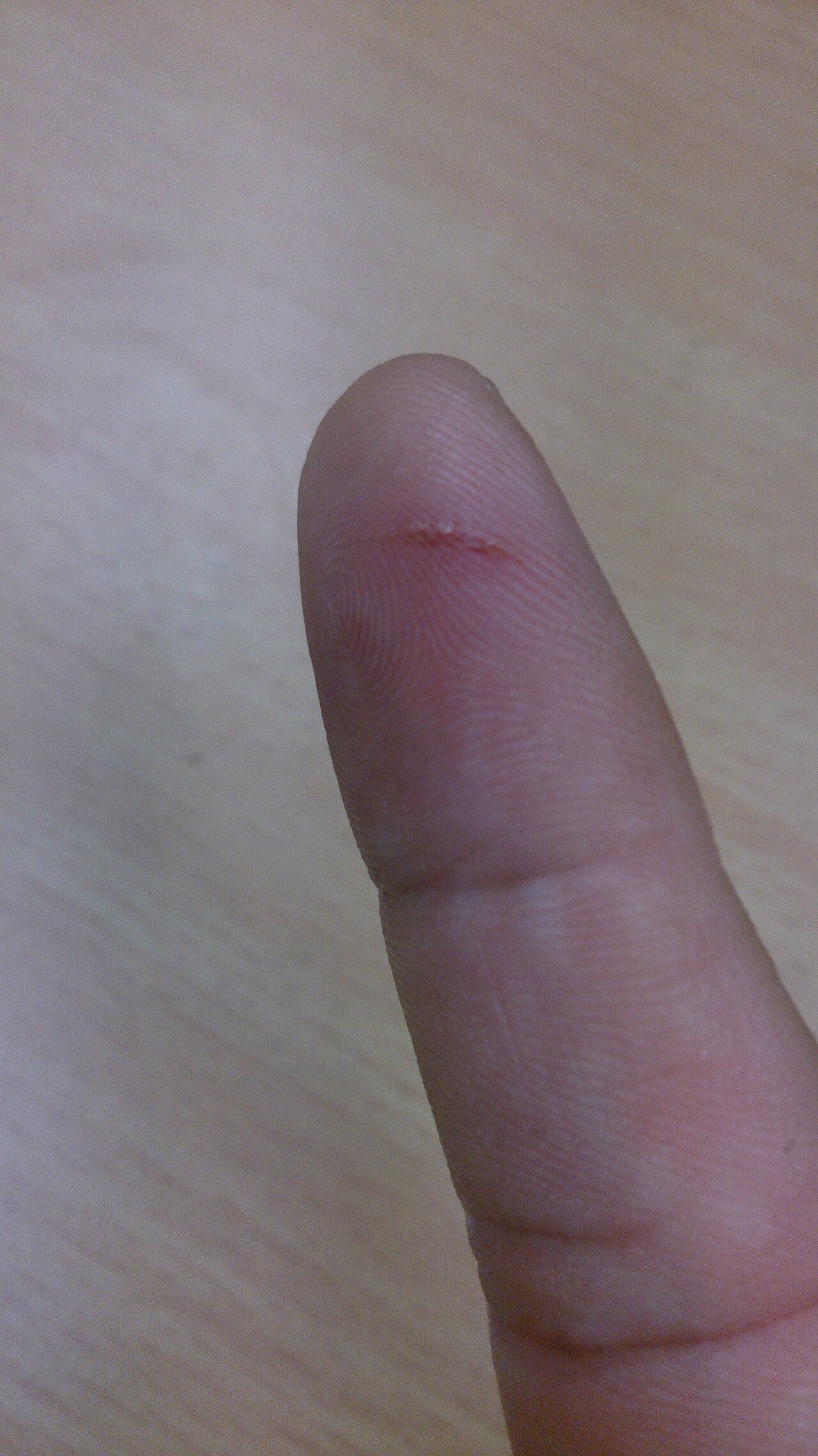
A small cut on a fingertip during the repair process, when itching is most common. Photograph: ProjectManhattan
Image Credits: Wikimedia Commons / ProjectManhattan
Wound pruritus is the medical term for the itching that shows up while a cut, graze, burn, or surgical wound repairs itself. It is one of the most common complaints during recovery, and it usually peaks days to weeks after the injury, not in the first hours.
In most cases the itch is a sign that repair is actively underway. Histamine released by immune cells, nerves growing back into damaged skin, and the physical tightening of new tissue all converge on the same itch-sensing nerve fibers.
This article explains why wounds itch while they heal, including the four phases of wound healing, the histamine and nerve mechanisms behind the itch, how to calm it without slowing repair, and when itching is a warning sign instead.
The four phases of wound healing
Every wound moves through the same four overlapping stages, and itching can appear in more than one of them. Knowing the sequence helps explain why the itch comes and goes.
Hemostasis comes first. Blood vessels constrict and platelets form a clot that seals the wound within minutes, according to Healthline's wound-healing explainer. This stage is about stopping blood loss, not itch.
Inflammation follows and is where the real itching begins. White blood cells such as neutrophils and macrophages flood the wound to clear bacteria and dead tissue. As part of that cleanup, the body releases histamine, the same chemical behind hay fever and mosquito-bite itch.
The proliferation phase builds new tissue. Fibroblasts lay down collagen, new blood vessels sprout into the wound bed, and skin cells migrate across the gap to close it. This busy construction zone is where most people notice the itch intensifying.
Remodeling is the long final phase. Collagen fibers reorganize and strengthen over weeks or months, and the scar matures. Itching can linger here too, especially around scars, long after the surface looks closed.
A wound that stalls in the inflammation phase is classified as a chronic wound. If healing seems stuck for weeks with no progress, that is a different problem from ordinary healing itch.
Why histamine makes a healing wound itch
Histamine is the single biggest chemical driver of wound itch. When tissue is injured, mast cells, a type of immune cell concentrated in skin, rush to the wound site. They release histamine along with prostaglandin E2, interleukins, and other signaling molecules, according to West Coast Wound and Skin Care.
Histamine earns its keep during repair. It widens nearby blood vessels, increases blood flow to the wound, and helps immune cells reach damaged tissue. Elastoplast notes that stimulating skin nerve endings is simply a side effect of that useful work.
Those nerve endings are unmyelinated C-fibers, the slow-conducting fibers dedicated to itch and dull pain. Histamine binds directly to receptors on these fibers, and the signal travels to the brain as itch. This is the same pathway that makes a mosquito bite itch, which is why antihistamines can take the edge off wound itch too.
Histamine is not working alone. Prostaglandins and cytokines released in the same wave sensitize the nerve endings further, lowering the threshold at which they fire. The result is a wound that itches from stimuli, such as dry air or light friction, that healthy skin would ignore.
Oral H1-receptor blockers such as cetirizine, loratadine, or diphenhydramine reduce itch perception by blocking histamine binding, according to West Coast Wound and Skin Care. They rarely erase the itch completely, because the nerve-regrowth mechanism runs on a separate track.
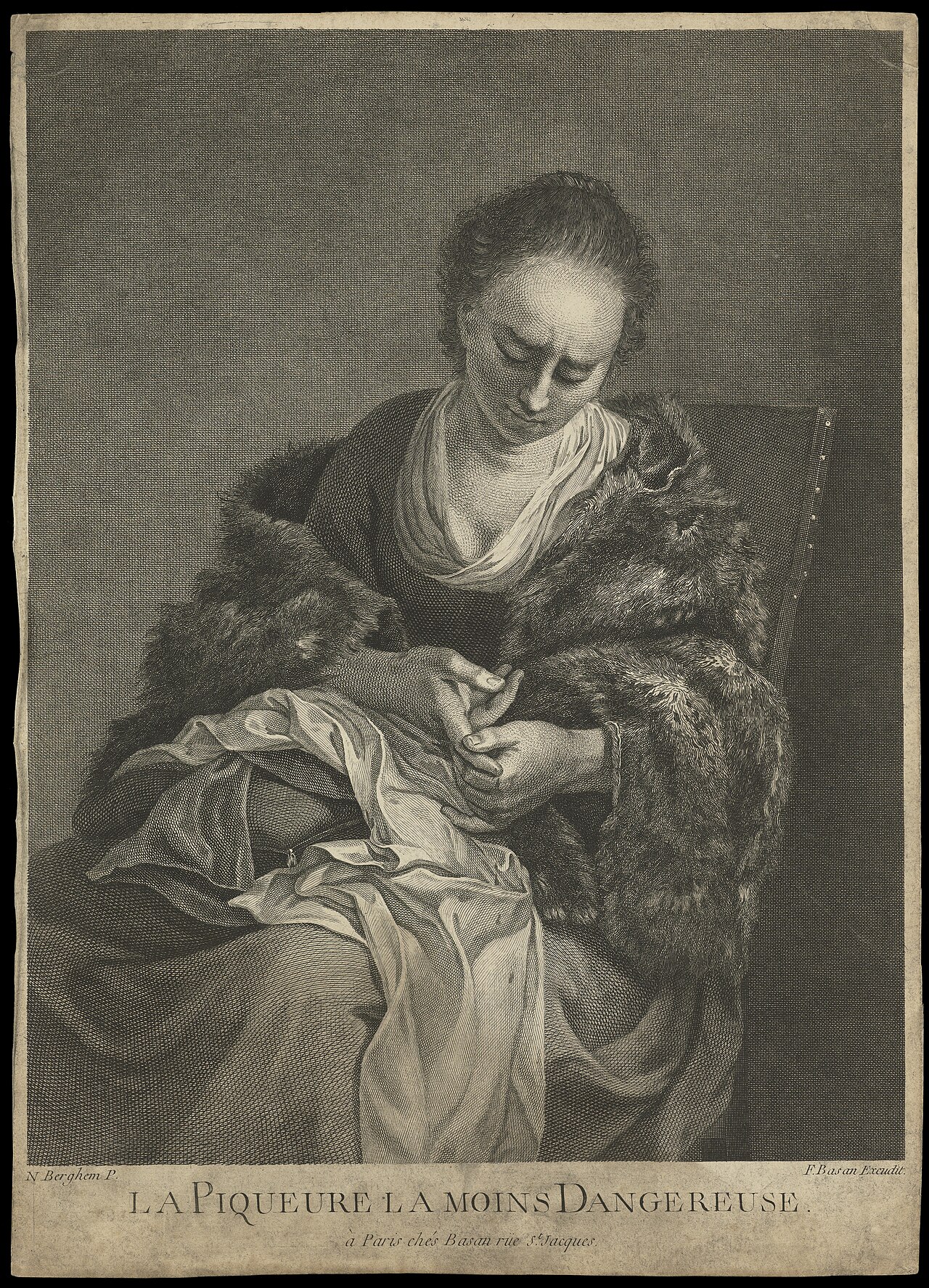
Gentle care of a minor cut; keeping the wound clean and covered reduces irritation. Photograph: Wellcome Collection
How regrowing nerves add to the itch
Skin is packed with sensory nerve endings, and an injury destroys them. As the wound heals, those nerves regenerate and grow back into the new tissue, and during regrowth they misfire. Biology Insights reports that regenerating nerve fibers show temporary hyper-excitability, sending erratic signals the brain reads as itch.
Research tracking nerve fiber density in healing skin found that two neuropeptides, substance P and CGRP, peaked between 2 and 6 weeks after injury. CGRP levels eventually returned to baseline, but substance P remained elevated at roughly twice normal density even months later. Substance P is a well-known mediator of itch and pain, which helps explain why some scars keep itching long after they look finished.
Mechanical tension adds a third layer. Specialized cells called myofibroblasts contract the wound margins to shrink the wound's surface area. That pulling tugs on surrounding healthy skin and its nerve pathways, creating a persistent low-grade itch, according to West Coast Wound and Skin Care.
Dryness amplifies everything. A scab or newly formed skin loses moisture faster than intact skin, and dry nerve endings fire more easily. This is one reason the itch often worsens in winter or in air-conditioned rooms, and it is a different mechanism from the skin itch that follows a hot shower, though moisturizing helps both.
Nighttime is the worst for many people. Histamine levels follow a circadian rhythm and run higher at night, and with fewer distractions the brain notices the itch more. A similar nighttime worsening shows up in other conditions, such as a cough that gets worse when lying down.
What calms the itch without slowing healing
The golden rule is simple: do not scratch. Scratching gives a split second of relief by overwhelming itch signals with pain signals, but it tears new tissue, triggers fresh inflammation, and releases more histamine. Biology Insights describes it as a loop where scratching directly intensifies the itch it was meant to stop.
Keep the wound moist and covered. A covered wound heals faster and itches less than one left to dry out and scab heavily. Petroleum jelly or a plain fragrance-free moisturizer on the surrounding skin reduces the dryness that sensitizes nerve endings.
Cool the area when the itch spikes. A cool, damp cloth constricts blood vessels and dulls nerve firing for a short while. Avoid hot water on healing skin, since heat increases blood flow and histamine release.
Antihistamines can help, especially at night. Over-the-counter options such as cetirizine or loratadine are less sedating choices for daytime, while diphenhydramine's drowsiness can be an advantage before bed. As always with medication, follow the package directions.
Watch out for contact irritation. Adhesives, latex, fragrances, and some topical antibiotics can cause contact dermatitis that mimics healing itch. If the itch is worst exactly where tape or a bandage touches, try a hypoallergenic dressing.
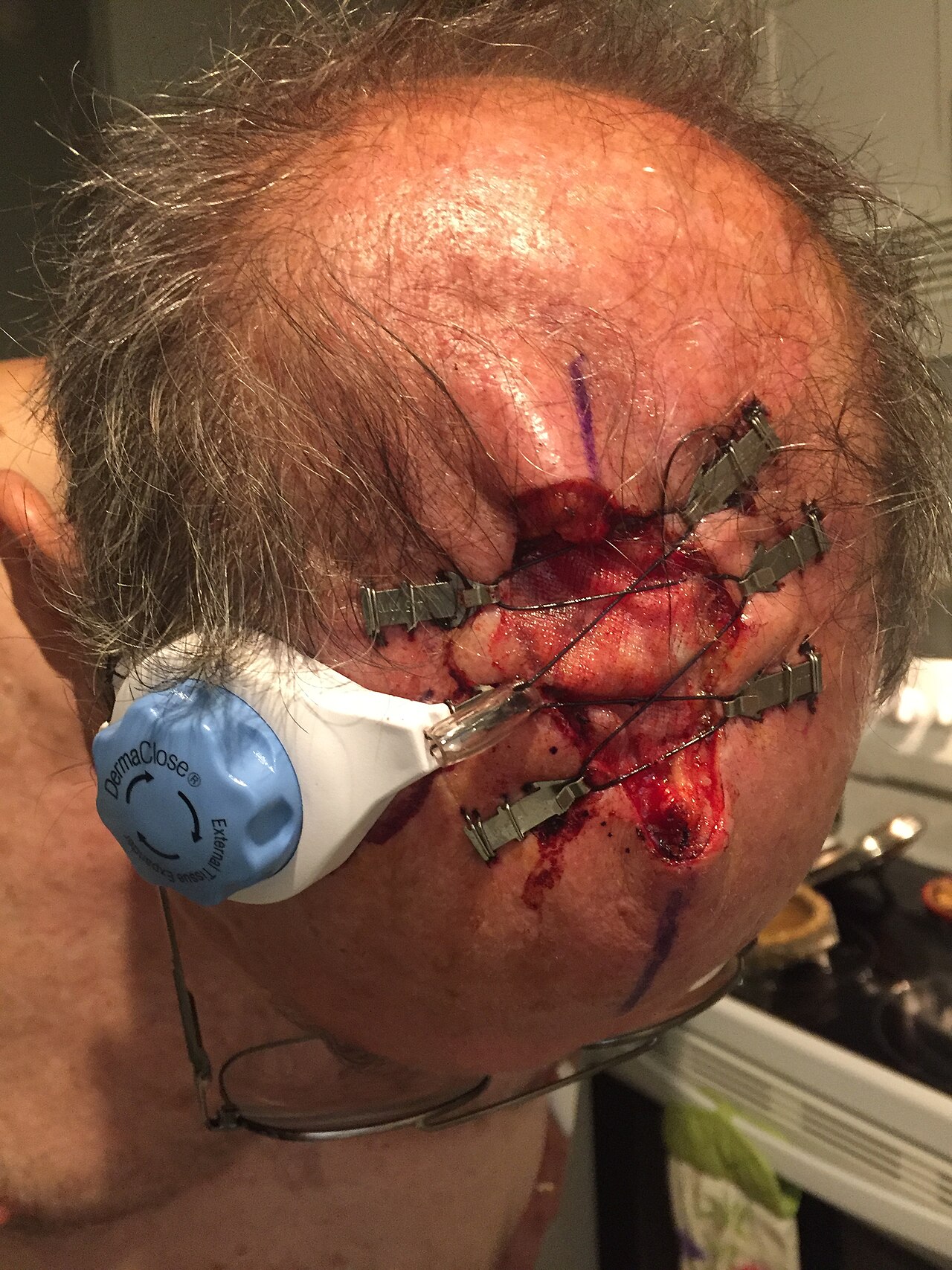
Wound closure devices hold skin edges together so tissue can repair with less tension. Photograph: Whoisjohngalt
When itching means something is wrong
Ordinary healing itch appears days to weeks after injury, comes and goes, and gradually fades. Certain patterns deserve a clinician's look instead of patience.
Increasing redness, warmth, swelling, or pain around the wound can signal infection. Pus, yellow or green drainage, red streaks spreading outward, or a fever are clearer warning signs, according to Healthline.
Itch that keeps intensifying instead of easing over 2 to 3 weeks is worth checking. So is itching paired with a rash spreading beyond the wound, which can indicate an allergy to a dressing or ointment rather than healing.
People with diabetes, poor circulation, or weakened immunity should be more cautious. Their wounds heal slower and infect more easily, so new or worsening itch deserves earlier attention.
Frequently asked questions
Does an itchy wound mean it is healing?
Usually, yes. Itching that starts several days after injury and slowly fades typically reflects histamine release, nerve regrowth, and tissue remodeling. The absence of itch does not mean healing has stalled, though, since many wounds heal without itching at all.
How long does wound itching last?
Most wound itch resolves within 2 to 4 weeks as inflammation settles. Scar itch can persist for months because substance P stays elevated in regenerating nerves. Itching that worsens after the second week deserves medical attention.
Is it safe to put anti-itch cream on a healing wound?
Plain moisturizers and petroleum jelly are generally safe on closed or nearly closed wounds. Avoid steroid creams or products with fragrances on open wounds unless a clinician advises it, since they can irritate raw tissue or trigger contact dermatitis.
Why does my scar still itch months later?
Scar remodeling continues for months, and regenerating nerves stay hyper-excitable during that time. Research shows the itch mediator substance P can remain at about twice normal density long after the surface closes. Gentle massage and moisturizing often help.
Outlook
An itchy wound is usually a wound doing its job. Histamine from mast cells, hyper-excitable regrowing nerves, and the mechanical pull of contracting tissue together explain why the itch peaks during the proliferation and remodeling phases, sometimes weeks after the injury.
Calm the itch with moisture, cooling, and patience rather than fingernails. Keep the wound covered, moisturize the surrounding skin, and consider an oral antihistamine at night if the itch disrupts sleep.
It's a good idea to see a clinician if itching intensifies after 2 to 3 weeks, or if redness, swelling, pus, or fever appear. This article is for general information only and is not medical advice.
Latest in Health
- Why skin itches after a hot shower
- Why a cough gets worse when lying down
- Night leg cramps: causes, relief, and prevention
- Why your heart races when you get startled
Get one practical health explainer in your inbox each week. Subscribe to the Rive News newsletter.
Related stories
ADHD linked to fourfold dementia risk in Pitt study of 187,000 adults
Adults with ADHD face four times the risk of dementia, a University of Pittsburgh study of 187,000 adults published in JAMA Psychiatry

Why Do Athletes Get Cramps Despite Drinking Water?
Muscle cramps strike even well-hydrated athletes because sweat drains electrolytes that plain water cannot replace. Here is why water alone

Do bananas actually prevent muscle cramps?
A medium banana has 422 mg of potassium, but the evidence says it cannot stop cramps. Here is what the research shows, and what actually