
Why does your scalp hurt when you move a tight ponytail?
Key takeaways
- Your hair has no nerves, so the ache comes from nerve endings around each follicle when a tight style tugs on them.
- A tight ponytail can trigger a genuine headache from traction on scalp muscles and fascia, not from anything inside your skull.
- Occasional soreness is harmless, but daily tight styling can damage follicles and cause lasting hair loss over time.
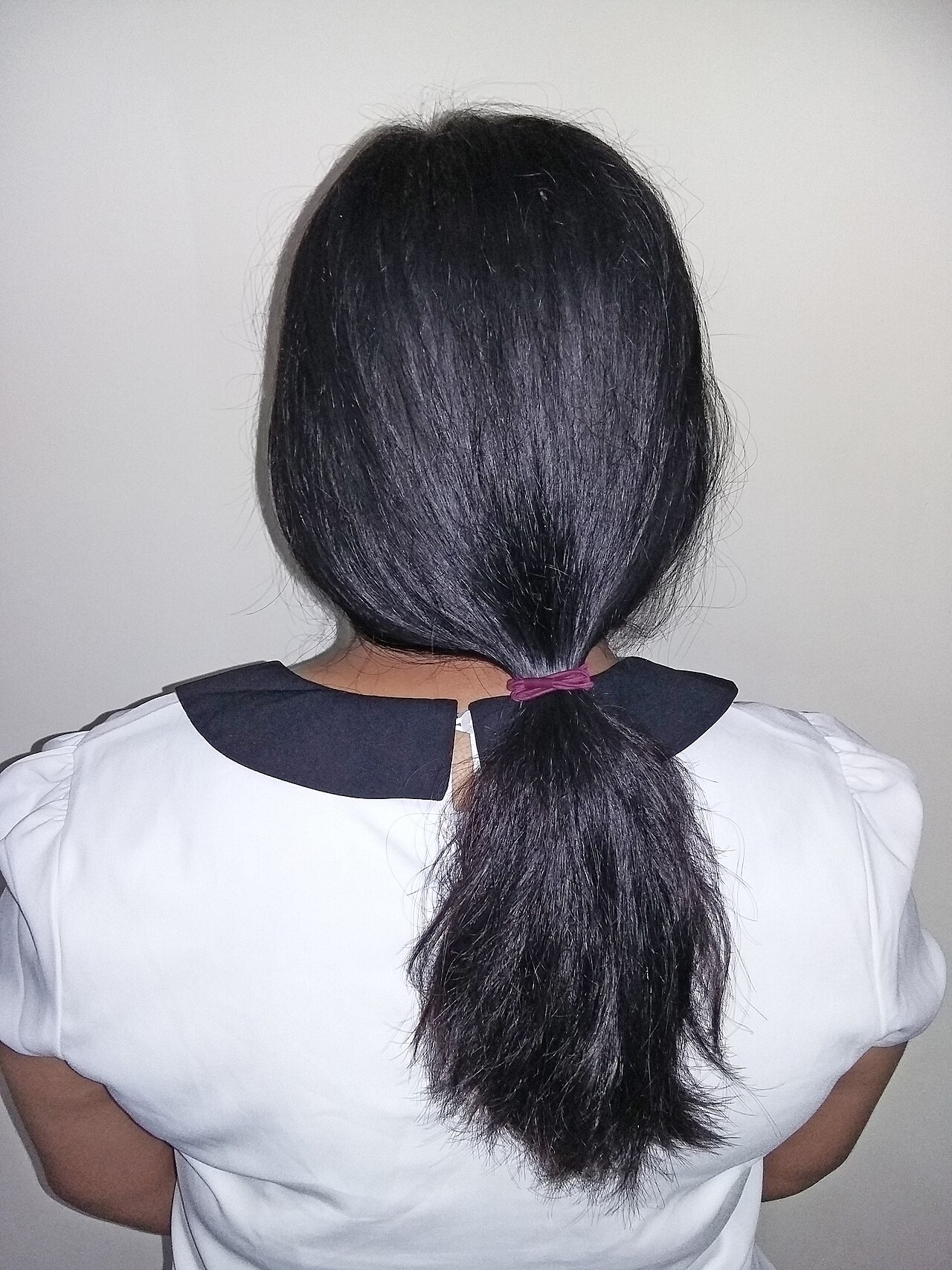
A tight ponytail pulls on the nerve-rich tissue that anchors every hair follicle. Image Credits: Wikimedia Commons
That familiar ache when you take your hair down after a long day has a real medical explanation. Scalp pain triggered by moving your hair is called trichodynia, and it happens because the nerves packed around your hair follicles are reacting to sustained pulling. Your hair strands themselves feel nothing.
This article explains why your scalp hurts when you move a tight ponytail, including the nerves involved, the so-called ponytail headache, when sensitivity becomes a condition, and how to get relief.
Why the pain feels like your hair hurts
Hair is made of dead keratin, a protein with no nerves and no blood supply. The scalp pain you feel cannot come from the strands. It comes from the skin around them.
Each hair follicle sits in a small pocket of skin packed with sensory nerve fibers. These nerves respond to pressure, temperature, and chemical signals from the surrounding tissue, according to Biology Insights. When those nerve endings get irritated or sensitized, you feel pain at the base of your hair.
Pulling gently on a lock of hair tugs on the follicle and its nerve supply, which is why "hair pain" often gets worse when you move your hair or press on your scalp.
The scalp is one of the most nerve-dense areas of the body. The main nerve responsible for sensation across the forehead, top of the head, and temples is a branch of the trigeminal nerve, the same nerve involved in migraines and tension headaches. So when you shift a tight ponytail, you are pulling on some of the most sensitive real estate on your body.
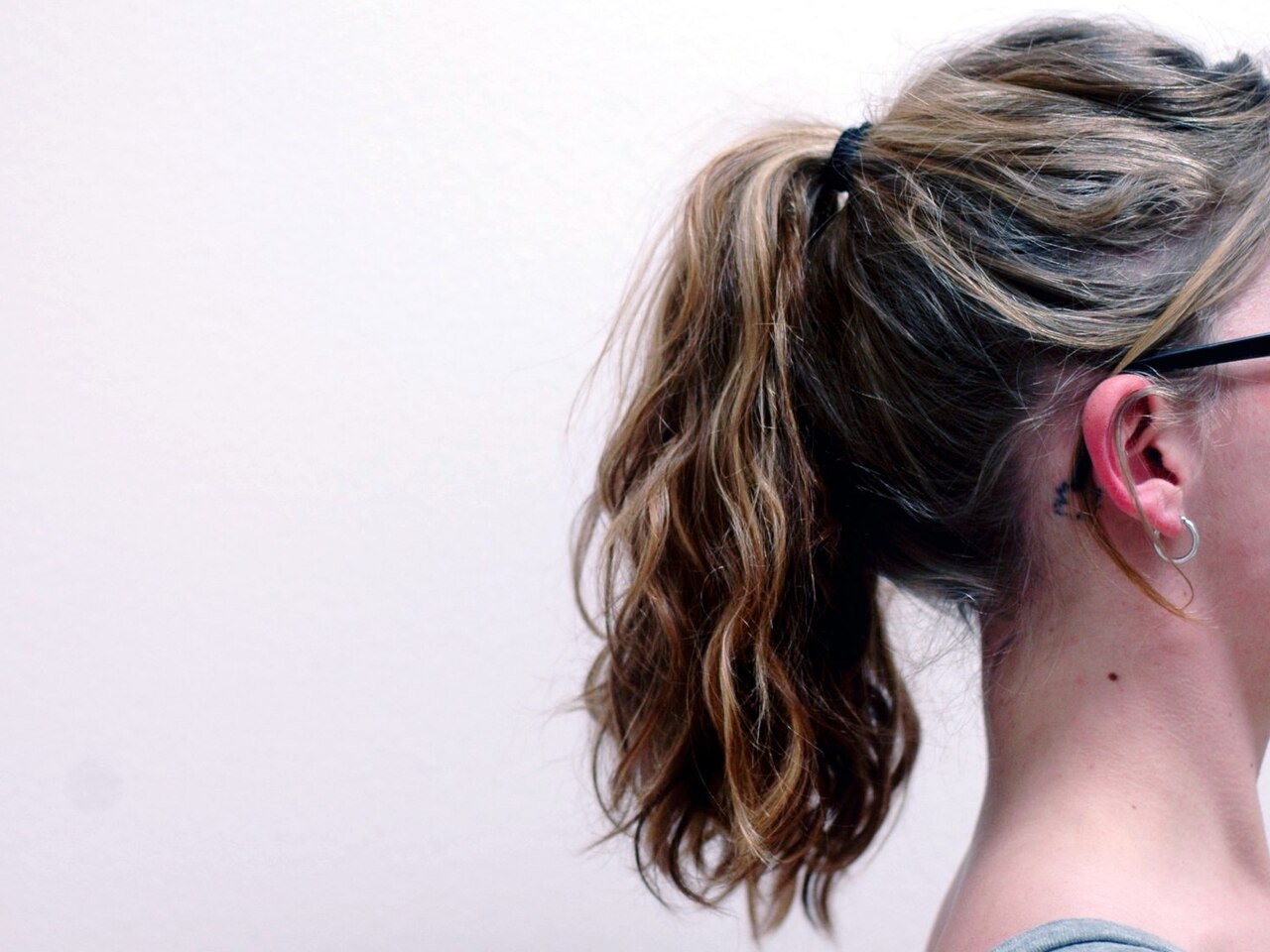
Even slight repositioning of a tight style tugs follicles and their nerve supply. Image Credits: Wikimedia Commons
Tight ponytails and the ponytail headache
If your scalp pain shows up after you wear a tight bun, braids, or a high ponytail, the cause is usually mechanical. Sustained traction on the hair pulls on the connective tissue and muscles that anchor each follicle to the scalp. This generates a genuine headache, sometimes called ponytail headache, which arises from the pericranial muscle fascia and tendon traction rather than from anything happening inside the skull.
Researchers classify it as a pure extracranial headache, meaning it originates entirely outside the skull. That is why the pain often disappears within minutes of releasing your hair. Remove the traction and the nerve signaling stops.
Research on ponytail headache found that more than half of women in one study experienced headache purely from wearing their hair pulled back, with pain at the site of the hair tie and often radiating to the forehead, temples, or neck. Loosening the hair relieved the pain within half an hour for most participants. Even a plain hair tie becomes a source of real tension when it grips the same spot for hours.
Stress can make everything worse. Chronic stress amplifies the nervous system's sensitivity to incoming signals, so a stimulus that would normally register as mild pressure can register as pain instead. That is one reason scalp tenderness flares during difficult weeks.
Trichodynia: when the scalp turns extra sensitive
Sometimes scalp pain shows up without any tight hairstyle to blame. The clinical term is trichodynia: a painful, burning, or stinging sensation of the scalp that occurs without a visible skin disease explaining it. People describe burning, stinging, tenderness, tingling, or a crawling feeling, sometimes across the whole scalp and sometimes in patches.
The term was coined by dermatologist Alfredo Rebora in a 1996 paper in the journal Dermatology, which found the symptom in roughly a third of female patients with hair loss. Later studies by Ramon Grimalt (1998) and Isil Kivanc-Altunay (2003), published in peer-reviewed dermatology journals, confirmed the pattern. Trichodynia often shows up alongside telogen effluvium, the stress-related shedding many people notice after illness or hormonal shifts.
The leading explanation centers on the nerves around every follicle. Follicles are wrapped by fine nerve fibers that carry signaling molecules called substance P and calcitonin gene-related peptide. These molecules normally help regulate hair growth, but they are also involved in neurogenic inflammation, where the nerves themselves trigger compounds associated with pain.
One theory holds that elevated substance P around the follicle can simultaneously trigger pain signaling and push hairs into the shedding phase.
Some people also develop scalp allodynia, where stimuli that should not cause pain, like lightly brushing your hair, become genuinely painful. Scalp allodynia can flare during migraines, periods of high stress, or hormonal shifts. For unexplained sensations elsewhere on the body, our explainer on why wounds itch while they heal covers a similar nerve-sensitivity process.
Traction alopecia: when pulling causes lasting damage
Occasional soreness from a tight ponytail is normal and harmless. Persistent pain from wearing tight styles every day is a different story. Chronic tension on hair follicles can lead to traction alopecia, a form of hair loss caused by repeated mechanical pulling, according to the London Dermatology Centre.
Warning signs include thinning at the hairline or temples, broken hairs around the parting, and soreness that no longer fades quickly after you release your hair. Unlike brief trichodynia, traction alopecia can damage follicles permanently if the tension continues for months or years. The fix starts with reducing the pull: looser styles, softer hair ties, and giving the scalp regular breaks from tension.
If pain persists or you notice hair loss, consult a dermatologist for evaluation and early intervention. Early changes are usually reversible.
What actually helps the soreness
For purely mechanical soreness, the simplest fix works fastest: take the hair down and let the follicles rest. Pain that comes from a tight style typically fades within minutes to half an hour once the traction stops.
Avoid tight hairstyles while the scalp is tender. Ponytails, buns, braids, or anything that pulls at the scalp will aggravate already-sensitized nerves. A plain hair tie becomes a source of real tension when it grips the same spot for hours.
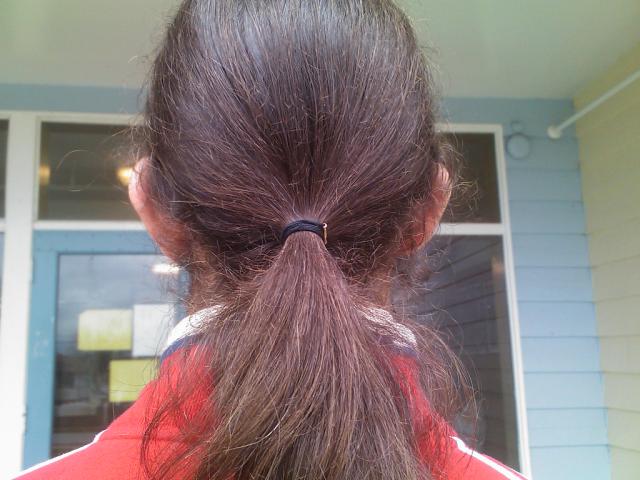
Switching to looser styles and softer ties reduces the daily traction load on follicles. Image Credits: Wikimedia Commons
For trichodynia without a clear structural cause, some dermatology sources report that capsaicin cream applied to the scalp has shown benefit in research, working by depleting substance P from local nerve endings. This is not a home remedy to try without medical guidance. Checking factors like ferritin, thyroid function, and vitamin D can also matter, since addressing the underlying hormonal or nutritional picture tends to ease both shedding and scalp sensitivity together.
Disclaimer: this article is for information only and is not medical advice. See a dermatologist if scalp pain is persistent, worsening, or comes with hair loss.
How long does ponytail scalp pain last?
For simple mechanical soreness, the pain usually fades within minutes to about half an hour after you release your hair. In one study of ponytail headache, loosening the hair relieved the pain within 30 minutes for most participants.
Is it normal for your scalp to hurt when you move your hair?
Occasional tenderness after a tight style is common and usually harmless. Pain that happens with gentle touching, brushing, or moving your hair without any tension can indicate trichodynia or scalp allodynia, which deserve a dermatologist's look.
Can tight ponytails cause permanent damage?
Wearing tight styles occasionally is fine. Wearing them tightly every day for long periods can cause traction alopecia, a form of hair loss from repeated mechanical pulling. Thinning at the hairline is the classic early warning sign.
Does trichodynia mean I am losing hair?
Not always, but the two are linked. Rebora's original 1996 research identified trichodynia specifically in patients with telogen effluvium. Many people with scalp tenderness notice increased shedding at the same time, which is worth discussing with a dermatologist.
Why does my scalp itch or burn after a hot shower?
Heat can flare already-sensitive scalp nerves, and hot water strips protective oils. Related sensory quirks, like why skin itches after a hot shower, follow similar nerve-overreaction pathways.
Outlook
A sore scalp from a tight ponytail is your follicles' nerve endings protesting against sustained traction. For most people it is a brief, harmless signal that fades once the hair comes down.
The things that matter are the patterns: how often it happens, how long it lingers, and whether hair loss is part of the picture.
Keep styles looser, give your scalp tension-free days, and get checked if pain or shedding persists. If the soreness comes with other odd bodily sensations, you may also find our piece on why you burp more after drinking soda interesting for another case of the body overreacting to mild stimuli.
Latest in Health
- Why you cough more lying down with a cold
- Why skin itches after a hot shower
- Why wounds itch while they heal
- Why your heart races when you get startled
Get one short science-backed health explainer in your inbox each week. Subscribe to the Rive News newsletter.
Related stories
ADHD linked to fourfold dementia risk in Pitt study of 187,000 adults
Adults with ADHD face four times the risk of dementia, a University of Pittsburgh study of 187,000 adults published in JAMA Psychiatry

Why Do Athletes Get Cramps Despite Drinking Water?
Muscle cramps strike even well-hydrated athletes because sweat drains electrolytes that plain water cannot replace. Here is why water alone

Do bananas actually prevent muscle cramps?
A medium banana has 422 mg of potassium, but the evidence says it cannot stop cramps. Here is what the research shows, and what actually