
Why your voice sounds different on a recording
By Rive News / Research desk | Rive News / Published October 29, 2026 at 9:00 AM PKT
Key takeaways
- You hear your own voice through two routes at once: sound through the air and vibrations through the bones of your skull.
- Bone conduction boosts the lower frequencies, so the voice in your head sounds deeper and fuller than the one other people hear.
- A recording captures only the air route, which is why playback sounds thinner and higher, and also why it matches how others hear you.
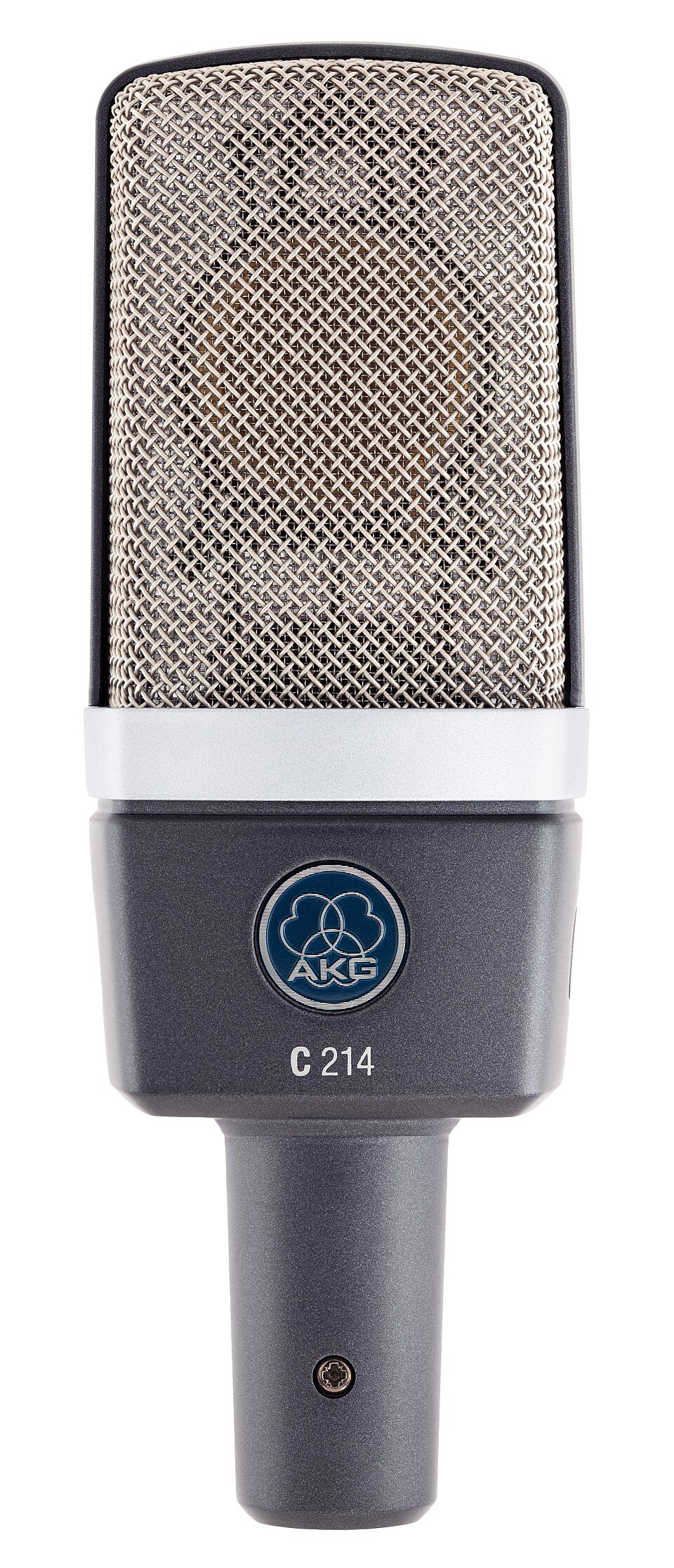
[An AKG C214 condenser microphone.] Photograph: an AKG C214 condenser microphone
Image Credits: Wikimedia Commons
Hearing your voice on a recording for the first time is a strange experience. The voice coming back sounds thinner, higher, and somehow less like you than the one you have used all your life. Most people react the same way, and many working voice actors still dislike their own playback.
The reason is physical, not a fault in the microphone. You hear yourself through two channels at once, while a recording captures only one. The missing channel is the one that makes your voice sound deep and full to you alone.
This article explains both hearing routes, what bone conduction adds, why other people's voices do not change on playback, and how to get used to the recorded version.
The two routes your voice takes to your ears
When you speak, your vocal folds vibrate and set the air moving. Those sound waves travel out of your mouth, through the air, and into your ear canals, the same way any other person's voice reaches you. That route is called air conduction, and it is the route every listener shares.
The second route never leaves your body. Vibrations from your vocal folds travel through the bones and tissues of your head straight to your inner ear. That route is called bone conduction, and only you get it for your own voice.
Your brain blends the two signals into one familiar voice. You never hear the air-only version while speaking, so the blend becomes your sense of what you sound like. It is a private mix, built over a lifetime of talking.
The inner ear turns both kinds of vibration into signals the brain reads as sound. Sound waves in the air vibrate the eardrum, which moves three tiny bones in the middle ear, which pass the motion on to the cochlea, a small snail-shaped organ in the inner ear. Bone vibrations reach the cochlea more directly, through the skull itself.
What bone conduction adds
Bone conduction changes the sound because bone favors lower frequencies. Timothy Hullar, an otolaryngologist who answered this question for Scientific American while at Washington University School of Medicine in Saint Louis, explained that the second route changes the sound because, in his words, "the mechanical properties of your head enhance its deeper, lower-frequency vibrations."
That extra low-frequency weight is why the voice in your head has a warmth and depth that nobody else hears. It is not an illusion in the sense of being imagined. It is a real signal reaching your inner ear, just one that no listener or microphone can share.
A recording strips that signal away. Hullar put it plainly: "When you listen to a recording of yourself speaking, the bone-conducted pathway that you consider part of your 'normal' voice is eliminated." What remains is the air-conducted version, which sounds thinner and brighter by comparison.
A team of hearing researchers writing for young readers in Frontiers for Young Minds stated the same point in the simplest terms. They wrote that only the air conduction part is recorded, because the microphone is outside your head. Their article appeared in April 2025, and it frames the effect as a classroom experiment readers can try with a helper.
Why other people's voices stay the same
The test that proves the mechanism is listening to someone else on a recording. A friend's voice sounds nearly the same on playback as in person, while yours changes. The Frontiers researchers note this directly: the spoken and recorded voices of a helper sound more similar because the bone conduction component is missing in both cases.
You hear other people through air alone in life and on playback, so nothing is lost between the two. You hear yourself through air plus bone in life, but through air alone on playback, so a whole channel disappears. The size of that gap is the size of the surprise.
Microphone placement and speaker quality can shift the tone slightly, but they are side effects. A good microphone in a quiet room still records only the airborne sound, and a cheap phone speaker still plays back only that sound. The core difference comes from the missing bone route, not from the equipment.
Age and hearing changes can add smaller effects over time, but they do not explain the sudden shock of a first playback. That shock is the same at any age, because the private blend has been with you since you first learned to talk.
Getting used to the recorded version
The uncomfortable part is not only acoustic. Your brain has built an identity around the blended voice, and the recording contradicts it. That mismatch feels personal, which is why people describe cringing rather than simply noticing a difference.
Repeated exposure usually softens the reaction. With enough playback, the brain learns a second version of your voice and stops treating it as wrong. Voice actors, teachers, and podcasters often report the same path: early discomfort, then tolerance, then using playback as a tool.
It helps to remember that the recording is closer to how other people hear you than the voice in your head is. If you want to know how you sound to a room, the recording is the honest witness. The voice in your head is the flattering one, and it belongs to you alone.
You can test the bone route yourself in a small way. Press your fingers gently against your cheekbones while speaking, and you will feel faint vibrations. Those vibrations are part of what your inner ear receives while you talk, and they vanish the moment you stop speaking and press play.
This article is for general information only and is not medical advice; talk to a clinician about any symptoms.
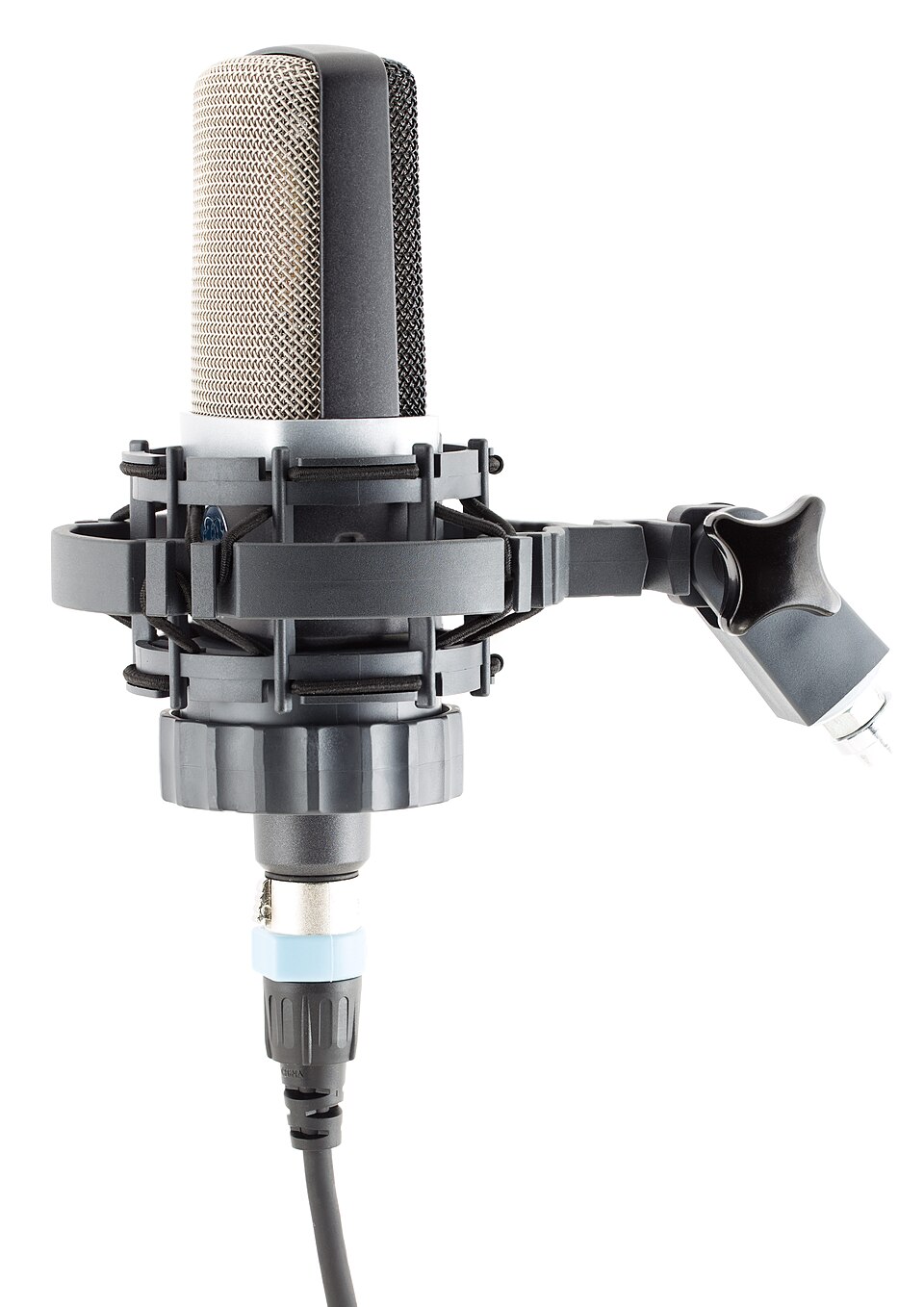
[An AKG C214 condenser microphone fitted with an H85 shock mount.] Photograph: an AKG microphone with shock mount
Image Credits: Wikimedia Commons
Frequently asked questions
Is my recorded voice my real voice?
Yes, in the sense that matters to listeners. The recording holds the air-conducted sound everyone else hears. The deeper version in your head is real too, but it is private to you because it includes bone conduction.
Why does my voice sound higher on a recording?
Bone conduction boosts lower frequencies, so removing it leaves the higher part of your voice more prominent. The playback has not raised your pitch. It has removed the bass boost your skull was adding.
Do singers and actors hear the same effect?
They do, and many dislike their early playbacks. Training helps because they learn to judge the recorded version, which is the version audiences hear, rather than the blended version in their heads.
Can a better microphone fix the difference?
No. Any microphone sits outside your head and captures only airborne sound. A better microphone gives a cleaner air-conducted recording, but it cannot restore the bone vibrations only you can hear.
The bottom line
Your voice sounds different on a recording because you normally hear it through air and bone together, while a microphone captures only the air route. Bone conduction adds low-frequency depth that makes the voice in your head sound fuller, and playback removes it.
The recorded version is therefore thinner, but it is also the version other people know. Listen to it a few times, and the stranger on the playback starts to sound like you.
Tags: voice, hearing, sound
Rive News is a research desk that explains everyday questions using published sources, with no individual author persona behind its articles.
Related
- Why do you get goosebumps when cold or scared?
- Why do you blank on names but remember faces?
- Why do eyes water when you yawn?
Subscribe for one plain-English explainer like this in your inbox each morning.
Rive News follows a standards note: facts are sourced from public pages, claims carry attribution, and corrections are made openly when a source is corrected.
Related stories
ADHD linked to fourfold dementia risk in Pitt study of 187,000 adults
Adults with ADHD face four times the risk of dementia, a University of Pittsburgh study of 187,000 adults published in JAMA Psychiatry

Why Do Athletes Get Cramps Despite Drinking Water?
Muscle cramps strike even well-hydrated athletes because sweat drains electrolytes that plain water cannot replace. Here is why water alone

Do bananas actually prevent muscle cramps?
A medium banana has 422 mg of potassium, but the evidence says it cannot stop cramps. Here is what the research shows, and what actually