
Why Do Bookshelves Sag in the Middle Over Time?
Key takeaways
- Bookshelves sag because of creep: wood and wood composites deform slowly and permanently under constant weight.
- Doubling a shelf's length multiplies sag about eight times, while doubling its thickness resists sag eight times better.
- Keep 3/4-inch plywood spans at 36 inches or less, put heavy books near the supports, and add a center support or stiffener to fix a bowed shelf.
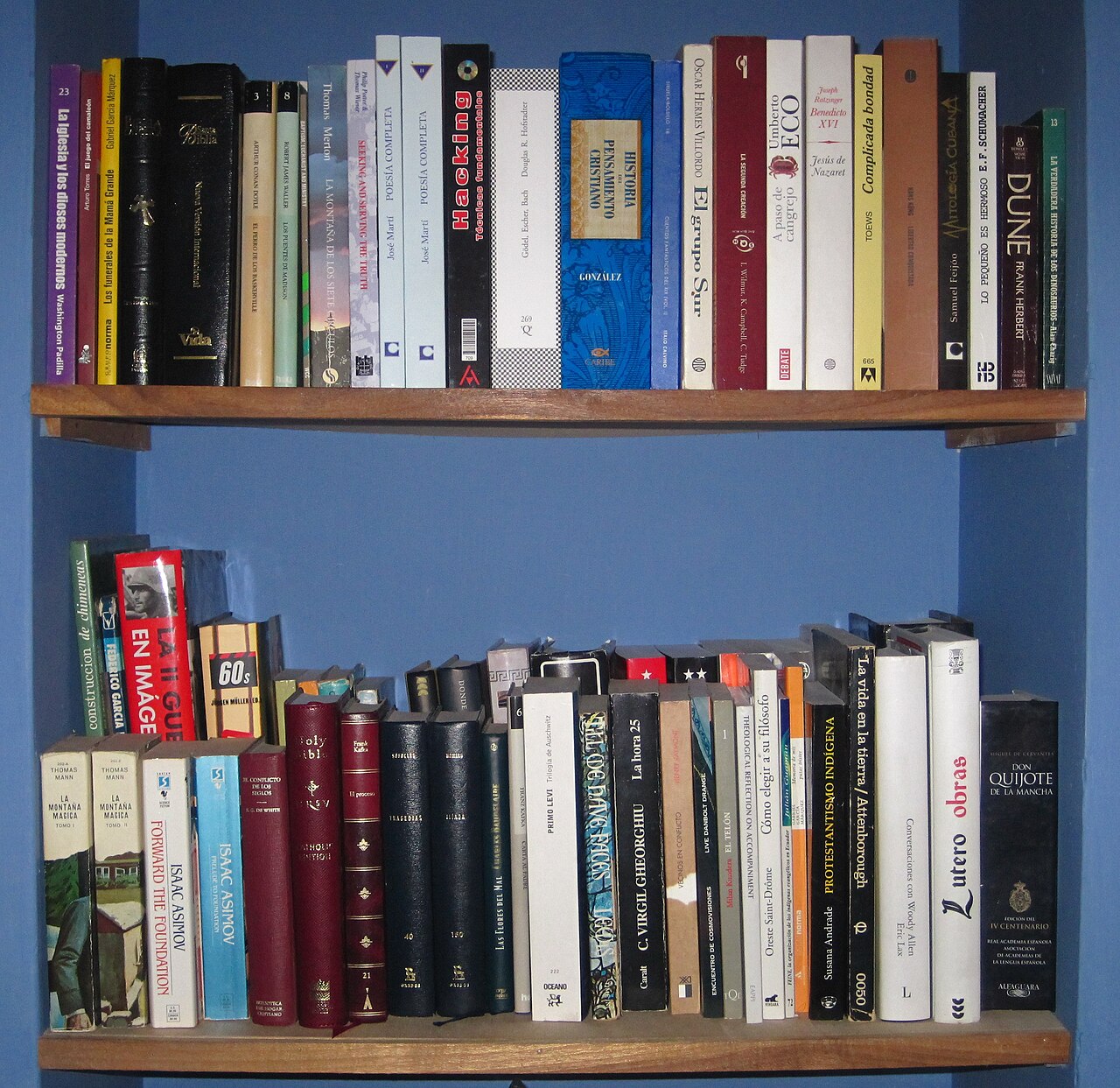
Shelf sag is the slow downward bow that appears in the middle of a bookcase shelf after months or years of holding books. The curve is gentle at first, a shallow dip you notice when you sight along the front edge of the shelf.
The technical name for the dip is deflection, and the reason it grows over time is a process called creep. Wood and wood composites are viscoelastic, meaning they stretch and slowly reshape under constant stress rather than snapping all at once. EngineerFix explains that this lets the wood fibers gradually yield to the load and settle into a permanent downward curve.
This article explains why bookshelves sag in the middle over time, including the physics behind the dip, how far a shelf can safely span, which materials resist sagging, and how to fix a shelf that has already bowed.
What actually causes the dip
Three factors work together to bend a shelf: the load, the span, and the material. Remove any one of them and the sag never happens.
The load is heavier than most people expect. Books are dense, and a full shelf carries serious weight. Archziner's rule of thumb is to plan for about 20 to 25 pounds of books per linear foot of shelf, so a simple 3-foot-wide shelf is likely holding around 75 pounds.
The span is the distance between the shelf's supports, and it is the most powerful factor of all. According to the beam deflection formula, sag increases with the cube of the length. Vectree's breakdown of shelf physics puts it plainly: doubling the distance between brackets does not double the sag, it increases it by eight times.
That cubic relationship is why the dip always appears in the middle. The center of the shelf is the point farthest from any support, so it is where the bending force concentrates. The fibers on the top of the shelf get squeezed while the fibers on the bottom get stretched, and over time that stretched bottom face is where most shelf failures begin.
Then there is creep, the time factor. EngineerFix describes creep as the slow, permanent change in a material's shape when it is held under constant stress for a long period. Wood and wood composites exhibit both elastic and viscous behavior, so instead of breaking, they gradually stretch and reform into a curve.
Environment speeds creep up. EngineerFix notes that swings in temperature and moisture cause internal stresses and uneven expansion and contraction inside the wood structure. A bookcase in a humid room or near a heat source will sag faster than the same bookcase in a stable climate.
How far a shelf can span before it bows
There is a practical span limit, and most sagging shelves exceed it. For a 3/4-inch plywood shelf carrying a typical load of books, EngineerFix gives a maximum span of no more than 36 inches.
Professional builders treat 36 inches as a hard ceiling. Archziner notes that you almost never see a professionally built bookcase with a shelf span wider than 36 inches without some kind of center support.
If a 3/4-inch shelf still sags at 36 inches, Archziner recommends two options: shorten the span to under 30 inches with a central support, or increase the effective thickness to 1.5 inches by laminating two boards together or adding a deep front nosing.
Thickness is the cheapest way to fight the cube law. Archziner points out that doubling a shelf's thickness makes it roughly eight times more resistant to sagging. A small upgrade in board thickness buys a huge return in stiffness.
There is a second force worth knowing about: shear stress. While bending stress attacks the middle of the shelf, shear stress attacks the connection points, the pins, screws, and brackets at the sides. Archziner describes it as the entire weight of a loaded shelf trying to rip its supports right out of the sides.
If you see the shelf pins tilting or the side panels bowing outward, the problem is at the supports, not the middle.
Which materials hold up and which do not
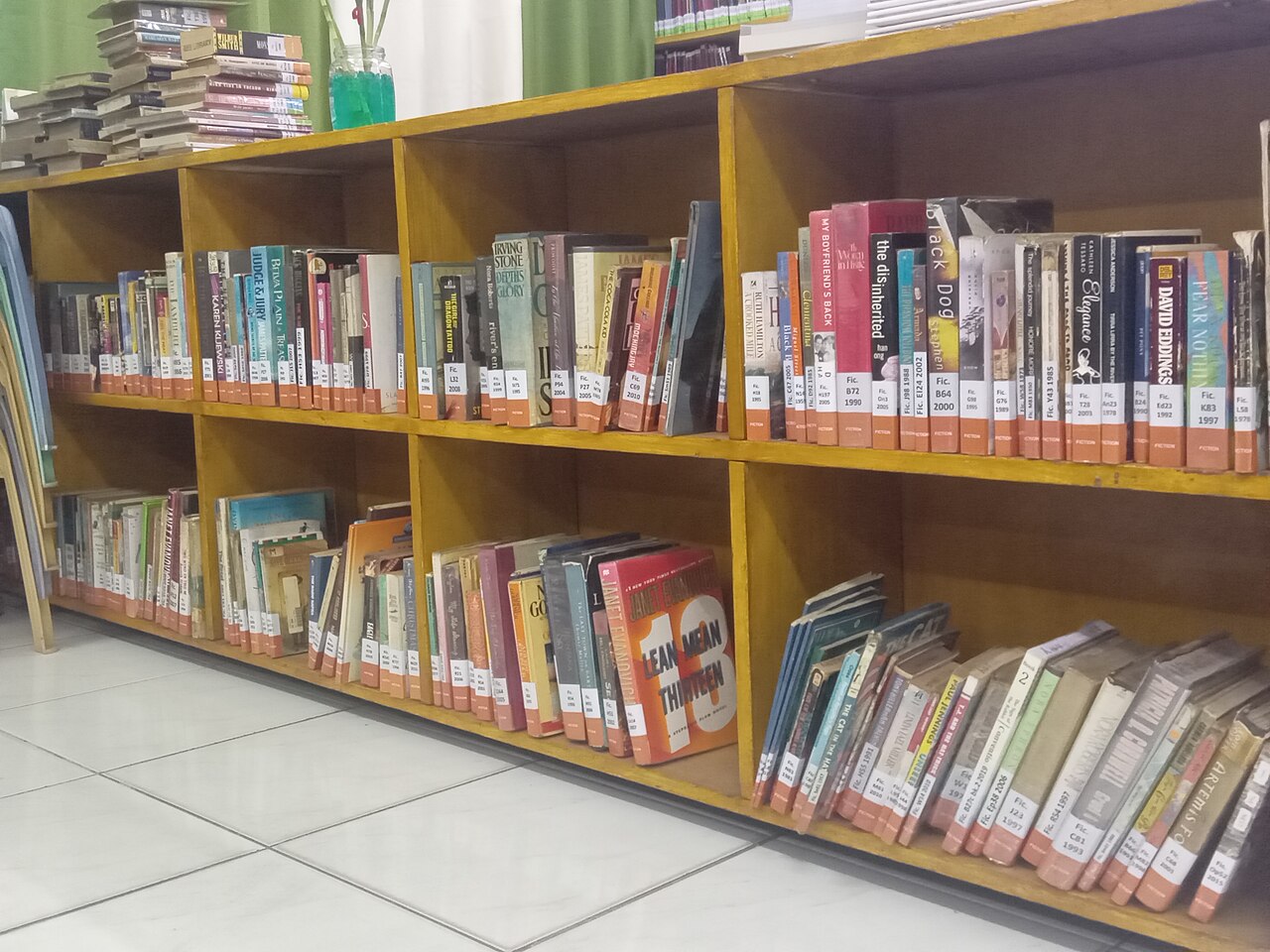
Material choice decides how fast creep happens. Vectree explains that stiffness is measured by the modulus of elasticity, and hardwoods like oak or maple have a high value, so they resist deflection better than softwoods like pine or manufactured boards.
Solid wood and high-quality plywood sit at the top of the shelf-material ranking. EngineerFix ranks particleboard and medium-density fiberboard (MDF) as significantly less stiff and more prone to sagging than solid wood or plywood of the same thickness.
The reason is structural. Particleboard contains more air pockets and less structural cohesion than plywood, which accelerates the deformation process, according to EngineerFix. It is the most common bookcase material in flat-pack furniture, and it is also the most common sagging culprit.
If you are buying a new bookcase, check the shelf material and the span before you buy. A 42-inch span of particleboard will sag no matter what you put on it. A 30-inch span of plywood will stay flat for decades.
How to fix a shelf that has already bowed
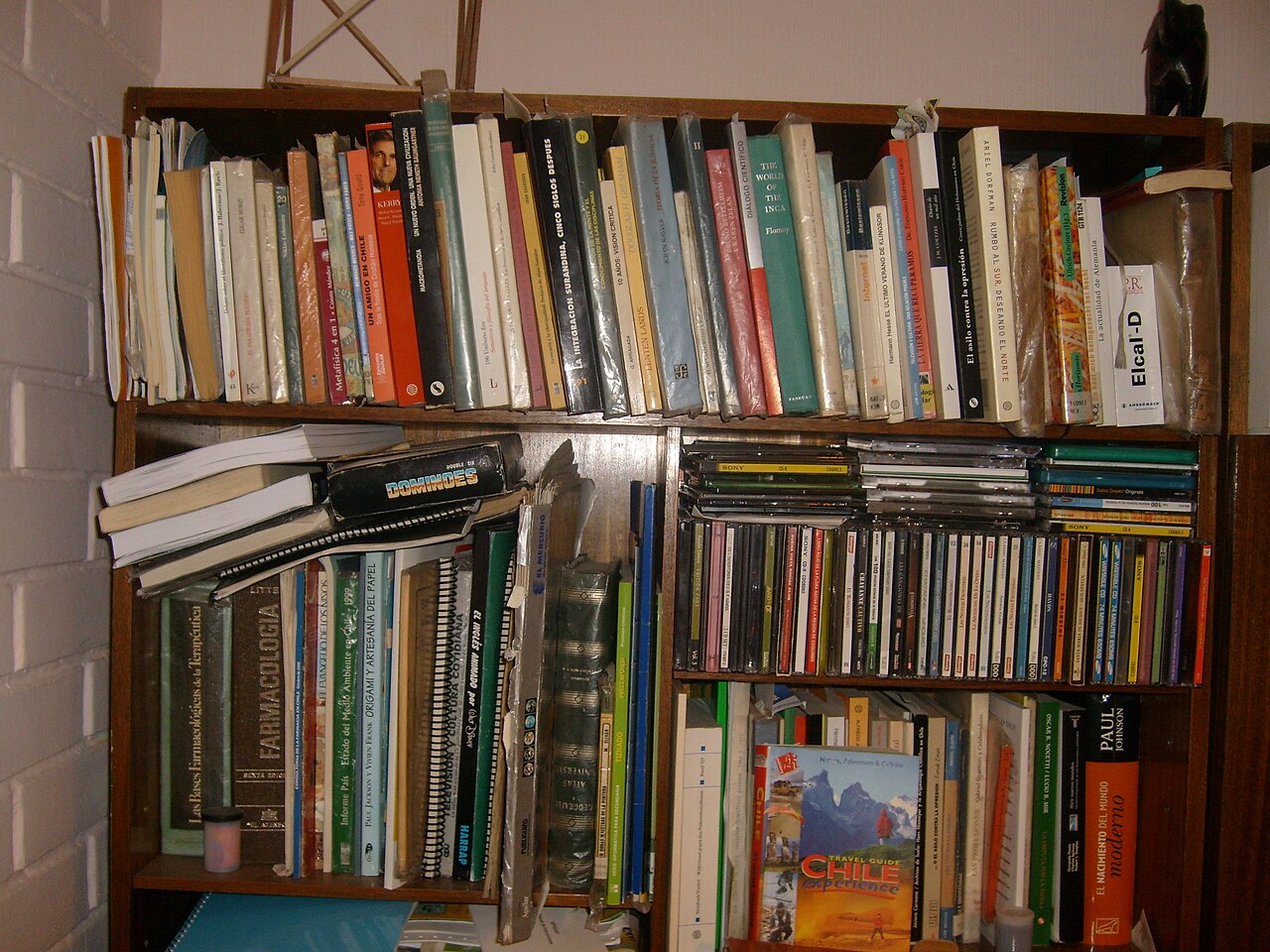
A sagging shelf is not always a lost cause. These fixes range from free to a weekend project.
Flip the shelf. The simplest fix costs nothing. EngineerFix notes that reversing the shelf lets the downward force of the load and the shelf's own weight push the material back toward a flat plane over several months. Unload it, turn it over, reload it.
Add a center support. For spans longer than three feet, EngineerFix recommends a rigid vertical divider or a metal standard-and-bracket system directly under the shelf. This effectively halves the unsupported span, which cuts deflection dramatically because of the cube law.
Stiffen the front edge. The front edge of a shelf endures the maximum tensile stress, so reinforcing it pays off. EngineerFix describes gluing and screwing a wooden cleat, typically a 1x2 hardwood strip, along the underside of the shelf. This raises the area moment of inertia, the geometric property that controls resistance to bending. A metal C-channel or angle iron with the tall dimension oriented vertically works even better for heavy loads.
Reload smarter. Put the heaviest books directly over the vertical supports, near the sides of the case. EngineerFix advises placing heavy objects close to the supports to minimize the bending force, and keeping lighter books in the center of the span.
FAQ
How much sag is normal for a bookshelf?
A tiny amount of deflection is normal for any loaded shelf, but a visible dip means the shelf is overloaded, overspanned, or both. If you can see daylight curving under a straightedge laid across the shelf, the shelf needs a fix.
Why do cheap bookcases sag faster?
Cheap bookcases usually combine the two worst factors: long spans of particleboard. Particleboard has low stiffness and creeps quickly, and mass-market bookcases often stretch shelves to 36 inches or more to cut down on parts.
Can I straighten a warped shelf without replacing it?
Often yes. Flip the shelf so the bow faces up and reload it; the load will press it back toward flat over several months, according to EngineerFix. For a severe bow, add a stiffener under the front edge at the same time.
Does standing books upright versus stacking them flat change sagging?
What matters is total weight and where it sits, not the orientation of the books. Keep the heaviest volumes near the supports and avoid piling stacks in the middle of a long span.
The bottom line
Bookshelves sag in the middle because of creep: constant weight slowly and permanently bends the shelf, and the effect multiplies with the cube of the span. The fix is mechanical, not mysterious: shorten the span, thicken the shelf, choose plywood or solid wood over particleboard, and park heavy books near the supports.
Grab a tape measure and check your bookcase today. If any shelf spans more than 36 inches without a center support, move the heaviest books toward the sides now and add a center divider or front-edge stiffener this weekend. Your shelves will thank you by staying flat.
Rive News is a research desk covering home maintenance. For structural concerns beyond a simple shelf, consult a qualified carpenter.
Latest in Home & DIY
- Why Your Kitchen Smells Like Fish or Hot Plastic
- Why Does the Smoke Alarm Go Off When You Cook Even With No Smoke
- Why Recessed Lights Turn Off By Themselves and Come Back On
- Why Extension Cords Get Warm: When Heat Turns Dangerous
Subscribe for one plain-English home maintenance explainer every week.
Found an error in this article? Email the research desk with the correction and we will fix it.
Related stories
Why Your Faucet Keeps Dripping After You Turn It Off
A dripping faucet is usually a worn washer, O-ring, or cartridge that can no longer seal. One drip per second wastes over 3,000 gallons

How to fix a running toilet without a plumber in 30 minutes
A running toilet can waste 200 gallons of water a day. Diagnose the flapper, float, or fill valve in two minutes, then fix it yourself
How to hang heavy shelves on drywall safely
Studs first, toggle bolts second, plastic anchors never for heavy loads. Weight ratings, installation steps, and mistakes that bring