
Why Your Kitchen Smells Like Fish or Hot Plastic
Key takeaways
- A fishy smell with nothing cooking often means plastic electrical components are overheating and releasing amine compounds that mimic rotting fish.
- Loose wire connections cause arcing, which creates intense localized heat that melts insulation long before any flame appears.
- Unplug the suspect appliance, switch off the breaker, and call a licensed electrician; if you see smoke or scorch marks, leave and call emergency services.

Kitchens pack outlets, heating appliances, and wiring into a small space, which is why a strange smell here deserves fast attention. Photograph: Mateusz Pielech/Pexels
You walk into the kitchen and catch a whiff of fish, or hot plastic, even though nothing is cooking and the trash went out yesterday. That smell is one your nose should never ignore. In many cases it is the scent of electrical components overheating behind the walls, inside an outlet, or in an appliance.
This article explains why overheating wiring smells like fish, including the chemistry behind the odor, the usual kitchen suspects, the non-electrical lookalikes, and exactly what to do the moment you smell it.
Why fish? The chemistry of overheating plastic
You are not smelling electricity. You are smelling the plastic around it breaking down.
Outlets, switches, breakers, and wire casings are molded from heat-resistant plastics and resins, including older thermosetting compounds such as urea-formaldehyde. When these materials get hot enough, they undergo thermal decomposition and release volatile organic compounds called amines. Amines are chemically similar to trimethylamine, the substance responsible for the characteristic odor of decaying fish, EngineerFix explains.
That is why scorched electrical plastic smells uncannily like seafood gone bad.
The hot-plastic or acrid variant of the smell comes from a different material: PVC wire insulation overheating and degrading, which releases strong chemical fumes, EngineerFix reports. In the early stages of overheating, before anything smokes, the odor often reads as fishy; as temperatures climb, it shifts toward sharp, burning plastic.
This is an early warning system, not a false alarm. The breakdown happens at temperatures far below visible smoke or flame. David Langston, a Senior Electrical Inspector with the National Fire Protection Association (NFPA), has warned that in multiple cases this odor was the only early sign before a major short circuit, according to a report on electrical fire smells.
When you smell it, something is already hot enough to be degrading.
The usual electrical suspects in a kitchen
Kitchens concentrate high-draw appliances and moisture in one room, so they produce most of the conditions that overheat wiring.
Overloaded circuits. When too much load runs through one circuit, the wiring heats up and the insulation around it begins to cook. That is the burning smell, Nextgen Electric explains. A kitchen circuit feeding a microwave, toaster oven, and kettle at once is a classic setup for this.
Loose connections and arcing. Nextgen Electric calls loose wiring connections a leading cause of electrical fires. When a wire backs out slightly from a terminal screw in an outlet or junction box, electricity arcs across the gap. Arcing generates intense localized heat in a tiny area, charring insulation and melting the plastic housing. Warning signs include warm cover plates, buzzing or crackling sounds, and lights that flicker when another appliance turns on.
Worn outlets and switches. The internal contacts that grip a plug loosen over thousands of insertions. A loose grip means poor contact, more resistance, and heat whenever a high-current appliance runs. Nextgen Electric notes that discoloration, heat, or a smell at one specific outlet means that device should be replaced promptly, with the wiring behind it inspected.
Overheating appliances. A dishwasher heating element, a failing fridge compressor relay, an overheating power strip under the counter, or a worn appliance cord can all produce the same fishy chemical smell. The odor often comes and goes with the appliance cycle, which is a useful clue: if the smell appears only while the dishwasher runs, the dishwasher is the prime suspect.
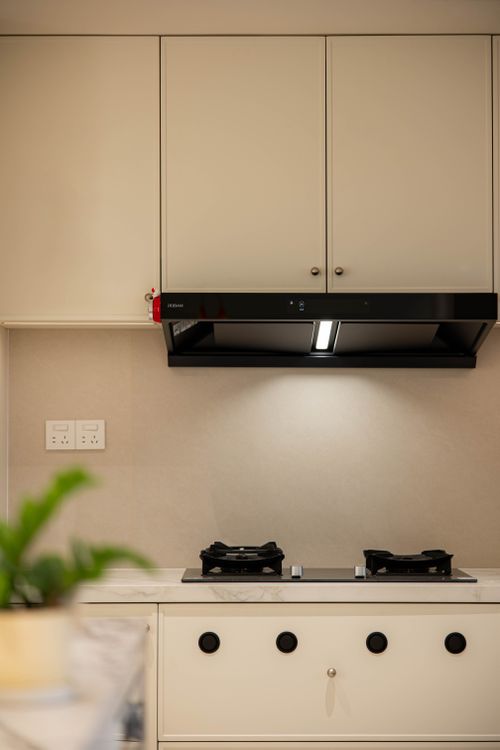
Range, dishwasher, and fridge circuits carry the heaviest kitchen loads, so start your investigation there. Photograph: Liuuu _61/Pexels
Not everything fishy is electrical
Rule out the innocent causes before you panic, because kitchens produce plenty of genuine fish smells too. Work through this list first.
A garbage disposal with trapped food, a dishwasher filter that has not been cleaned, a fridge drip pan, or a dead mouse in a vent can all smell convincingly fishy. Sewer gas from a dried-out drain trap smells more like rotten eggs than fish, but a failing wax ring or blocked vent can produce odd variants. Actual seafood in the trash or a forgotten lunch bag is the simplest explanation of all.
The electrical version has tells. It is strongest near an outlet, a switch, or the breaker panel. It comes and goes with appliance use rather than with the trash schedule.
It may arrive with warm faceplates, flickering lights, or a faint buzzing. And critically, rotten-egg sulfur is the smell utilities add to natural gas: if the odor is eggy rather than fishy, treat it as a possible gas leak, ventilate, and call the gas company, not an electrician.
What to do the moment you smell it
Treat a fishy or hot-plastic smell as an active warning, not a curiosity.
First, if it is safe, unplug the appliance nearest the smell. Do not touch the outlet itself or reach behind a hot device. Never use water on anything that might be electrical.
Second, if the smell is strong, spreading, or clearly coming from an outlet, switch, or the panel, switch off the breaker for that circuit. If you cannot localize the source, switch off the main breaker to de-energize the whole house, EngineerFix advises.
Third, call a licensed electrician and describe both the odor and any companion symptoms: warmth, buzzing, flickering, or discoloration. If an outlet has overheated enough to emit a smell, the receptacle is compromised and must be replaced, with the wiring behind it inspected, EngineerFix notes.
Fourth, if you see smoke, scorch marks, or the smell is strong and spreading, leave the house and call emergency services. Electrical fires can burn inside walls long before you see flames, Nextgen Electric warns.
FAQ
Why does my kitchen smell like fish when nothing is cooking?
Overheating electrical components release amine compounds as their plastic housings break down, and amines smell like decaying fish. Check outlets, switches, and appliances for warmth or discoloration, and call an electrician if the smell persists.
Is a fishy electrical smell dangerous?
Yes. It means something is hot enough to degrade plastic, which is a recognized early warning of an electrical fire. Cut power to the area and get a licensed electrician to inspect it.
What does an electrical fire smell like?
Usually burning plastic, rubber, or a fishy odor from overheating insulation. Some people also report a metallic or ozone scent, like the air after a lightning strike, which indicates electrical arcing.
Why does the smell come and go?
It often tracks with appliance cycles or load spikes. A dishwasher heating element or a fridge compressor only overheats while running, so the odor appears and fades with the cycle.
Should I call an electrician or the fire department?
Call an electrician for a persistent smell with no smoke or flames. Call emergency services and leave the house if you see smoke, scorch marks, or sparks.
The bottom line
A fishy or hot-plastic smell in a quiet kitchen is your electrical system asking for help in the only language it has. The chemistry is real: scorching plastic releases fish-like amines well before smoke appears. Track the smell to its source, cut the power, and bring in a licensed electrician.
Noses are underrated safety equipment. Trust yours.
Rive News is a research desk, not a licensed electrician. For persistent electrical odors, hire a qualified electrician.
Latest in Home & DIY
- Why Does Your Fridge Make Ice on the Back Wall?
- Why Do Radiators Gurgle and When Do They Need Bleeding?
- Why Do Shower Curtains Billow Inward?
Subscribe for one plain-English home safety explainer every week.
Image Credits: Pexels / Mateusz Pielech, Liuuu _61
Related stories
Why Your Faucet Keeps Dripping After You Turn It Off
A dripping faucet is usually a worn washer, O-ring, or cartridge that can no longer seal. One drip per second wastes over 3,000 gallons
How to fix a running toilet without a plumber in 30 minutes
A running toilet can waste 200 gallons of water a day. Diagnose the flapper, float, or fill valve in two minutes, then fix it yourself

How to hang heavy shelves on drywall safely
Studs first, toggle bolts second, plastic anchors never for heavy loads. Weight ratings, installation steps, and mistakes that bring