
Why Your Faucet Keeps Dripping After You Turn It Off
Key takeaways
- A drip after shutoff means a seal inside the faucet, usually a washer, O-ring, or cartridge, is no longer closing fully.
- Compression faucets fail at the rubber washer. Single-handle faucets fail at the cartridge. Mineral buildup can defeat either.
- One drip per second wastes more than 3,000 gallons of water a year, per the EPA via Denver Water.

Image Credits: Wikimedia Commons
You turn the handle until it stops. A minute later: drip. Then another.
The faucet is off, yet water keeps coming.
Inside every faucet is a seal whose only job is to block the water when the handle closes. When that seal wears, cracks, or gets coated in mineral deposits, it stops closing fully. Pressurized water finds its way through the gap.
This article explains what is happening inside the faucet, the four faucet types and their weak points, why the seals wear out, what a drip costs in water and money, and how to fix it yourself or decide to call a plumber.
What is actually happening inside
Your home's water lines are pressurized. When the faucet is open, that pressure pushes water out of the spout. When you close the handle, a mechanical seal presses against an opening and holds the pressure back.
A drip means the seal is not seating cleanly. Something, a flattened washer, a cracked O-ring, a scored cartridge, a pitted valve seat, is leaving a tiny channel. Water pressure does the rest, squeezing a steady bead of water through a gap you cannot see.
This is why tightening the handle harder sometimes helps for a while. Extra force compresses the worn seal a little further into the gap. But it also accelerates the wear, so the drip comes back worse.
The four faucet types and their weak points
Not all faucets seal the same way, and the fix depends on which type you have.
Compression faucets are the oldest design, with separate hot and cold handles that you twist multiple turns. A rubber washer at the end of the stem gets squashed against a brass valve seat to stop the water. The washer is the usual suspect. It hardens, cracks, or loses its shape over the years, and water starts seeping past.
Cartridge faucets, common in single-handle designs, use a cartridge that slides or rotates to control flow. When the cartridge wears out or malfunctions, it continually lets water pass through. That produces a slow drip even with the handle fully closed.
Ball faucets, also single-handle, use a rotating ball with chambers that align to let water through. They contain many small parts, including springs, seats, and O-rings. A drip usually traces back to worn seats and springs.
Ceramic disc faucets, the newest type, use two polished ceramic discs that slide against each other. They are durable, but a chip or scratch on either disc leaves a gap. Water creeps through, so the tap drips from the spout even when closed.
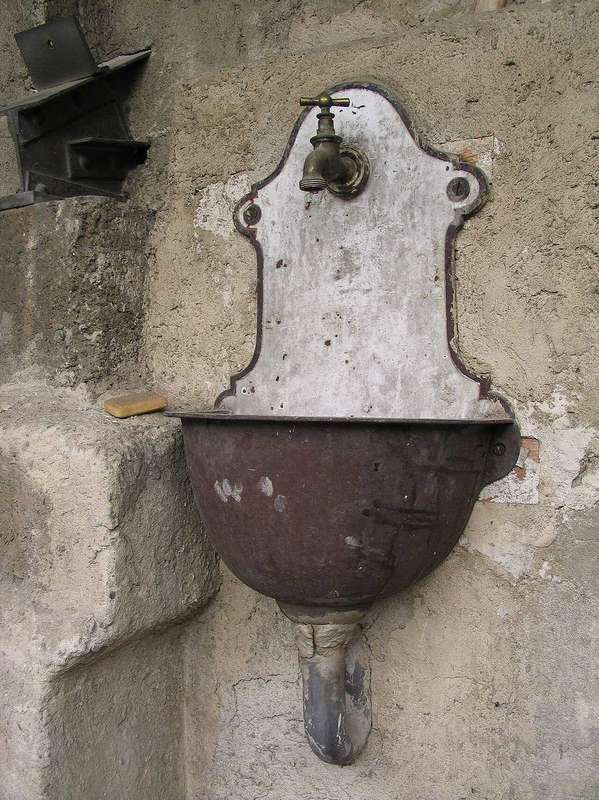
Image Credits: Wikimedia Commons
Why the seals wear out
Rubber does not last forever. Every open-close cycle compresses the washer or O-ring a little more. Hard water accelerates the damage. Minerals in the water abrade the rubber and build up as limescale on sealing surfaces. That stops discs and washers from seating flat.
The valve seat can fail too. On older compression faucets, the brass seat the washer presses against becomes pitted and rough.
In that case a new washer only helps for a few weeks. The rough seat chews it up again. The seat needs refacing with a special tool, or the faucet needs replacing.
High water pressure multiplies all of this. Very high mains pressure strains washers and cartridges, so taps in high-pressure homes wear out unusually quickly. A pressure-reducing valve on the main line can extend the life of every seal in the house.
One diagnostic clue from the trade: if you have to crank the handle harder and harder to stop the drip, a tired washer is the likely reason, per Precise Supplies' tap-repair guide.
What a drip actually costs you
A drip looks trivial. The numbers say otherwise. Denver Water, citing the EPA, reports that a faucet leaking one drip per second can waste more than 3,000 gallons of water every year.
Zoom out and the picture gets worse. The EPA's WaterSense program estimates that the average American household wastes close to 10,000 gallons a year through leaks of all kinds. The average family can waste 180 gallons per week from household leaks. Fixing them can save up to 10 percent on water bills.
Hot-water drips cost twice. You pay for the water and for the energy used to heat it. A hot-side drip is the most expensive kind of drip in the house.
Fixing it yourself
Most drips are a beginner-friendly repair. The general sequence, described step by step by Tobin Restoration, is the same across types.
First, shut off the water to the faucet at the supply valves under the sink. Remove the handle, usually by loosening a set screw hidden under a decorative cap. Then loosen the packing nut to expose the stem or cartridge underneath.
Inspect what you find. Look for cracks, flattening, or mineral buildup on the washer, O-ring, or cartridge. Those are usually the culprits.
Replace the worn part with an exact match. Put a little plumber's grease on O-rings for a smooth seal.
Take the old part to the hardware store to match it. Repair kits are cheap and widely available: a seats-and-springs kit for common faucet brands can cost around $3. Reassemble in reverse order without overtightening. Turn the water back on slowly. Watch for lingering drips.
A photo of the disassembled parts before the store trip makes matching far easier. And if the faucet leaks from the spout, replace the seats and springs. If it still drips afterward, replace the cartridge too. If it leaks around the handles instead, the O-rings are the problem.
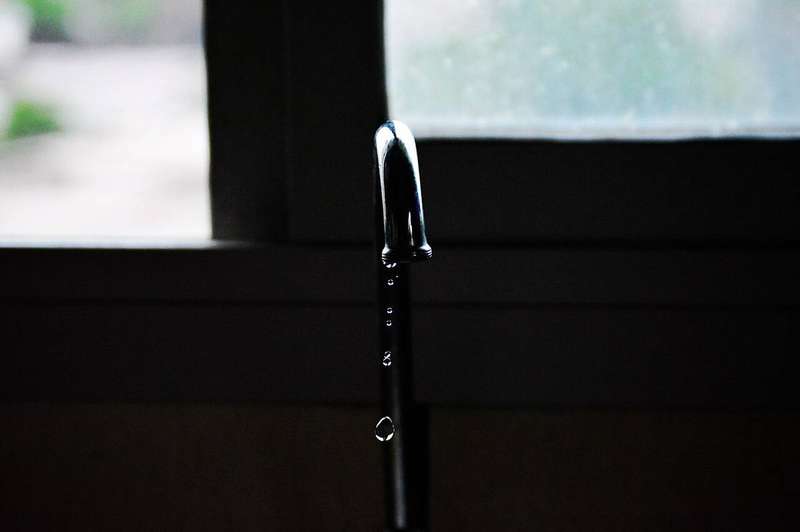
Image Credits: Wikimedia Commons
When to call a plumber
DIY has limits. Call a professional if the shutoff valves under the sink are frozen or broken. Call if the faucet body is corroded to the point that parts will not come apart, or if the valve seat is pitted and needs refacing.
Also call if the drip persists after you have replaced every wearable part. That points to a cracked faucet body, damaged supply lines, or a pressure problem that parts alone will not fix.
If your home's water pressure is above 80 psi, measured with a $10 gauge on an outdoor spigot, a plumber can install a pressure-reducing valve. That one fix protects every faucet, toilet fill valve, and appliance in the house.
Frequently asked questions
Why does my faucet drip only sometimes?
Intermittent drips often track with pressure changes. Municipal water pressure rises at night when demand drops. That can push water past a marginal seal that holds during the day. Thermal expansion in hot-water lines can do the same.
Is it the hot or cold side dripping?
Feel the drips. Hot-side drips waste heated water and usually mean the hot washer or cartridge wore first. That is common since heat accelerates rubber breakdown. Cold-side parts tend to last longer.
Can I just leave a slow drip?
You can, but you are paying for it every month, and most drips get worse, not better. A washer that is seeping today will be streaming in months. The parts cost a few dollars. The water does not.
Does a dripping faucet mean I need a new faucet?
Rarely. Washers, O-rings, seats, springs, and cartridges are all replaceable. Kits exist for nearly every major brand. Replacement makes sense only when the faucet body itself is cracked or corroded beyond repair.
The bottom line
A faucet drips after shutoff because its internal seal can no longer hold back the water pressure. On older two-handle faucets that means a worn rubber washer. On single-handle faucets it usually means a tired cartridge.
Mineral buildup and high pressure can defeat either type. The fix is one of the cheapest repairs in the house, often a few dollars in parts and half an hour. The drip it cures wastes thousands of gallons a year. Shut off the supply, match the worn part at the hardware store, and the silence afterward is worth it.
---
Topics: faucet repair, plumbing, dripping faucet, water conservation, DIY, home
Rive News is the research desk behind this publication's explainers, covering money, health, home, and science in plain English.
Latest in Home & DIY
- How to Prevent Mold in a Bathroom Without an Exhaust Fan
- How to Reduce Humidity in a Room Without a Dehumidifier
- Why Condensation Forms on Windows in Winter
- Houseplants and Indoor Humidity: What Changes
Subscribe for one plain-English home explainer in your inbox each week.
DIY content only; turn off water supplies before any plumbing work and call a licensed plumber if unsure. © 2026 Rive News. Corrections: contact the research desk.
Related stories

How to fix a running toilet without a plumber in 30 minutes
A running toilet can waste 200 gallons of water a day. Diagnose the flapper, float, or fill valve in two minutes, then fix it yourself

How to hang heavy shelves on drywall safely
Studs first, toggle bolts second, plastic anchors never for heavy loads. Weight ratings, installation steps, and mistakes that bring
Do Houseplants Raise Indoor Humidity? What the Research Says
Houseplants release water vapor through transpiration, and studies show offices with plants measure higher humidity. Here is how much,