
Do Houseplants Raise Indoor Humidity? What the Research Says
Key takeaways
- Houseplants increase indoor humidity. They release water vapor through their leaves in a process called transpiration.
- One office study measured median humidity rising from 29.1% with no plants to 49.2% with 18 plants.
- Ventilation matters more than plants. They help most in dry, still rooms, not drafty ones.
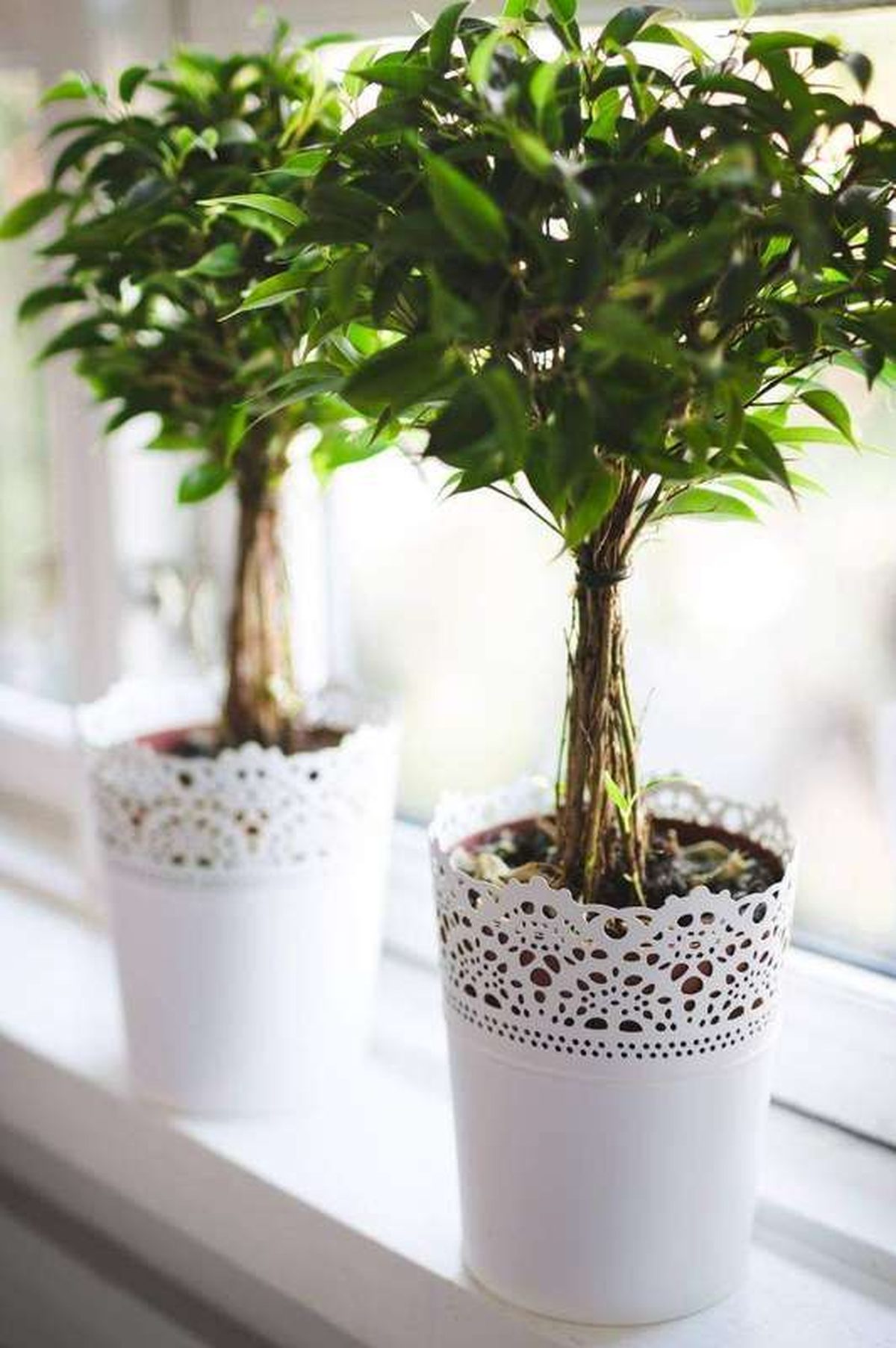
Image Credits: Wikimedia Commons
There is a persistent myth that houseplants dry the air out, as if drinking water somehow leaves the room drier. The evidence points the other way. Plants add moisture to indoor air, and researchers have measured the effect in both offices and sealed chambers.
This article explains how houseplants affect indoor humidity: how transpiration works, what office and chamber studies measured, which plants add the most moisture, and the limits of the effect.
The short answer: plants add moisture
Plants pull water up from the soil through their roots and release most of it as vapor through tiny pores in their leaves. The process is called transpiration. It is the same mechanism behind a forest feeling damp after rain.
That vapor goes straight into your room's air. There is no mechanism by which a healthy, watered plant would reduce humidity. The only honest debate is about how much the effect matters in a real home, and the studies below put numbers on it.
What the office studies found
A study published in PLOS ONE measured temperature, carbon dioxide, and relative humidity in offices with zero, five, or eighteen plants. Offices without plants had a median relative humidity of 29.1 percent. That is below the commonly recommended indoor range of 40 to 70 percent.
Offices with five plants measured 38.9 percent. Offices with eighteen plants measured 49.2 percent. The researchers attributed the climb to transpiration. They noted that it lined up with earlier work, including a school study by Park and colleagues that found monthly mean humidity 4 to 8 percent higher in rooms with plants than in control rooms.
Low humidity is not just a comfort issue. The PLOS ONE authors note that dry indoor air can irritate skin and dry out mucous membranes. Dry conditions also help some viruses stay viable longer in the air.
What the chamber studies found
Sealed-chamber experiments push the effect further by removing ventilation from the equation. A study in the journal Atmosphere tested five evergreen woody plants in chambers. It reported humidity increases of more than 50 percent in every treatment chamber. It cited earlier work by Bandehali and colleagues that found plants raise humidity by about 40 to 80 percent in enclosed settings.
A University of Reading team took the middle path: real offices, but carefully measured. In a 28-cubic-meter office, twelve Ficus plants or six Epipremnum plants produced a small but statistically significant increase in the room's moisture content. Depending on the season, each plant released between 35 grams of moisture per day in winter and 68 grams per day in summer through evapotranspiration.
Here is the catch the Reading team stresses: most of that moisture left through air exchange with the rest of the building and through absorption into room surfaces. In summer, when windows were open and air exchange was high, they could not detect a significant plant effect at all. Ventilation moves more moisture than plants add.
Which plants add the most moisture
Not all houseplants are equal humidifiers. The Reading researchers compared five species in controlled chambers and found big differences. Leafy Epipremnum, the pothos many people grow in hanging baskets, had the highest evapotranspiration rate under every tested condition.
Succulent Sansevieria, the snake plant, sat at the other end. Its moisture contribution was not significantly higher than bare soil. That makes it a good pick for rooms where you want greenery without extra dampness.
Two practical rules follow. Big, leafy, fast-growing plants in bright spots transpire the most, because transpiration rises with light and temperature. And the soil itself evaporates water too, so a freshly watered pot humidifies more than a dry one, at least until the top layer dries out.
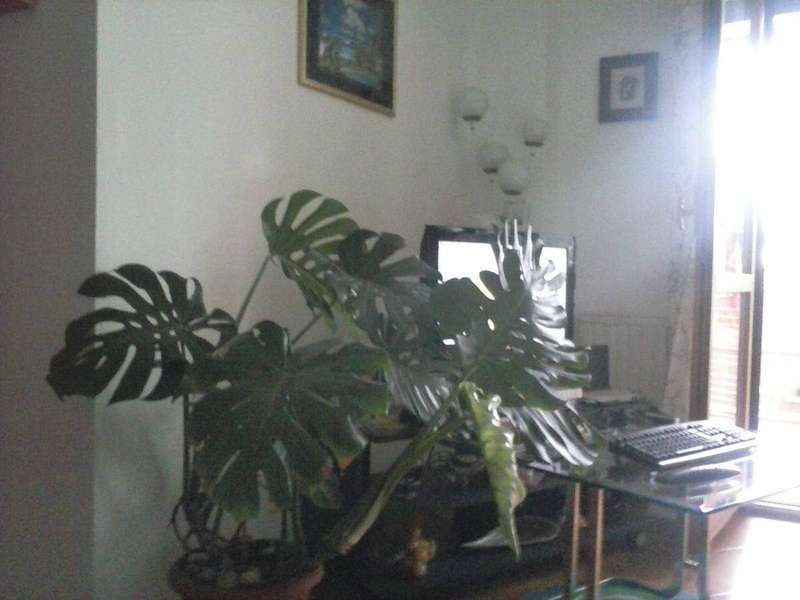
Image Credits: Wikimedia Commons
The honest limits
Plants are a gentle humidifier, not a replacement for one. A single pothos in a drafty living room will not move the needle on a hygrometer. The office studies that showed double-digit humidity gains used five to eighteen plants in enclosed rooms.
Ventilation dominates everything. Opening windows, running extractor fans, and heating systems move far more moisture than a plant collection can add. That is actually good news in reverse: if your home runs humid and musty, your plants are not the main suspect.
There is one scenario where plants genuinely matter. In a dry, heated room in winter, with the windows shut and a cluster of leafy plants on the sill, the added vapor can lift a room from the uncomfortably dry twenties into the thirties or forties of relative humidity. That matches exactly what the PLOS ONE office measurements showed.
Frequently asked questions
Can houseplants make a room too humid?
In a normal ventilated home, no. The amounts involved are tens of grams of water per plant per day. That is far below what cooking, showering, or drying laundry adds. In a sealed, unventilated room packed with plants, humidity could climb, but that is an unusual setup.
Do plants absorb moisture from the air instead?
Some plants, like certain bromeliads and air plants, can take in water through their leaves. But the net flow for ordinary potted plants is outward. Transpiration plus soil evaporation exceeds any leaf absorption by a wide margin.
Will more plants let me skip a humidifier?
For mild dryness, a generous cluster of leafy plants can help. For truly dry winter air or a medical need for controlled humidity, a humidifier delivers far more moisture, far more predictably. Plants are a supplement, not a substitute.
Does misting my plants raise room humidity?
Briefly and barely. Misting wets the leaves for minutes. Transpiration runs all day. If your goal is room humidity rather than leaf health, water the soil and let the plant do the work.
The bottom line
Houseplants increase indoor humidity. The mechanism is transpiration. The office studies show gains of several to twenty percentage points of relative humidity with enough plants, and the chamber studies confirm the physics.
The effect is real but modest, strongest with many leafy plants in still, dry rooms, and always smaller than what ventilation does. So if your winter air feels scratchy, a crowded windowsill is a legitimate small step, just not a substitute for a humidifier.
Rive News's research desk writes plain-English explainers on home and science, verified against public sources.
Latest in Home & DIY
- What is the ideal indoor humidity level, and why does it matter?
- How to prevent bathroom mold without an exhaust fan as a renter
- Why does condensation form on windows in winter?
Subscribe for one practical home explainer every morning.
Corrections: spotted an error? We fix verified mistakes promptly and note the update.
Related stories

Why Your Faucet Keeps Dripping After You Turn It Off
A dripping faucet is usually a worn washer, O-ring, or cartridge that can no longer seal. One drip per second wastes over 3,000 gallons

How to fix a running toilet without a plumber in 30 minutes
A running toilet can waste 200 gallons of water a day. Diagnose the flapper, float, or fill valve in two minutes, then fix it yourself

How to hang heavy shelves on drywall safely
Studs first, toggle bolts second, plastic anchors never for heavy loads. Weight ratings, installation steps, and mistakes that bring