
How to fix a running toilet without a plumber in 30 minutes
Key takeaways
- A running toilet can waste up to 200 gallons of water a day. The hissing sound is also a water bill problem.
- Most running toilets trace to three parts: a worn flapper, a float set too high, or a fill valve that won't shut off.
- A two-minute dye test tells you which part failed. The usual fix is a replacement part costing under $10.

The inside of a toilet tank: flapper, fill valve, float, and overflow tube. Knowing these four parts is most of the repair. Diagram: Mcgill/Wikimedia Commons
Image Credits: Wikimedia Commons
A toilet that never stops running is easy to ignore and expensive to keep. A running toilet can waste up to 200 gallons of water every single day, per EPA figures cited by plumbing guides.
The good news is that the repair is one of the friendliest DIY jobs in the house. This article explains how to fix a running toilet without a plumber: why toilets run, the two-minute diagnosis, the three fixes in order, and when to call a professional.
Why toilets run
A toilet tank is a simple machine with one job: hold water, then release it on command. A running toilet means water is escaping or entering when it shouldn't. The tank keeps refilling to compensate.
Three culprits cause nearly every case. The flapper, the rubber seal at the bottom of the tank, wears out and lets water leak into the bowl.
The float, which tells the fill valve when to stop, sits too high and lets water spill into the overflow tube. Or the fill valve itself is worn, dirty, or stuck and never shuts off.
Utility conservation guides put it the same way. The Eugene Water and Electric Board's repair guide notes that leaking toilets are usually caused by leaking flush valves and leaking fill valves. A constantly running fill valve is a high-waste failure, in the 0.5 to 3 gallons-per-minute range, per EPA WaterSense guidance summarized by repair site I'll Just Fix It Myself.
Chain and refill-tube issues round out the list. A chain that is too tight, too loose, or tangled stops the flapper from sealing. A refill tube pushed too far into the overflow can even siphon tank water into the bowl, causing ghost-flushing with a perfectly good flapper.
The two-minute diagnosis
Before buying parts, find out which part failed. Take the tank lid off and set it somewhere safe, then run this test.
First, do the dye test the New York City Department of Environmental Protection recommends. Drop food coloring or a dye tablet into the tank water, then don't flush. Wait about 20 minutes.
If color appears in the bowl, water is leaking from the tank. Your flapper or flush valve is the problem.
If the bowl stays clear, look at the water level. Is water flowing into the overflow tube, the open pipe in the middle of the tank?
Then the tank is overfilling, and the float or fill valve is at fault. A constant hissing sound with no visible overflow points at the fill valve itself.
This test takes two minutes and saves you from replacing all three parts blindly. Most of the time, it points straight at the flapper.
Fix 1: Replace the flapper
The flapper is the most common culprit and the easiest fix. It is the rubber disc or bulb at the bottom of the tank, connected to the flush handle by a chain. Minerals and age make it brittle, warped, or coated in slime so it can't seal.
- Turn off the water supply valve behind the toilet, turning it clockwise.
- Flush to empty the tank, then sponge out the remaining water.
- Unhook the old flapper from the flush valve pegs and detach the chain.
- Attach the new flapper the same way, leaving a little slack in the chain.
- Turn the water back on and flush to test.
A replacement flapper usually costs under $10 at any hardware store. Match the size to your flush valve. Most are 2 or 3 inches. Check that the new one seats flat with no rocking. If the dye test comes back clean after the swap, you solved it.
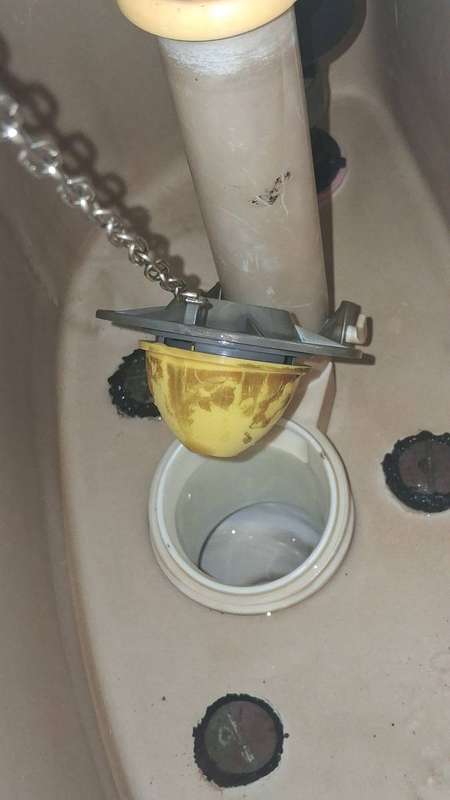
A flapper with its rubber seal worn away, the most common cause of a running toilet. Photograph: Ranch9613/Wikimedia Commons
Image Credits: Wikimedia Commons
Fix 2: Adjust the float and water level
If water is spilling into the overflow tube, the tank is filling too high. The fix is to lower the shutoff point so the fill valve stops sooner.
For a ball float on an arm, gently bend the arm downward. For a cup-style float on the fill valve column, squeeze the adjustment clip and slide the float down. Either way, the goal is the same. The tank should stop filling with the waterline about 1 inch below the top of the overflow tube.
Flush and watch a full cycle. The fill valve should shut off crisply with water sitting below the overflow rim. If it does, you're done.
If the water keeps creeping up past your adjustment, the fill valve's shutoff mechanism is worn. Adjustment alone won't hold.
While you're in there, check the refill tube. That thin tube should clip to the top of the overflow pipe with its outlet above the waterline.
If it's shoved down into the overflow, it can siphon tank water into the bowl and trigger endless refilling. Clip it at the top and the phantom running stops.
Fix 3: Replace the fill valve
When adjustment fails or the valve hisses constantly, the fill valve itself needs replacing. This is still a beginner job, about 20 minutes with an adjustable wrench.
- Turn off the supply valve and flush to empty the tank. Sponge out leftover water.
- Disconnect the water supply line from under the tank.
- Unscrew the lock nut holding the old fill valve and lift the whole assembly out.
- Set the new valve's height per the included instructions, then drop it in and tighten the lock nut by hand plus a quarter turn.
- Reconnect the supply line and the refill tube, turn the water on, and check for leaks.
The New York City DEP recommends replacing a failed valve with a modern piston-type fill valve, the style sold under names like Fluidmaster, rather than an old float-ball design. If your household has recurring flapper leaks, the DEP also notes that anti-leak valves exist which refill the tank only on flush. It does not endorse specific products.
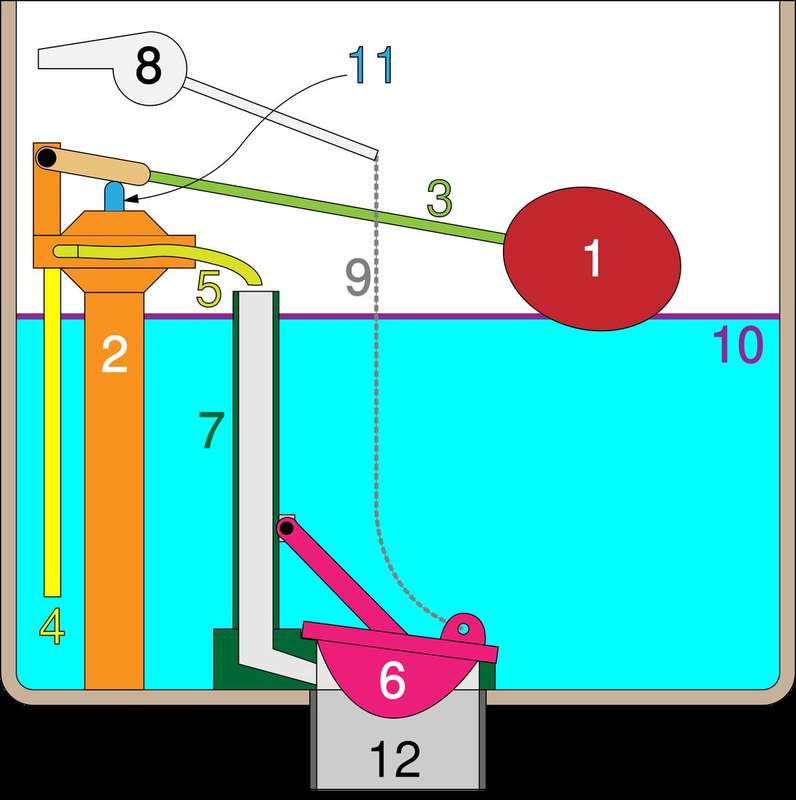
How a gravity flush valve seals at rest. When the seal or the fill shutoff wears out, the tank cycles forever. Diagram: Klork/Wikimedia Commons
Image Credits: Wikimedia Commons
When to call a plumber
DIY covers the big three, but some symptoms point deeper. Call a licensed plumber if you find a cracked tank or bowl, water pooling around the toilet's base, or rusted-through hardware that crumbles when touched.
Also call if you've replaced the flapper and fill valve and the toilet still runs. At that point the problem may be a damaged flush valve seat, a hairline tank crack, or a supply-line issue that needs professional eyes. A plumber's visit costs more than a $10 flapper, but less than months of a 200-gallon-a-day leak.
Frequently asked questions
Why does jiggling the handle stop the running temporarily?
Jiggling reseats a flapper that isn't sealing on its own, usually because the chain is tangled or the flapper is warped. It confirms the flapper is your problem, but the fix is replacing it, not developing a jiggle habit.
How much water does a running toilet actually waste?
Up to 200 gallons per day, per the EPA figures cited in plumbing and utility guides. That is roughly 6,000 gallons a month, enough to show up painfully on a water bill.
Can I just turn off the toilet's water between uses?
You can as a stopgap, using the supply valve behind the toilet. But it doesn't fix anything, and forgetting to turn it back on leads to its own problems. Treat it as a pause button while you get the part.
Do I need to match the exact flapper brand?
No, but match the size and type. Most residential toilets use a 2-inch or 3-inch flapper. Bring the old one to the store to compare, and check the package for your toilet's gallons-per-flush rating on 1.6 gpf models.
The bottom line
A running toilet is almost always a flapper, a float, or a fill valve, and the dye test tells you which in two minutes. Start with the flapper, adjust the water level next, and replace the fill valve last. Each step needs basic tools and a part that costs less than a pizza.
The payoff is immediate: silence, a normal water bill, and one less thing quietly wasting 200 gallons a day. If the tank still runs after all three fixes, that is your signal to call a plumber rather than keep guessing.
Tags: plumbing, toilet repair, DIY, water conservation, home maintenance
Rive News is the research desk behind this explainer series, covering tech, health, science, and everyday questions with sourced reporting.
Latest in Home & DIY
- Why Your Faucet Keeps Dripping After You Turn It Off
- How to prevent bathroom mold without an exhaust fan as a renter
- Why does condensation form on windows in winter?
- How to hang heavy shelves on drywall safely
Subscribe for one evidence-based explainer in your inbox every morning.
Related stories

Why Your Faucet Keeps Dripping After You Turn It Off
A dripping faucet is usually a worn washer, O-ring, or cartridge that can no longer seal. One drip per second wastes over 3,000 gallons

How to hang heavy shelves on drywall safely
Studs first, toggle bolts second, plastic anchors never for heavy loads. Weight ratings, installation steps, and mistakes that bring
Do Houseplants Raise Indoor Humidity? What the Research Says
Houseplants release water vapor through transpiration, and studies show offices with plants measure higher humidity. Here is how much,