
Why your fridge makes ice on the back wall
By Rive News / Research desk | Rive News / Published October 29, 2026 at 9:00 AM PKT
Key takeaways
- The back wall is the coldest panel in the fresh-food section, so moisture in the air freezes there first.
- A little frost during cooling is normal; thick or spreading ice means moisture, drainage, or defrost is failing.
- The usual culprits are a worn door seal, a blocked defrost drain, a setting that is too cold, or food pressed against the wall.
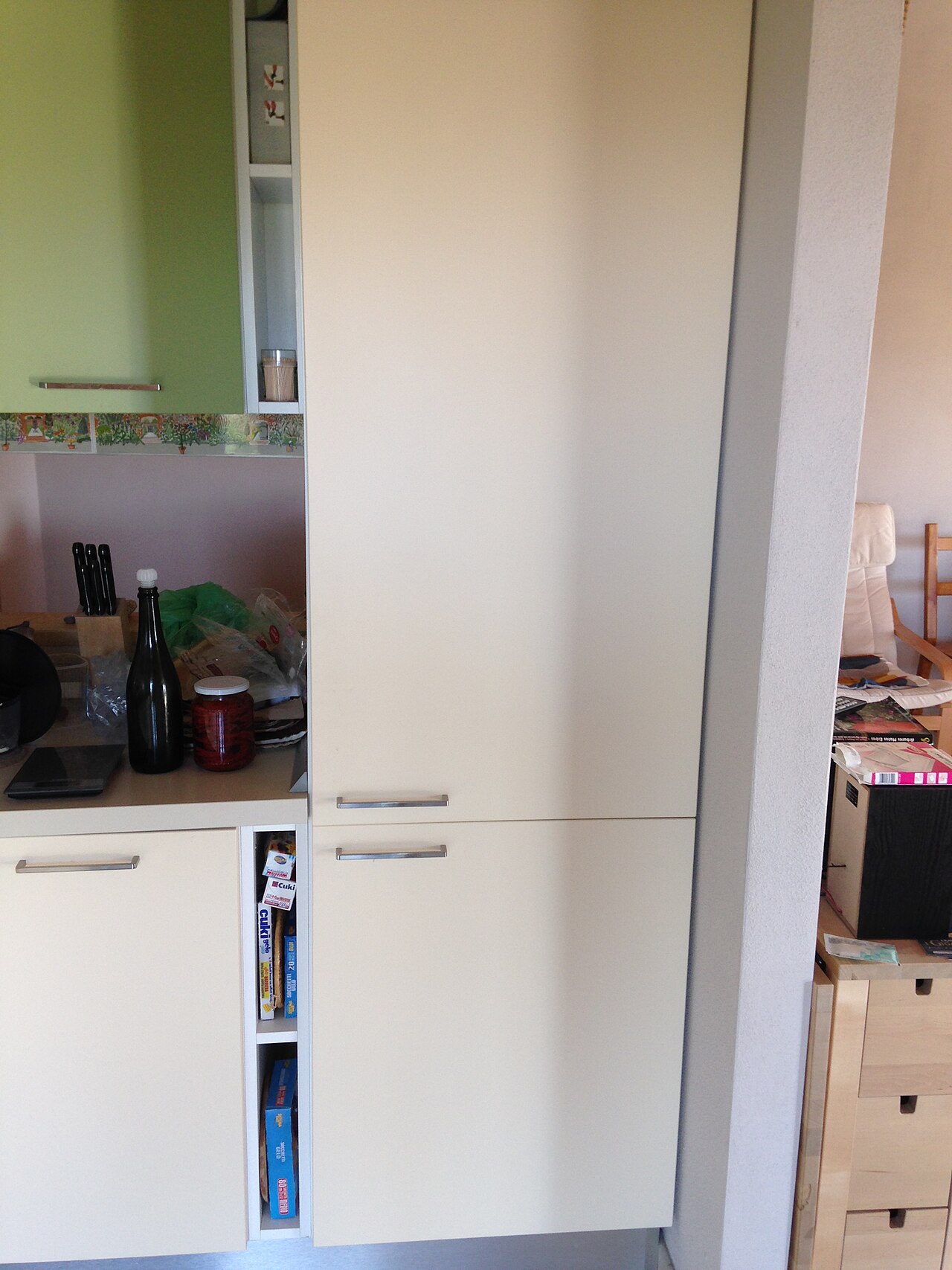
[A tall integrated refrigerator cabinet in a home kitchen, photographed in October 2016. Photograph: Antonio Mette]
Image Credits: Wikimedia Commons
Ice on the back wall of a fridge forms when water vapour in the air meets a surface cold enough to freeze it. The back wall of the fresh-food section holds the cooling element, often called the evaporator plate or coil, which makes it the coldest point inside the compartment.
A thin layer of frost there during a cooling cycle is normal in many fridges. It becomes a problem when the ice grows thick, spreads, or never melts away. This article explains the normal cycle, the faults that break it, and the checks that separate a settings tweak from a repair call.
The normal frost and melt cycle
Warm air always carries some moisture, and a fridge constantly battles that moisture. Every time the door opens, room air enters. Food releases moisture too, especially uncovered items and anything put away while still warm.
That moisture looks for the coldest surface available, and inside a fridge that surface is the back wall.
Engineer Fix explains the sequence plainly. When warm, moisture-laden air contacts the super-chilled back wall, condensation forms rapidly and freezes into frost or ice. Modern fridges handle this with an automatic defrost system: on a schedule, the cooling pauses, a heater or the off cycle melts the frost, and the water drains away.
Refrigerateur.ch describes where that water goes. Meltwater runs down through a small drain hole at the bottom of the back wall, into a tray above the compressor, where it evaporates.
As long as each part of that cycle works, frost appears and disappears without building up. Ice appears when any part of the cycle falls behind the moisture coming in.
Too much moisture coming in
The most common moisture source is the door seal, or gasket. Engineer Fix identifies a compromised door seal as a frequent cause of warm, humid room air leaking in continuously. As that moisture-laden air enters, it heads for the coldest available surface, which is the back wall, where it condenses and freezes.
Zanussi's support guide lists the same checks for a frosting fridge. It asks whether the door is being opened for too long or too often, whether the door closes properly after use, and whether the gasket is damaged, deformed, or broken. A seal that looks fine can still leak if food packaging stops the door closing fully, or if the seal has hardened with age and no longer springs back.
Use habits add moisture too. Zanussi warns against placing warm or hot food straight into the fridge, since that changes the inside temperature and can lead to ice.
Busy households with frequent door openings let in more humid air, and in humid weather that air carries more moisture per opening. None of this means the fridge is broken, but it raises the load on the defrost system.
A setting set too cold
Temperature settings are the easiest cause to check and the easiest to fix. Engineer Fix puts the optimal range for the fresh-food compartment at 35 to 40 degrees Fahrenheit, which is 1.7 to 4.4 degrees Celsius. Below 35 degrees, the cooling element runs colder than necessary, and even normal levels of condensation freeze quickly and excessively.
Refrigerateur.ch gives the same advice in round numbers, recommending around 4 degrees Celsius (39 degrees Fahrenheit) for the refrigerator compartment. Setting the dial to its coldest position does not preserve food better.
It makes the back wall cold enough to freeze moisture that a correct setting would only condense and drain away.
Food placement makes the same problem worse. Engineer Fix notes that items touching the back wall directly can freeze solid, since they sit against the coldest part of the unit. Overpacking, or blocking the internal air vents, disrupts circulation and forces the cooling system to run longer cycles, which adds frost to the back panel.
The blocked drain
The defrost drain is a small hole, and small holes block easily. Engineer Fix calls a clogged defrost drain line, also known as the weep hole, one of the most common mechanical faults behind back-wall ice. Food debris or residual ice can plug it, and once it plugs, meltwater has nowhere to go.
The result is a slow creep. Water from each defrost cycle pools at the bottom of the compartment instead of draining to the tray above the compressor, and it refreezes. The ice layer then climbs the wall over days and weeks.
Refrigerateur.ch describes the same mechanism and lists a blocked drain alongside a low temperature setting, a failing door gasket, and food pressed against the back wall as the main causes named by manufacturers such as Sub-Zero.
Clearing the drain is usually a maintenance job rather than a repair. It means finding the hole at the bottom of the back wall, clearing debris, and flushing it gently with warm water. If the hole refreezes quickly after clearing, the drain tube itself may be iced further down, which can need a longer defrost with the fridge emptied and switched off.
When the defrost system itself fails
Frost-free fridges rely on parts that can fail: a defrost heater, a thermostat, or a timer or control module. If the heater element burns out, the thermostat fails to signal it, or the timer sticks, the automatic defrost cycle does not happen. Frost then builds without any melting phase to balance it.
Heavy ice buildup in a frost-free refrigerator is therefore a different signal from light frost in a manual-defrost model. The Bajaj Finserv appliance guide draws exactly this line: moderate frost in a manual-defrost fridge is normal and needs regular defrosting, while heavy buildup in a frost-free model suggests a failed defrost heater, thermostat, or timer that needs professional attention.
Age makes all of this more likely. Refrigerateur.ch notes that older models may have less efficient defrost cycles or less effective insulation, which promotes frost formation.
That does not automatically mean buying a new fridge, but it does mean older units need more thorough and regular maintenance to keep ice in check.
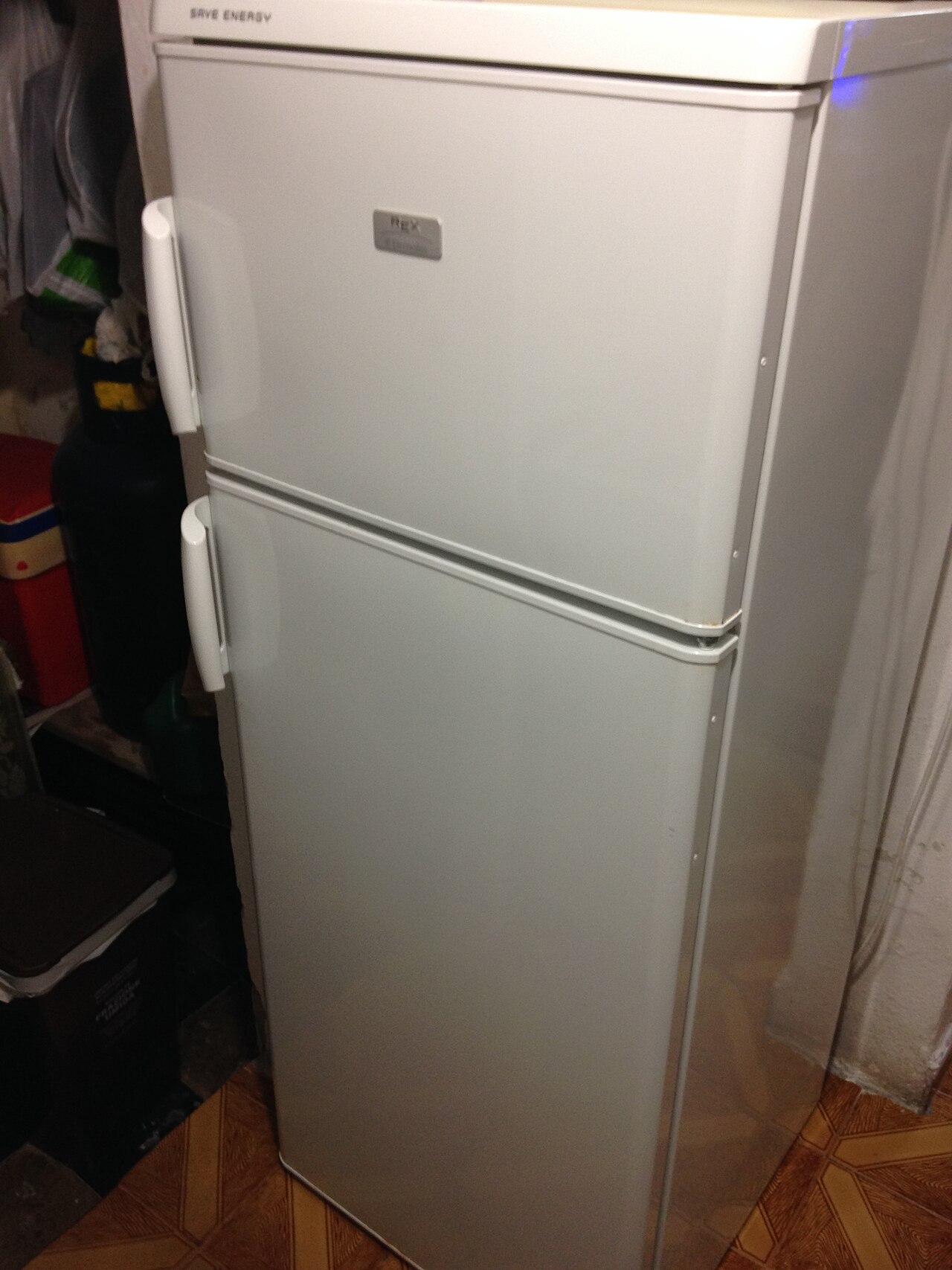
[A domestic refrigerator in a home setting. Photograph: domestic refrigerator]
Image Credits: Wikimedia Commons
Frequently asked questions
Is a little ice on the back wall normal?
Often, yes. A thin frost or a few water droplets on the back wall while the compressor runs is normal in many fridges, because that wall is the coldest surface.
The frost should melt during the off cycle and drain away. Thick, spreading, or permanent ice is not normal.
What temperature should a fridge be set to?
Engineer Fix recommends 35 to 40 degrees Fahrenheit (1.7 to 4.4 degrees Celsius) for the fresh-food compartment. Refrigerateur.ch recommends around 4 degrees Celsius.
Settings below that range freeze normal condensation and waste energy without preserving food better.
How do I check the door seal?
Close the door on a piece of paper and try to pull it out. If it slides out easily, the seal may need cleaning or replacement. Also check that no packaging stops the door closing fully, and look for cracks, tears, or hardened sections in the gasket.
Can I chip the ice off the back wall?
Avoid sharp tools and force. Chipping can puncture the evaporator plate or the wall lining and cause a refrigerant leak, which turns a maintenance job into a repair. Switch the fridge off, empty the affected area, and let the ice melt, or call a technician if the buildup is heavy.
The bottom line
Back-wall ice is a moisture story with a cold ending. Moisture enters through door openings, leaks, and warm food, freezes on the coldest panel, and should melt and drain away on schedule. When ice builds instead, one of those steps is failing: too much moisture in, too cold a setting, a blocked drain, or a defrost system that has stopped cycling.
Work through the cheap checks first: the temperature setting, the door seal, food kept clear of the back wall, and the drain hole. If the ice is heavy, returns fast, or sits in a frost-free fridge that should be melting it, that points to a failed defrost part or a damaged seal, and a technician is the right next step.
Tags: refrigerators, fridge frost, home appliances, kitchen
The Rive News research desk covers personal finance, home, and everyday science explainers from public sources, with claims checked against the cited pages.
Related
- Why your fridge makes a buzzing noise and when to worry
- Why a refrigerator runs constantly and never stops
- Why a faucet keeps dripping after you turn it off
- Why one room is colder than the rest of the house
Subscribe for one practical explainer a day, drawn from real sources and checked before publication.
Rive News publishes explainers based on public sources. Corrections are noted on the article when a cited fact changes.
Related stories
Why Your Faucet Keeps Dripping After You Turn It Off
A dripping faucet is usually a worn washer, O-ring, or cartridge that can no longer seal. One drip per second wastes over 3,000 gallons
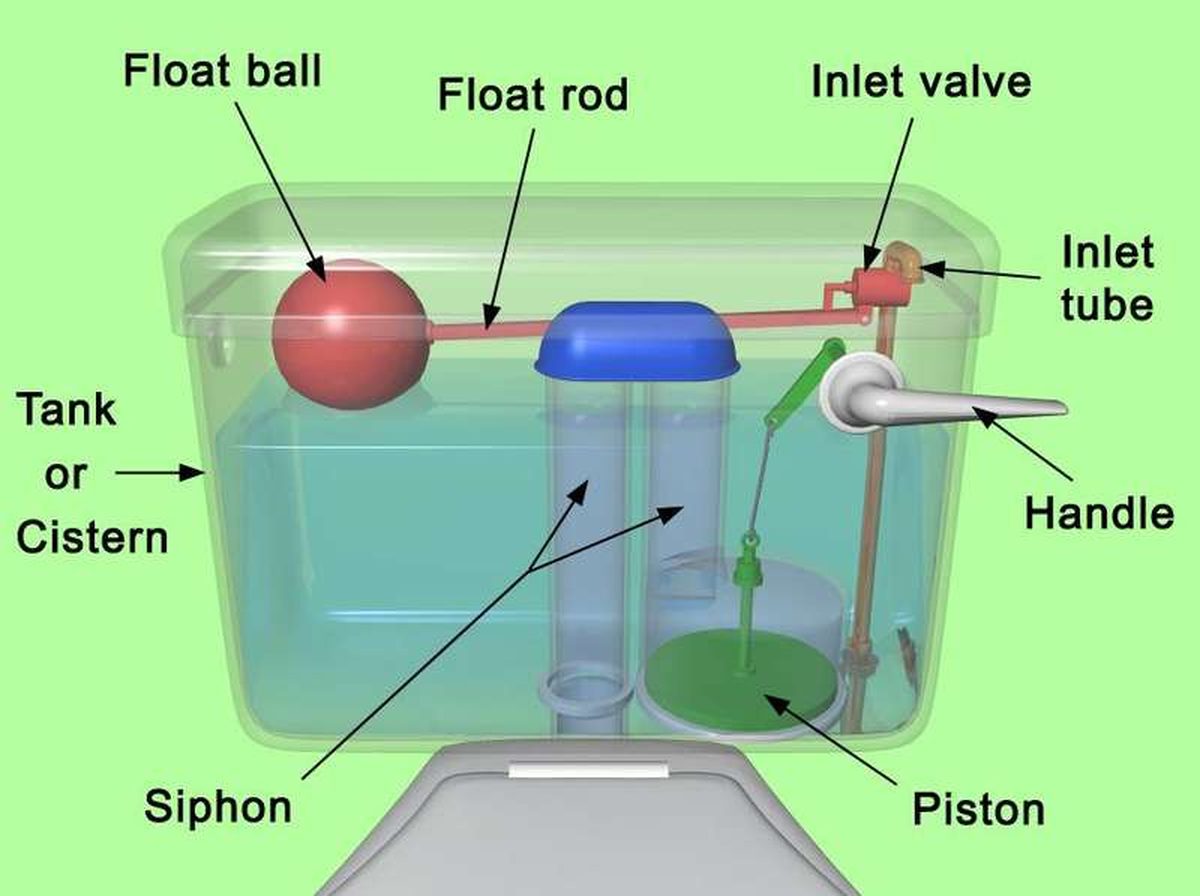
How to fix a running toilet without a plumber in 30 minutes
A running toilet can waste 200 gallons of water a day. Diagnose the flapper, float, or fill valve in two minutes, then fix it yourself
How to hang heavy shelves on drywall safely
Studs first, toggle bolts second, plastic anchors never for heavy loads. Weight ratings, installation steps, and mistakes that bring