
What causes doors to stick in summer and how to fix them
Key takeaways
- Wood is hygroscopic: it absorbs summer humidity and swells, usually by up to an eighth of an inch across the door's width.
- Sticking can also come from loose hinges, worn seals, paint buildup, or foundation movement, not just moisture.
- Fix humidity first and sand last: removing wood in summer leaves drafty gaps when the door shrinks in winter.

A sticking door is a door whose edge rubs against the frame, making it hard to open, close, or latch. In summer the most common reason is simple: the wood has absorbed moisture from humid air and swollen, so a fit that was fine in spring now binds against the jamb.
This article explains what causes doors to stick in summer. It covers how wood responds to humidity, the other reasons a door can bind, the safest fixes, and how to tell normal seasonal sticking from a structural problem.
How summer humidity makes wood swell
Wood is a hygroscopic material, which means it takes in and gives off moisture until it matches the air around it. According to Engineer Fix, when humidity rises, water molecules swell the wood's cell walls and the material expands. When the air dries out, the cell walls contract and the wood shrinks.
Summer is when this process runs at full speed. Warm air holds far more moisture than cold air, and indoor relative humidity stays elevated for weeks at a time. Engineer Fix notes that a significant humidity rise can make a standard door expand horizontally by an eighth of an inch or more, which is the classic reason a door scrapes the jamb or refuses to latch in August.
The expansion does not happen evenly. Engineer Fix explains that movement along the door's length is negligible, while movement across its width and thickness is significant.
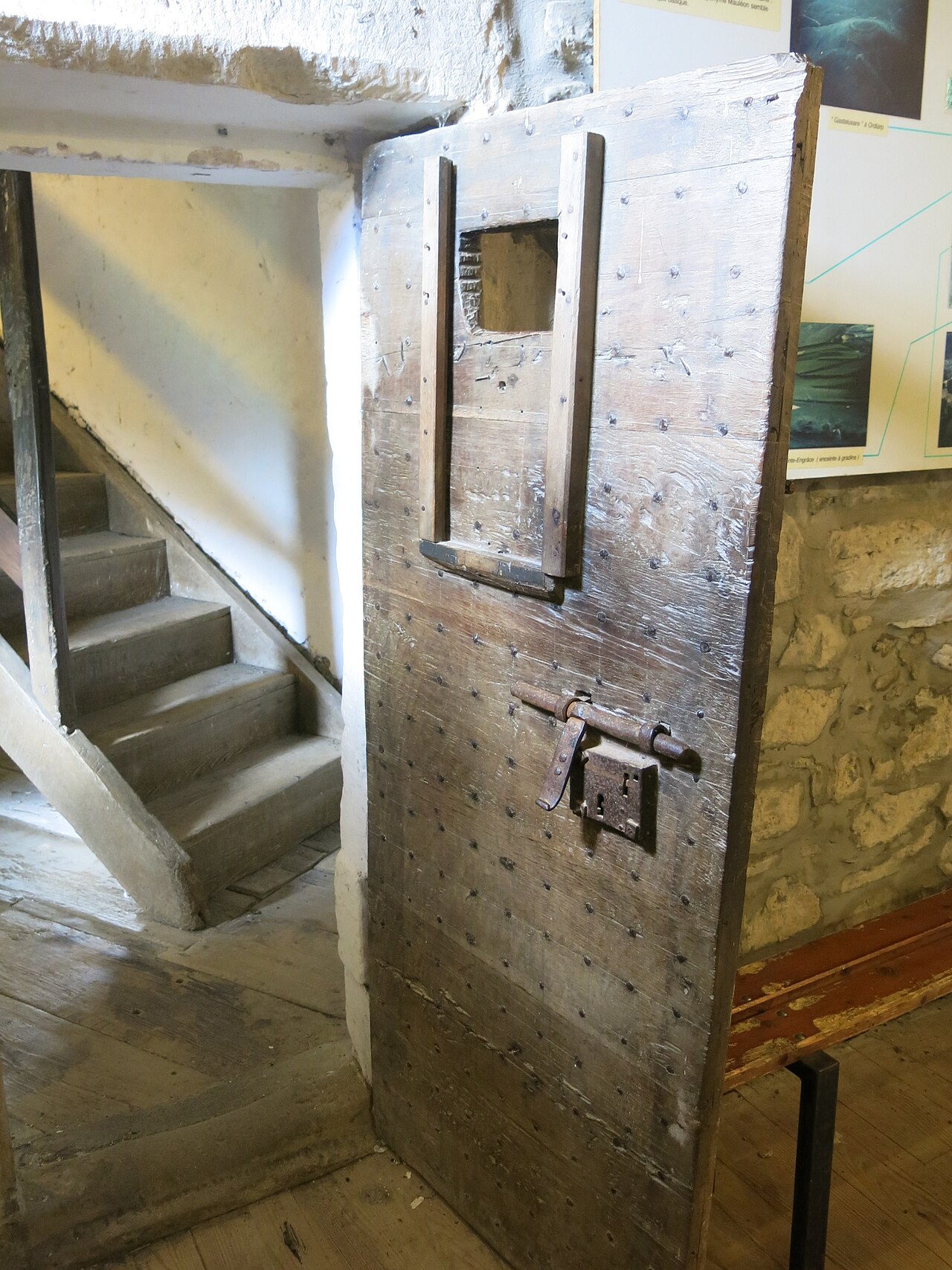
That is why a sticking door usually rubs at the side or top edge rather than growing taller. Paint and varnish slow the process but do not stop it, especially if the door's top and bottom edges were never sealed.
This pattern also explains why the problem vanishes in winter. Cold outdoor air, once heated indoors, holds very little relative humidity, so it draws moisture back out of the wood.
The door shrinks, and homeowners may even see small gaps open between the door and the frame. Justin Brown, a joiner and owner of Timber Shelves, told Homes and Gardens that wooden doors expand and contract with changes in humidity and temperature, and that a door can start sticking during a particularly humid season.
Household activity can add to the load. According to Brown, plastering a room releases a lot of moisture into the air, and wood absorbs it the same way it absorbs summer humidity.
Reducing indoor humidity without a dehumidifier can calm the problem down in mild cases. With an average of seven or more internal doors in a typical home, as the siding firm TC Siding Professionals points out, one humid spell can make several doors misbehave at once.
Other causes of a sticking door
Humidity is the usual suspect, but it is not the only one. A door that sticks all year round, or that suddenly starts sticking in dry weather, is probably binding for a different reason.
Loose or worn hinges are high on the list. When hinge screws work loose, the door sags and its top corner digs into the frame.
Tightening the screws, or replacing short screws with longer ones that bite into the framing, often fixes a sagging door in minutes. Worn hinge knuckles can cause a similar drop.
Paint buildup matters more than people expect. TC Siding Professionals notes that clumps of paint or varnish on door edges can stop a door closing properly.
Each repaint adds a layer, and the edge that was planed to a perfect fit five years ago may now be several coats thicker. A sticking door in a recently painted room deserves a close look at the edges before anyone blames the weather.
Improper installation shows up as sticking that never went away. If the frame is out of plumb or the door was hung with uneven gaps, seasonal swelling simply exposes a fit that was always marginal. Weatherstripping that has swollen, shifted, or been fitted too tight can also drag against the door.
The cause that deserves respect is foundation movement. Edens Structural warns that sticking combined with a crack near the door frame is one of the common early signs of soil shifting or structural settling.
The pattern to watch: seasonal sticking that comes and goes with the weather is almost always moisture. Sticking that appears suddenly without a seasonal trigger, or that persists through every season, deserves a structural assessment rather than a sanding block.
How to fix a sticking door safely
The order of operations matters. Most quick fixes people reach for first are the ones most likely to cause trouble later.
Start by managing the moisture. Engineer Fix recommends keeping indoor relative humidity between 30 and 50 percent year-round, using a dehumidifier in summer if needed.
In many homes, the door that bound in August swings free again once the air dries out, and no repair was ever needed. Like hardwood floors that creak, a door's seasonal movement often responds to humidity control before it needs carpentry.
For a door that needs to work today, rub a dry lubricant on the rubbing spot. Engineer Fix suggests paraffin wax on the sticking edge or the jamb, which buys clearance without removing any wood.
A candle stub does the same job. This is the right first move because it is fully reversible.
Check the hinges before anything else that removes material. Tighten every screw, and if a screw spins without biting, drive a longer screw into the framing behind the jamb. A door that was sagging on loose hinges may close perfectly once the hinges are firm, with no sanding at all.
If you do need to remove wood, be conservative. Engineer Fix advises taking off no more than a sixteenth of an inch and immediately resealing the exposed edge with paint or varnish, because raw wood drinks moisture faster than finished wood.
Mark the rubbing spot with chalk or lipstick, remove the door, and plane only that area. Then seal it the same day.
This is where the classic mistake happens. Both Energy Swing Windows and ironmongery specialist Jeremy Barltrop warn that sanding too much in summer backfires in winter: when dry air shrinks the door back, the over-sanded edge becomes a drafty gap that lets cold air through. Sanding is a last resort, not a first step.
For prevention, seal every surface of the door, including the top and bottom edges that nobody sees. Engineer Fix calls an unsealed edge the fastest route to swelling, since end grain absorbs moisture far more quickly than face grain. A door that is sealed on all six sides moves far less from season to season.
When sticking signals a bigger problem
Most summer sticking is a maintenance nuisance. A few patterns mean something else is going on.
Call in a professional if sticking appeared suddenly with no change in weather or humidity, if it affects only one door while identical doors in the same house behave normally, or if it comes with cracks running from the corners of the frame. Edens Structural notes that frames pushed out of square by shifting foundations no longer match the doors built for them, and no amount of planing fixes the geometry underneath.
Warping is the other red flag. A door that twists so its corners no longer sit in the same plane will not be saved by humidity control or a sixteenth of an inch of planing.
GC Trades in Auckland points out that repeated swelling and shrinking can cause permanent warping over time, especially in doors exposed to direct sun or poor sealing. A warped door usually needs replacement, not repair.
Moisture that never resolves deserves attention too. If the air stays damp despite ventilation and dehumidifying, and efflorescence keeps appearing on the basement walls, the house may have a water intrusion problem feeding the humidity. Fix the water first. The doors are the symptom.
Frequently asked questions
Why does my door only stick in summer?
Because summer air carries much more moisture, and wood absorbs it and expands. When winter's dry heated air returns, the wood gives the moisture back up and shrinks, so the sticking usually disappears on its own.
Should I sand down a door that sticks in summer?
Only as a last resort, and only a tiny amount. Sanding removes wood permanently, and when the door shrinks in winter you can be left with a visible gap and a draft. Try humidity control, wax, and hinge checks first.
How much can a door actually swell?
According to Engineer Fix, a significant rise in humidity can expand a standard door horizontally by an eighth of an inch or more. That sounds small, but door clearances are often only a sixteenth of an inch, so it is more than enough to jam.
Why do doors stick at the top or side but not the bottom?
Wood moves mostly across its width and thickness, not along its length, as Engineer Fix explains. The side and top edges sit closest to the frame, so that is where the expansion binds first.
Can a sticking door mean foundation problems?
It can, but the pattern tells the story. Predictable sticking that comes and goes with the seasons points to moisture. Sudden sticking with no seasonal trigger, especially with cracks near the frame, points to possible foundation movement and deserves a professional look, according to Edens Structural.
The bottom line
Doors stick in summer because humid air swells the wood, usually by a fraction of an inch that is still enough to jam a tight fit. Start with the reversible fixes: bring indoor humidity down toward the 30 to 50 percent range, wax the rubbing edge, and tighten the hinges.
Save sanding for last, take off as little as possible, and reseal the edge the same day. And if the sticking ignores the seasons entirely or arrives with cracks at the frame, have the structure checked before you touch the door.
Related stories

Why Your Faucet Keeps Dripping After You Turn It Off
A dripping faucet is usually a worn washer, O-ring, or cartridge that can no longer seal. One drip per second wastes over 3,000 gallons

How to fix a running toilet without a plumber in 30 minutes
A running toilet can waste 200 gallons of water a day. Diagnose the flapper, float, or fill valve in two minutes, then fix it yourself

How to hang heavy shelves on drywall safely
Studs first, toggle bolts second, plastic anchors never for heavy loads. Weight ratings, installation steps, and mistakes that bring