
Why some rooms echo much more than other rooms
By Rive News / Research desk | Rive News / Published October 28, 2026 at 9:00 AM PKT
Key takeaways
- Echoes come from sound reflecting off hard surfaces instead of being absorbed.
- Bare rooms with parallel walls and high ceilings echo most.
- Soft, porous materials absorb sound energy and shorten the lingering sound.

[A large, sparsely furnished hall with hard floors and bare walls.] Photograph: Wikimedia Commons contributor
Image Credits: Wikimedia Commons
Step into an empty flat and clap, and the sound hangs in the air. Step into a furnished living room and clap, and it dies almost at once.
This article explains why some rooms echo more than others, including the difference between an echo and reverberation, the role of surface materials, and why room shape and size matter. It finishes with the fixes that follow from that physics.
Echo versus reverberation
An echo and reverberation are related but not identical. An echo is a single, distinct repeat of a sound, heard separately from the original.
Reverberation is many overlapping reflections blending into one lingering sound. It is the wash that follows a clap in an empty hall, rather than a clean repeat.
The human ear needs a gap of about 0.1 seconds between the original sound and its reflection to hear them as separate sounds. Sound travels at roughly 343 metres per second, so in 0.1 seconds it covers about 34 metres there and back.
That gives the 17-metre rule: a wall must sit about 17 metres away for a clean echo in open space. Most rooms are far smaller, so what people call an echo at home is usually reverberation.
Hard surfaces reflect, soft surfaces absorb
The main cause of reverberation is multiple reflections from hard surfaces, according to Testbook's acoustics explanation. Walls, floors, and ceilings return sound energy instead of soaking it up.
Engineer Fix lists bare drywall, ceramic tile, polished concrete, and large glass windows as highly reflective surfaces. Each sends nearly all the sound energy that hits it back into the room.
Soft, porous materials behave the opposite way. Engineer Fix notes that they absorb sound energy, converting it into a small amount of heat and preventing reflection.
New York Soundproofing draws the same contrast with two rooms. A loft with brick, concrete, and floor-to-ceiling windows sounds bright and exhaustingly reverberant, while a living room with carpet, curtains, and upholstery sounds calm.
What the absorption numbers say
Acousticians rate materials with a Noise Reduction Coefficient, or NRC, from 0 to 1. A value of 0 means total reflection, while 1 means total absorption.
A comparison published by Alibaba Product Insights gives concrete walls an NRC of 0.05 to 0.10, glass windows 0.05 to 0.15, and wood flooring 0.10 to 0.15. These are all strongly reflective.
Carpet with padding scores 0.30 to 0.50 in the same comparison. Heavy curtains reach 0.40 to 0.60, and acoustic ceiling tiles reach 0.50 to 0.70.
The gap explains the empty-room effect. A room full of 0.05 surfaces returns almost every sound, while a room with 0.50 surfaces removes half the energy at each bounce.
Parallel walls and flutter
Room shape matters as much as surface material. Engineer Fix identifies hard, parallel surfaces as the worst geometry, since sound bounces directly back and forth between them.
When two facing walls reflect sound in phase, the result is a flutter echo. This is the rapid, metallic ringing heard when clapping between two bare walls.
Parallel walls also create standing waves, or room modes. Certain frequencies reinforce each other at fixed spots, making some notes boom while others vanish.
Square and rectangular rooms are especially prone to this, since their dimensions repeat. Irregular shapes help, because angled walls scatter sound in many directions rather than bouncing it predictably.
Why size and ceiling height matter
Larger rooms give sound more distance to travel and more time to decay. Engineer Fix notes that high ceilings increase room volume, giving sound more space before reflections return.
A large, empty space therefore combines high reflectivity with a long path length. The sound keeps returning, and each return arrives late enough to be heard as a lingering tail.
Open floor plans extend this effect. Without walls to interrupt the path, sound travels freely across the whole area before dying away.
Small, furnished rooms do the opposite. Short paths and absorbent surfaces kill reflections quickly, so speech stays clear and music stays tight.
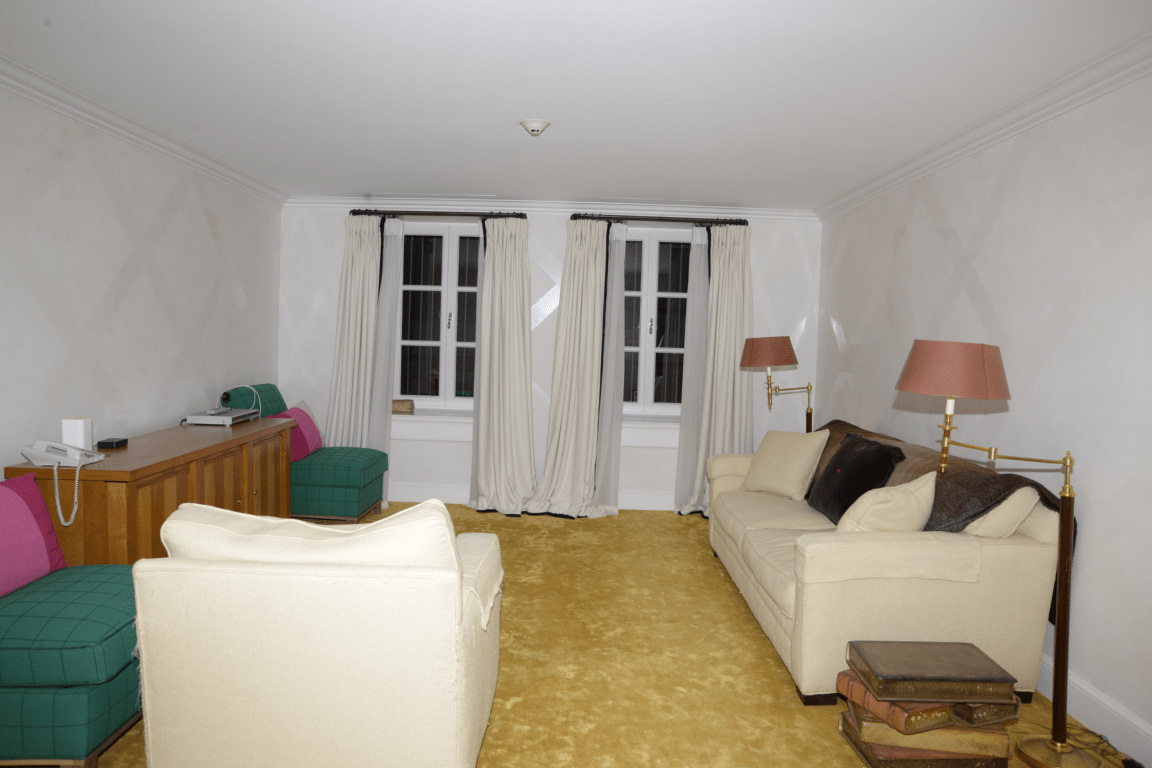
[A furnished living room with soft seating and a rug.] Photograph: Wikimedia Commons contributor
Image Credits: Wikimedia Commons
Why bathrooms and kitchens echo most
Bathrooms and kitchens combine almost every echo factor. Their floors are tile, their walls are often tile or painted drywall, and their surfaces are flat and parallel.
They also lack soft furnishings. No curtains, no upholstery, and no bookshelves mean almost nothing absorbs sound.
Water adds to the effect indirectly. Hard, wipeable surfaces are chosen for hygiene, and those same surfaces are the most reflective materials in a home.
That is why a bathroom voice sounds loud and sharp while a bedroom voice sounds soft. The rooms are built from opposite acoustic materials.
Frequency changes the picture
Not all frequencies echo equally. High frequencies reflect strongly off hard surfaces, which is why echoey rooms sound bright or harsh.
Low frequencies behave differently. Their long wavelengths bend around obstacles and build up in corners, creating a boomy or muddy quality.
This frequency split explains why a simple rug helps speech clarity but leaves bass boom untouched. The rug absorbs mid and high frequencies, while low frequencies need thicker, denser treatment.
It also explains why an echoey room tires listeners. The brain works harder to separate speech from a wash of high-frequency reflections.
Fixes that follow the physics
The most effective fix is adding absorption where sound hits hardest. A thick rug on a hard floor, heavy curtains over glass, and upholstered furniture all remove energy at each bounce.
Breaking up parallel surfaces helps too. Bookshelves, varied furniture, and angled items scatter sound, which prevents flutter echoes from building.
Acoustic panels work by the same principle as curtains, with a higher NRC. Placing them at reflection points, such as the wall opposite a speaker, gives more benefit than covering a random wall.
For low-frequency boom, thin foam does little. Dense panels, bass traps in corners, and soft furnishings with real mass address the longer wavelengths.
Frequently asked questions
Why does an empty room echo but a furnished room does not?
Furniture, rugs, and curtains absorb sound energy at each bounce, so reflections die quickly. An empty room returns almost all the energy, so reflections overlap into audible reverberation.
What is the difference between an echo and reverberation?
An echo is one distinct repeat, heard separately from the original sound. Reverberation is many reflections blending into a lingering sound after the source stops.
Do high ceilings always make a room echo?
High ceilings increase volume and reflection paths, which usually lengthens reverberation. Soft surfaces and varied shapes can offset the effect, so a tall furnished room can still sound calm.
Will foam panels alone fix an echoey room?
Foam panels help with mid and high frequencies, but they do little for low-frequency boom. A mix of rugs, curtains, furniture, and denser panels usually works better than foam alone.
The bottom line
Some rooms echo more than others because of three factors: reflective surfaces, parallel geometry, and large volume. Bare rooms maximise all three, while furnished rooms minimise them.
The fix follows the same logic. Add absorption, break up parallel reflections, and treat low frequencies with mass. Change those three factors and the room stops ringing.
Tags: room acoustics, echo, home sound
Rive News's research desk covers everyday science and home topics from published sources, with no invented experts or first-hand claims.
Related
- Why hardwood floors creak and how to quiet them
- How to silence a squeaky floorboard
- How to stop doors from squeaking
- Why one room is colder than the rest of the house
Subscribe to Rive News for one plain-English explainer each day.
Rive News follows a published standards policy: no invented facts, quotes, or statistics, and every number traces to a cited source.
Related stories
Why Your Faucet Keeps Dripping After You Turn It Off
A dripping faucet is usually a worn washer, O-ring, or cartridge that can no longer seal. One drip per second wastes over 3,000 gallons
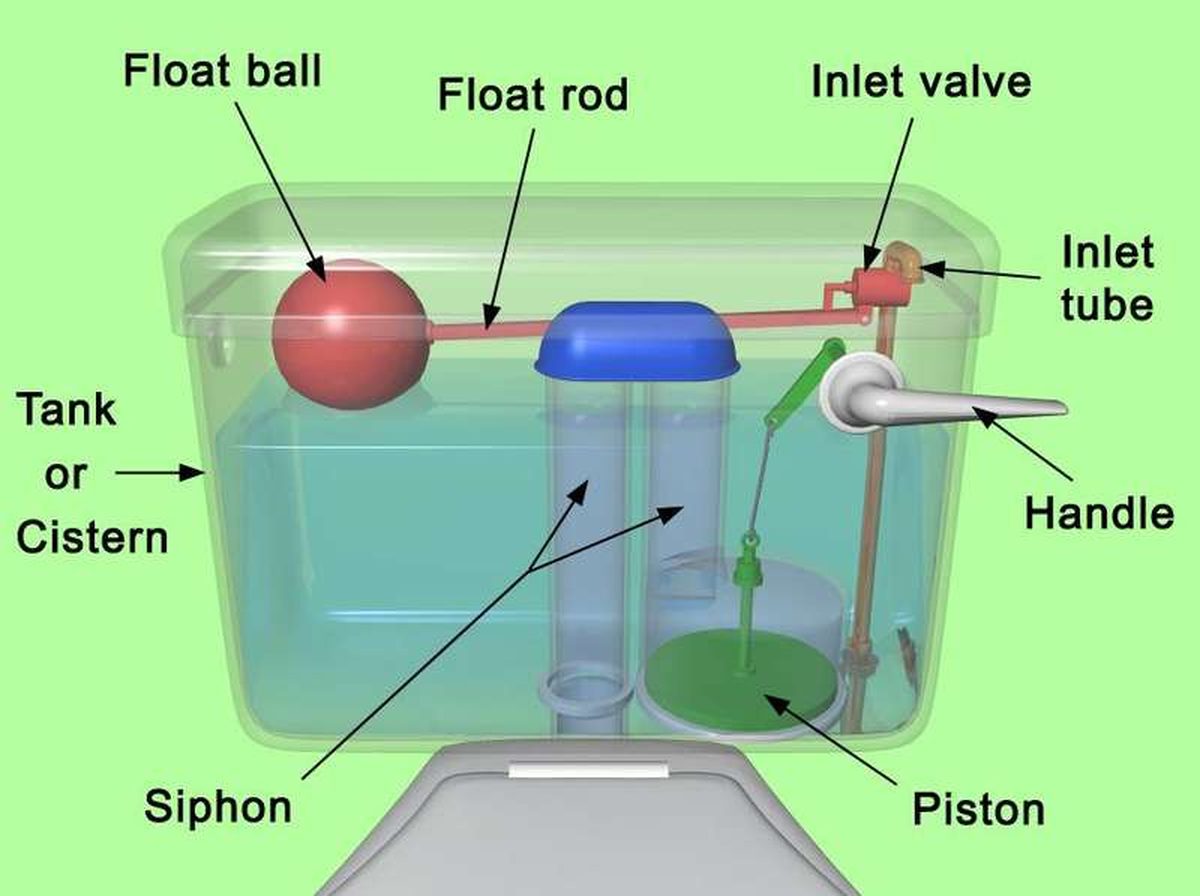
How to fix a running toilet without a plumber in 30 minutes
A running toilet can waste 200 gallons of water a day. Diagnose the flapper, float, or fill valve in two minutes, then fix it yourself
How to hang heavy shelves on drywall safely
Studs first, toggle bolts second, plastic anchors never for heavy loads. Weight ratings, installation steps, and mistakes that bring