
Why Does a Running Toilet Seem to Fix Itself, Then Start Again?
Key takeaways
- A toilet that runs, stops, and runs again has a slow leak from the tank into the bowl, usually through a worn flapper.
- The "self-fix" is an illusion: the leak pauses as parts reseat or water levels shift, then resumes when pressure changes.
- The 30-minute food coloring dye test confirms a flapper leak, and a replacement flapper solves it in most cases.
A phantom flush is the quiet moment when a toilet refills on its own, runs for a few seconds, then falls silent. Hours later, or even minutes later, it does it again. It can look like the problem fixed itself in between.
What is really happening is simpler and less mysterious. A small amount of water is leaking from the tank into the bowl, so slowly that you cannot see or hear it.
When enough water has drained that the float drops, the fill valve turns on to top the tank back up. Then everything goes quiet again, until the next cycle.
This article explains the cycle behind the phantom flush, including why the running seems to stop on its own, how to confirm the cause with a dye test, and the repairs that stop it for good.
How the phantom flush cycle works
A healthy toilet runs for about a minute after a flush, then goes silent. The tank refills, the float rises, and the fill valve shuts off. That is the end of the story, until the next flush.
When a toilet runs on its own every few minutes or hours, one step in that cycle is breaking down. Water is slipping past the flapper, the rubber seal at the bottom of the tank that holds water in place between flushes. The tank level drops slowly, and when it drops far enough, the fill valve opens briefly to replace the lost water.
Plumbers call this a phantom flush because nobody pulled the handle. The EPA notes that a single leaky toilet can waste about 200 gallons of water a day, according to Gatewood plumbing inspectors. Even a slow leak adds up fast.
Why a running toilet seems to fix itself, then starts again
The self-repair effect has a physical explanation. A flapper that does not seal perfectly can still seat properly under certain conditions, then lose its seal again.
Several things can pause the leak temporarily. A small piece of grit or mineral scale may wash off the flush valve seat during a refill, letting the flapper seal for a while.
Water temperature changes can make the rubber flapper swell slightly and seat better. A lift chain that is tangled or draped over the flapper can slip off, letting the flapper drop flat and seal.
Then the situation reverses. As the tank refills, the chain may catch on the flapper edge and hold it up a hair.
Hard-water minerals keep building up on the valve seat. The rubber flapper itself, which hardens and warps with age, slowly loses whatever flexibility let it seal in the first place.
None of this means the leak is gone. The toilet was not healing itself. It was sitting in a brief window where the geometry of a failing seal happened to close, and then the window shut again.
The flapper is the most common culprit
The flapper is the number one cause of a toilet that runs on its own. Lee Company, a regional plumbing contractor, reports that replacing the flapper fixes roughly 90 percent of phantom flushing toilets. OrganizerTone's repair guide puts the share at over 80 percent of cases.
The flapper is a soft rubber disc at the bottom of the tank. When you flush, it lifts to let water rush into the bowl.
When the tank refills, it drops back down and forms a watertight seal. Over time, rubber hardens, warps, or collects mineral buildup, and the seal stops being watertight.
Bleach tablets dropped into the tank make flappers fail sooner, because chlorine attacks the rubber. Hard water leaves mineral deposits on the valve seat where the flapper rests. If grit or buildup sits between the flapper and the seat, water trickles through even when the flapper itself looks fine.
A cracked flush valve gasket, the seal between the tank and the bowl, can also cause refill cycles, though this is rare. A sticking handle can also hold the flapper up: if the toilet only stops running after you jiggle the handle, the handle is probably too tight or corroded.
The 30-minute dye test confirms the leak
There is a simple diagnostic that catches a flapper leak for certain. It is called the food coloring test, and plumbing guides recommend it as the first step.
Lift the porcelain lid off the tank and set it somewhere flat and secure. Add a few drops of dark food coloring, blue or green work best, to the tank water.
Do not flush. Wait 20 to 30 minutes.
If any colored water appears in the bowl, the flapper is failing to seal. Colored water in the bowl means tank water is slipping past the flapper and seeping into the bowl, exactly the slow leak behind the phantom flush.
If the bowl water is still clear after 30 minutes, the flapper is probably fine, and the cause is elsewhere: the water level may be set too high, or the fill valve may be failing.
Other causes behind intermittent running
The dye test does not catch everything. Two other tank parts can start and stop a leak in the same intermittent pattern.
A water level set too high sends a thin stream of water down the overflow tube, the tall open pipe in the center of the tank. The overflow tube is a failsafe that prevents flooding, but if the float shuts the fill valve off above the correct level, water siphons down the tube continuously.
The level should sit at least one inch below the top of the overflow tube, according to EngineerFix's repair guide. A wobbling float can make this intermittent: the valve hovers near shutoff, leaks a little, and cycles.
A failing fill valve can also cause the pattern. Internal wear or mineral buildup keeps the valve from closing fully after the tank fills.
A telltale sign is a faint hissing sound after the tank has supposedly finished refilling, meaning water is still flowing in slowly. That slow feed raises the level until water spills down the overflow tube, which restarts the cycle.
Both problems produce the same on-again, off-again running as a flapper leak, which is why the dye test matters. It tells you whether to replace the flapper or keep looking.
How to fix it
Replacing a worn flapper is a cheap, straightforward DIY job, and it is the fix most of the time. Hardware stores carry universal replacement flappers from brands like Korky or Fluidmaster.
Turn off the water at the shutoff valve behind the toilet. Flush to empty the tank. Unhook the old flapper's ears from the pegs on the overflow tube and unclip the chain from the flush lever arm.
Match the size before you buy. Most flappers are 2-inch or 3-inch models. Take the old one to the store so you can compare.
Snap the new flapper onto the pegs, clip the chain to the lever arm, and adjust the slack. The chain should have about a half-inch of slack when the flapper is closed.
Too tight, and the chain holds the flapper open. Too loose, and it can snag under the flapper.
Turn the water back on and watch a full refill cycle. Run the dye test again to confirm the seal is watertight.
If the flapper did not fix it, adjust the water level down with the adjustment screw or clip on the fill valve. If a hissing fill valve is the problem, replace the fill valve assembly. For more on odd household sounds, see our explainer on why pipes bang when you turn off a faucet, and for hard-water issues that wear parts out faster, see how a water softener works and whether you need one.
Can a phantom flush damage the toilet?
Not the toilet itself, but it wastes a lot of water and money. The EPA estimates one leaky toilet can waste about 200 gallons a day. Fixing it early keeps the bill down.
How often should a toilet flapper be replaced?
Flappers wear out in roughly 3 to 5 years, faster in hard-water homes or with in-tank bleach tablets. If dye testing shows a leak, replace it rather than trying to clean it.
Why does my toilet only run at night?
Quieter houses make every sound louder, but there is a real cause too: lower nighttime water pressure in municipal systems can shift a marginal fill valve. Check the flapper first, since it is still the most likely culprit.
The bottom line
A toilet that seems to fix itself is not healing. A worn or grit-caked flapper is sealing on and off as conditions shift, letting water slip into the bowl in between. The 30-minute dye test proves it in one step.
Replace the flapper, set about a half-inch of chain slack, and the phantom flushes stop for good. If they do not, the water level or the fill valve is next on the list.
Latest in Home
- Why pipes bang when you turn off the faucet
- How a water softener works and whether you need one
- How to silence a squeaky floorboard
- Why smoke detectors beep randomly without smoke
Subscribe for one practical home fix in your inbox each week.
Image Credits: Wikimedia Commons / Ser Amantio di Nicolao
Related stories
Why Your Faucet Keeps Dripping After You Turn It Off
A dripping faucet is usually a worn washer, O-ring, or cartridge that can no longer seal. One drip per second wastes over 3,000 gallons
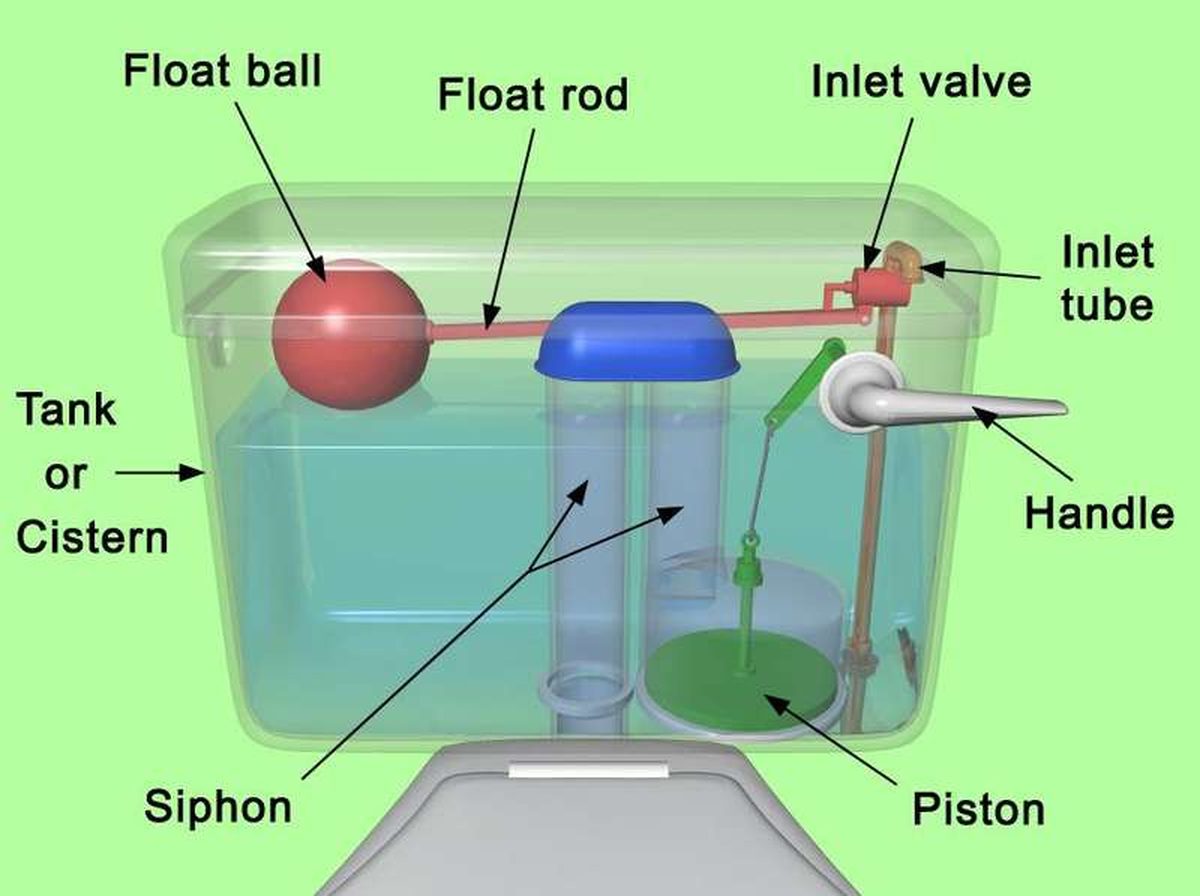
How to fix a running toilet without a plumber in 30 minutes
A running toilet can waste 200 gallons of water a day. Diagnose the flapper, float, or fill valve in two minutes, then fix it yourself
How to hang heavy shelves on drywall safely
Studs first, toggle bolts second, plastic anchors never for heavy loads. Weight ratings, installation steps, and mistakes that bring