
How to stop your washing machine from smelling: deep-clean steps
By Rive News / Research desk | Rive News / Published October 20, 2026 at 9:00 AM PKT
Key takeaways
- The smell comes from mold, mildew, and detergent residue thriving in the damp, dark corners of the machine.
- Run an empty hot cycle with two cups of white vinegar, then a second hot cycle with half a cup of baking soda.
- Scrub the rubber gasket folds, the detergent drawer, and the drain pump filter, then leave the door open after every wash.
A washing machine that smells like mildew is a machine growing things it should not. Warm water, leftover detergent, fabric softener, and lint create a film inside the drum and seals, and mold and bacteria move straight in.
Front-loaders get the worst reputation because the watertight door seal traps moisture, but top-loaders can smell too. The odor transfers to laundry, so clothes come out smelling worse than when they went in.
This article explains how to stop your washing machine from smelling, including why the odor starts, the deep-clean cycle that works, the parts people forget to clean, and daily habits that keep it fresh.
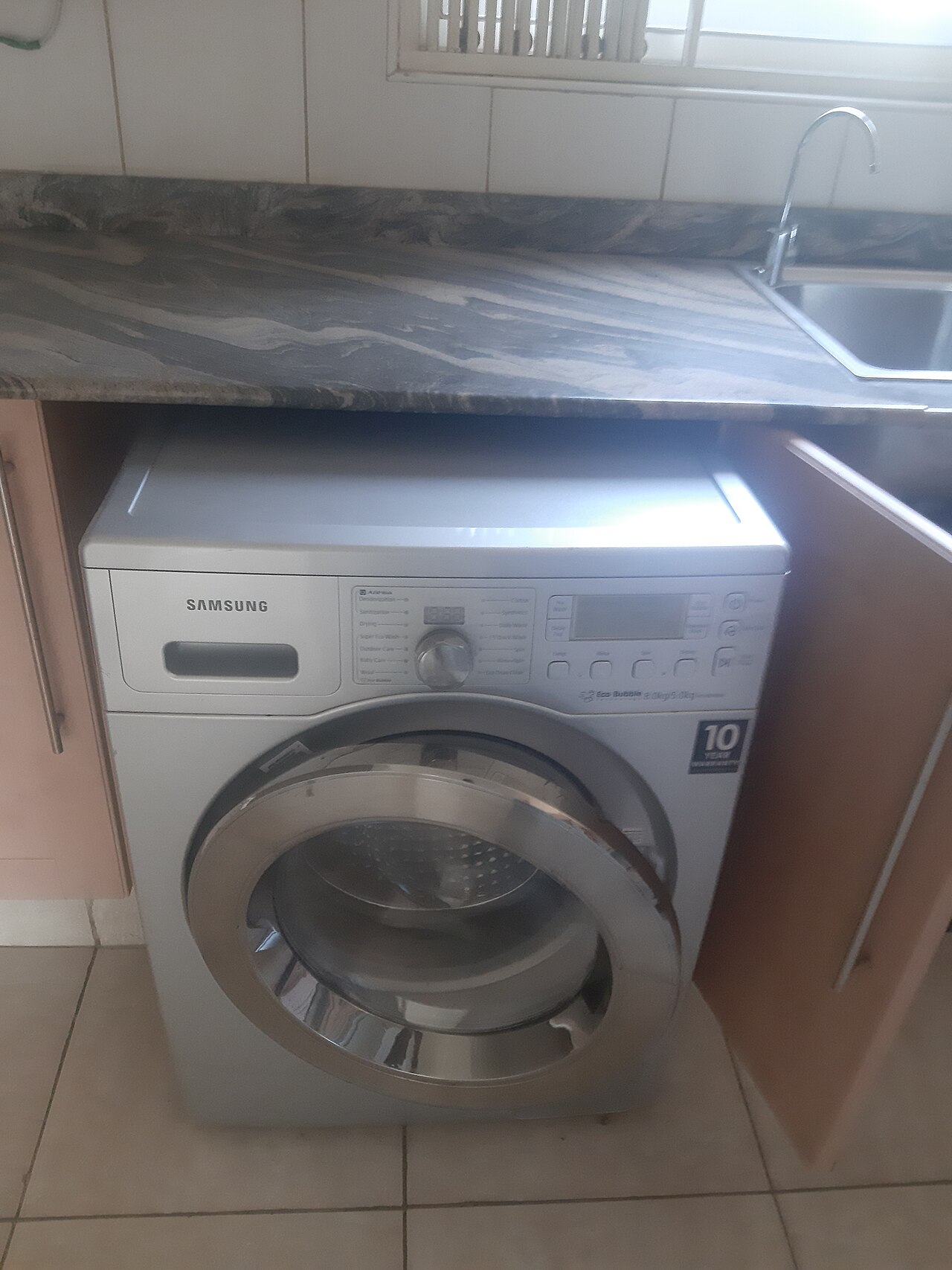
A front-load washing machine with its round door in a home laundry area, the design most prone to trapped-moisture odors.
Image Credits: Wikimedia Commons
How to stop your washing machine from smelling: the quick version
Run the machine empty on its hottest, longest cycle with two cups of white vinegar, then run it again hot with half a cup of baking soda in the drum. Scrub the rubber door gasket, pull out and wash the detergent drawer, and clean the drain pump filter.
Then change the habits that caused it: leave the door ajar after every load, remove wet clothes promptly, and cut back on detergent. Most odors surrender to this routine within a day.
Why the odor starts
Hoffmann Bros names four usual causes: residue buildup from detergents and fabric softeners, moisture that never fully dries, infrequent hot-water washes, and poor ventilation after use. Modern cold-water, high-efficiency cycles make it worse, because they never get hot enough to kill what is growing.
The rubber door gasket is the prime hideout on front-loaders. Liberty Home Guard notes that mold spots, detergent residue, trapped lint, and even lost socks collect in the gasket folds, where water pools after every cycle. The detergent dispenser drawer is the second hideout: damp, dark, and coated in soap film.
Excess detergent feeds the problem directly. Undissolved soap leaves a residue called scrud on the drum and hoses, and that residue is food for microbes. If your machine smells and your clothes feel slightly slimy, you are almost certainly using too much soap.
The deep-clean cycle that works
Start with vinegar. Pour about two cups of distilled white vinegar into the drum and run an empty cycle on the hottest, longest setting available.
AEANET's guide uses the same ratio: two cups of vinegar, hottest water, largest load size. The acid breaks down detergent buildup and mineral deposits while killing much of the odor-causing bacteria.
Follow with baking soda. Sprinkle half a cup directly into the drum and run a second hot cycle.
Hoffmann Bros recommends this exact two-step sequence: vinegar first, then baking soda, never mixed together in one cycle. The baking soda neutralizes odors and scours loosened grime.
Hot water does real work here: the Mr. Appliance guide explains that water around 140°F dissolves detergent and softener residue far better than cold water and kills remaining bacteria and mold spores. If your machine has a dedicated tub clean or sanitize cycle, use it instead of a normal hot wash.
For severe smells, repeat the pair of cycles once more. If the odor survives two full rounds, the problem is likely physical buildup in the gasket or filter, which brings us to the parts people skip.
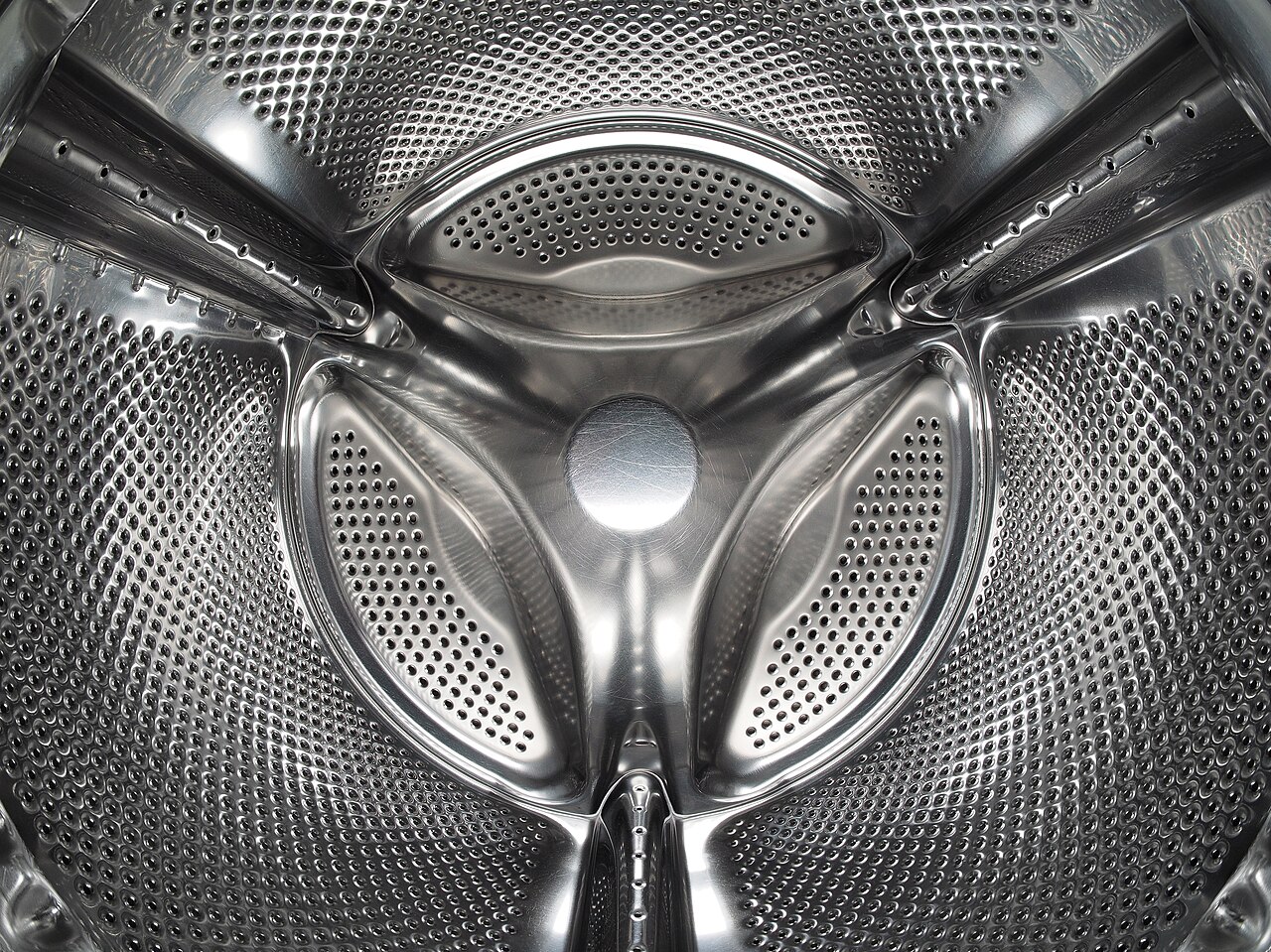
The inside of a stainless steel washing machine drum, where detergent residue and biofilm build up out of sight.
Image Credits: Wikimedia Commons
The parts people forget to clean
Pull back every fold of the rubber door gasket and wipe inside with a cloth dipped in equal parts water and white vinegar. Liberty Home Guard's method: wipe thoroughly, scrub visible mold with a soft brush, then dry the area with a clean towel. Check for trapped items while you are in there.
Remove the detergent dispenser drawer completely. Soak it in hot, soapy water, scrub the corners and the housing it slides into with an old toothbrush, then dry it fully before reinserting. Residue here recirculates bacteria into every wash.
Clean the drain pump filter, usually hidden behind a small panel at the machine's front bottom. Place a towel underneath, open it slowly, and pull out the lint, hair, and debris. Liberty Home Guard calls this the most-forgotten step, and it can single-handedly sustain a persistent smell.
Wipe the drum itself and the machine's exterior with a damp microfiber cloth. If you use bleach for mold, use it alone, rinse thoroughly, and keep it far from every other cleaning product.
Daily habits that keep it fresh
Leave the door or lid open after every wash. This is the golden rule across every source: airflow evaporates residual moisture, and mold cannot grow on a dry surface. Even an inch of gap makes the difference.
Remove wet clothes promptly when the cycle ends. A load left overnight in a sealed drum is a mildew incubator, and the smell will be waiting in the morning. If the power goes out mid-cycle, get the clothes out and hung up rather than letting them sit.
Use less detergent than you think you need, and consider switching to powder if buildup keeps returning. Run a hot empty cycle monthly as maintenance, and clean the gasket and drawer on the same schedule. A washing machine only stays fresh if it gets to dry out between jobs.
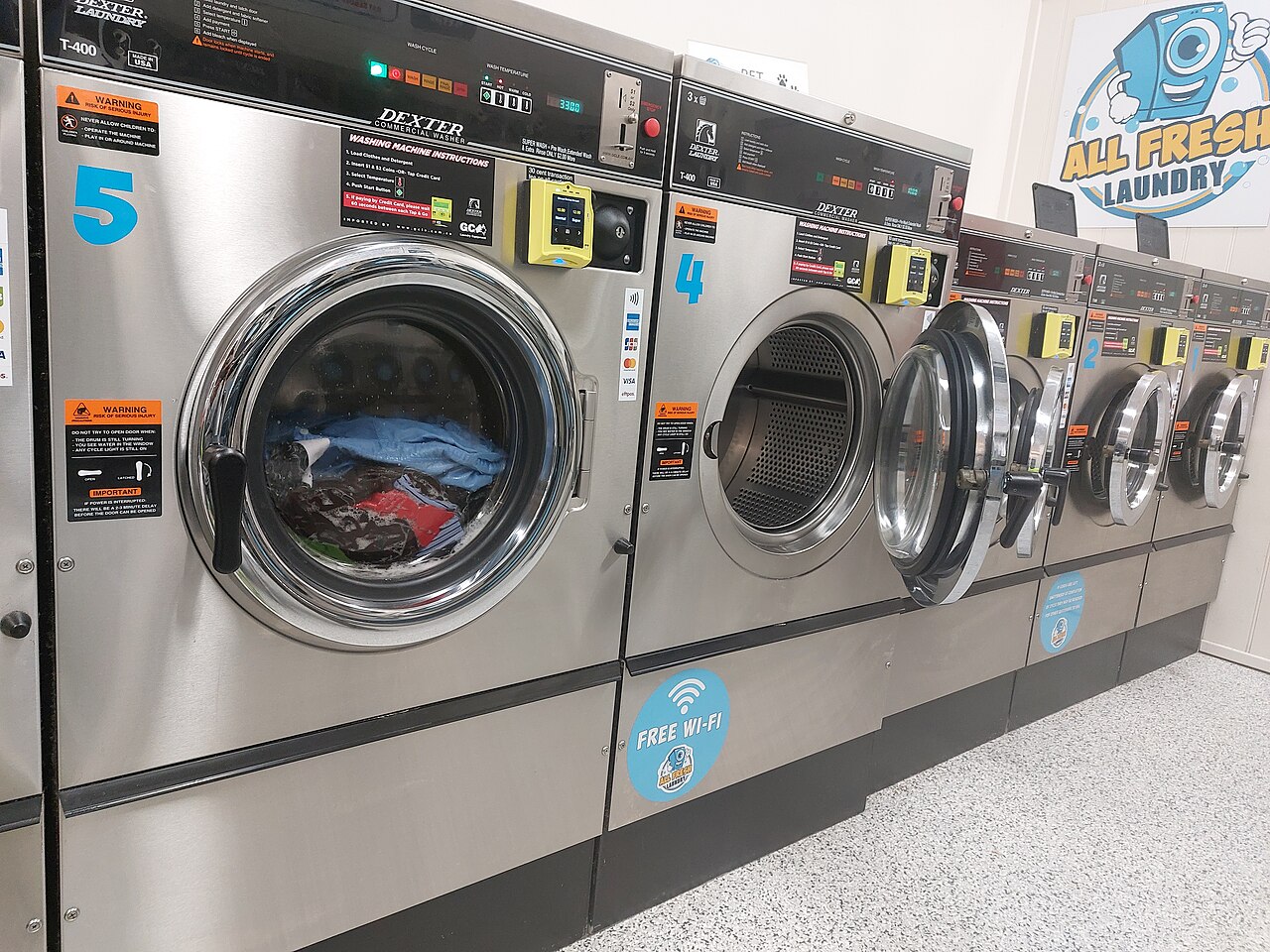
A row of commercial washing machines; the same causes, trapped moisture and detergent residue, affect home machines.
Image Credits: Wikimedia Commons
One more check: if only your hot water smells, like rotten eggs, the water heater may be the real culprit rather than the washer. That is a separate issue with its own set of causes, so rule it out before deep-cleaning the machine twice.
Frequently asked questions
Why does my front-load washer smell worse than my old top-loader?
The airtight door seal that makes front-loaders efficient also traps moisture after every cycle. Water pools in the rubber gasket folds, creating a permanent damp habitat for mold and mildew. Top-loaders ventilate better with the lid up, though they can still smell if the lid stays closed.
Can I use bleach to clean a smelly washing machine?
Yes, used alone, since a cup of liquid bleach in an empty hot cycle kills mold effectively. The Mr. Appliance guide warns never to mix bleach with vinegar or other cleaners, because the fumes are dangerous, so run a rinse cycle afterward and ventilate the room.
How often should I clean my washing machine?
Run an empty hot cleaning cycle monthly, and wipe the gasket and detergent drawer on the same schedule. Households that mostly wash in cold water or use heavy fabric softener may need it more often. The drain pump filter deserves a check every few months.
Will vinegar damage my washing machine's seals?
Occasional cleaning cycles with white vinegar are widely recommended and safe for modern machines. The concern is only with frequent, heavy use over years on certain rubber compounds. Two cups in a monthly hot cycle is well within normal guidance from appliance professionals.
My washer still smells after cleaning. What now?
Recheck the three forgotten spots: deep inside the gasket folds, the dispenser housing behind the drawer, and the drain pump filter. If all three are clean and the smell persists, the residue may be in the hoses or outer tub, which is a job for an appliance technician rather than another cleaning cycle.
The bottom line
Washer odor is a moisture problem with a cleaning solution: hot vinegar cycle, hot baking soda cycle, scrubbed gasket and drawer, cleaned drain filter. Then keep the door open and the detergent measured, and the smell stays gone. Put a monthly hot empty cycle on your calendar today, and your laundry will come out smelling like nothing at all, which is exactly the goal.
Tags: washing machine, laundry, mold and mildew, home cleaning, appliance care
Rive News's research desk covers practical home maintenance, turning trade and restoration guidance into plain-language how-tos.
Latest in Home & DIY
- What causes water stains on your ceiling
- How to get candle wax out of carpet
- What to do when your power goes out suddenly
- Why does your tap water taste strange sometimes
Get one practical home fix in your inbox every week. Subscribe to the Rive News newsletter.
Published by Rive News. Information is for general purposes only.
Related stories
Why Your Faucet Keeps Dripping After You Turn It Off
A dripping faucet is usually a worn washer, O-ring, or cartridge that can no longer seal. One drip per second wastes over 3,000 gallons
How to fix a running toilet without a plumber in 30 minutes
A running toilet can waste 200 gallons of water a day. Diagnose the flapper, float, or fill valve in two minutes, then fix it yourself

How to hang heavy shelves on drywall safely
Studs first, toggle bolts second, plastic anchors never for heavy loads. Weight ratings, installation steps, and mistakes that bring