
What causes water stains on your ceiling: finding the leak
By Rive News / Research desk | Rive News / Published October 20, 2026 at 9:00 AM PKT
Key takeaways
- A brown ceiling stain means moisture reached the ceiling material, most often from a roof leak, a plumbing leak, or AC condensation.
- Timing is the best clue: stains that grow after rain point to the roof, steady dampness points to plumbing, summer-only stains point to the AC.
- Fix the leak before the stain. Paint alone never works, since water-soluble compounds bleed through ordinary paint within days.
A water stain on a ceiling is a brown or yellowish discoloration on drywall, plaster, or ceiling tiles. It forms when water passes through the ceiling material, dissolving dust, dirt, and tannins from wood framing and depositing them on the visible surface.
The stain itself is not the real problem. It is the visible symptom of moisture arriving from somewhere it should not be: the roof above, a pipe in the floor cavity, or an air conditioner sweating overhead.
This article explains what causes water stains on your ceiling, including the short list of main sources, roof leaks, plumbing leaks from fixtures above, HVAC condensation and attic moisture, and how to repair the stain after the leak stops.
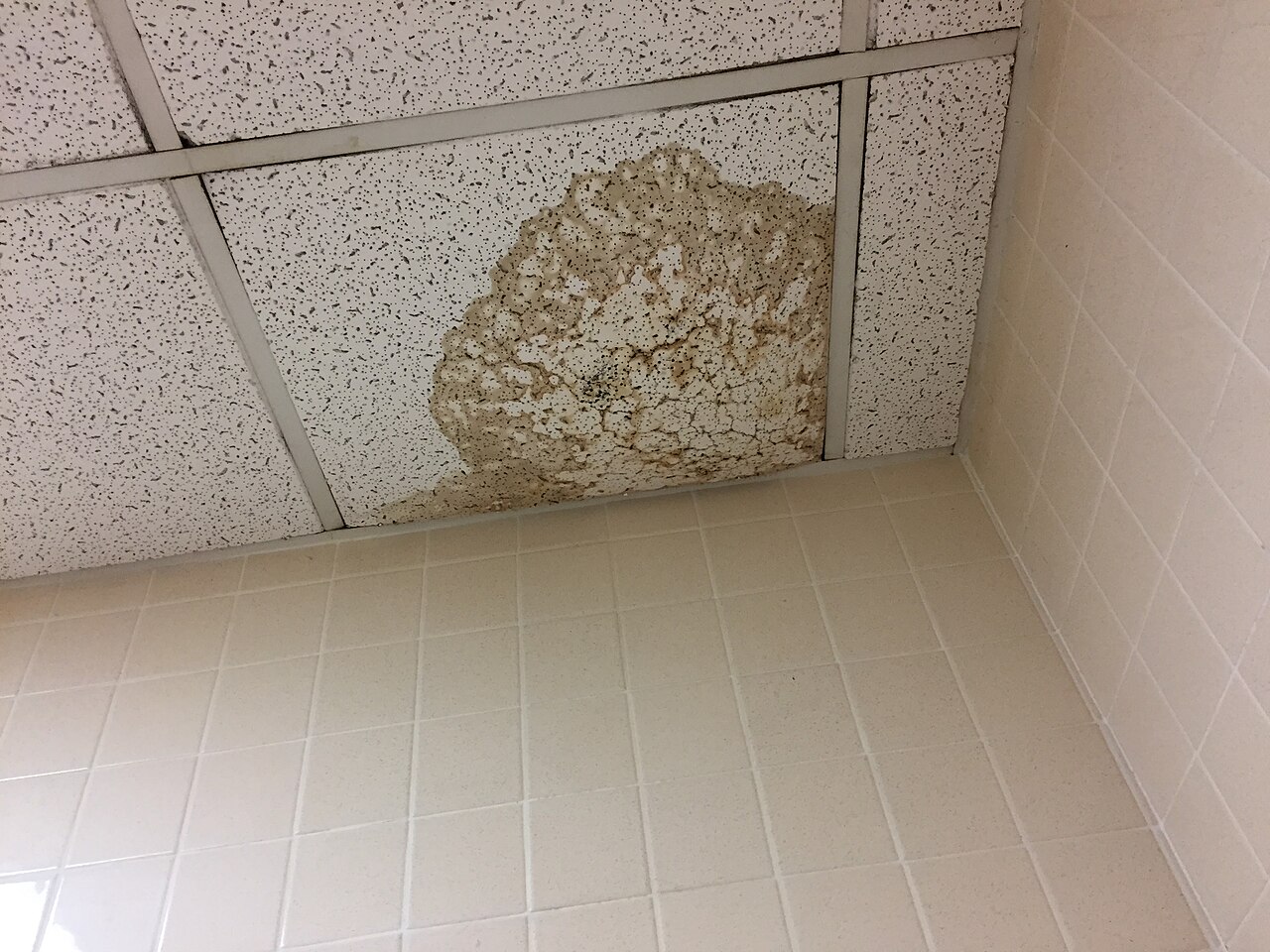
A brown water stain on ceiling tiles, the classic sign that moisture has reached the ceiling material.
Image Credits: Wikimedia Commons
What causes water stains on your ceiling: the short list
Brown spots almost never appear without moisture nearby. ServiceMaster Restore lists six common causes: plumbing leaks, roof leaks, HVAC condensation, bathroom moisture, attic humidity, and old water damage whose stain survived the repair.
Where and when the stain appears narrows the list fast. PuroClean's diagnostic framework uses three questions: where the stain sits, when it gets wet, and what is directly above it.
A stain that appears or expands during heavy rain suggests the roof. A brown ring around a ceiling AC vent suggests condensation. A stain below an upstairs bathroom suggests plumbing.
Water can travel along framing, pipes, and ducts before it shows itself, so the stain may sit several feet from the actual entry point. That is why reading the clues matters more than staring at the spot.
Roof leaks
Roof leaks are the first suspect when the stain grows after rain or snowmelt and stays quiet in dry weather. EngineerFix notes that these leaks are intermittent by nature: the intrusion stops when precipitation stops, but the brown mark remains.
Damaged or missing shingles, failed flashing around chimneys, vents, and skylights, and clogged gutters that back water up onto the roof deck are the usual entry points. Ice dams can do the same job in cold climates, forcing meltwater under the shingles and into the attic.
Check the roof directly above and uphill from the stain, not just straight up. Because water runs along rafters and joists, the entry point can be surprisingly far from the discoloration. A professional roofer handles the repair once you have confirmed the timing pattern.
Plumbing leaks from fixtures above
A stain directly beneath an upstairs bathroom, laundry room, or kitchen usually means plumbing, not the roof. ServiceMaster points to leaking supply lines, drainpipes, toilets, and shower pans as the common culprits behind circular or expanding stains.
The usual failures are small: a worn toilet wax ring, a cracked shower pan, loose pipe fittings, or failed caulk and grout around a tub. Slow drips from a pipe joint can take weeks to show on the ceiling, and by the time the stain appears there is often significant hidden damage in the floor cavity.
Plumbing leaks can be continuous or intermittent depending on fixture use. EngineerFix suggests a simple test: run water in the suspected fixture for a while and watch the stain for fresh dampness.
A gray tint or foul smell points to a drain-line or sewer leak, which needs urgent attention for sanitation reasons. And if your water bill has crept up for no clear reason, a hidden supply leak is a strong possibility. A grayish, foul-smelling stain can also mean trouble in your drains rather than your supply lines, so if your tap water tastes strange sometimes, treat that as a separate issue with its own causes.
HVAC condensation and attic moisture
Air conditioners pull moisture from the air, and all that water has to drain somewhere. When a condensate line clogs or a drain pan overflows in an attic-mounted system, water drips straight onto the ceiling below. These stains often appear suddenly in summer, after weeks of normal AC operation.
Sweating ductwork causes the same trouble. If duct insulation fails, cold metal ducts condense moisture from warm attic air and drip it down. Homes with attic HVAC equipment see this pattern most.
Attic condensation is the cold-weather version. Poor insulation or ventilation lets warm, moist house air condense on cold roof surfaces, and the drips land on the ceiling below. Unlike plumbing leaks, this one shows up in cool weather and wet insulation.
How to repair the stain after the leak stops
Resist the urge to paint first. Legacy Water Restoration warns that ordinary paint does not stop a stain: water-soluble compounds soak back through within days, the trapped moisture feeds mold, and the fresh coat hides your early warning sign.
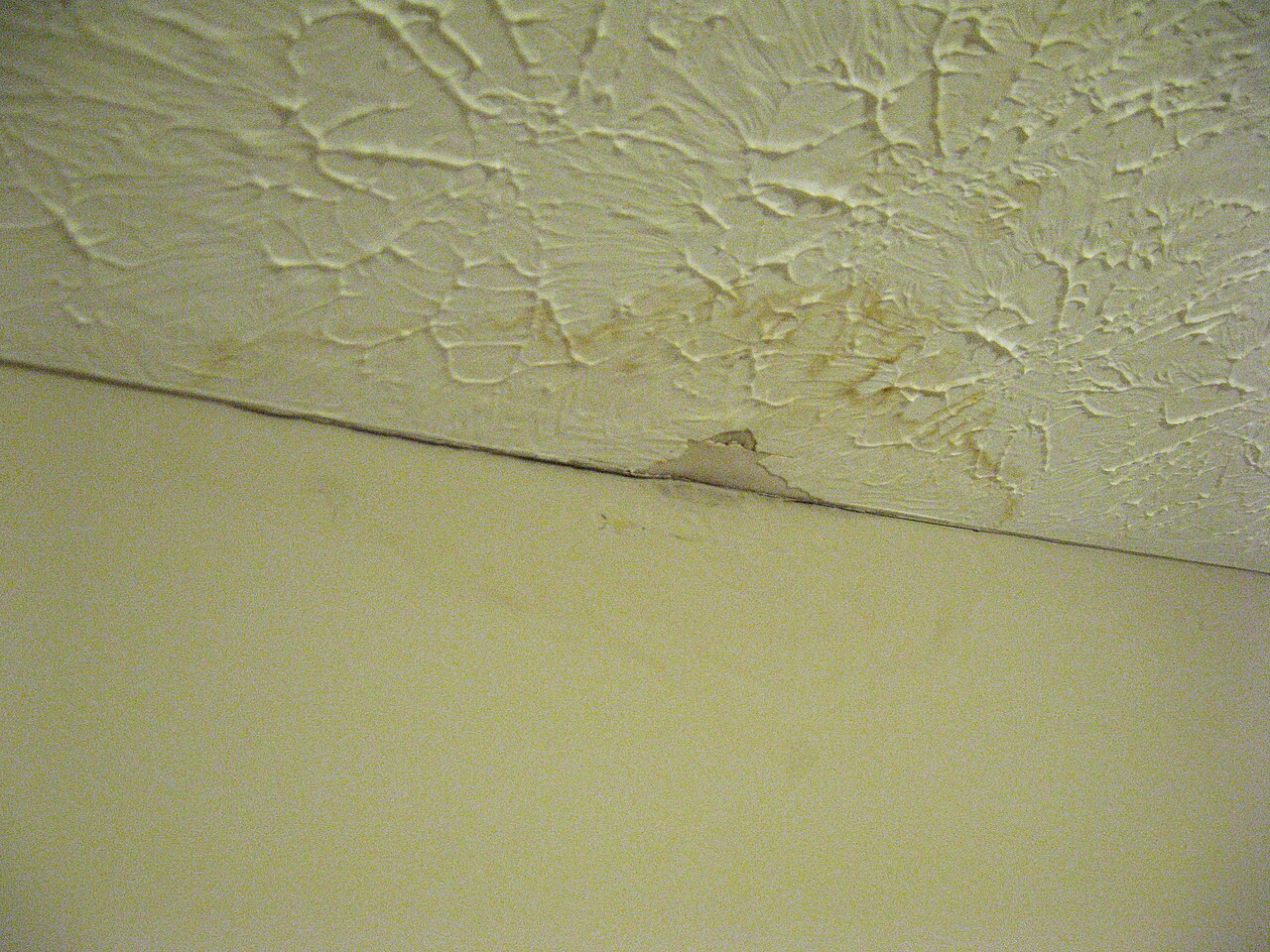
Water damage with peeling paint where a ceiling meets the wall, showing why the source must be fixed before any cosmetic repair.
Image Credits: Wikimedia Commons
First, confirm the ceiling is fully dry, using a moisture meter if you have one. Cut out any drywall that sags, crumbles, or stays soft; patching over ruined material only delays the collapse. Small areas can be patched with joint compound and sanded smooth.
Then seal the stain with a stain-blocking primer, the shellac or oil-based kind, not standard latex primer. The brown compounds that bleed through regular paint cannot pass a proper stain blocker. Finish with ceiling paint, and fill any old nail holes while you have the supplies out, following the same patching approach used when hanging heavy pictures without damaging the wall.
Treat emergencies seriously. If the ceiling bulges, drips, or sits near a light fixture or ceiling fan, switch off the breaker for that circuit and keep everyone clear, following the same first response as when your power goes out suddenly. A waterlogged ceiling can collapse without warning.
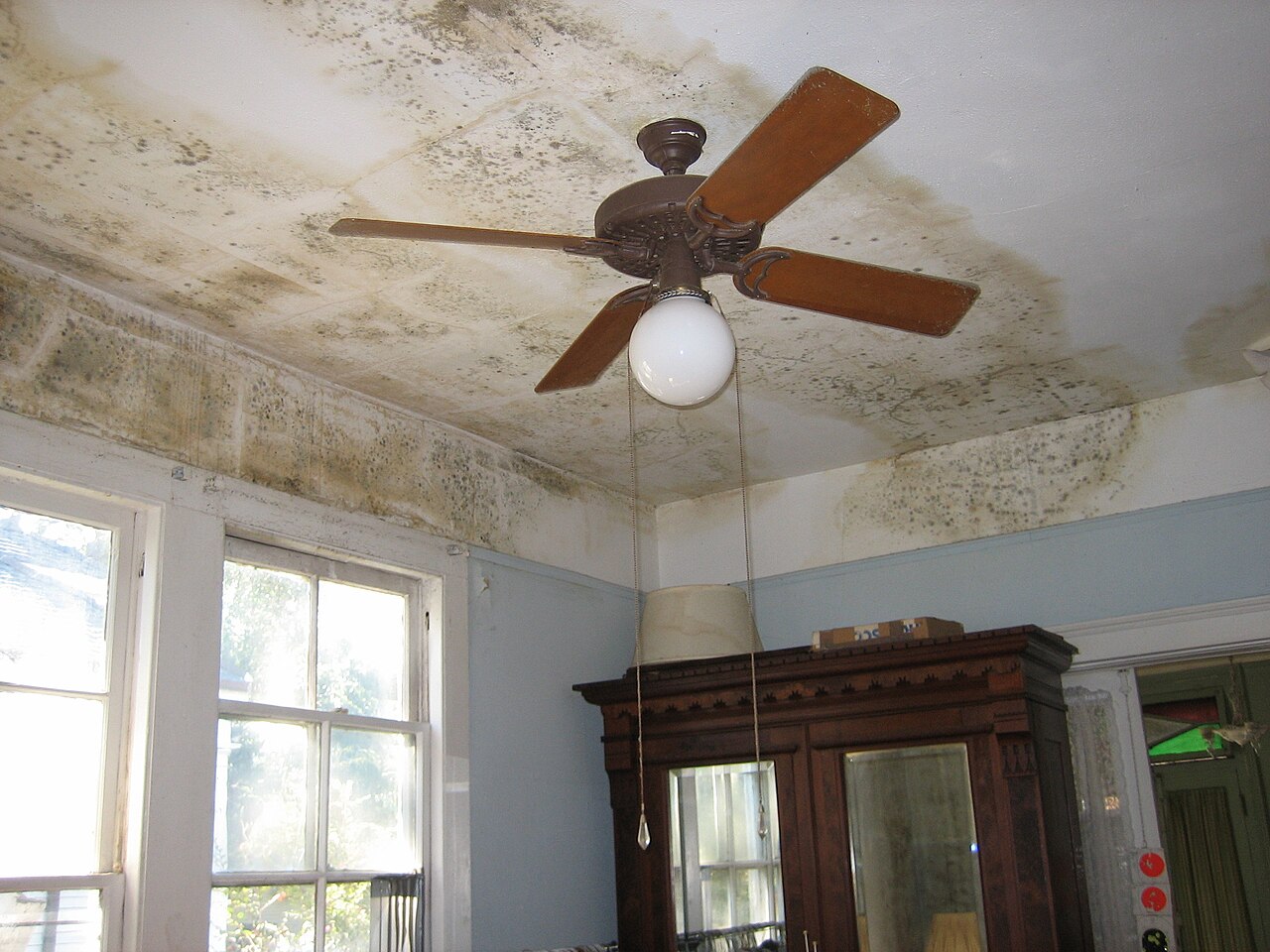
Mold spreading across a ceiling around a fan after prolonged moisture exposure, a reminder that slow leaks rarely stay cosmetic.
Image Credits: Wikimedia Commons
Frequently asked questions
Can I just paint over a water stain on my ceiling?
No. The brown compounds in a water stain are water-soluble, so they soak back through standard paint and reappear within days, according to Legacy Water Restoration.
Paint also seals in moisture and hides the warning sign of an active leak. Fix the source, let the ceiling dry, then use a stain-blocking primer.
How do I know if the leak is still active?
Touch the stain and the surrounding area; active leaks feel damp or cool, and the discoloration keeps growing. PuroClean recommends checking after rain and after running upstairs fixtures to see which trigger makes it worse. If the stain appeared once and never changed, the source may already be fixed, but verify before you repaint.
Does a brown ceiling stain mean there is mold?
Not necessarily, but the risk is real. Mold needs sustained moisture, and ServiceMaster notes that old or ignored stains often come with it.
If you see fuzzy growth, smell a musty odor, or the stain covers a large area, assume mold may be present behind the surface. Small surface spots can be cleaned; widespread growth calls for a professional.
Should I call a roofer or a plumber?
Match the trade to the timing. A stain that grows after rain means a roofer; a stain under a bathroom that never fully dries means a plumber; a stain that appears only when the AC runs means an HVAC technician. When the clues conflict, a water-damage restoration company can trace the moisture with meters before you hire anyone.
Will homeowners insurance cover ceiling water damage?
It depends on the policy and the cause. Sudden, accidental leaks are more likely to be covered than slow seepage that went unrepaired for months, and Legacy Water Restoration notes that insurers look closely at how long the damage went unaddressed. Document everything with dated photos and check your policy before filing.
The bottom line
A ceiling water stain is a symptom, not the disease, and the timing of when it grows tells you which system is failing. Roof leaks follow the rain, plumbing leaks follow the fixtures, and AC condensation follows the summer.
Fix the source first, dry the ceiling completely, then seal and repaint with a stain-blocking primer. Your next step is simple: check the stain after the next rain and after running the upstairs shower, and you will know exactly who to call.
Tags: ceiling stains, roof leaks, plumbing leaks, water damage, home maintenance
Rive News's research desk covers practical home maintenance, turning trade and restoration guidance into plain-language how-tos.
Latest in Home & DIY
- How to get candle wax out of carpet
- What to do when your power goes out suddenly
- Why does your tap water taste strange sometimes
- How to stop your washing machine from smelling
Get one practical home fix in your inbox every week. Subscribe to the Rive News newsletter.
Published by Rive News. Information is for general purposes only.
Related stories
Why Your Faucet Keeps Dripping After You Turn It Off
A dripping faucet is usually a worn washer, O-ring, or cartridge that can no longer seal. One drip per second wastes over 3,000 gallons

How to fix a running toilet without a plumber in 30 minutes
A running toilet can waste 200 gallons of water a day. Diagnose the flapper, float, or fill valve in two minutes, then fix it yourself

How to hang heavy shelves on drywall safely
Studs first, toggle bolts second, plastic anchors never for heavy loads. Weight ratings, installation steps, and mistakes that bring