
How to hang heavy pictures without damaging the wall
By Rive News / Research desk | Rive News / Published October 20, 2026 at 9:00 AM PKT
Key takeaways
- A heavy picture belongs on wall studs or on anchors rated above its weight, never on a bare nail in drywall.
- Toggle bolts hold up to 50 pounds in drywall, while anything heavier needs studs or a rail system.
- Weigh the frame, use two mounting points, and pull-test the hardware before hanging the art.
A heavy picture falling off the wall is a double disaster. The frame breaks and the wall tears. Both failures come from the same mistake: hardware that cannot carry the weight it was given.
Drywall by itself holds almost nothing. It is a thin sheet of gypsum, and a nail driven into it works loose over time. The strength lives behind the wall, in the wooden studs, or in anchors designed to spread the load across the drywall's back face.
This article explains how to hang heavy pictures without damaging the wall, including finding studs, choosing anchors by weight, the step-by-step mounting process, and damage-free options for renters.
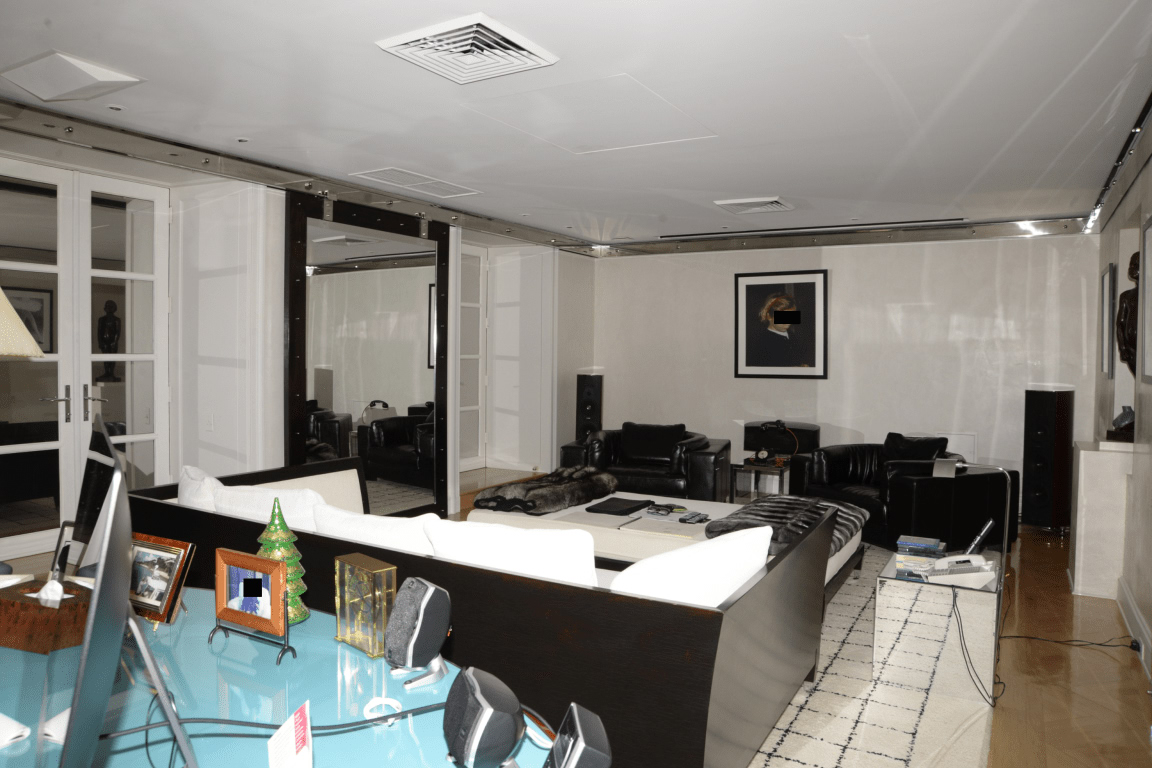
A modern living room with framed artwork hung on the wall, the result of matching hardware to weight. Photograph: Wikimedia Commons contributor.
Image Credits: Wikimedia Commons
Finding the studs first
Studs are the strongest option, always. A screw driven into a wooden stud can carry far more than any drywall anchor, and it will not work loose. If anything in your home weighs over 20 pounds, finding a stud is the first job.
Most wall studs sit 16 inches apart, measured from center to center, starting from a corner, according to Engineer Fix. An electronic stud finder locates them quickly: slide it slowly across the wall and mark where it signals.
Confirm the spot by tapping. The sound turns solid and dense over a stud, hollow between them.
When no stud lines up with your chosen spot, you have two honest choices. Move the picture a few inches to hit one, or switch to heavy-duty drywall anchors rated for the weight.
What you must not do is drive a plain nail into bare drywall and hope. Hope is not a mounting strategy.
Before drilling anywhere, check for wiring and plumbing. Mixtiles advises double-checking for both before the drill comes out. Stud finders with AC detection help, and avoiding the vertical strip above outlets is a sensible habit.
Standard gallery height puts the center of the artwork 57 to 60 inches from the floor, according to Mixtiles. Mark that line lightly in pencil before you commit to any holes.
Choosing anchors by weight
Match the hardware to the actual weight of the frame, not your guess. Weigh the picture on a bathroom scale if you are unsure. The anchor's rating must exceed that number with margin to spare.
Apartment Guide publishes a practical weight table:
- Plastic anchors suit lightweight frames up to 15 pounds.
- Winged anchors handle medium frames up to 25 pounds.
- Toggle bolts take heavy mirrors and artwork up to 50 pounds per anchor.
AS Hanging draws similar lines with finer detail:
- Pictures under 5 pounds can use adhesive strips or mounting tape.
- The 5 to 20 pound range suits plastic drywall anchors.
- From 20 to 50 pounds, use metal anchors like toggle or molly bolts.
- Over 50 pounds belongs on a wall stud or a rail-cable hanging system.
For studs, use real wood screws, not the thin nail that came with the frame. Nathan of BiltPros, a Southern California general contractor quoted by Apartment Guide, recommends at least a quarter-inch lag bolt into a stud for heavy pieces. For drywall-only mounting he names quarter-inch toggler bolts as the strongest type of anchor for that wall.
One more rule from the trade: the flimsy wire and tiny hooks that ship with many frames are often the weakest link. Replace thin wire with braided steel cable rated for at least twice the artwork's weight, and mount D-rings about a third of the way down each side of the frame for stability.

A gallery wall of framed pictures, where two-point mounting keeps every frame level and steady. Photograph: Wikimedia Commons contributor.
Image Credits: Wikimedia Commons
Mounting step by step
With hardware chosen, the process is straightforward. Measure the frame and mark your hanging height on the wall. Set the artwork's center at that 57 to 60 inch gallery line.
Locate the studs and mark them in pencil. Decide your mounting method: two stud screws for the heaviest pieces, or a mix of one stud screw and one toggle anchor when only one side lands on wood. Two mounting points are the best way to keep heavy artwork steady, Mixtiles notes, because they stop the frame from tilting forward or sideways.
Drill pilot holes with the correct bit size. For wood screws, the bit should be slightly smaller than the screw so the threads bite.
For toggle anchors, follow the anchor's stated hole size exactly. Over-drilling makes anchors grip poorly.
Install the hardware and leave a few millimeters of screw head exposed to catch the D-rings or wire. Set toggle anchors flush and tighten until snug, without crushing the drywall face.
Hang the frame with a helper for anything heavy. Set both D-rings onto their points, step back, and check with a level.
Then do the safety check that matters most: give the frame a gentle downward pull. Mixtiles recommends re-checking the screws after 24 hours, since hardware can settle slightly once the piece is mounted.
Damage-free options for renters
Not every wall should get holes. Adhesive strips handle pictures under 5 pounds cleanly and peel off without a trace, AS Hanging notes. For anything heavier in a rental, look at a rail-cable picture hanging system.
The rail mounts once along the top of the wall, and pictures hang from adjustable cables and hooks. AS Hanging reports these systems support up to 300 pounds per track, work on drywall, plaster, brick, and wood, and let you reposition art without new holes. One installation, endless rearranging.
French cleats are another low-damage heavy option for owned homes. Two interlocking beveled strips, one on the wall and one on the frame, distribute weight across a wide area. They hold heavy mirrors and art securely while needing only a few small screw holes.
Whatever method you choose, patching small holes is cheap and easy. Keep a small tub of spackle and a putty knife.
Press it in, smooth it flush, sand lightly when dry, and touch up with paint. A properly patched anchor hole disappears completely, which is the real meaning of hanging without damaging the wall.
Frequently asked questions
How heavy is too heavy for drywall alone?
Above 50 pounds, stop relying on drywall anchors and use studs or a rail system, per AS Hanging's guide. Between 20 and 50 pounds, metal toggle or molly bolts are the minimum. Under 20 pounds, standard anchors are fine if rated for the weight.
Can I hang a heavy mirror with adhesive strips?
No. Adhesive strips top out around 5 pounds, and a falling mirror is dangerous as well as expensive.
Heavy mirrors need studs, toggle bolts, or a rail system. There is no damage-free shortcut for real weight.
What if my walls are plaster, brick, or concrete?
Masonry needs a masonry bit plus sleeve anchors or concrete screws such as Tapcons, Mixtiles advises. Vacuum the dust from the hole before inserting the anchor. Plaster walls do well with toggle bolts or rail hooks that engage the lath behind the plaster.
Why does my picture keep tilting no matter how I hang it?
Single-point hanging lets frames rotate. Switch to two mounting points spaced across the frame's width, with D-rings set a third of the way down each side. Two points lock the frame level.
Should I use the hardware that came with the frame?
Often it is undersized. Apartment Guide quotes a contractor warning that included mounting hardware frequently cannot handle the job, and wobbly failures trace back to the wrong anchor choice. Buy hardware rated for your frame's actual weight.
The bottom line
Heavy pictures stay on the wall when the hardware matches the weight. Studs first, rated anchors second, two mounting points always, and a pull test before you walk away.
Weigh your frame tonight and buy the right anchors tomorrow. That single step prevents nearly every hanging failure. While you are improving the walls, our guide on what causes water stains on ceilings covers the other wall problem worth checking before you decorate around it.
Rive News is a research desk that tests DIY advice against contractor guidance and manufacturer specifications before writing about it.
Latest in Home & DIY
- What causes water stains on ceilings?
- How to get candle wax out of carpet
- How to stop a washing machine from smelling
- Why does tap water taste strange sometimes?
Subscribe to the Rive News newsletter for one practical home fix every week.
Published by Rive News. Information is for general purposes only.
Related stories
Why Your Faucet Keeps Dripping After You Turn It Off
A dripping faucet is usually a worn washer, O-ring, or cartridge that can no longer seal. One drip per second wastes over 3,000 gallons
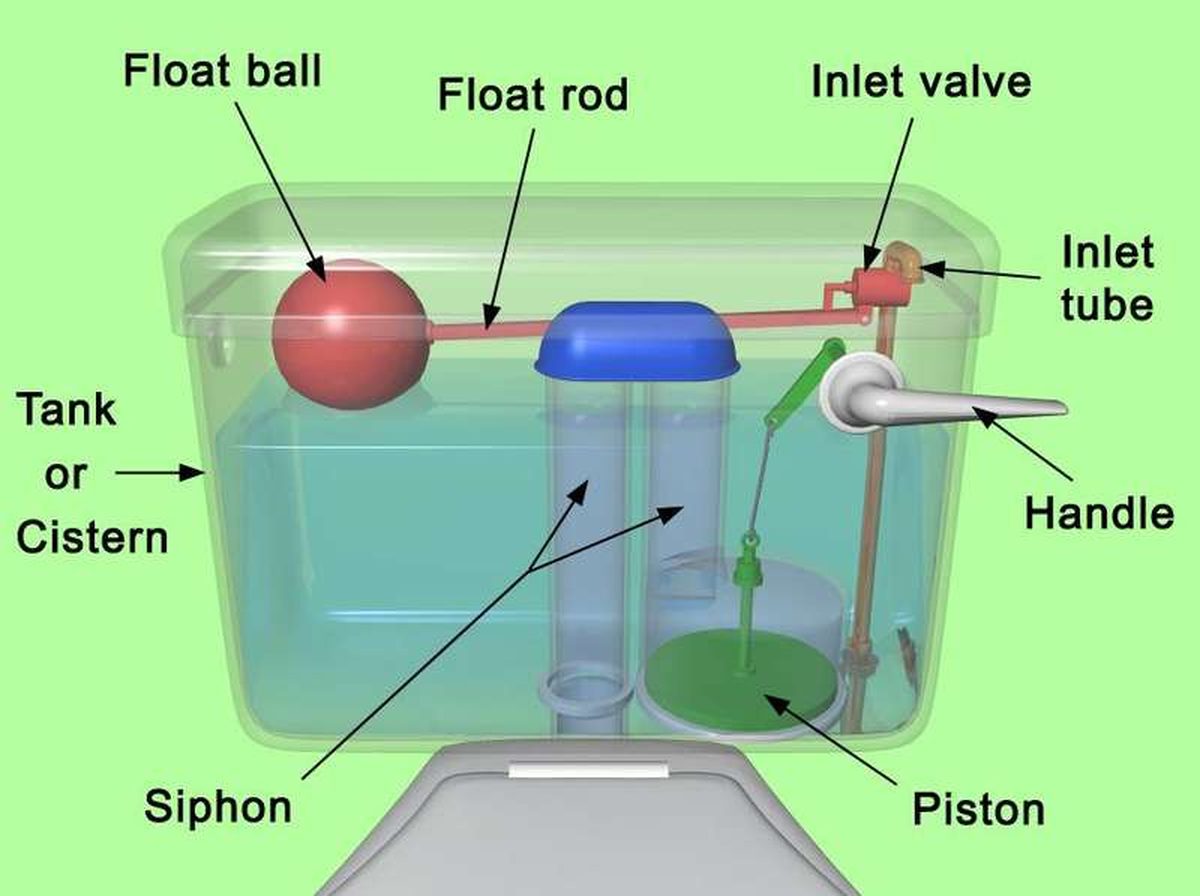
How to fix a running toilet without a plumber in 30 minutes
A running toilet can waste 200 gallons of water a day. Diagnose the flapper, float, or fill valve in two minutes, then fix it yourself
How to hang heavy shelves on drywall safely
Studs first, toggle bolts second, plastic anchors never for heavy loads. Weight ratings, installation steps, and mistakes that bring