
Why children ask for the same story every single night
By Rive News / Research desk | Rive News / Published October 29, 2026 at 9:00 AM PKT
Key takeaways
- Repetition lets a child stop worrying about what happens next and start noticing new words, pictures, and feelings.
- In a 2011 experiment, 16 three-year-olds remembered new words better from one story heard three times than from three different stories.
- The same story also works as a calming ritual, because a predictable ending tells a child the day is safely over.
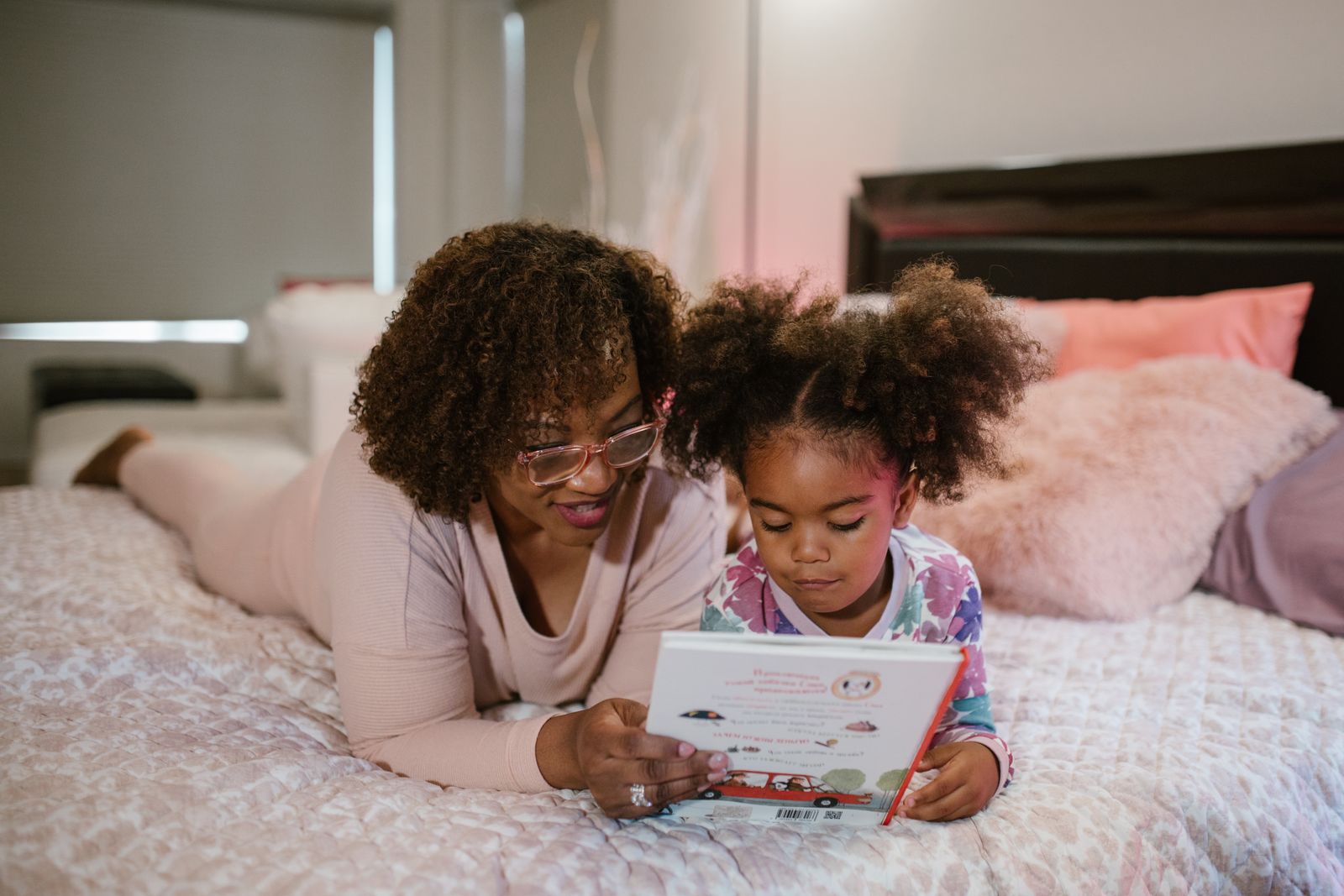
[A mother and daughter share a bedtime story, the kind of repeated ritual young children request night after night.] Photograph: a mother and daughter reading together
Image Credits: Pexels
Every parent knows the scene. You finish the last page, close the book, and your child pushes it straight back toward you, asking for it again.
You suggest a different story, one you have not read every evening this week. Your child insists on the familiar favourite.
It can feel like stubbornness, or a lack of imagination. The research points the other way. For a young child, the eleventh reading is not the same as the first, even when it looks identical from the outside.
Repetition frees attention for learning
A first reading is hard work for a small brain. The child must follow the plot, track the characters, decode the pictures, and take in the language, all at once. Something has to give, and usually it is the finer detail.
On a repeat reading, the plot is already known. That frees attention for everything the child missed the first time: a new word, a character's expression, a detail in the background of an illustration, a joke that only lands once the ending is understood.
Developmental psychologists describe this as a shift in focus. Because hearing the same story reduces the mental effort needed to follow what happens, children can spend that freed effort on language they have not yet absorbed.
BabyCenter makes the same point in plainer terms. Through repeating things, a toddler is able to take in new information each time, which is why a child allowed to choose the bedtime book will pick the same one night after night, nine times out of ten.
What the 2011 experiment actually found
The clearest evidence comes from a small experiment by University of Sussex psychologist Jessica Horst and colleagues Kelly Parsons and Natasha Bryan, published in Frontiers in Psychology in 2011.
Researchers visited 16 three-year-olds at home three times during one week. At each visit, one group heard a single story three times. Another group heard three different stories containing the same unfamiliar object names.
Both groups received equal exposure to those names. The design matters, because it rules out the simplest explanation, that the repeated group just heard the words more often.
Children who heard the repeated stories performed better on immediate memory and later retention tests. The repeated story helped them learn and keep new words, even though the other group had heard the same target words just as many times.
The experiment was small, and it examined learning under specific conditions. It did not establish why children request favourite books, or test whether reading at bedtime offered extra benefits. Still, its result fits a wider pattern: repeated reading of the same text produces stronger language outcomes than reading many different texts once each.
Prediction is a skill, not a party trick
Once a child knows a story well enough to fill in the endings of sentences, something important has changed. The child is no longer just listening. The child is predicting.
Virginia Walter, an associate professor of education and information studies at the University of California, Los Angeles, told Parents.com that children who know a story by heart develop their logic skills. They are rehearsing the ability to predict events based on existing knowledge.
That is why children correct you when you skip a page or change a word. They are not being difficult. They have built a model of the story in their heads, and your deviation breaks it.
Noticing the break proves the model exists.
The same logic explains why stories with repeated phrases are so popular. A child who can join in with the refrain is practising language in a safe frame, where the next line is already known and the risk of getting it wrong is low.
The ritual matters as much as the words
There is a second reason for the nightly request, and it has little to do with vocabulary. Bedtime is the end of the day, and young children handle endings better when they can see them coming.
A familiar story is a predictable sequence: the same voice, the same lap, the same ending, the same closing of the book. That predictability tells a child's nervous system that this is safe, that this resolves, that it is time to relax.
The World Economic Forum's summary of the research notes that younger children need longer to encode information than older children, and they forget faster. A one-year-old learns a sequence of new actions twice as fast as a six-month-old, while a 1.5-year-old typically remembers such a sequence for two weeks and a two-year-old for three months.
Repetition bridges that gap. It gives a young brain the extra passes it needs to hold on to something, and it wraps those passes in comfort rather than pressure.
When repetition starts to fade
The intense phase of same-story requests is most common in the toddler and preschool years. From around the age of two, children begin demanding favourite stories and rhymes over and over, according to BabyCenter.
With age and experience, interests shift toward novelty. The World Economic Forum summary notes that a preference for familiarity reflects an early stage in the learning process, and that older children gradually seek new experiences once they have encoded enough information.
That shift is not a deadline, and it does not arrive on the same day for every child. Some children move on quickly; others keep a beloved book in rotation for months. Both patterns are ordinary.
Parents do not need to force variety. Offering a new book alongside the favourite, rather than instead of it, lets a child choose novelty when ready, without losing the anchor.
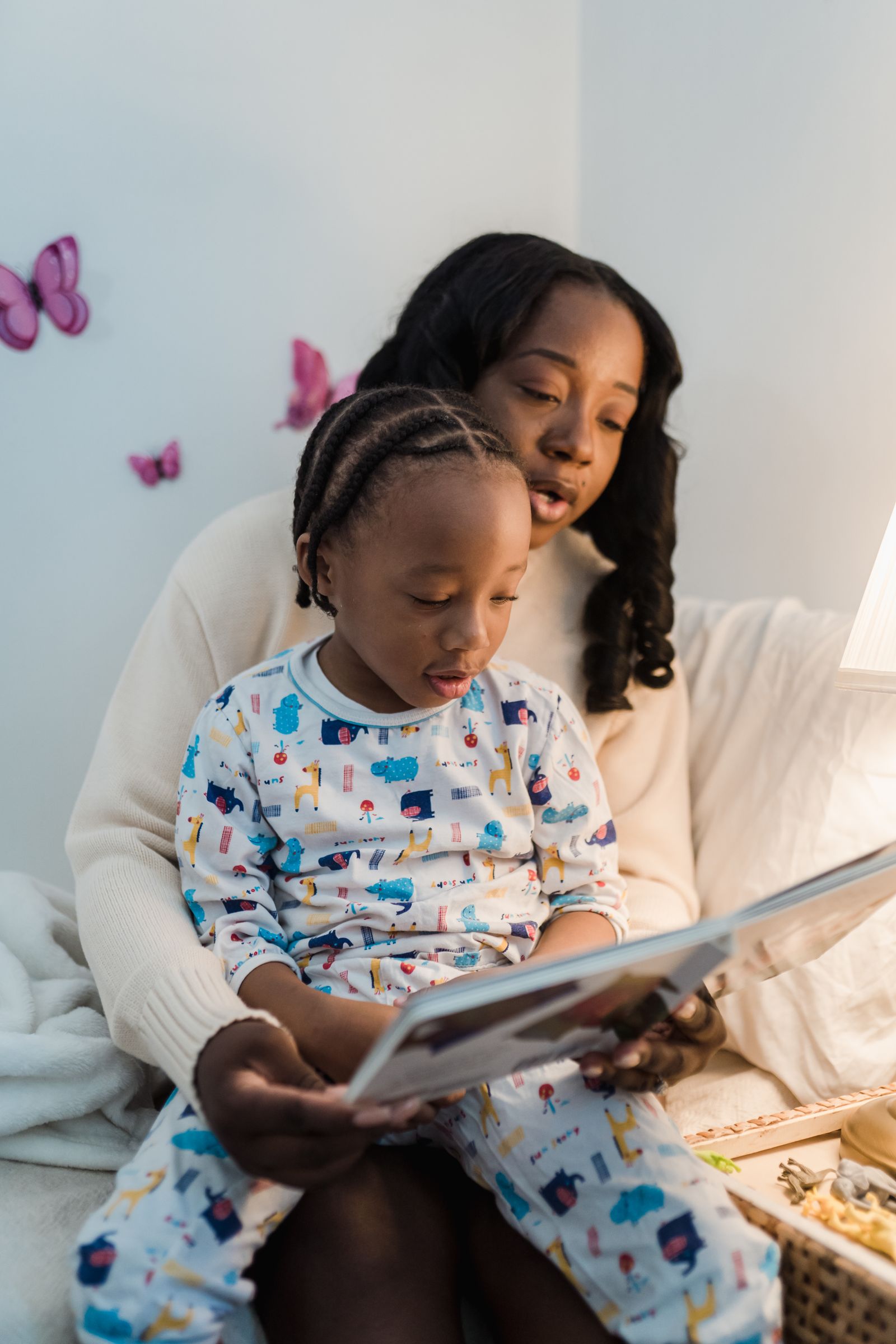
[A mother and son read a bedtime story together in a cozy bedroom, repeating a familiar ritual.] Photograph: a mother and son reading a bedtime story
Image Credits: Pexels
How to survive the hundredth reading
There will be nights when you genuinely cannot read it one more time. The words have lost all meaning, you are reading on autopilot, and you suspect your child knows it too.
Let the child read it to you. From around age three, many children have memorised enough of a favourite book to tell the story from the pictures. Asking questions and being a genuinely curious audience turns the same book into a different task for them, and often a more satisfying one.
You can also change the job, not the book. Ask your child to find a particular picture, to do the animal noises, or to tell you what happens next before you turn the page. The story stays the same, but the child's role in it grows.
If you need a break, say so honestly and offer a trade: the favourite tonight, a new book tomorrow, or the favourite read by another adult. Children accept limits better when the favourite is not being taken away for good.
Frequently asked questions
Is it bad for a child to hear only one story?
No. Repeated reading builds vocabulary and comprehension, and the research shows it can beat hearing many different stories once each. Variety helps over time, but a favourite phase is not a problem.
Why does my child get upset if I change a word?
Because the child has memorised the story and built expectations from it. A changed word breaks the prediction, which is exactly the skill the repetition has been building.
At what age does this phase usually pass?
It is strongest in the toddler and preschool years, from around age two, and it fades gradually as children encode information faster and seek novelty. There is no fixed age.
Should I keep reading the same story even when I am bored?
You do not have to read it unchanged every night. Let the child retell it, vary the child's role, or alternate nights. The benefit comes from the repetition, not from your suffering.
The bottom line
Children ask for the same story every night because repetition is how young brains learn deeply rather than widely. Knowing the plot frees attention for new words, builds the prediction skills behind logic, and wraps learning in a calming, predictable ritual.
The favourite book is not a rut. It is a tool your child has chosen, and chosen well. Read it again, and notice what they notice this time.
Tags: children, bedtime stories, language development
The Rive News research desk covers everyday science and parenting questions, checking claims against published sources before writing.
Related
- Why toddlers repeat the same book or show endlessly
- Why toddlers love repeating the same story again
- Why children need routines to feel safe and calm
- Why babies love peekaboo so much
Subscribe for one clear, sourced answer to an everyday question in your inbox each morning.
Rive News publishes explainers checked against public sources; corrections are welcomed and noted on the article.
Related stories
Why babies cry more in the evening: the witching hour explained
The witching hour is the fussy evening stretch most newborns hit daily. Why overtiredness, cluster feeding, and overstimulation stack up
When Do Babies Start Sleeping Through the Night by Month?
Most babies sleep through the night between 3 and 6 months, with regressions at 4 and 8 to 10 months. See the month-by-month table

Why Your Baby Wakes Up the Second You Put Them Down
Newborns wake when put down as the startle reflex, light sleep, and lost warmth hit at once. It is normal and peaks early, fading