
How to Handle a Child Who Refuses to Do Homework Calmly
Key takeaways
- Refusal usually signals a stuck point: tiredness, unclear directions, a missing skill, or worry.
- A fixed time, a calm place, and one small first step beat nightly arguments.
- Contact the teacher when refusal is frequent, one subject always stalls, or work takes far longer than expected.
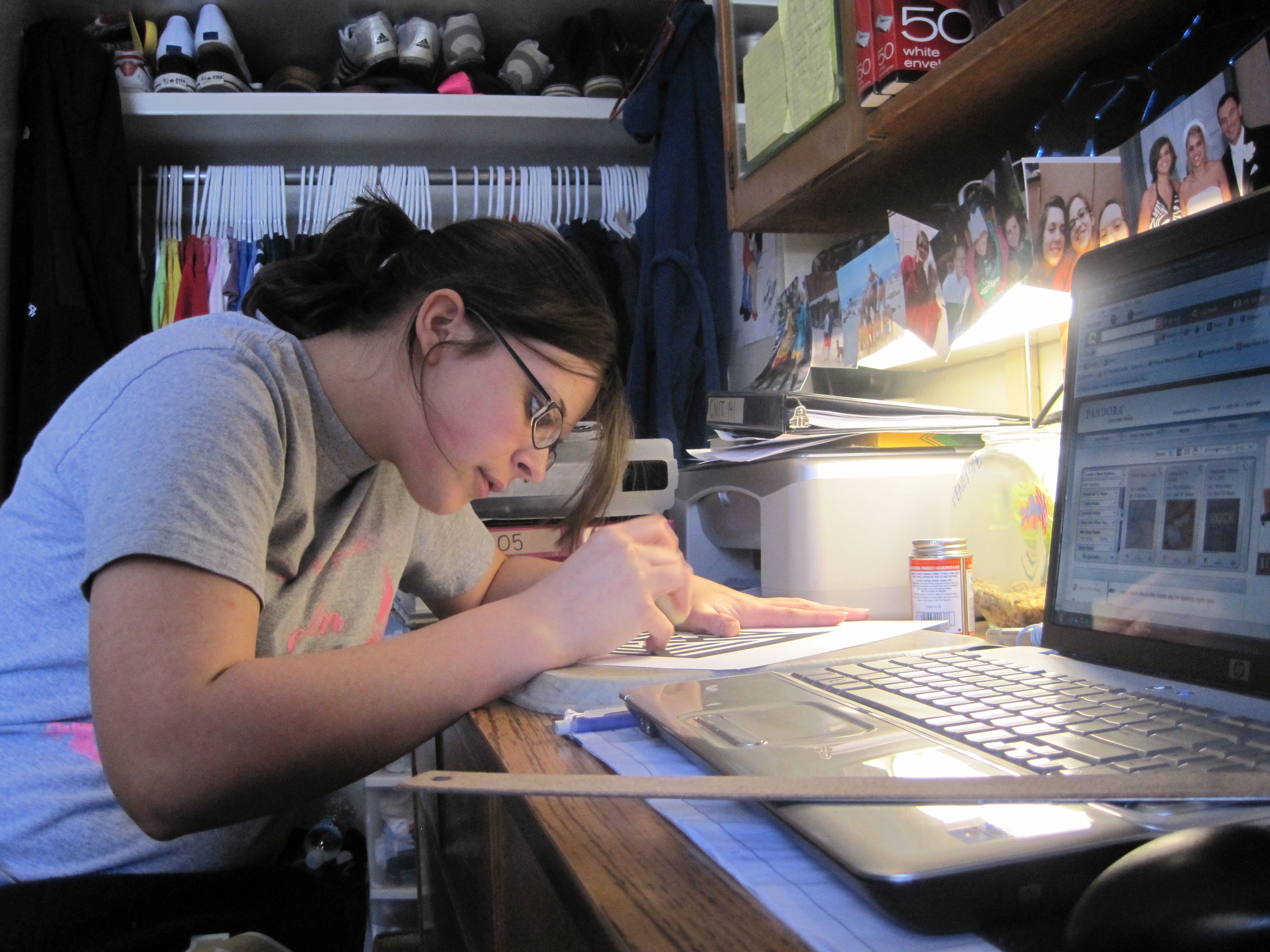
"I am not doing it" is one of the most tiring sentences a parent can hear. It can turn a normal evening into a standoff, and it can leave both sides feeling that the other is being unfair. The refusal is real, but the reason behind it is often not laziness.
A child who refuses homework may be tired, unsure what the assignment means, stuck on a skill, or upset about something at school. Finding which of those fits is the first job. The fix follows from the cause, not from louder pressure.
This article explains how to find the stuck point, how to build a routine a child can enter, how to help without taking over, and when to ask the teacher or a pediatrician for help.
Find the stuck point first
Ask what is getting in the way before making a stricter homework rule. Pick a calm moment, perhaps after a snack or later in the evening, rather than questioning a child in the middle of a standoff. A calm question gets a truer answer than a challenge issued mid-argument.
Try a question with clear options: "Which part feels hardest today: stopping what you are doing, knowing what the teacher asked, or doing the questions?" The child might name something else. Listen for a concrete obstacle instead of deciding that "I do not want to" means laziness.
If the child cannot explain, look at the assignment together. Is it written down? Are the materials at home?
Can the child explain the first instruction in their own words? Can they do a similar example? A refusal that happens only with reading, writing, or one subject is useful information for the teacher.
Drew Edwards, a child clinical psychologist at Wake Forest University, has long advised parents to treat homework as a routine to build, not a battle to win. In a Wake Forest guide to homework battles, he said, "There is no one best time or place for everyone." He added, "Every child is different.
This may be a process of trial and error." That trial-and-error spirit applies to the whole routine.
Build a routine a child can enter
A routine removes the nightly negotiation. The child knows when homework starts, where it happens, and what the first step is. Without that structure, homework becomes negotiable, and conflict grows.
Start by choosing when to begin. Do not insist that every child work the minute they get home. Some children need a break after school, while others prefer to finish before play.
The American Academy of Pediatrics advises making time for homework and providing a consistent work area, and the Blub Kids guide echoes that advice.
Try the chosen time for a few school days. If it keeps colliding with hunger, activities, or bedtime, change it. A schedule that fights the family's real day will fail, however good it looks on paper.
Write the chosen time where both parent and child can see it.
Make the work spot ready before the start time. Put the notebook, pencil, and any required book on the same table. A kitchen table is fine if it is reasonably quiet.
Move distracting screens away during the work period, and if the assignment needs a device, keep only the needed task open.

Make the first step small
"Finish your homework" is too big a demand. It shows the child the whole mountain at once.
Replace it with one visible action: "Open the math page and read question one."
Or: "Write the date and tell me what the first direction says."
Put no more than a few items on the list: find the page, try the first item, mark what needs help, pack the work away. A short written or picture routine works well, especially while a new routine is being learned. The child can check off each step and see progress.
Edwards suggests breaking an assignment down into smaller parts. If a math assignment includes 20 problems, he suggests the child do three first and then ask a parent to look at them. Small chunks turn an overwhelming task into a series of short wins.
When working on one subject, put the books and materials for the other subjects out of sight. Edwards warned that seeing all the other work can make a child feel overwhelmed or make it harder to focus. One subject on the table, one task at a time, is enough.
Help without taking over
Stay available, but let the child make and correct their own attempts. Ask, "Do you know what to try next, or is there a part to ask your teacher about?" If a question is genuinely unclear, note where the child got stuck rather than completing it for them.
The teacher needs to see what the child can do independently.
Edwards is clear on this point.
He said, "Avoid getting in the habit of sitting with the child through every step of the way." He added, "Homework is supposed to be an independent process."
A parent who sits through every step trains the child to wait for help instead of starting alone.
It is also a mistake to expect perfect work on homework. If a parent corrects homework or does it for the child, the teacher cannot see what the child has learned.
Edwards said that doing the work for a child "doesn't give the teacher the opportunity to see what a child knows."
Check in every 10 minutes or so. When a parent checks in and the child is making progress, comment favorably, even if the child is not as far along as expected. Edwards advised praise for effort over fault-finding.
A child who hears only what is wrong will dread the next check-in.
Keep the evening calm
Constant haranguing is one of the most common mistakes parents make, according to Edwards. The other is doing the work for the child. Both damage the evening, and the second damages learning too.
A calm, brief approach protects the parent-child relationship, which matters more than any single assignment.
Name the child's feeling before restating the plan.
Edwards said, "Letting a child know that you understand their frustration can help encourage them." He suggested saying, "I know you don't like it."
That sentence costs nothing and often lowers the temperature enough for work to start.
Handle the "no homework" routine
Some children claim they have no homework. Edwards suggests setting aside 45 minutes to an hour, Monday through Thursday, for learning activities. If the child has no school assignment, the parent can create an assignment that fits the subjects the child is studying.
The regular routine helps the child get into the habit of doing homework. If the child actually has homework and is not bringing it home, the prospect of spending that time on a parent-made activity may encourage them to start bringing assignments home instead.
Adjust the plan to the child
A new reader may need a parent to read the teacher's instruction aloud while the child decides on the answer. A child who can read independently may prefer a parent nearby but silent. An older child can help estimate which assignment to do first and make their own short checklist.
If the work regularly exceeds what seems manageable, do not keep extending the evening indefinitely. Ask the teacher what completion should look like and what support is appropriate at home. A routine that runs until bedtime every night is not a routine, it is a burden.
When to ask for more help
Contact the teacher when refusals are frequent, one subject repeatedly causes distress, directions are unclear, or the work seems unmanageable despite a workable routine. Ask what the teacher sees in class, what the assignment is meant to practice, and whether a different support should be considered.
Send specific examples, not general complaints. For instance: "We tried starting after a break and looked at the first reading question together. Sam could read the directions but became stuck at the passage and stopped after ten minutes.
Is this the expected level of independent work?" That gives the teacher something concrete to respond to.

Speak with the child's pediatrician if school struggles become a pattern, affect learning or daily life, or come with persistent worry, sleep problems, or physical complaints. Repeated school difficulty can have learning, emotional, social, or health contributors. Bring the teacher's observations, examples of the work, and the child's own words to that conversation.
If a child says a classmate or adult has frightened them, or they feel unsafe at school, address that concern with the school promptly. A homework schedule cannot solve a safety problem. Neither refusing one assignment nor needing a routine establishes a diagnosis.
Frequently asked questions
What if my child refuses to do homework at all?
Break the demand down rather than removing it. Ask for one small piece, such as just the first question, and build from there. An outright refusal is often about feeling overwhelmed by the whole task, not the first step of it.
Should I do the homework for my child if they are really stuck?
Help them get unstuck rather than taking over. Talk through the first part together, then step back and let them try the next part themselves. Doing it for them solves tonight's argument but tends to make tomorrow's harder.
Is it normal for homework to cause friction almost every night?
Some friction most evenings is common, especially with a full school day behind the child. If it is intense every night, or getting worse rather than settling, it is worth looking at what sits underneath it rather than treating each evening as a one-off.
What if homework takes hours every night?
That is a signal to talk to the teacher. Homework that takes hours every night may mean the amount, the level, or the support does not fit the child. Bring notes on timing and the exact sticking points so the teacher can judge what to adjust.
The bottom line
A child who refuses homework is usually stuck, not defiant. Find the stuck point, set a fixed time and a calm place, and make the first step small enough to name. Help without taking over, praise effort, and keep the evening calm enough that the routine can survive a bad day.
If refusal stays frequent, one subject always stalls, or the work takes far longer than expected, share specific examples with the teacher and, when needed, the child's pediatrician. The goal is not a perfect page tonight. The goal is a child who can start, try, and ask for help when it is needed.
Tags: parenting, homework, children, school
Latest in Parenting
- Why Kids Ask Questions All the Time and How to Answer Without Losing Patience
- How to Handle Sibling Rivalry Without Taking Sides
- How to Talk to Children About Fear of the Dark
- How to Teach Kids About Money With Pocket Money
Subscribe for weekly parenting guides that keep evenings calmer.
Related stories

Why babies cry more in the evening: the witching hour explained
The witching hour is the fussy evening stretch most newborns hit daily. Why overtiredness, cluster feeding, and overstimulation stack up

When Do Babies Start Sleeping Through the Night by Month?
Most babies sleep through the night between 3 and 6 months, with regressions at 4 and 8 to 10 months. See the month-by-month table

Why Your Baby Wakes Up the Second You Put Them Down
Newborns wake when put down as the startle reflex, light sleep, and lost warmth hit at once. It is normal and peaks early, fading