
Why do toddlers bite other children? 7 sensory and speech roots
By Rive News / Research desk | Rive News / Published October 24, 2026 at 9:00 AM PKT
Key takeaways
- Biting is a normal developmental behavior under age 3: epidemiological studies suggest between a third and a half of toddlers in daycare are bitten by another child (APA Monitor, February 2011).
- The most common drivers are sensory and communicative: teething pain, oral stimulation, mouth exploration, and frustration that outruns their words.
- Calm, consistent responses work better than big reactions, shame, or labeling a child a "biter."
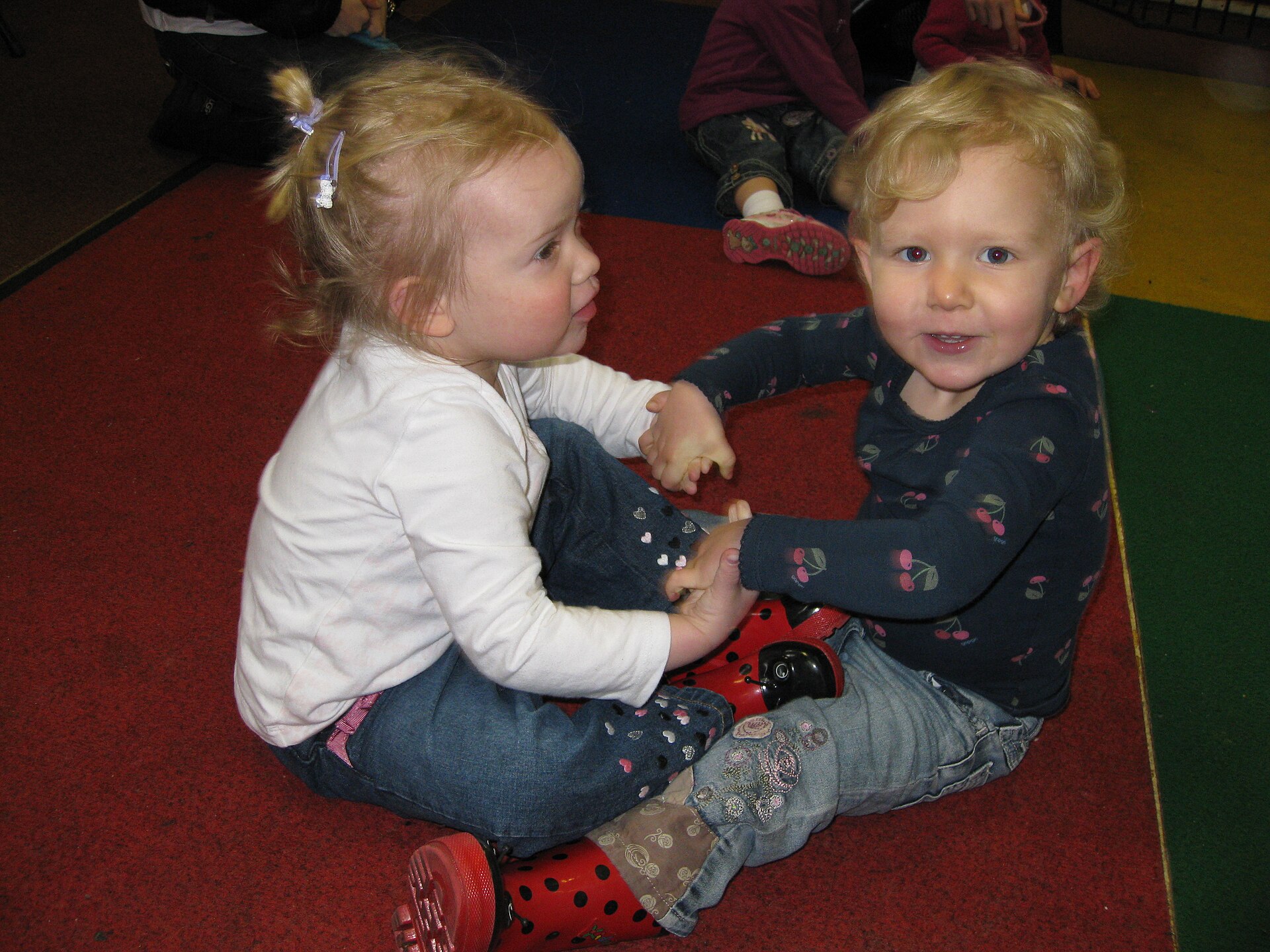
[Two toddlers holding hands while playing together at a playgroup.] Photograph: Toddlers playing together
Image Credits: Wikimedia Commons
Toddler biting is what happens when a child under 3 uses their teeth on another person instead of words, toys, or gestures. It is not aggression in the adult sense, and it is not a sign of a "bad kid."
According to Zero to Three, up to half of toddlers have been bitten at daycare, and biting is a normal part of toddler development. Most stop on their own once they gain language and self-control.
This article explains why toddlers bite, including the developmental roots, sensory needs and teething triggers, communication gaps behind the behavior, and practical responses that actually work.
The developmental roots of toddler biting
Biting belongs to a phase, not a personality. Penn State's Better Kid Care program calls it typical behavior up to about age 3. Cigna's family health library agrees: most children younger than 3 bite someone at least once, and most stop on their own.
Research cited by the American Psychological Association in APA Monitor (February 2011) pegs the scale: between a third and a half of all toddlers in daycare are bitten by another child, with epidemiological studies landing closer to half. A pediatric source reports that 94% of infants and toddlers regularly engage in aggressive physical behaviors like hitting, pushing, and biting, peaking around 24 months of age.
The age matters because the reasons change: Cigna breaks biting into stages. From 5 to 7 months, babies may bite from teething discomfort and usually bite a caregiver. From 8 to 14 months, biting often comes from excitement, aimed at a caregiver or a nearby child.
Why peers become the target between 15 and 36 months
From 15 to 36 months, biting shifts. Children at this age may bite when frustrated or wanting control over another person, and at this stage they usually bite other children, not adults.
This is also when a child's world gets crowded. Daycare rooms, playdates, and siblings mean more bodies, more toy disputes, and more standing too close, and Zero to Three notes that children sometimes bite to communicate a need for personal space.
What the brain is doing at 18 to 30 months
Biting tends to peak between 18 and 30 months, when emotional intensity outpaces language. Toddlers feel big frustration, jealousy, and excitement before they can name any of it.
They also lack the brake pedal adults take for granted: impulse control develops slowly, so an overwhelming feeling can travel straight into action. Calm environments and close supervision during trigger moments matter more than any lecture.
Sensory needs, teething, and the drive to chew
A surprising amount of toddler biting starts in the mouth, not the mind. For young children, the mouth is a sensory tool, and sometimes the urge to chew just lands on the wrong object.
Teething pressure seeks relief anywhere
When new teeth come in, a child's gums may be swollen and very tender, and chewing sometimes eases the pain, per Penn State's Better Kid Care. Zero to Three lists teething as a main reason toddlers bite.
Chew objects give the jaw something lawful to work on: cold teething rings, silicone chew toys, and damp washcloths. Offering them before the biting starts beats reacting after.
The mouth as a learning tool
Very young children learn by seeing, hearing, touching, smelling, and tasting, and Better Kid Care notes that one of the first things an infant does with a new toy is put it in their mouth.
To a very young child, biting a person and biting a toy are the same act: a way to learn about the world. This exploration motive fades as children find other ways to investigate.
Biting to feel cause and effect
Around 12 months, infants start learning that one action leads to another. Push a button and something pops up; drop a spoon and it bangs. Bite a friend, and that person reacts dramatically.
Better Kid Care flags this cause-and-effect curiosity as a real driver: the huge adult reaction fascinates a one-year-old, which is one reason experts advise keeping responses firm but calm.
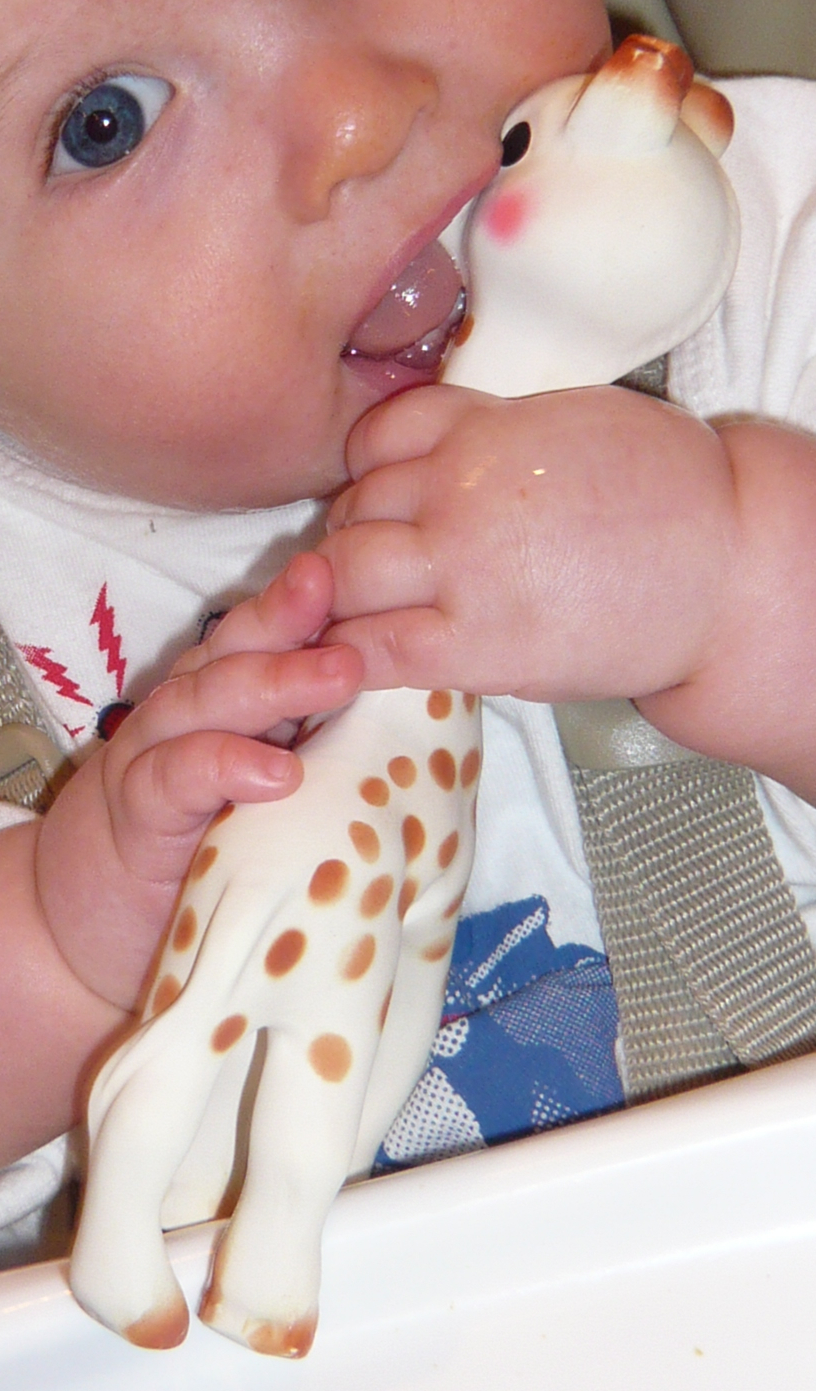
[A baby chewing on a giraffe teething toy, a classic tool for teething relief.] Photograph: A baby with a teething toy
Image Credits: Wikimedia Commons
When words run out: biting as communication
Once you look past the sensory roots, most remaining biting is a message: the toddler has something urgent to say and no words for it.
Frustration before language
Zero to Three lists the most common triggers: the child cannot yet say they are excited, angry, tired, mad, or overwhelmed. Biting becomes the sentence.
An 18-month-old who wants a toy has a vocabulary of maybe a few dozen words and none of them are "please stop" or "I need that." When another child grabs the toy, the feeling needs an outlet now, and teeth are available.
The educator's view: biting as problem solving
Zero to Three's educator edition frames it one step further. If teething and communication causes have been ruled out, it helps to think of biting as a toddler's form of problem solving.
The logic from the child's side is blunt: bite the child holding the toy and the toy gets dropped. The method works, so it repeats, until adults teach a replacement that works just as well.
Attention, even the negative kind
Older toddlers sometimes bite to get attention from children or adults, and any attention counts. Better Kid Care notes that for a child who feels overlooked, negative attention may beat no attention at all.
The paradox: a loud scolding can accidentally reward the bite. That is why Zero to Three advises shifting attention to the bitten child instead of lecturing the biter at length.
Overstimulation and the overloaded nervous system
Busy rooms push toddlers past their limits. A pediatrician writing for The Primary Carer names overstimulation as a main cause: too many sensory or social messages at once.
The advice is co-regulation: the adult calms themselves first, moves the child to a safe space if needed, and only then helps the child settle. A revved-up adult cannot calm a revved-up toddler.

[Two children playing in a colorful ball pit, getting the active play that burns off frustration.] Photograph: Children playing in a ball pit
Image Credits: Wikimedia Commons
Practical responses that actually work
No single trick ends biting overnight. What the sources converge on: stay calm, respond briefly, protect the bitten child, and set up the day so biting is less likely.
In the moment: calm, short, and consistent
UPMC HealthBeat's pediatric guidance recommends a firm but calm response. Check the bitten child, offer comfort, then tell the biter briefly that biting hurts.
Keep the reaction small on purpose: a big dramatic reaction can feed cause-and-effect curiosity and increase future biting. Shaming and harsh punishment do not reduce it, Zero to Three states plainly.
Do not label the child
Do not call a child a "biter," and ask others to drop the term. Zero to Three warns that labeling can lead children to take on the assigned identity, which intensifies the behavior.
Clinical psychologist Stanley Goldstein, PhD, told APA Monitor: "There's a stigma attached to biting, an attitude among adults that 'Kids who bite will grow up to rob banks.'" His corrective: biting is developmentally normal, so interventions should match the toddler, not the stigma.
Prevent the next bite
Zero to Three recommends detective work before strategy: what happened right before the bite, who the child was with, what they were doing, and whether a pattern repeats. Patterns reveal triggers you can remove.
Common prevention moves include distracting a child who looks ready to bite, duplicating popular toys to reduce sharing frustration, and keeping routines and nap times predictable, since UPMC HealthBeat warns that skipped naps and late bedtimes feed biting.
Active play earns a special mention. Zero to Three lists the need for more active playtime as a biting trigger, and Penn State's guide agrees that burning off energy through play reduces frustration. The ball pit above is doing real behavioral work.
When to seek more help
Most biting fades as language and self-control grow. But sources draw a line: Cigna advises that biting past age 3, or frequent biting at any age, may need professional attention. Biting that breaks skin repeatedly or comes with other developmental concerns also warrants evaluation.
If biting persists alongside limited speech, a pediatrician visit and a speech-language evaluation are sensible next steps.
FAQ
Is biting normal for toddlers?
Yes. Biting is a normal developmental behavior in children under 3, driven by teething, sensory needs, exploration, and frustration before language. Epidemiological studies cited by the APA suggest between a third and a half of toddlers in daycare are bitten by another child.
At what age do toddlers stop biting?
Most children stop biting on their own by about age 3 as language and self-control develop, according to Cigna. Biting peaks between 18 and 30 months and declines as children gain words and problem-solving skills.
Why does my toddler bite only other children, not adults?
Between 15 and 36 months, toddlers most often bite peers because that is where the friction is: toy disputes, crowding, and competition happen with other children.
Should I punish my toddler for biting?
Experts advise against harsh punishment and shaming. A firm, calm, brief response works better: comfort the bitten child, say plainly that biting hurts, and redirect. Big reactions can reward the behavior, and the "biter" label can make it worse.
Can teething really cause biting?
Yes. Sore, swollen gums drive a strong urge to chew, and chewing on skin can feel as relieving as chewing on a teething ring, per Penn State's Better Kid Care. Cold teething rings, silicone chew toys, and damp washcloths give that urge a safe target.
The bottom line
Toddlers bite because their bodies and emotions run ahead of their words. Teething pain, sensory needs, curiosity, frustration, and overstimulation are the usual roots, fading with language and self-control.
The practical next step is observation: note what happens right before each bite, then soften that trigger. Add chew options, duplicate the fought-over toy, protect nap time, and respond with calm brevity. If biting continues past age 3 or happens often, talk with your pediatrician.
Tags: toddlers, biting, child development, daycare
Rive News is a research desk that writes plain-language explainers on parenting and child development, grounded in published sources and expert guidance.
Related
- Why do toddlers throw tantrums in public? The brain science
- How to teach a child to share without forcing it
- How to wean a baby off night feedings gently and gradually
- Why babies stare at ceiling fans and lights: vision facts
Subscribe for one clear parenting explainer in your inbox every week, with sources you can check.
Corrections: we fix factual errors promptly when readers flag them. All content copyright Rive News 2026.
Related stories
Why babies cry more in the evening: the witching hour explained
The witching hour is the fussy evening stretch most newborns hit daily. Why overtiredness, cluster feeding, and overstimulation stack up

When Do Babies Start Sleeping Through the Night by Month?
Most babies sleep through the night between 3 and 6 months, with regressions at 4 and 8 to 10 months. See the month-by-month table

Why Your Baby Wakes Up the Second You Put Them Down
Newborns wake when put down as the startle reflex, light sleep, and lost warmth hit at once. It is normal and peaks early, fading