
What age is a dog considered a senior? Size-by-size guide
By Rive News / Research desk | Rive News / Published October 20, 2026 at 9:00 AM PKT
Key takeaways
- Vets define senior as the last 25 percent of a dog's expected lifespan, so the age varies by size.
- Rough guide: small breeds 10 to 12 years, medium 8 to 9, large 6 to 8, giant 5 to 7.
- Senior dogs need vet checks every 6 months, since a year between visits equals 5 to 7 human years.
There is no single birthday when a dog becomes a senior. A Chihuahua at eight is middle-aged, while a Great Dane at eight is genuinely old, and vets treat them accordingly.
The reason is lifespan. Small dogs commonly live into their teens, while giant breeds are often considered old around seven or eight, so "senior" has to be relative to how long the dog is expected to live.
This article explains how vets define the senior stage, the age ranges by breed size, why large dogs age faster, the early signs of aging, and what changes in care senior dogs need.
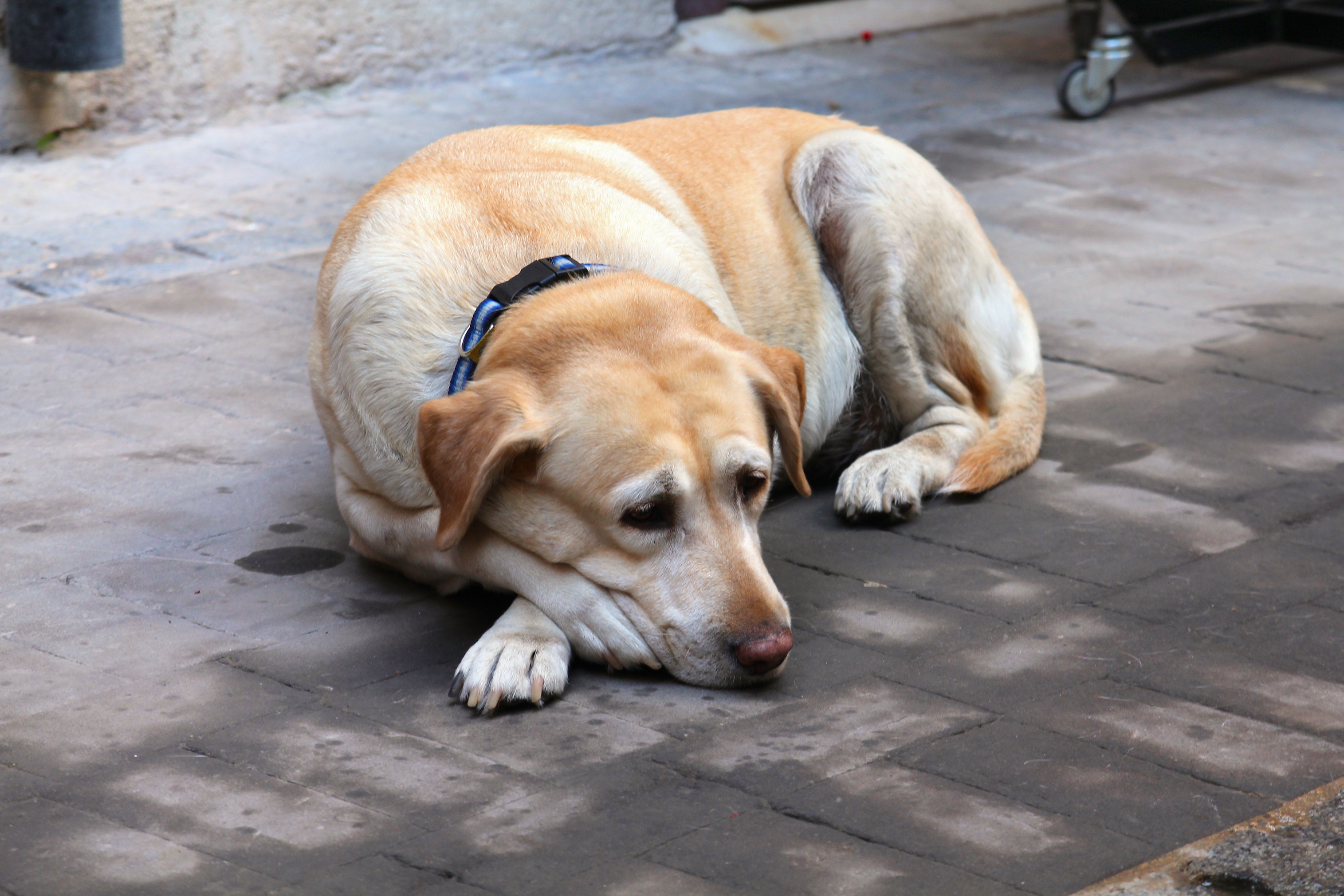
A senior Labrador rests on a sidewalk, showing the grayed muzzle typical of older dogs.
Image Credits: Wikimedia Commons
How vets define the senior stage
The American Animal Hospital Association's 2019 canine life stage guidelines define "senior" not by a fixed age but as the last 25 percent of a dog's expected lifespan. A dog enters the senior stage when three quarters of its expected life is behind it.
This definition comes from veterinary researchers Bartges and colleagues, whose life-stage framework is widely cited in veterinary practice. It replaced the old habit of picking one number for every dog regardless of size.
The AAHA framework names five stages: puppy, young adult, mature adult, senior, and end of life. Senior covers the final quarter of expected lifespan through to the end of life, while the end-of-life stage depends on the individual dog's health rather than age.
Why does this matter for owners? Because senior status triggers different care: more frequent checkups, different screening tests, and closer attention to weight, joints, and organ function. Knowing when your dog crosses the line means starting that care on time.
Senior age ranges by breed size
Because expected lifespan tracks body size, the senior threshold slides with it. Published guides vary slightly, but they agree on the gradient.
For small and toy breeds under about 20 pounds, most guides place the senior line between 10 and 12 years. Shatto Veterinary gives 10 to 12, while the AVMA figures cited by MyDogAndMeForever give 8 to 11.
Medium breeds, roughly 20 to 50 pounds, are generally considered senior around 8 to 9 years. PetDirect's guide puts medium dogs at 7, reflecting the same downward slide as size increases.
Large breeds, roughly 50 to 90 pounds, reach senior status around 6 to 8 years. Limerick Veterinary Hospital uses 8 as its rule of thumb for large breeds.
Giant breeds over about 90 pounds get there earliest, around 5 to 7 years. PetDirect suggests considering the senior switch from age 5 for giants, and Roundwood Vets gives 5 to 6.
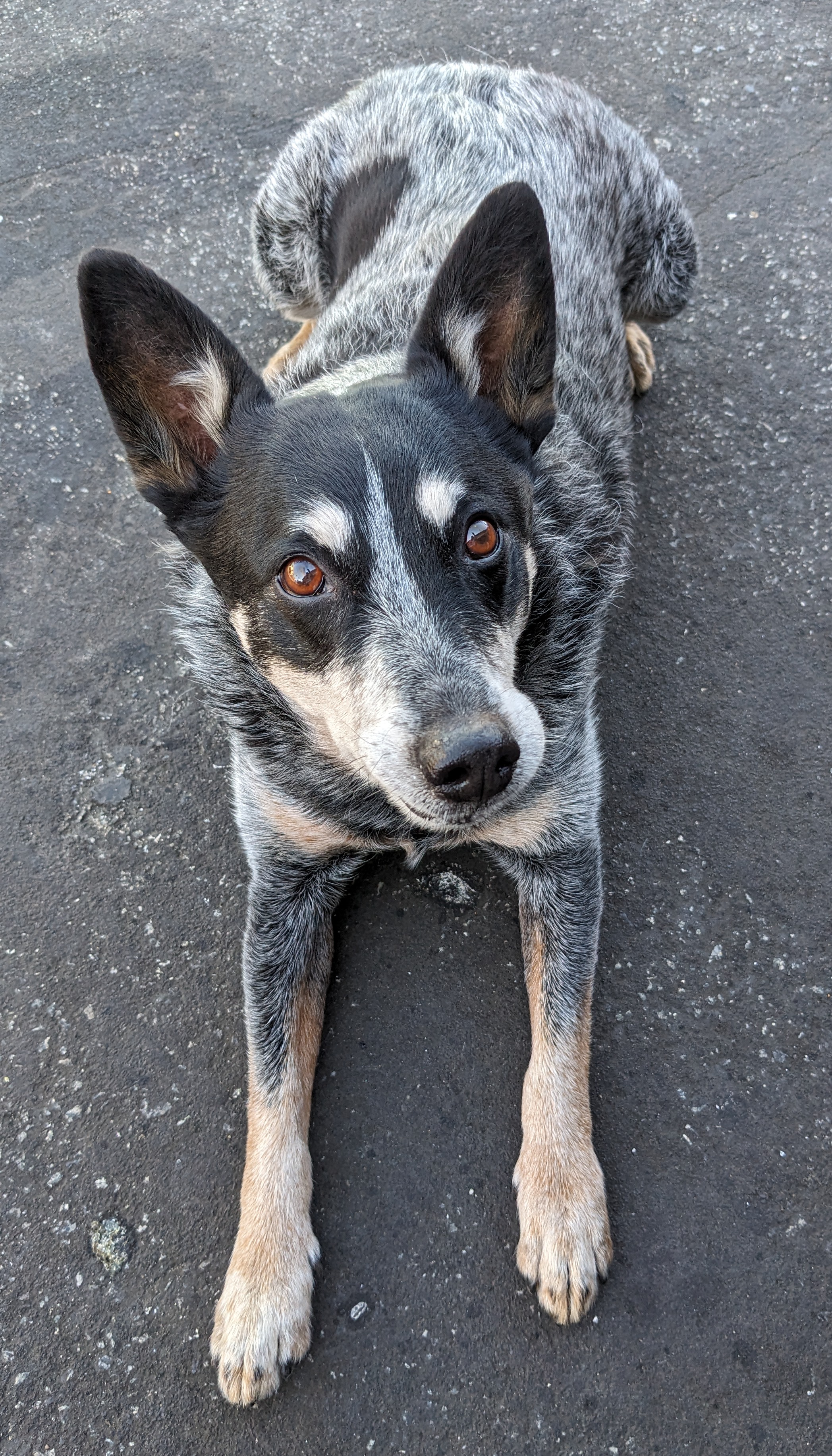
An Australian Cattle Dog looks up at the camera. Medium breeds typically enter their senior years around 8 to 9.
Image Credits: Wikimedia Commons
The takeaway is the pattern, not any single number: the bigger the dog, the earlier the senior years begin. If your dog sits between categories, ask your vet where they place it.
Why big dogs age faster than small dogs
The size-lifespan link is one of the most consistent findings in canine biology, and it runs opposite to the pattern across species, where larger animals usually live longer. Within dogs, the reverse holds.
Larger dogs age faster at the cellular level and accumulate age-related damage sooner. Their joints, hearts, and organs simply work harder under greater mechanical and metabolic strain across a shorter expected life.
This is why breed size dominates every senior-age chart. A seven-year-old Great Dane is dealing with genuine old-age changes, while a seven-year-old Dachshund is barely middle-aged.
Genetics and care still matter within each size band. Weight control, dental care, and preventive medicine shift an individual dog's trajectory, which is why vets treat the chart as a starting point rather than a verdict.
Early signs your dog is getting older
Graying around the muzzle and face is usually the first visible clue. Like gray hair in people, it is cosmetic and needs no treatment, but it marks the clock.
Stiffness after rest is another classic sign, especially difficulty rising in the morning or after naps. This often points to arthritis, which is manageable when caught early.
Sleep patterns change. Older dogs sleep more during the day and may sleep more restlessly at night, sometimes pacing or vocalizing in the dark.
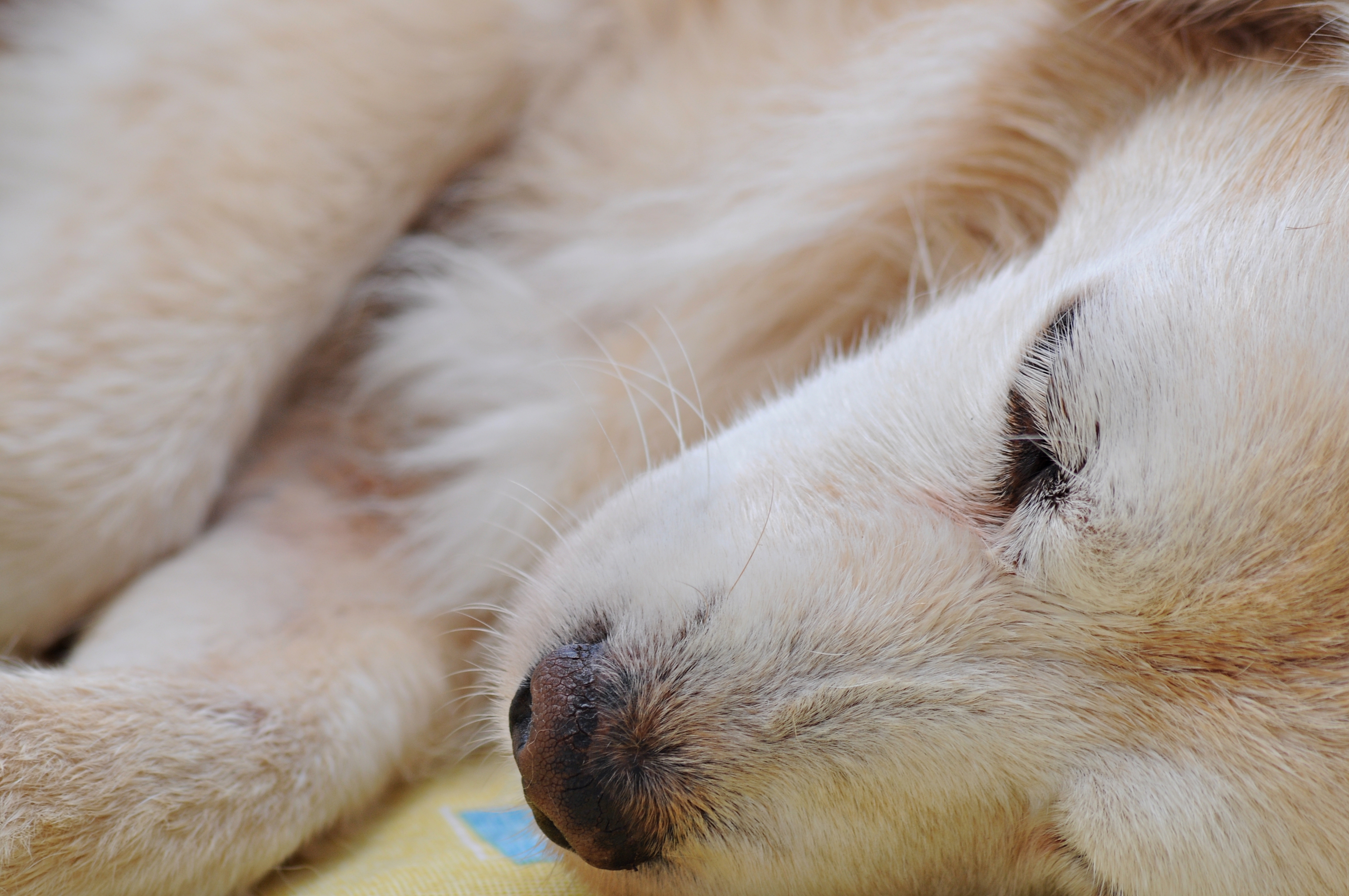
An elderly dog naps. Increased daytime sleep is one of the earliest aging changes owners notice.
Image Credits: Wikimedia Commons
Senses dull gradually. A cloudy appearance in the eyes is often nuclear sclerosis, a normal aging change in the lens that differs from cataracts, while hearing loss shows up as missed cues or a startle response.
Weight shifts in either direction deserve attention. Weight gain often follows lower activity, while unexplained weight loss can signal dental pain, organ disease, or other problems that need a vet's eyes.
Behavioral changes round out the list: disorientation, altered interactions with the family, or house-training lapses in a previously reliable dog. Genghis Collar notes these can indicate cognitive dysfunction, the canine version of dementia.
Any of these signs warrants a veterinary evaluation. Normal aging and treatable disease look alike from the outside, and only an exam separates them.
What changes in care senior dogs need
The single biggest change is exam frequency. Genghis Collar recommends senior wellness exams every 6 months instead of annually, because a 12-month gap for a senior dog equals roughly 5 to 7 years between checkups for a person.
Senior exams go deeper than adult ones. They typically include a full physical exam, blood pressure measurement, blood work with CBC and chemistry panel, and urinalysis, plus targeted screening based on breed and individual risk.
Diet often needs adjusting. Senior formulas tend to be lower in calories but higher in fiber, with joint-supporting nutrients, though PetDirect notes that a healthy, active dog doing well on adult food does not need to switch on a birthday alone.
Exercise changes shape rather than stopping. Shorter, more frequent walks replace marathon outings, and low-impact activities like swimming protect stiff joints while keeping muscle on.
Home tweaks help a lot: ramps instead of jumps, non-slip rugs on slick floors, raised food bowls for arthritic necks, and warm, padded bedding for old bones. Small changes add up to real comfort.
Finally, keep prevention tight. Older dogs can be more vulnerable to everyday hazards, from dropped medications to rich foods, so senior status is a good moment to re-proof the house.
The bottom line
A dog is considered a senior during the last quarter of its expected lifespan: roughly 10 to 12 for small breeds, 8 to 9 for medium, 6 to 8 for large, and 5 to 7 for giants. The number on the chart matters less than what follows it, which is twice-yearly vet visits, closer attention to weight and mobility, and quick vet checks for any new change. Senior years can be some of the best years when the care keeps pace with the aging.
Is my 7-year-old Labrador a senior?
Probably at the threshold. Large breeds are generally considered senior from around 6 to 8 years, so a 7-year-old Labrador is entering the senior window and should start senior-style veterinary care.
Do small dogs really live that much longer?
Yes. Small breeds commonly live into their teens, while a Great Dane is considered quite old at seven, as Limerick Veterinary Hospital puts it. This lifespan gap is exactly why senior status depends on size rather than a single age.
Should I switch to senior dog food at the senior age?
Not automatically. If your dog is healthy, active, and holding good body condition on adult food, most vets see no need to switch on a birthday alone. Switch when appetite, weight, or digestion suggests it, and transition over 7 to 10 days.
How often should a senior dog see the vet?
Every 6 months. Because dogs age faster than humans, a full year between senior exams is like a person going 5 to 7 years between checkups, and early detection is the main advantage of senior care.
What is the difference between nuclear sclerosis and cataracts?
Nuclear sclerosis is a normal, harmless clouding of the lens that comes with age and barely affects vision. Cataracts are opaque, block light, and can cause blindness. A vet can tell them apart with a simple eye exam.
Rive News is the research desk behind these explainers, covering everyday questions with sourced, checkable facts.
Latest in Pets
- What to do when your dog eats something it should not
- Why your dog barks at every visitor, and how to calm it
- Why your cat follows you to the bathroom
- Why your dog eats grass on walks, and what research says
Get one useful explainer in your inbox each morning. Subscribe to the Rive News newsletter.
Copyright 2026 Rive News. All rights reserved.
Related stories

Why Does My Dog Eat Grass and Vomit?
A UC Davis study of 1,571 owners found grass eating is normal dog behavior, not self-medication: only 10% were ill first. What the science
Why Does My Dog Stare at Me While I Eat?
Dogs stare at you while you eat because it has worked before, and mutual gaze raises bonding hormones. Learn the reinforcement science
Foods toxic to dogs: the list, with reasons
Chocolate, xylitol, grapes, onions: common foods can harm dogs. Learn what makes each one toxic, the warning signs, and what to do if your