
What to do when your dog eats something it should not: act fast
By Rive News / Research desk | Rive News / Published October 20, 2026 at 9:00 AM PKT
Key takeaways
- Call your vet or the ASPCA Animal Poison Control Center at 888-426-4435 right away, before symptoms appear.
- Note what your dog ate, how much, when it happened, and your dog's weight, and keep the packaging.
- Do not make your dog vomit at home unless a veterinary professional specifically tells you to.
"Something it should not" covers anything your dog swallows that is not dog food. That includes chocolate, sugar-free gum, human medications, cleaning products, and even some common houseplants.
Some of these items pass through harmlessly, but others can poison a dog within minutes. The difference between a scare and an emergency often comes down to how fast you act.
This article explains what counts as a dangerous swallow, which household items poison dogs most often, what to do in the first minutes, what your vet needs to know, and how to keep it from happening again.
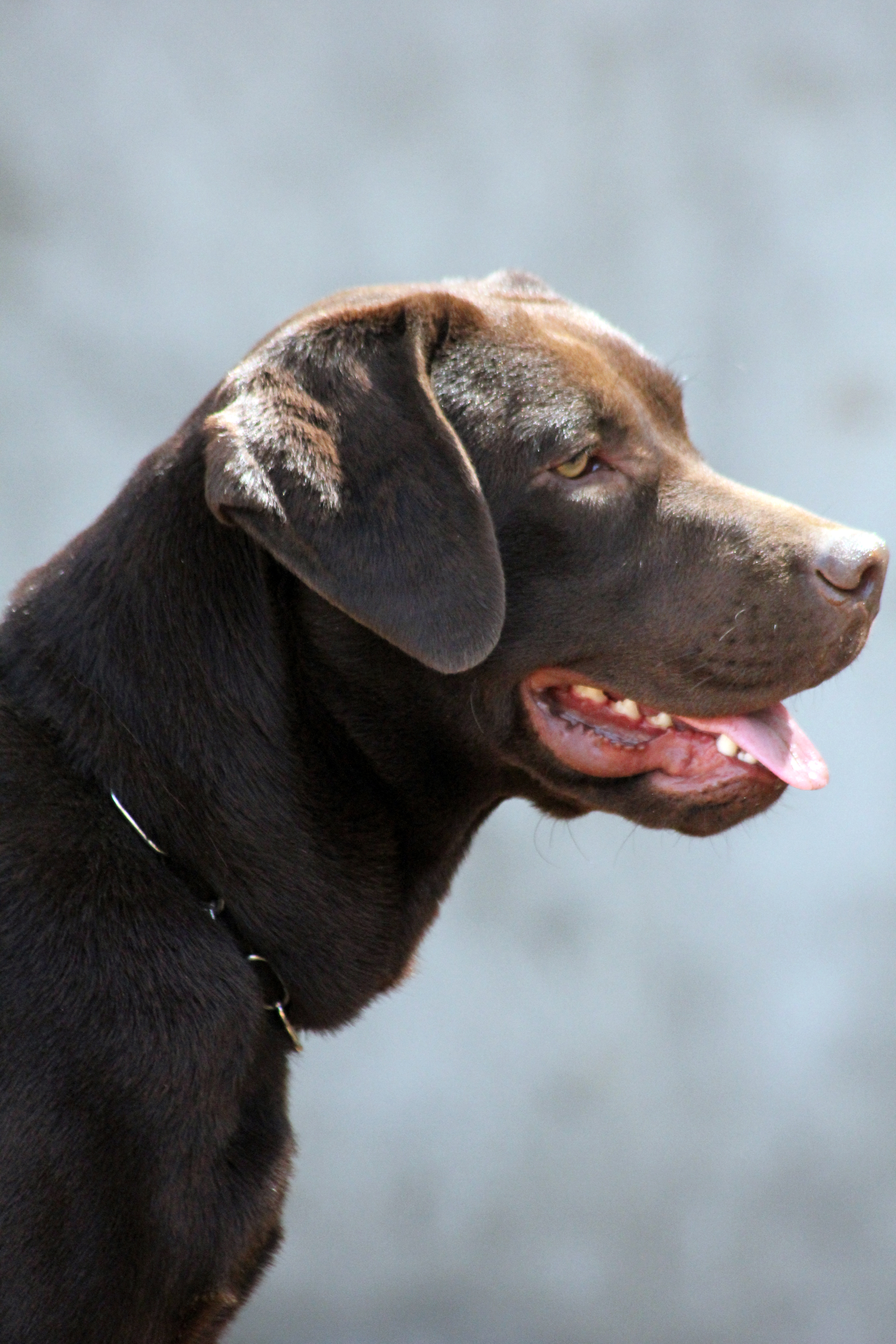
A chocolate Labrador in profile. Dogs explore the world with their mouths, which is why swallowed objects are such a common emergency.
Image Credits: Wikimedia Commons
What counts as "something it should not"
Dogs explore the world with their mouths, so almost anything small enough to swallow is a candidate. Food theft from counters and bins is the classic route, and dogs are skilled at finding chocolate, wrappers, and leftovers humans thought were hidden.
Medications are another major category. Dropped pills, open purses, and nightstand bottles account for a large share of emergency calls, because many human painkillers and antidepressants are toxic to dogs even in small amounts.
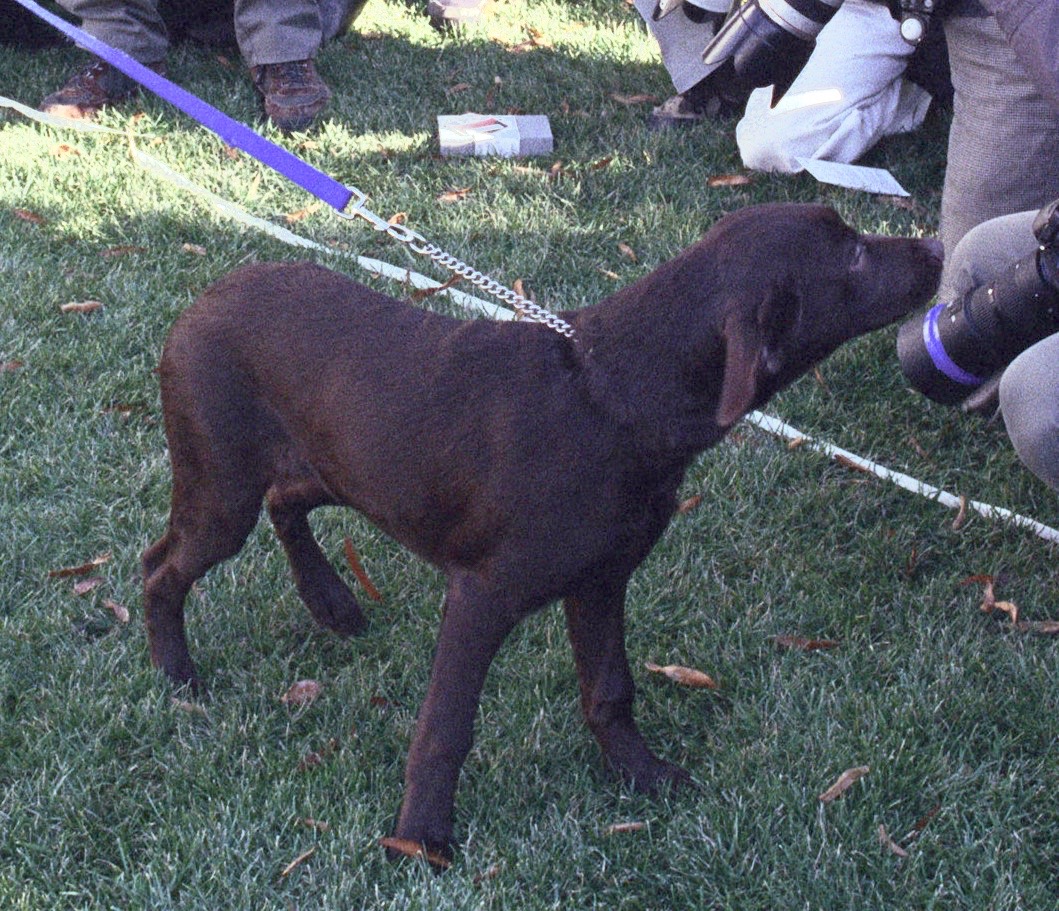
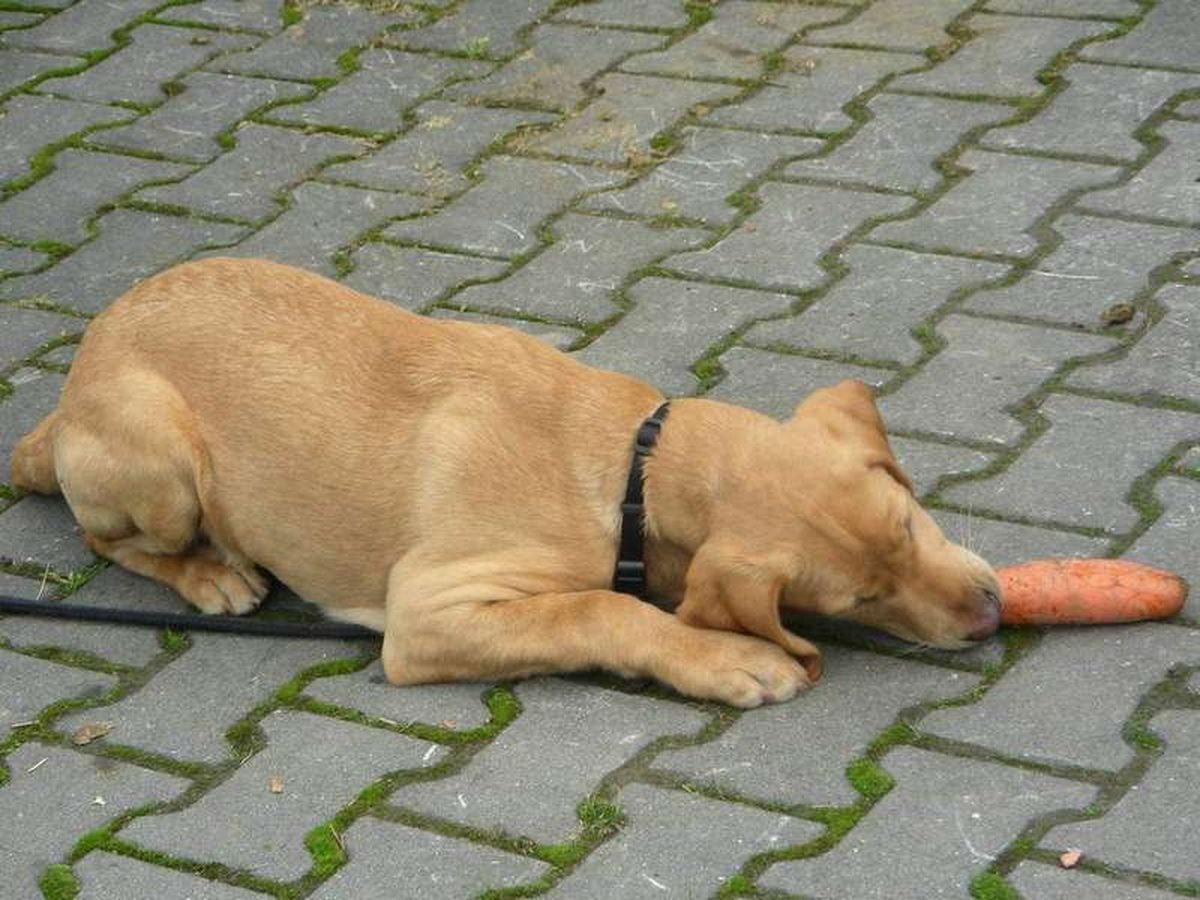
A young Labrador investigates on a walk. Puppies swallow first and ask questions later, so close supervision matters most in the first year.
Image Credits: Wikimedia Commons
Then there is the non-food category: batteries, socks, toys, and bits of trash. These may not poison your dog, but they can block the intestines, which is its own emergency.
Not everything a dog picks up outdoors is dangerous, though. Grazing on plain grass is usually harmless, as explained in our piece on why dogs eat grass on walks.
This article is for information only; if your dog ate something dangerous, contact your vet or an animal poison helpline immediately.
The household items that poison dogs most often
Chocolate sits at the top of most lists because dogs love it and homes are full of it. The ASPCA notes that chocolate contains methylxanthines, which can cause vomiting, diarrhea, hyperactivity, heart rhythm problems, tremors, seizures, and even death in dogs.
Dark and baking chocolate are the most dangerous because they contain more of these compounds per ounce. Milk chocolate is less concentrated, but a large enough amount can still harm a small dog.

Chocolate cupcakes. Chocolate contains methylxanthines that can poison dogs, with dark and baking chocolate the most dangerous.
Image Credits: Wikimedia Commons
Xylitol, also labeled as birch sugar or wood sugar, is arguably scarier. Even small amounts can cause a sudden drop in blood sugar, leading to weakness, lack of coordination, seizures, and liver failure, according to the ASPCA.
Common xylitol sources include sugar-free gum, mints, candy, some peanut butters, baked goods labeled sugar-free, and human toothpaste. Sugar-free gum is the most common source of xylitol poisoning reported to Pet Poison Helpline, per VCA Canada.
Other frequent offenders include grapes and raisins, onions and garlic, macadamia nuts, and alcohol. Rat poison, antifreeze, and many cleaning products round out the list of items that turn a normal home into a hazard zone for a curious dog.
What to do in the first minutes
Stay calm, because panic wastes the minutes that matter. Move your dog away from whatever it was eating so it cannot take a second helping.
Next, gather four facts: what was eaten, how much, when it happened, and your dog's approximate weight. Count the remaining pills, check the bag, find the label, and note the time.
Keep the packaging. The ingredient list and concentration numbers on the label let a vet or poison control specialist calculate the actual dose, which decides everything that follows.
Then call for professional help immediately. Your own vet during office hours is a good first call; outside office hours, call the ASPCA Animal Poison Control Center at 888-426-4435, which answers around the clock, though a consultation fee usually applies.
Do not wait to see whether your dog gets sick. Many toxins take hours to show symptoms, and early treatment is far more effective than treatment that starts after the damage is done.
What your vet needs to know
The four facts you gathered are exactly what the vet will ask for. Your dog's weight, the product name, the amount eaten, and the time of ingestion let the clinic estimate the dose and choose a plan.
Bring the packaging with you if you head to the clinic. Small Door Veterinary points out that poison control centers can rapidly assess the estimated amount of toxin and then give your vet specific treatment information, which is why calling them first often speeds things up.
Do not try home remedies on your own. DialaVet advises against inducing vomiting at home unless directed, because vomiting can worsen things if blood sugar is already low, and activated charcoal does not bind every toxin.
Do not give syrup, food, or so-called antidotes from the internet either. Some "remedies" delay real treatment or make the poisoning worse.
If your dog is already weak, seizuring, or collapsed, skip the phone research and go straight to an emergency veterinary hospital. Severe symptoms mean the situation has moved past the phone-call stage.
How to keep it from happening again
Prevention starts with the kitchen. Store chocolate, xylitol products, and medications in closed cabinets or high shelves, never in purses, coat pockets, or open bags on the floor.
Trash is the next frontier. A dog-proof bin with a locking lid removes the most tempting crime scene in the house, and it costs far less than an emergency vet visit.
Walk the house at dog height once, looking for dropped pills, loose batteries, and open cleaning supplies. Most owners are surprised by what they find the first time they do this.
Training helps too. A reliable "leave it" cue can stop a swallow before it happens, and it is one of the highest-value commands a dog can learn.
Finally, save the poison line number in your phone now. The ASPCA Animal Poison Control Center is reachable at 888-426-4435, and Pet Poison Helpline lists 800-213-6680 as its 24/7 line. You do not want to be searching for a number during an emergency.
The bottom line
A dog that eats something it should not needs fast, calm action: secure the scene, note what, how much, and when, keep the packaging, and call your vet or a poison helpline right away. Do not induce vomiting or try home fixes without professional direction. Most scares end well when owners act in the first minutes, and a few simple storage habits prevent most repeat performances.
Is it an emergency if my dog ate chocolate but seems fine?
Yes, treat it as urgent anyway. Chocolate symptoms can take hours to appear, and early treatment works far better, so call your vet or the ASPCA line at 888-426-4435 with the type of chocolate, the amount, and your dog's weight.
Should I make my dog throw up?
Not on your own. Vomiting is not appropriate in every situation and can cause additional harm, so only induce vomiting if a veterinarian or poison control specialist specifically instructs you to.
What does the poison helpline need from me?
Have four things ready: what your dog ate, how much, when it happened, and your dog's weight, plus the product packaging if possible. These details let the specialist estimate the dose and advise your vet.
Are sugar-free products really that dangerous for dogs?
Yes, because many contain xylitol, which can trigger a sudden blood sugar crash and liver failure. Sugar-free gum is the most common xylitol source in poisoning reports, so check labels and store these products out of reach.
My dog swallowed a sock, not poison. Is that still urgent?
It can be. Non-food objects can block the intestines, which is a surgical emergency, so call your vet for guidance even though no toxin is involved.
Rive News is the research desk behind these explainers, covering everyday questions with sourced, checkable facts.
Latest in Pets
- Why your dog barks at every visitor, and how to calm it
- What age a dog is considered a senior, size by size
- Why your dog eats grass on walks, and what research says
- How to keep a cat entertained when you are at work
Get one useful explainer in your inbox each morning. Subscribe to the Rive News newsletter.
Copyright 2026 Rive News. All rights reserved.
Related stories
Why Does My Dog Eat Grass and Vomit?
A UC Davis study of 1,571 owners found grass eating is normal dog behavior, not self-medication: only 10% were ill first. What the science
Why Does My Dog Stare at Me While I Eat?
Dogs stare at you while you eat because it has worked before, and mutual gaze raises bonding hormones. Learn the reinforcement science
Foods toxic to dogs: the list, with reasons
Chocolate, xylitol, grapes, onions: common foods can harm dogs. Learn what makes each one toxic, the warning signs, and what to do if your