
Why does your dog bark at every visitor? Causes and fixes
By Rive News / Research desk | Rive News / Published October 20, 2026 at 9:00 AM PKT
Key takeaways
- Most door barking is territorial, excitement, fear, or attention-seeking, and each cause needs a different response.
- Punishment usually backfires: the ASPCA warns it can suppress the bark while leaving the guarding instinct intact.
- Desensitization, a trained quiet cue, and managed greetings reduce barking faster than scolding ever will.
A dog that erupts at every knock, ring, or footstep on the porch is one of the most common complaints trainers hear. It is loud, it startles guests, and it feels impossible to interrupt once it starts.
The barking is not defiance, though. It is communication driven by instinct, emotion, or habit, and the fix depends on which one is driving your dog.
This article explains why dogs bark at visitors, how to tell greeting barks from guarding barks, why punishment backfires, the training steps that actually work, and when to call a professional.
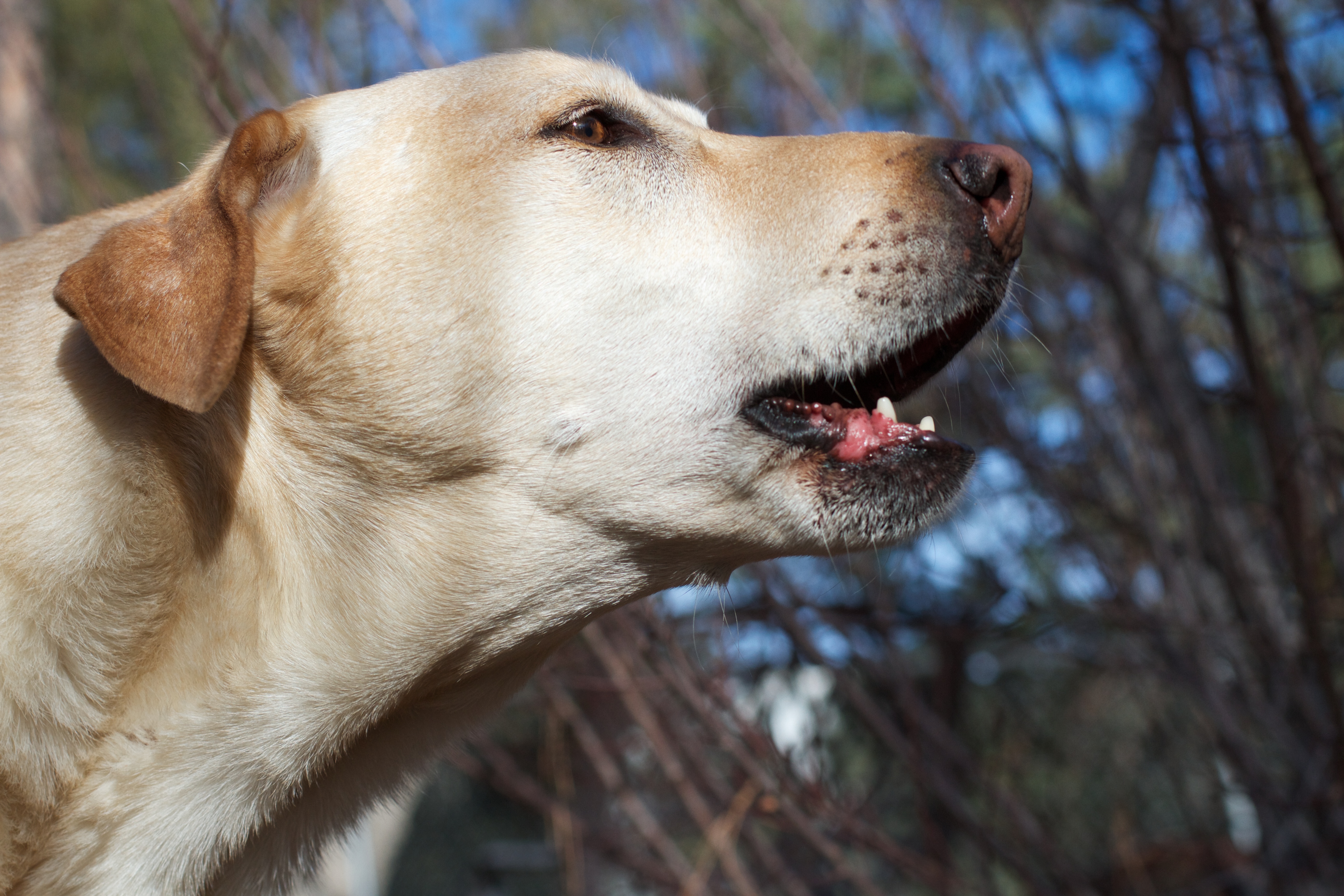
A Labrador Retriever mid-bark, the classic alert posture behind most door barking.
Image Credits: Wikimedia Commons
Why dogs bark at the door
Territory is the biggest driver. The ASPCA explains that dogs bark territorially to alert the household to visitors or to scare off intruders, and defending territory is such a high priority that many dogs will bark through scolding and yelling without pausing.
The trigger can be a sight, a sound, or both. Dogs react to the doorbell, footsteps, the mail carrier at the gate, and even people and dogs passing the house, because the dog's territory extends as far as the dog believes it does.
Excitement is the second major cause. Some dogs love people and bark from pure arousal at the prospect of a new friend, a game, or a walk. This bark is usually higher-pitched and paired with a wagging body rather than a stiff one.
Fear drives a third group. Under-socialized or previously frightened dogs bark to make the scary thing go away, and the strategy works often enough that the habit sticks. The mail carrier "retreats" after every delivery, which teaches the dog that barking did the job.
Attention-seeking rounds out the list. The AKC notes that dogs bark to get rewards like toys, treats, and cuddles, and any reaction from the owner, even shouting, can count as a reward.
Greeting barks versus guarding barks
Reading the body tells you which bark you are hearing. The ASPCA suggests judging from posture whether your dog is saying "welcome, come on in" or "you had better leave."
A greeting barker is loose and wiggly: relaxed ears, wagging tail, maybe a play bow, and barks that sound almost cheerful. This dog wants the visitor to come closer.
A guarding barker is stiff and forward: hard stare, raised hackles, tail high or rigid, and deep, sustained barks. This dog wants the visitor to go away, and the motivation is serious.
Fear barking looks different again. Petco describes the signs: tail tucked or low, ears back, whites of the eyes showing, lip licking, and leaning away from the stimulus while barking.
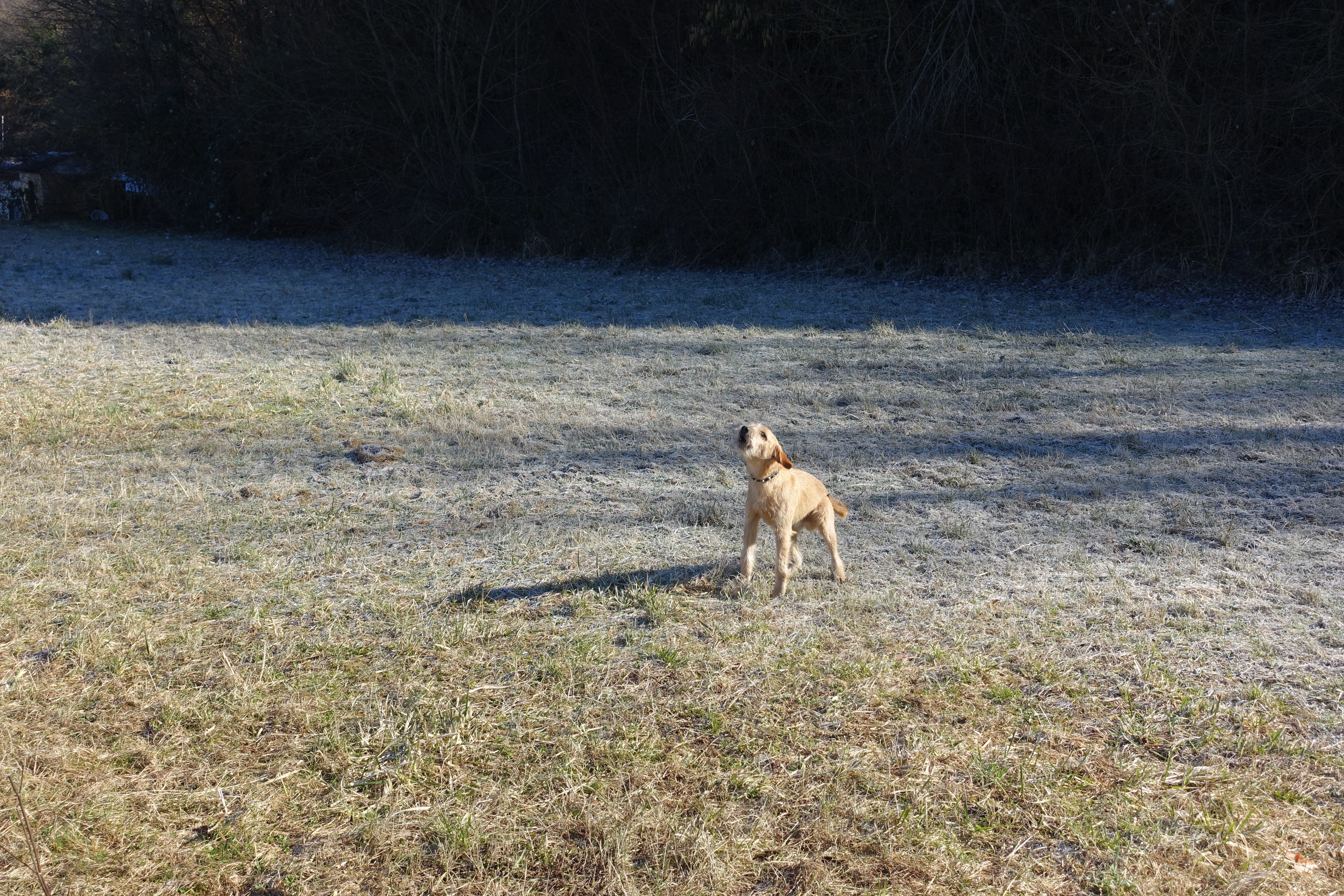
A dog barks with stiff posture. Hard staring and a rigid body mark guarding, not greeting.
Image Credits: Wikimedia Commons
Knowing which one you have decides the training plan. A friendly greeter needs impulse control; a fearful dog needs confidence building; a territorial guarder needs management plus counter-conditioning.
Why yelling and punishment backfire
Shouting "quiet" at a barking dog usually adds fuel. To the dog, the whole household is now barking together, which confirms that the visitor really is worth making noise about.
The ASPCA gives a sterner warning about punishment for territorial barking. Even if scolding suppresses the bark, the motivation to guard the territory stays strong, and the dog may then guard without the warning barks, for example by biting without warning.
Punishment also fails on the learning side. The dog connects the unpleasant consequence with the visitor's presence, which can make fear-based barking worse instead of better.
What does work is changing the emotional response. The ASPCA recommends limiting the dog's view of passersby and teaching the dog to associate strangers with good things like food and attention.
Territorial behavior often appears between one and three years of age, as Clover Pets notes, when puppies reach social maturity. Owners frequently describe it as sudden, but it is the developmental window doing its normal work.
Training steps that actually reduce barking
Start with management, because every unpracticed bark is a win. Close blinds or use frosted film on the windows facing the street, and keep the dog away from the front door when visitors are expected.
Next, build a reliable quiet cue. Petco's method: set up staged situations where the dog will bark, wait for a pause, reward the quiet, and attach the word "quiet" to that pause. Reward calm behavior generously and consistently.
Desensitization and counter-conditioning address the root cause. At a distance where the dog notices the trigger but does not bark, pair the trigger with high-value treats, then gradually close the distance over sessions.
Teach an incompatible behavior for the doorbell. A dog lying on a mat with a stuffed chew toy cannot simultaneously charge the door, and the mat becomes the new doorbell routine with enough repetition.
Exercise and mental stimulation lower the baseline. A tired dog with a worked brain has less arousal to pour into barking, so walks, sniff games, and training sessions are part of the fix.

A dog barks outdoors. Desensitization works for outdoor triggers as well as the doorbell.
Image Credits: Wikimedia Commons
Avoid bark collars for anxious or fearful dogs. Petco flags them as controversial and stressful, and they should never be used on a dog whose barking comes from fear.
If the door routine also involves snatched food or grabbed objects in the chaos, review what to do when your dog eats something it should not so one problem does not become two.
When to get professional help
Call a certified trainer or veterinary behaviorist if the barking comes with lunging, snapping, or any bite history. Aggression layered on barking needs professional assessment, not internet tips.
Get help if the behavior appeared overnight with no obvious trigger. Clover Pets advises ruling out medical causes like pain or thyroid problems before treating sudden behavior change as a training issue.
Seek support if your own efforts stall after several consistent weeks. A professional can spot timing errors in your treat delivery or threshold mistakes in your desensitization plan that are invisible from inside the routine.
Dogs with true separation anxiety need a specialist too. The AKC notes that anxious barking when owners are gone is a different problem from door barking and needs its own protocol.
The bottom line
Dogs bark at visitors because instinct, excitement, fear, or habit tells them to, and the right fix starts with identifying which one is talking. Manage the environment, train a quiet cue, desensitize the trigger, and reward calm, and skip the shouting. Most door barking improves markedly within weeks of consistent work, and the stubborn cases improve with professional guidance.
Why does my dog bark at visitors but not family?
Familiarity is the difference. Family members are part of the dog's social group and territory, while visitors are novel intrusions that trigger territorial, excitement, or fear responses depending on the dog.
Will my dog grow out of barking at the door?
Unlikely without training, and it often gets worse. Territorial behavior typically strengthens between one and three years of age, and every successful barking episode reinforces the habit.
Is it okay to use a bark collar?
Use caution. Bark collars are controversial, can cause stress, and should never be used on anxious or fearful dogs. Reward-based training and desensitization address the cause rather than punishing the symptom.
Why does my dog only bark at certain visitors?
Dogs react to novelty and body language: uniforms, hats, beards, unusual gaits, or nervous behavior can all trigger a stronger response. Past experiences with similar-looking people also shape these preferences.
How long does it take to stop door barking?
With daily consistent practice, many owners see clear improvement in two to six weeks. Fear-based and long-rehearsed territorial cases take longer, and some dogs always need management alongside training.
Rive News is the research desk behind these explainers, covering everyday questions with sourced, checkable facts.
Latest in Pets
- What to do when your dog eats something it should not
- Why your cat follows you to the bathroom
- What age a dog is considered a senior, size by size
- Why your dog eats grass on walks, and what research says
Get one useful explainer in your inbox each morning. Subscribe to the Rive News newsletter.
Copyright 2026 Rive News. All rights reserved.
Related stories

Why Does My Dog Eat Grass and Vomit?
A UC Davis study of 1,571 owners found grass eating is normal dog behavior, not self-medication: only 10% were ill first. What the science
Why Does My Dog Stare at Me While I Eat?
Dogs stare at you while you eat because it has worked before, and mutual gaze raises bonding hormones. Learn the reinforcement science

Foods toxic to dogs: the list, with reasons
Chocolate, xylitol, grapes, onions: common foods can harm dogs. Learn what makes each one toxic, the warning signs, and what to do if your