
Why Your Cat Meows Loudly at Night: 7 Common Reasons
By Rive News
Research desk | Rive News
Key takeaways
- Cats are crepuscular. That means they are naturally most active at dawn and dusk. That is why the noise starts when you sleep.
- The usual causes are hunger, boredom, mating calls, attention-seeking, or a broken routine.
- In senior cats, loud nighttime crying can signal brain aging (cognitive dysfunction), thyroid problems (hyperthyroidism), or pain. It deserves a vet visit.
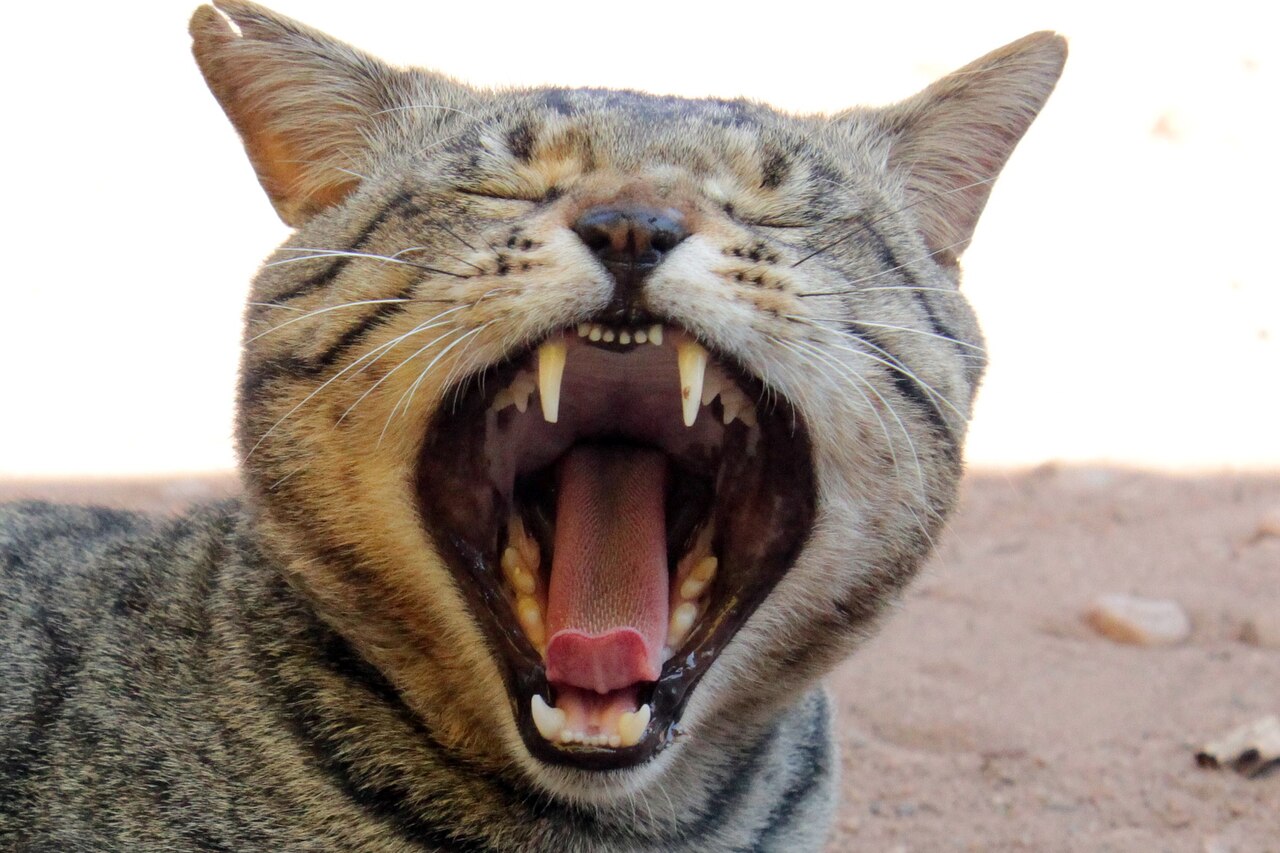
Image Credits: Wikimedia Commons
It is 2 a.m., you are deep asleep, and your cat is performing an opera in the hallway. Most cat owners have lived through this. The noise feels personal, but it is usually just biology: cats are wired to be awake when you are not.
Cats are crepuscular animals. That means they are most active during dusk and dawn. That schedule comes from their ancestors, who hunted when prey animals were most active. It survives intact in the modern house cat. This article explains why your cat meows loudly at night, including the seven most common causes, and what to do about each.
1. The crepuscular clock
The root of the whole problem is timing. Vet behavior research says internal rhythms tell cats that the hours around midnight and dawn are for hunting. A cat that slept all day has stored energy. Night is when the body wants to spend it.
Dr. Mikel Delgado, a postdoctoral researcher at the UC Davis School of Veterinary Medicine, has explained that cats' internal clocks mark the dark hours as active time. Your cat is not broken. It is running on software written for the wild.
2. Hunger
The simplest cause is also the easiest to fix. Cats that eat early in the evening run out of fuel by the small hours. A loud cat is often a hungry cat. Homes Alive Pets notes that a small snack before bed can quiet the midnight snack club. This helps especially for cats on diets or adjusting to new feeding schedules.
Before bed, make sure the food and water bowls are full and the litter box is clean. Those three checks solve a surprising share of nighttime concerts.
3. Boredom and pent-up energy
A cat that did nothing all day has nothing to be tired from. Under-stimulated cats patrol the house at night looking for something to do. Meowing becomes the entertainment. Interactive play, climbing challenges, and puzzle feeders during the day all drain the battery before bedtime.
The rule people repeat is that a tired cat is a quiet cat. Aim a real play session at the evening hours, when the cat's dusk peak is coming. Then you work with the clock instead of against it.
4. Attention and learned habits
Adult cats rarely meow at each other. They developed meowing mostly for humans. They learn fast which sounds produce results. If midnight meowing has ever earned food, play, or even annoyed attention, the behavior gets reinforced (strengthened).
The fix is counterintuitive (surprising): ignore the nighttime demands and reward quiet daytime communication instead. Responding to a 3 a.m. serenade teaches the cat that the serenade works. It takes consistency, and earplugs help. Most learned meowing fades once the payoff disappears.
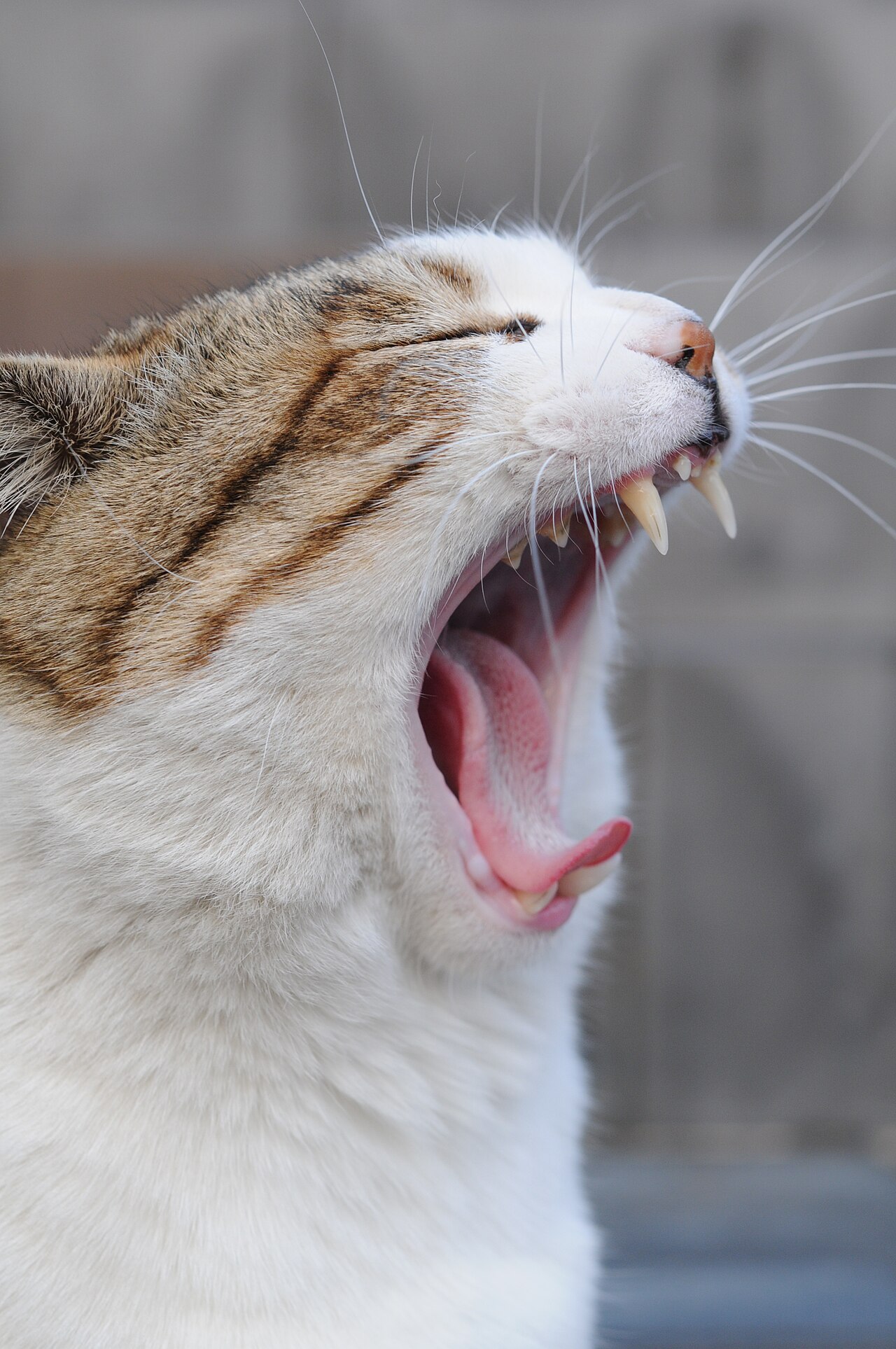
Image Credits: Wikimedia Commons
5. Mating calls
An unspayed female or unneutered male will howl loudly during mating season. That sound is built to carry. This is instinct, not behavior, and no training overrides it. Spaying or neutering usually ends the behavior. It brings long-term health benefits on top.
If a normally calm cat suddenly starts climbing the walls and yowling, and the animal is intact (not spayed or neutered), mating is the first thing to rule out.
6. Stress or a changed routine
Cats are creatures of habit. Disruptions produce anxiety. A new household member, a move, a different work schedule, or even a neighborhood cat outside the window can trigger nighttime vocalizing. Cats adopted from the street may vocalize at night until they trust the home and feel safe.
Night lights can help in a dark, unfamiliar space. Keeping the setup consistent matters more than most people expect. If the meowing started right after a change, the change is the likely cause.
7. Medical issues in senior cats
This is the cause that deserves the most respect. In older cats, sudden or worsening nighttime vocalizing can signal pain, hyperthyroidism (an overactive thyroid gland), kidney disease, high blood pressure, or cognitive dysfunction (age-related brain decline). Hyperthyroidism is common and treatable in older cats. So a new pattern of nighttime pacing and meowing is worth a checkup.
Cornell University's College of Veterinary Medicine lists "seemingly unprompted episodes of loud vocalizing, frequently in the middle of the night" among the signs of feline cognitive dysfunction, alongside disorientation and changed sleep cycles. Katherine Houpt, VMD, PhD, the emeritus James Law Professor of Animal Behavior at Cornell, described the pattern vividly: "They howl and screech constantly between midnight and dawn." Her take on the cause: "It's probably anxiety. They don't feel quite right, and they can't do anything about it."
Cornell's standing advice is direct: never assume that changes in an older cat are simply due to old age and therefore untreatable. Any real change in behavior or physical condition should prompt a veterinary visit.
Image Credits: Wikimedia Commons
What to do tonight
Start with the easy wins: an evening play session, a bedtime snack, full water, and a clean litter box. Ignore attention-seeking meowing so it stops paying off. Keep the environment steady and consider a night light for an anxious or elderly cat.
If the vocalizing is new, sudden, or paired with appetite changes, weight loss, extra thirst, or disorientation, book a vet visit. Medical causes like hyperthyroidism respond well to treatment, but only once they are diagnosed.
FAQ
Why does my cat meow loudly at night but not during the day?
Cats are crepuscular, most active at dawn and dusk, so their energy peaks when the house is quiet. Daytime naps store the energy that night releases.
Should I ignore my cat meowing at night?
For attention-seeking meowing, yes. Ignoring it is the standard advice, since any response rewards the behavior. But first rule out hunger, a dirty litter box, and medical issues, especially in senior cats.
Does spaying or neutering stop nighttime howling?
Usually, yes. Intact cats howl from hormonal mating instincts that training cannot override. Spaying or neutering removes the driver along with preventing unplanned litters.
When is nighttime meowing a vet emergency?
It is not usually an emergency. But see a vet promptly if the vocalizing is sudden and loud, sounds distressed, or comes with weight loss, appetite changes, excessive thirst, or confusion. Senior cats showing new vocalization patterns should always be evaluated.
The bottom line
Most nighttime meowing is a crepuscular cat being a crepuscular cat: hungry, bored, amorous (looking for a mate), or bored of being ignored. Work the easy levers first: play, food, routine. Retrain the learned habits by withholding the payoff. When the singer is old and the song is new, though, let a veterinarian rule out the medical causes. Cornell's researchers put it well: the cat does not feel quite right and cannot do anything about it, but you can.
Topics: cats, cat behavior, nighttime meowing, pet health, senior cats
Rive News's research desk publishes plain-English explainers on money, work, and everyday science.
Latest in pets
- Why Do Cats Purr? What the Sound Means
- Why Does My Cat Knead Its Paws?
- What Does It Mean When a Cat Slowly Blinks at You?
- How to Introduce a New Cat to Your Resident Cat
Get one practical pet explainer in your inbox every week. Subscribe free.
Rive News publishes explainers for general information only. © 2026 Rive News. All rights reserved.
Related stories

Why Does My Dog Eat Grass and Vomit?
A UC Davis study of 1,571 owners found grass eating is normal dog behavior, not self-medication: only 10% were ill first. What the science r

Why Does My Dog Stare at Me While I Eat?
Dogs stare at you while you eat because it has worked before, and mutual gaze raises bonding hormones. Learn the reinforcement science and w

Foods toxic to dogs: the list, with reasons
Chocolate, xylitol, grapes, onions: common foods can harm dogs. Learn what makes each one toxic, the warning signs, and what to do if your d