
Why Do Cats Knead With Their Paws at Home?
Key takeaways
- Kneading usually starts in kittenhood, when kittens press their paws against their mother to help milk flow.
- Adult cats knead when they feel safe and relaxed, and the motion can also leave scent from glands in their paw pads.
- Never punish kneading. Use a thick blanket, trim claws, and reward claw-free kneading instead.
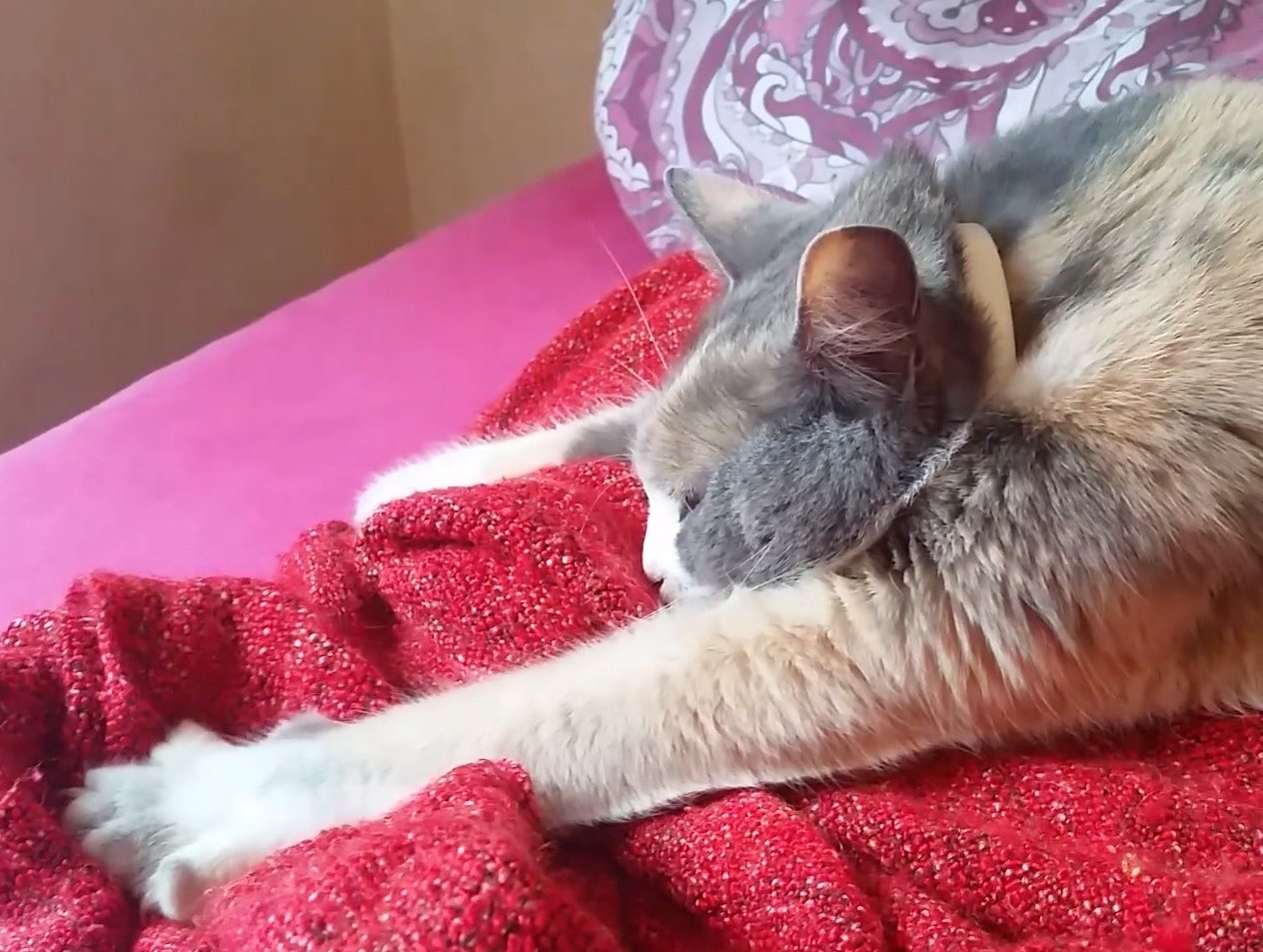
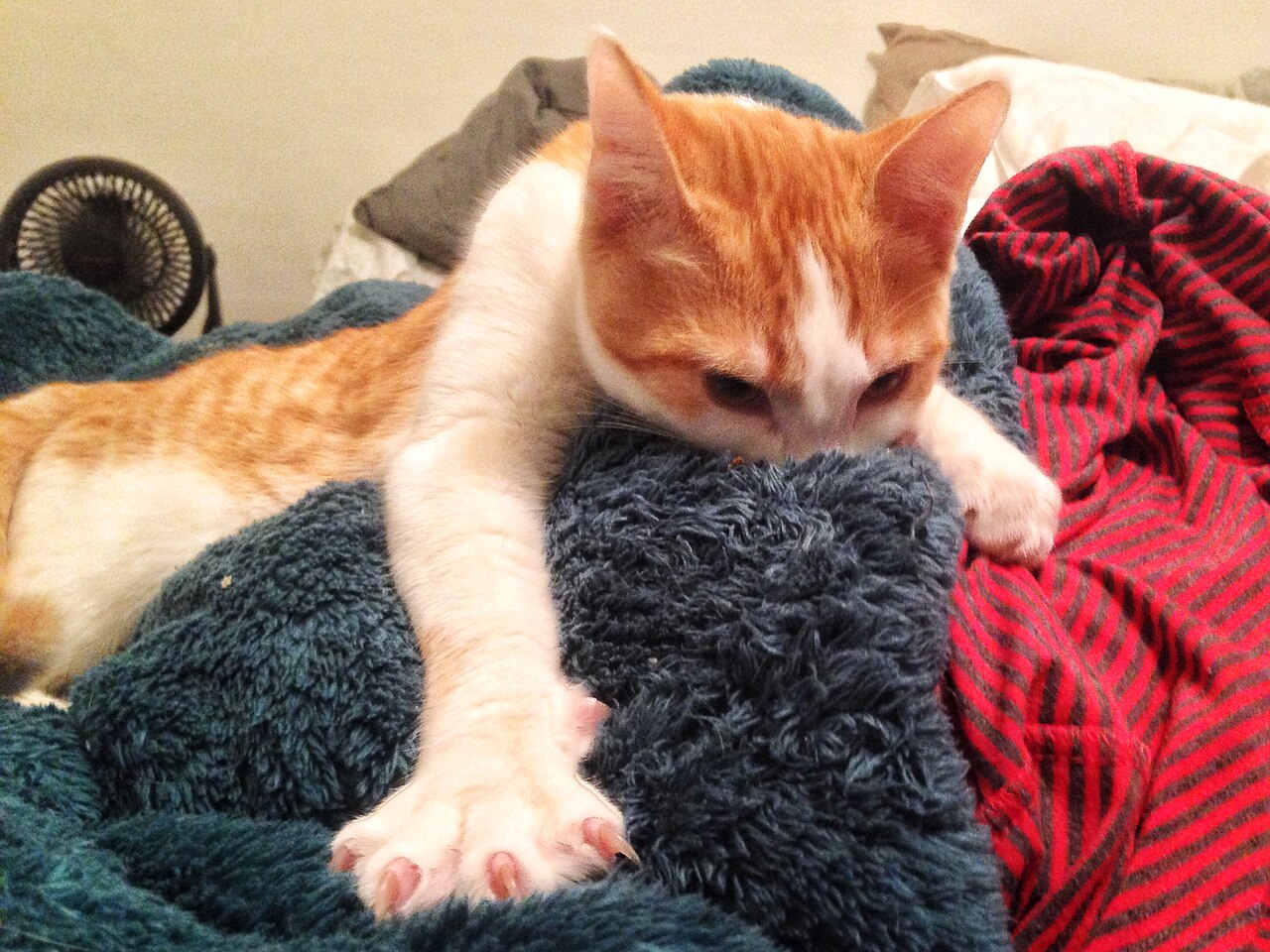
Kneading is the slow, rhythmic motion a cat makes by pushing its front paws into a soft surface, alternating left and right. Owners often call it "making biscuits" because the movement looks like kneading dough. Cats knead blankets, cushions, other animals, and laps.
Some purr while they do it. Some drool a little. Some extend their claws with each push.
No single explanation covers every cat. The behavior has roots in kittenhood, ties to comfort and bonding, and a scent-marking function. This article explains why cats knead with their paws, including the nursing origin, the comfort and bonding role, scent marking, and what to do when claws hurt.
It starts with nursing
The strongest explanation begins at birth. Newborn kittens press their paws rhythmically against their mother's body while nursing. The motion helps stimulate milk flow.
It also pairs with warmth, close contact, and safety. That early link between paw pressing and comfort stays with many cats for life.
Susan Hazel, an associate professor of animal behavior, welfare, and ethics at the University of Adelaide, told Live Science that kneading is the most likely leftover behavior from kittenhood. She noted that the motion cats use while kneading closely matches the motion kittens use while suckling. The pheromones released around the mammary glands probably make nursing a pleasurable activity.
Adult cats often knead in the same contexts where they feel safe. Laura Watson, a registered veterinary nurse and cat welfare assistant at International Cat Care, told Live Science that cats keep kneading into adulthood, particularly around someone they feel safe with, or on a soft cushion or blanket. The behavior connects to the comfort they felt while nursing.
Drooling during kneading supports this link. Hazel told Live Science that some cats drool while kneading, and some even suckle the surface they press. Those extra behaviors point back to nursing.
They do not mean the cat expects milk. They show how deeply the old pattern is wired in. A cat that stares at you without blinking is sending a different kind of signal, but kneading is almost always a calm one.
Comfort, bonding, and settling in
Kneading is also a comfort behavior in its own right. The rhythmic motion seems to soothe the cat doing it. Many cats knead right before settling down to sleep, or while curled up on a favorite person.
The pattern resembles how people fidget or rock to calm themselves.
Kneading can strengthen the bond between a cat and its owner. Scientific American reports that cats knead on preferred people in the house, and that the behavior can serve as a social act that builds a bond. A cat that kneads your lap is choosing you as a safe resting place.
That choice is a compliment, even when the claws dig in.
Some cats knead when they are mildly stressed, as a way to self-soothe. Injured cats sometimes knead and purr, which specialists think may be an attempt to calm themselves. This is less common than comfort kneading.
Context matters. A relaxed body, slow blinks, and a soft purr point to contentment. A tense body, flattened ears, or hiding points to a different problem.
Not every cat kneads. Some cats rarely or never show the behavior. That does not mean the bond is weak.
Scientific American notes that a cat that does not knead may show affection in other ways, such as purring, rubbing against you, or simply sitting beside you. Absence of kneading is normal variation, not a warning sign.
Scent marking from the paw pads
Cats carry scent glands in their paw pads. Kneading can press those glands against a surface and leave a scent mark. That mark tells other cats that this spot, blanket, or person belongs to a familiar cat.
It is a quiet form of territory marking.
Hazel told Live Science that kneading may deposit scent, and that this could mark territory. She also drew a distinction between kneading and scratching. Scratching a tree or post is more likely a deliberate scent-marking act.
Kneading on a lap, by contrast, happens mostly when the cat is relaxed. Scent deposit may be a side effect rather than the main purpose.
Wild ancestors may have kneaded for a practical reason too. Pressing down grass or leaves would flatten a resting spot, check for hidden hazards, and shape a nest. House cats no longer need that skill.
The motion survived because it still feels good and still serves social purposes. Evolution keeps behaviors that work, even after the original job disappears.
The scent angle explains why cats return to the same blanket or cushion. A familiar smell makes a spot feel safe. Watson told Live Science that a blanket a cat has kneaded can be left out in the environment, since it smells familiar and helps the cat feel safe.
That advice is useful for moves, vet visits, or new furniture.
How to live with kneading and claws
Kneading is normal behavior, and punishment backfires. Watson told Live Science that a cat should never be punished for kneading, since punishment could damage the bond between cat and caregiver. The cat does not understand that it is causing pain.
It only learns that the person it trusted became frightening.
A thick blanket is the simplest fix. Place a folded blanket or cushion on your lap before the cat settles. The padding protects your legs and gives the cat a proper kneading surface.
Keep the blanket in the same spot so the cat learns where to knead. This works for furniture too, since a washable throw protects upholstery.
Trimming claws helps as well. Watson told Live Science that caregivers can trim their cats' claws to reduce the sting. Trim only the sharp tips, and stop if the cat struggles.
Never declaw a cat. Declawing is an amputation of the last bone of each toe, and it causes lasting pain. A trimmed claw still kneads, just with less damage.
Training can shape the behavior. Hazel told Live Science that caregivers can reward kneading without claws, with food or a pat, and calmly get up and move away when claws come out. The cat learns that soft paws keep the lap, while claws end the session.
Keep sessions short and consistent. One calm rule, applied every time, teaches faster than scolding.
Watch for changes in the pattern. A cat that suddenly kneads far more than usual, kneads while hiding, or shows other changes in appetite, litter box habits, or energy may need a vet check. Kneading alone is rarely a symptom.
A sudden shift in several behaviors at once is worth a call. The same watchfulness applies to any pet, from a kitten learning to use the litter tray step by step to an older dog that needs help with stiff joints.
Frequently asked questions
Why does my cat knead me and not the blanket?
Your lap is warm, familiar, and safe. Cats knead preferred people as a social behavior that builds a bond. The cat has chosen you as its resting place.
A blanket on your lap keeps the claws comfortable.
Why does my cat drool while kneading?
Drooling often goes with deep relaxation and the nursing link. Some cats drool or lightly suckle the surface they knead. A little drool during calm kneading is normal.
Sudden heavy drooling with other symptoms is worth a vet check.
Should I stop my cat from kneading?
No. Kneading is normal, and punishment can damage your bond. Redirect the behavior instead: use a thick blanket, trim the claw tips, and reward claw-free kneading.
Get up calmly if claws come out.
Why has my cat stopped kneading?
Some cats knead less as they age, and some never knead at all. A sudden stop with other behavior changes, such as hiding or appetite loss, deserves a vet visit. On its own, less kneading is usually just variation.
The bottom line
Kneading is a leftover from kittenhood that adult cats use to show comfort, bond with people, and mark familiar spots with scent. It is normal, and it usually means the cat feels safe. Protect your lap with a blanket, keep claws trimmed, and reward soft paws.
Never punish the behavior. A cat that kneads on you is telling you, in its own language, that it trusts you.
Tags: pets, cats, behavior, kittens
Latest in Pets
- How to help an older dog with stiff joints
- Why cats stare at their owners
- How to litter train a kitten step by step
Subscribe for one practical pet-care idea each week.
Related stories

Why Does My Dog Eat Grass and Vomit?
A UC Davis study of 1,571 owners found grass eating is normal dog behavior, not self-medication: only 10% were ill first. What the science

Why Does My Dog Stare at Me While I Eat?
Dogs stare at you while you eat because it has worked before, and mutual gaze raises bonding hormones. Learn the reinforcement science

Foods toxic to dogs: the list, with reasons
Chocolate, xylitol, grapes, onions: common foods can harm dogs. Learn what makes each one toxic, the warning signs, and what to do if your