
Why cats stare without blinking at their owners
By Rive News / Research desk | Rive News / Published October 26, 2026 at 9:00 AM PKT
Key takeaways
- An unblinking stare usually means your cat is focused, curious, or asking for something.
- Cats have a third eyelid that lubricates the eye, so their blinks are easy to miss.
- Read the whole body, not just the eyes, to tell affection apart from fear or hunting focus.
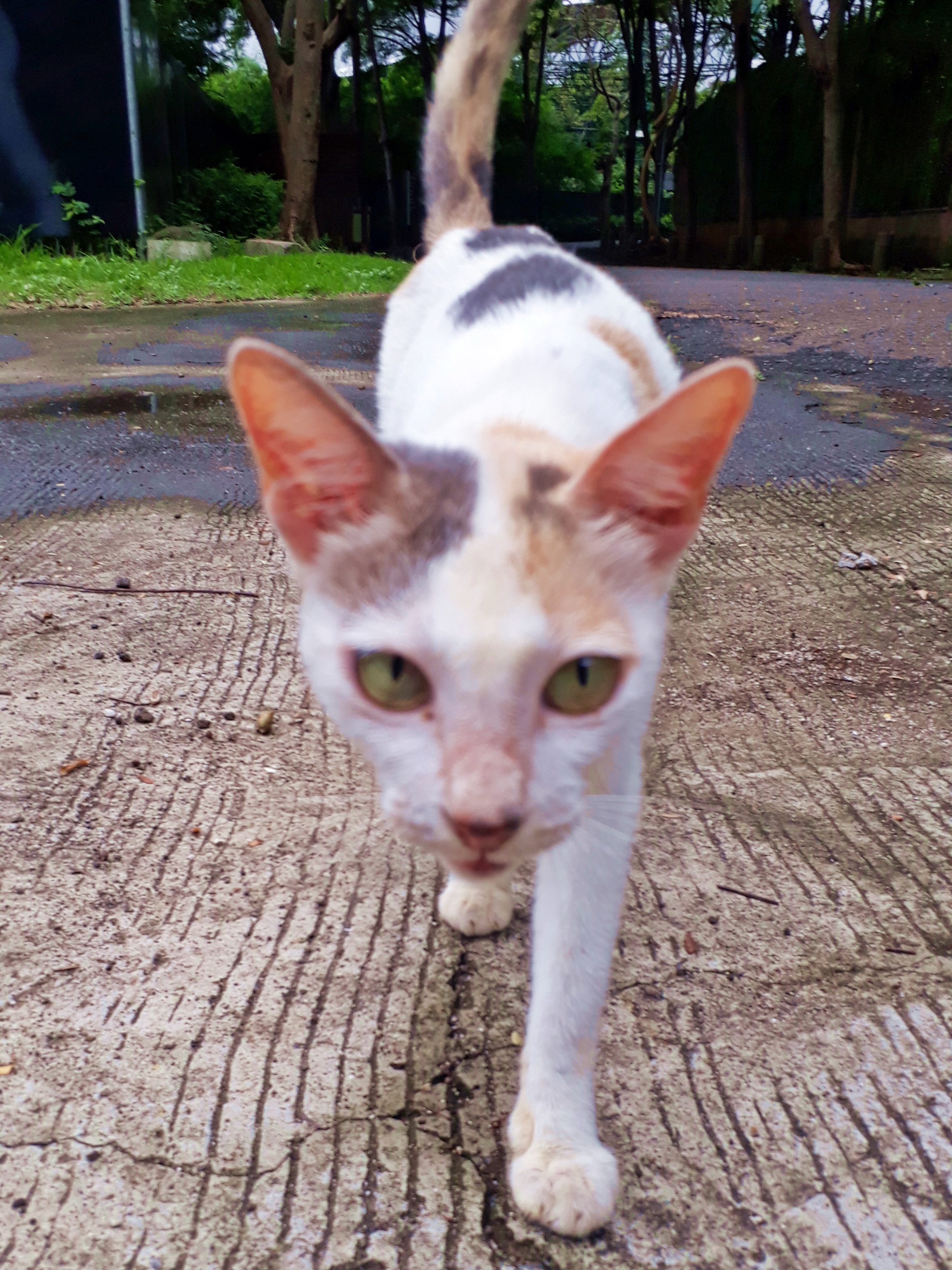
[A cat holds a steady gaze toward the camera.] Photograph: Wikimedia Commons contributor
Image Credits: Wikimedia Commons
A cat staring at you without blinking is usually watching you closely, not threatening you. The stare is a normal part of how cats gather information, ask for things, and show comfort. This article explains why cats stare without blinking, including the third eyelid, the hunting stare, and the affection stare, and how to read the rest of the body.
What the stare actually is
A stare is a cat holding its gaze on something that has its attention. For a cat, that something is often a person moving through the room, a sound it cannot place, or a small object worth tracking. The gaze looks intense to us because human conversation uses frequent blinking and regular breaks in eye contact.
Cats do not follow the same social rules, so their steady gaze can feel stranger than it is.
The word "unblinking" is also partly an illusion. Cats blink less often than people do, and one reason is the third eyelid, a thin membrane that sweeps across the eye to spread moisture and clear away dust. PetMD notes that this third eyelid helps lubricate and protect the cornea, which means a cat can refresh its eye without an obvious lid closure.
When your cat seems not to blink at all, it may be blinking in a way you simply cannot see.
The hunting stare: focus, not anger
Cats are predators by ancestry, and staring is the first step in the hunting sequence. A cat that fixes on a moving hand, a toy, or a bird outside the window is tracking a target, not passing judgment. Chewy describes this as a cat prepping for a pounce, even when the target is only a toy on the living room floor.
The body usually gives this away, with the head low, the body still, and the tail twitching at the tip.
This focus also explains why cats stare at things their owners cannot see. Cats hear in a wider range than people do, and they notice small movements at the edge of vision that a person would miss. A cat staring at a blank wall may be listening to a sound inside it or watching an insect you have not spotted.
The stare is the cat doing its job, which is paying attention to its surroundings.
Dawn and dusk sharpen this instinct further. Cats are crepuscular, meaning they are naturally most active in the low light around sunrise and sunset. A stare that arrives every evening at the same hour may simply be the hunting drive switching on at the time wild cats would be out looking for prey.
A short play session before bed often burns off that energy and shortens the evening stare.
The affection stare and the slow blink
Not every stare is about hunting. A relaxed cat that gazes at you with soft eyes and then closes them slowly is sending a very different message. Veterinarians describe the slow blink as a sign of trust and comfort, often paired with a loose body and forward ears.
Chewy quotes behavior experts who describe a steady gaze paired with a slow blink as a cat saying it feels safe with you.
You can answer a slow blink with one of your own. Look at your cat, close your eyes slowly, hold them shut for a second, and open them again. Many cats will return the gesture, and some will then look away, which is also normal.
The point is not to win a staring contest. It is to trade a calm signal for a calm signal, in a language the cat already uses.
The contrast matters. A hunting stare is hard and still, with dilated pupils and a body ready to move. An affection stare is soft, with narrowed or slowly closing eyes and a body that stays loose.
If you learn only one distinction from this article, make it that one, because it separates the two stares owners confuse most often.
The asking stare: learned behavior that works
Sometimes a cat stares at you because staring works. Mikel Delgado, a cat behavior expert with Rover, told Romper that a cat may stare because it is bored or because eye contact has previously led to good things like pets and treats. Cats are quick learners, and a stare that once produced a meal or a door opening is a stare worth repeating.
Watch what happens right after the stare to decode it. If the cat walks to an empty food bowl, the stare was probably a request for dinner. If it walks to a door, it probably wants to go out or come in.
If it walks to a toy, it probably wants play. The stare itself is only the opening line, and the next move is the part that tells you what it means.
This is also why staring can feel like it increases over time. Every time a stare is rewarded, the cat learns that staring is an effective way to get a human's attention. That is not manipulation in the human sense.
It is ordinary learning, the same process by which a cat learns that the sound of a can opener means food.
When a stare means fear or pain
A small share of stares deserve a closer look. A cat that stares with wide eyes, flat ears, a tense body, and a puffed tail is probably frightened or on high alert. Stephanie Howell, a veterinarian with VEG ER for Pets in Brookhaven, Georgia, told Chewy that wide eyes, dilated pupils, and a tense body can mean a cat is hyper-alert.
In that case, the kindest response is to back off, lower your own profile, and give the cat space to leave.
Pain can also change how a cat looks at you. A cat that suddenly stares more than usual, hides, avoids touch, or stops eating may be unwell, and those changes together matter more than any single stare. PetMD notes that blinking or squinting with one eye can signal irritation or pain and should be checked by a veterinarian.
A stare alone is rarely an emergency, but a stare plus a behavior change is worth a vet visit.
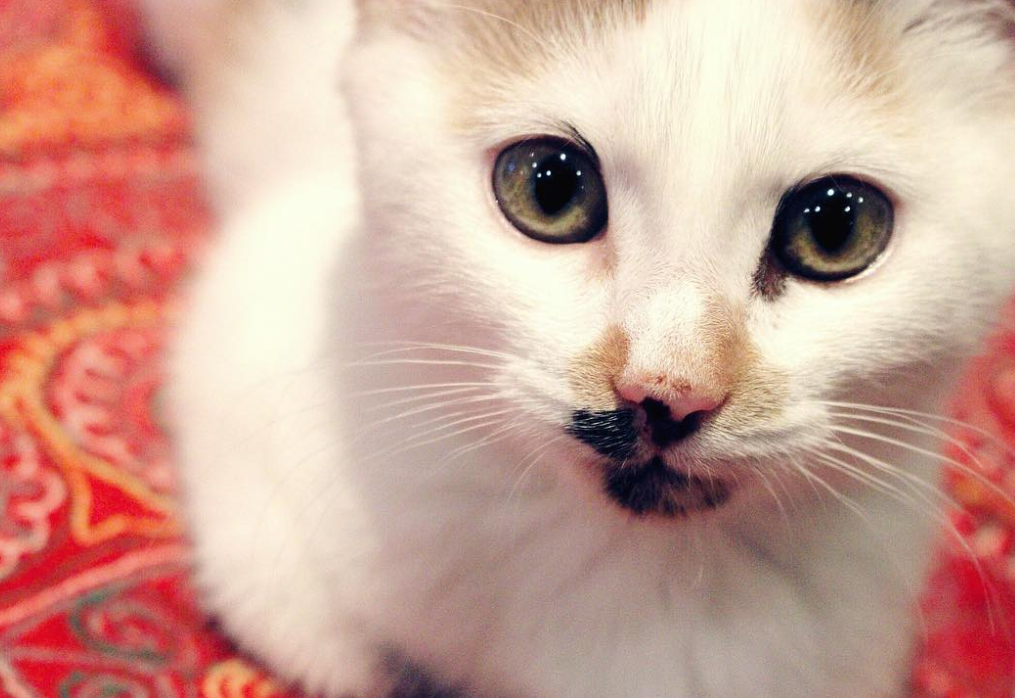
[A kitten looks straight into the camera with wide eyes.] Photograph: Wikimedia Commons contributor
Image Credits: Wikimedia Commons
How to read the whole cat
Eyes alone will mislead you, so read the full picture before deciding what a stare means. Ears forward and a tail held upright usually mean a confident, friendly cat. Ears flat, a low crouch, and a lashing tail usually mean stress or overstimulation.
Pupils change with light as well as mood, so a big pupil in a dim room means less than the same pupil in bright light.
Context is the other half of the reading. A stare at mealtime means something different from a stare at midnight, and a stare at a stranger means something different from a stare at a familiar owner. The same cat can produce all of these stares in one day, and none of them contradicts the others.
Cats, like people, have more than one reason to look at someone.
If the stare bothers you, the fix is usually boring and effective. Offer a short play session, check the food and water bowls, and then ignore the stare for a while. A cat that gets what it needs tends to stare less, and a cat that learns staring does not always produce a reward will try other ways of asking.
Frequently asked questions
Is it normal for a cat to stare without blinking?
Yes, in most cases. Cats blink less visibly than people because of the third eyelid, and a steady gaze is a normal way for a cat to focus, ask for something, or show comfort.
Does a cat staring at me mean it is angry?
Usually not. Anger or fear in cats shows in the whole body, with flat ears, a tense posture, and often a puffed tail. A relaxed body with a steady gaze is far more likely to mean curiosity or affection.
What does it mean when a cat slowly blinks at me?
A slow blink is widely read as a sign of trust and comfort. You can return it by closing your eyes slowly and opening them again, which many cats answer in kind.
Should I stare back at my cat?
A soft look and a slow blink are fine, but a hard, unbroken stare can feel threatening to a cat. Keep your own gaze relaxed, and look away first if the cat seems tense.
When should a stare worry me?
A stare plus a sudden behavior change is the combination to watch. Hiding, avoiding touch, loss of appetite, or squinting with one eye all justify a call to your veterinarian.
The bottom line
A cat that stares without blinking is usually focused, curious, comfortable, or asking for something. The third eyelid explains why the stare looks unbroken, the hunting instinct explains the hard version, and the slow blink explains the soft one. Read the ears, tail, and body alongside the eyes, and you will rarely misread the message.
If the stare comes with a sudden change in behavior, let a veterinarian take a look.
Tags: cats, cat behavior, pet care
Rive News's research desk covers everyday science and pet behavior in plain language, citing public sources for every key claim.
Related
- Why cats stare at you for so long
- What a slow blink from your cat means
- Why cats chatter at birds through the window
- What cat purring really means
Subscribe for one plain-language explainer a day, no jargon and no filler.
Rive News publishes research-desk explainers with named sources and a standing corrections policy: errors are corrected openly when readers point them out.
Related stories
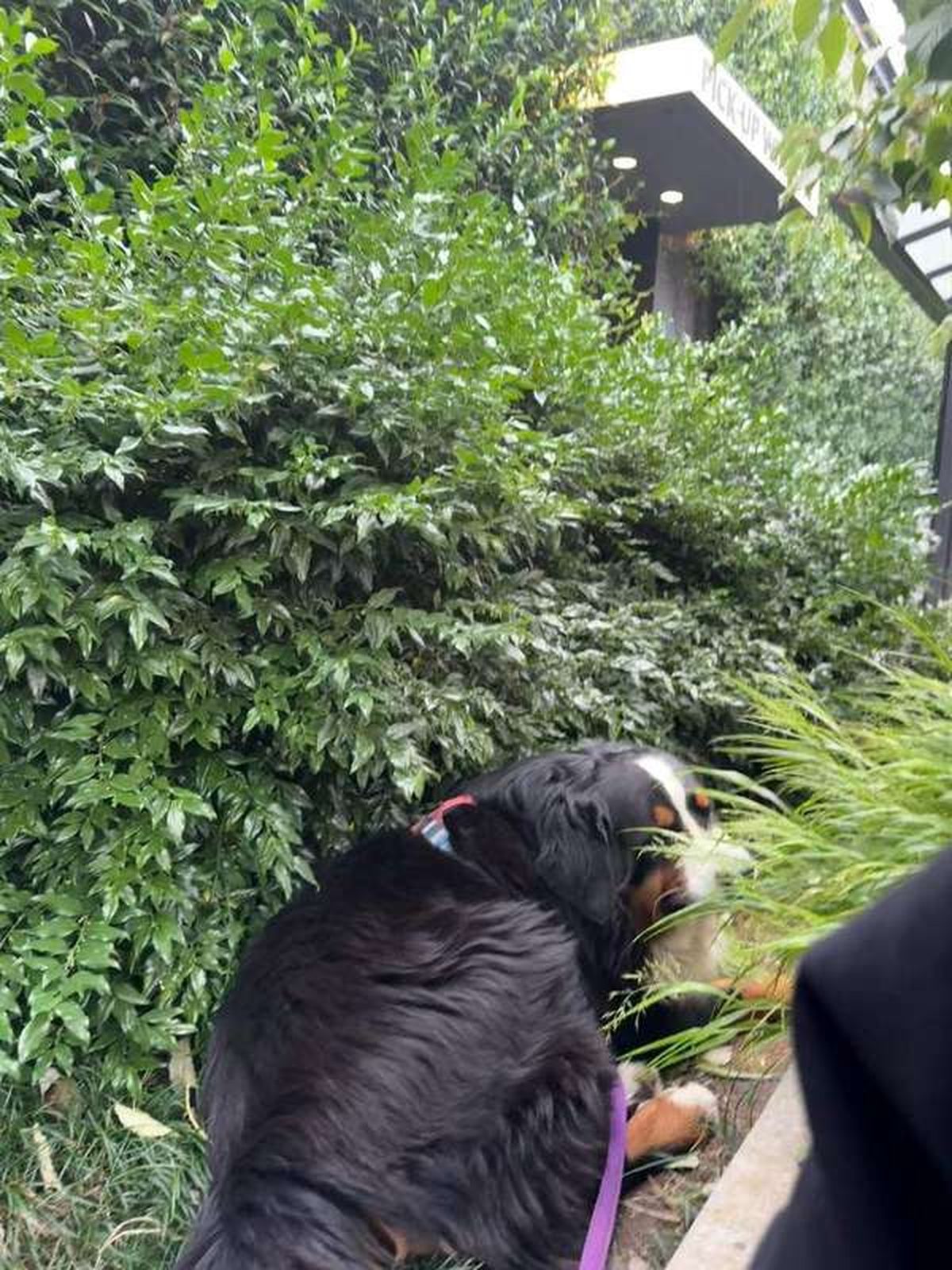
Why Does My Dog Eat Grass and Vomit?
A UC Davis study of 1,571 owners found grass eating is normal dog behavior, not self-medication: only 10% were ill first. What the science
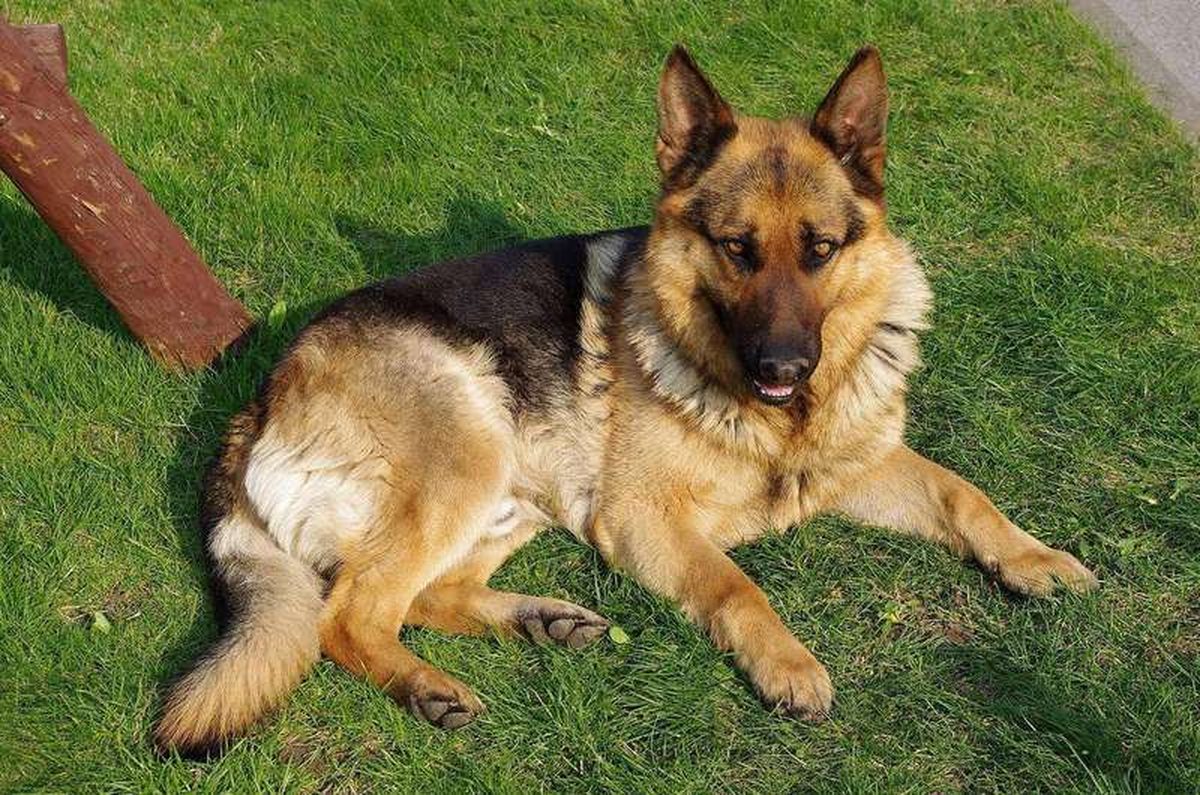
Why Does My Dog Stare at Me While I Eat?
Dogs stare at you while you eat because it has worked before, and mutual gaze raises bonding hormones. Learn the reinforcement science
Foods toxic to dogs: the list, with reasons
Chocolate, xylitol, grapes, onions: common foods can harm dogs. Learn what makes each one toxic, the warning signs, and what to do if your