
Why Dogs Howl Along With Sirens: The Ancestral Instinct Explained
Key takeaways
- Dogs howl at sirens because the wail mimics a wolf or dog howl, and their inherited instinct answers it as pack communication.
- Most sirens run 700 to 1600 Hz, a pitch range that closely matches the sound of a real howl.
- The howling is rarely about ear pain; if it were, dogs would run and hide instead of singing along.
An ambulance passes, the siren wails, and your dog throws its head back and sings. It looks like a complaint. It is actually a conversation.
Dogs descended from wolves, and wolves use howling as long-distance communication: to find lost pack members, mark territory, and check in across miles. A siren's long, high-pitched wail sounds enough like a howl to wake that ancient instinct. This article explains the ancestry, the acoustics, and which dogs howl the most, plus when the howling means something else.
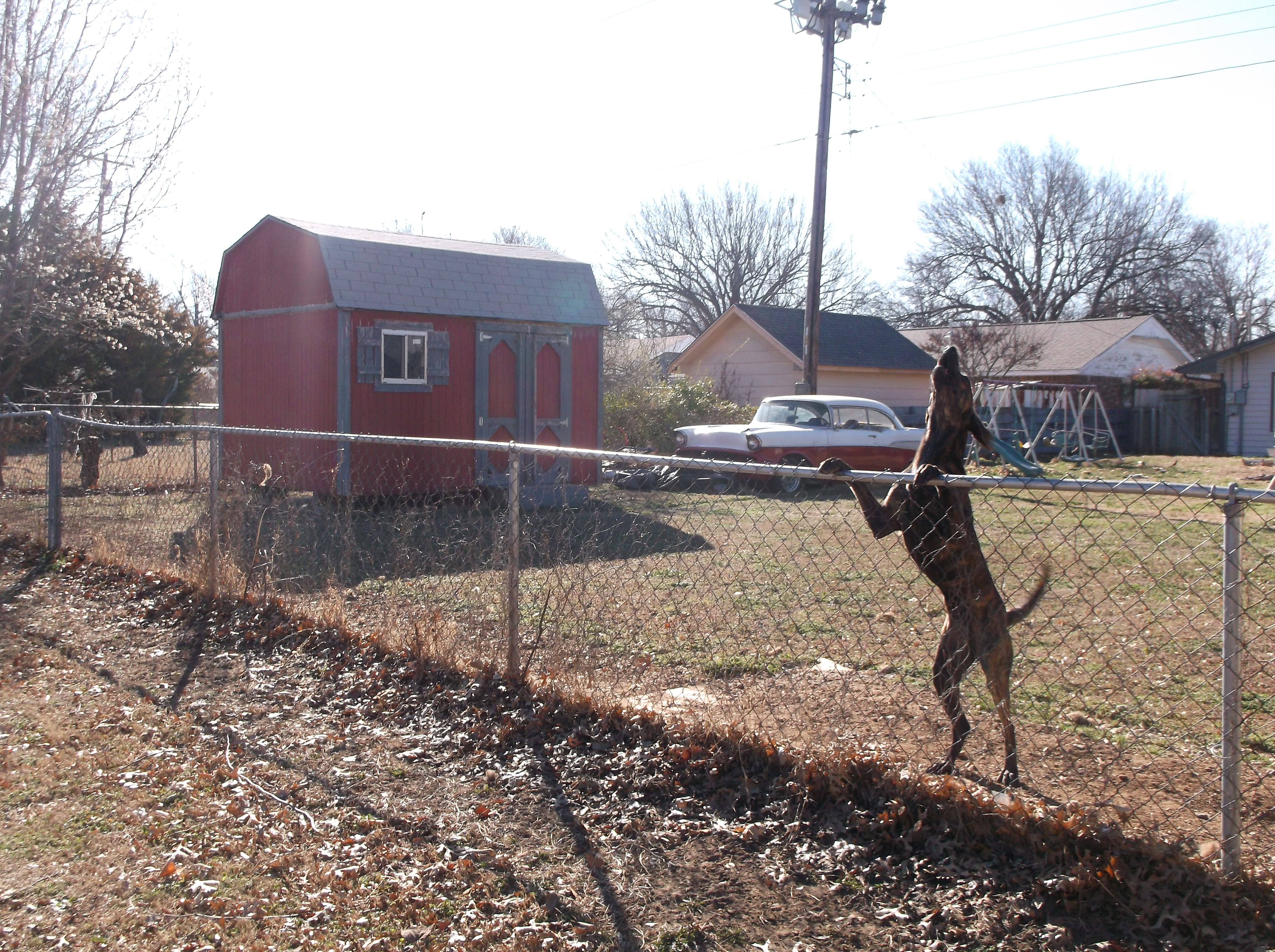
A dog howling from a backyard, answering a sound only it fully understands. Photograph: Kiddo27/Wikimedia Commons
Image Credits: Wikimedia Commons / Kiddo27, Luis Garcia, Found Animals Foundation
An instinct inherited from wolves
The first step in understanding dog behavior is realizing their ancestors were wolves. Dogs and wolves share a common ancestor, and howling was the wolf pack's long-distance phone system long before humans domesticated a single pup.
Wolves howl to locate each other when the pack is spread out, to announce territory to rival packs, and to keep the group bonded. Barking is loud up close, but it does not carry the way a sustained howl does.
A wolf separated from its pack will howl to find its relatives, and the others howl back to guide the missing member home. That behavior was critical for survival, so it became deeply wired into canine DNA.
Domestic dogs inherited the instinct even though most never need it. As veterinarian Dr. Elliott Garber told Rover, modern dogs might not rely on howling the way their wild ancestors did, but they have inherited the drive to communicate or express emotion.
Dog howls are generally shorter and less intense than wolf howls, since pet dogs rarely need to project across miles of forest.
So when a siren sounds, the dog's ancient brain may simply be responding to what it perceives as another animal calling from far away. Scientists who study warning-signal design have even noted that sirens work on humans partly because their frequency mirrors the sounds animals use for alarm calls. The convergence may not be a coincidence at all.
Why sirens sound like howls to a dog
Sirens and howls share an acoustic profile. Most ambulance, fire truck, and police sirens operate at frequencies between 700 and 1,600 hertz, a range that closely matches the pitch of a wolf or dog howl. To a dog, the rising and falling wail reads as something alive, more like a call than a crash.
Dogs also hear far more of the sound than we do. Their hearing range stretches to about 60 kHz, while humans top out near 20 kHz, so the siren lands in their auditory world with a richness we cannot perceive. The UCSB ScienceLine explains that like sirens, howls contain high-pitched sounds, and scientists think a dog howls at a siren because the dog believes it is hearing a howl from another dog.
That idea got formal scientific attention. In 2020, researcher Koranova published a study in Acta Biotheoretica proposing a natural and technical convergence between wolf howls and emergency sirens.
The study argues the two signals overlap acoustically in ways that explain the response. A 2023 study by Lehoczki went further, finding that a family dog's genetic distance from wolves affects how strongly it reacts to howls.
There is also a simpler possibility scientists acknowledge: nobody except the dog knows whether it truly thinks the siren is another dog or whether the sound just triggers the urge to join in. Either way, the response is social, not defensive.

A dog mid-howl, the inherited wolf behavior triggered by howl-like sounds. Photograph: Luis Garcia/Wikimedia Commons
Which dogs howl most, and when to pay attention
Breed genetics decide how readily a dog sings. Dogs with closer genetic ties to wolves, such as Siberian Huskies and Malamutes, are the most likely howlers, and scent hounds bred to vocalize while hunting, like Beagles and Basset Hounds, also respond strongly. A quiet breed is not broken; its instincts are just wired differently.
It is also worth knowing that the more a dog hears and responds to a siren, the more the behavior can become a habit. Some dogs learn that howling seems to make the noise go away, since the siren passes and fades right as they finish. The timing is coincidence, but the dog may connect the two.
Contrary to popular belief, the howling is rarely about pain. Experts largely agree that sirens do not physically hurt dogs' ears.
As Mental Floss notes, if the sound caused pain, dogs would show other behaviors like running and hiding. Joining in is a social response, not a distress signal.
That said, context matters. Howling at a passing siren is normal and harmless.
Howling that is new, constant, or paired with pacing, drooling, or destructiveness can signal separation anxiety or illness, and that version deserves a vet visit rather than a laugh. The difference is pattern: a dog that sings with the ambulance and then naps is fine.
What to do when the sirens start
For most dogs, the answer is nothing. The howl is a healthy expression of an ancient instinct, and it stops when the siren passes. Punishing it only confuses a dog that thinks it is answering its pack.
If the noise genuinely distresses your dog, look for the signs: flattened ears, tucked tail, trembling, or bolting for cover. Those point to noise anxiety rather than instinct, and they respond to the usual tools, which are a safe quiet room, calm background sound, and desensitization training with a professional's guidance.
Some owners teach a "quiet" cue for the moments when a 2 AM siren sets off a full chorus. Reward the silence, not the scolding, and keep expectations realistic: you are asking the dog to override thousands of years of wiring, so progress is gradual.

A mixed-breed dog howling, proof that the siren instinct crosses breed lines. Photograph: Found Animals Foundation/Wikimedia Commons
Frequently asked questions
Does howling at sirens hurt a dog's ears?
No. Experts agree the sound does not cause physical pain.
If it hurt, dogs would run and hide instead of standing their ground and singing along. The howl is a social response, not a pain response.
Why do some dogs howl at sirens while others ignore them?
Genetics and breed play the biggest role. Breeds closer to wolves, like Huskies and Malamutes, and vocal hunting breeds like Beagles, howl more readily. Individual temperament and past experience shape the rest.
Do dogs think a siren is another dog?
They may. The siren's 700 to 1600 Hz wail closely matches a howl's pitch, and scientists think dogs interpret it as a distant animal calling. Researchers admit the inner experience is still partly a mystery, but the social shape of the response is clear.
Should I stop my dog from howling at sirens?
Usually not. It is normal, harmless, and brief. Only intervene if the dog shows real distress, such as trembling or hiding, which signals noise anxiety rather than instinct, or if the howling has become a constant compulsive habit.
Can howling at sirens mean separation anxiety?
Howling alone at a passing siren does not. But howling that happens when you leave, paired with pacing or destruction, can indicate separation anxiety. The pattern and context tell the two apart.
The bottom line
Dogs howl along with sirens because the wail sounds like a wolf howl and wakes an inherited pack instinct: answer the call, locate the pack. The 700 to 1600 Hz pitch match, the 2020 acoustic convergence research, and the breed patterns all point the same way. It is not pain, it is not defiance, and for most dogs it needs nothing more than a smile and a closed window.
Latest in Pets
- Why Dogs Tilt Their Heads When You Talk
- Why Cats Purr and What It Means
- Why Dogs Lick Human Faces
- Why Cats Squeeze Into Boxes That Look Too Small
Subscribe for weekly explainers on the pets you live with.
Related stories

Why Does My Dog Eat Grass and Vomit?
A UC Davis study of 1,571 owners found grass eating is normal dog behavior, not self-medication: only 10% were ill first. What the science
Why Does My Dog Stare at Me While I Eat?
Dogs stare at you while you eat because it has worked before, and mutual gaze raises bonding hormones. Learn the reinforcement science

Foods toxic to dogs: the list, with reasons
Chocolate, xylitol, grapes, onions: common foods can harm dogs. Learn what makes each one toxic, the warning signs, and what to do if your