
Why Cats Squeeze Into Boxes That Look Too Small
Key takeaways
- A 2014 Utrecht University study of 19 shelter cats found that hiding boxes measurably lowered stress scores within 3 days.
- Enclosure removes blind spots, which calms a predator that is also prey; warmth matters too, since a cat's comfort zone is 86 to 97°F.
- The tight squeeze itself is rewarding through thigmotaxis, the calming effect of pressure on all sides of the body.
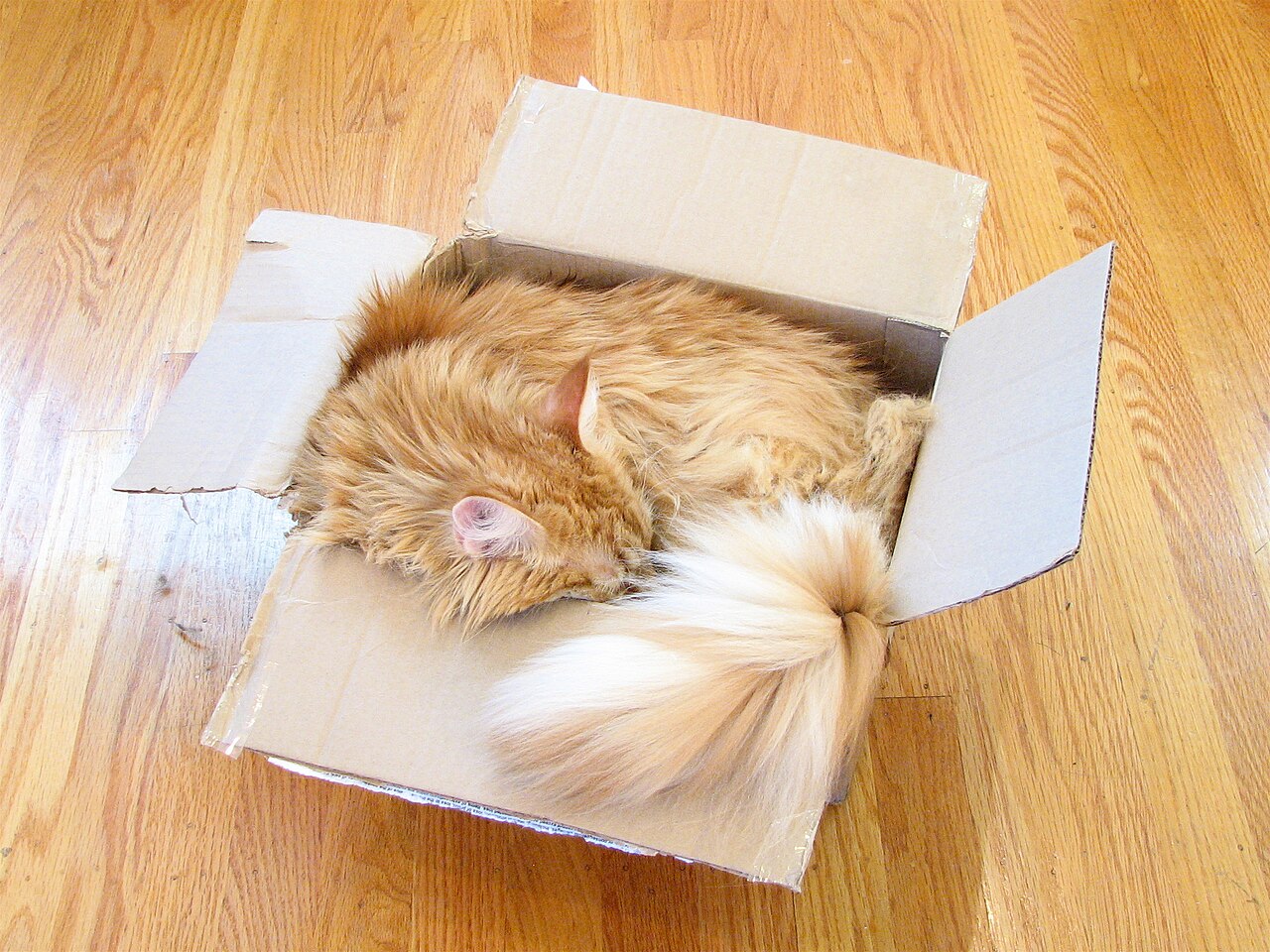
Image Credits: Wikimedia Commons / contributor
Every cat owner knows the scene: an expensive cat tree stands ignored while the cat folds itself into the delivery box the size of a shoebox. It looks uncomfortable. It is not.
The behavior is one of the most studied quirks in feline science, and the explanations run from stress hormones to thermostats to deep evolutionary instinct.
The short version is that a box does three jobs at once. It hides the cat from threats, it holds warmth against the body, and the pressure of the walls triggers a calming response. Each job has evidence behind it.
Together they explain why the too-small box wins every time.
The stress experiment that settled it
The strongest evidence comes from a 2014 study led by Claudia Vinke at Utrecht University in the Netherlands, published in Applied Animal Behaviour Science. The team randomly divided 19 newly arrived shelter cats into two groups. Ten received a cardboard hiding box.
Nine did not.
Behavior was scored over a fortnight using the Kessler and Turner Cat-Stress-Score, a standardized scale.
By day 3, the cats with boxes had lower average stress scores and less variability than the cats without. Some box-free cats were fine, but others showed stress far greater than any boxed cat. By day 14 both groups converged.
The box did not change the shelter. It changed how fast the cat could cope with it.
The paper's conclusion, quoted widely since: "The hiding box appears to be an important enrichment for the cat to cope effectively with stressors in a new shelter environment the first weeks after arrival."
The mechanism fits feline coping style. Cats are poor at resolving conflict the way social species do.
Their default strategy under tension is withdrawal from view. Kathy Carlstead's laboratory work in the early 1990s showed cats under unpredictable routines responded with elevated stress hormones and hid whenever they could.
A box gives that instinct somewhere to go, letting the sympathetic nervous system settle back to baseline.
A hunter who is also hunted
Evolution handed the cat two instructions at once: catch small things, and avoid becoming a small thing something else eats. The box serves the second instruction.
A box creates an enclosed space where a cat can watch its surroundings while staying hidden. The walls eliminate blind spots behind and beside the cat, which is why cats prefer boxes with one opening over containers open on multiple sides. A cat's primary response to threat is not fighting or fleeing.
It is disappearing.
Cats are ambush hunters by nature, not endurance chasers. The same enclosure that hides them from threats doubles as a hunting blind: a place to watch, wait, and burst out. Watch a cat in a box and you will see both modes, the flattened loaf of a resting animal and the coiled crouch of a predator.
This instinct runs so deep that cats respond to the idea of a box. In a 2021 citizen-science study led by Gabriella Smith, cats sat inside squares taped on the floor, including a Kanizsa illusion square implied by four Pac-Man shapes with no real walls. The suggestion of enclosure pulled them in.
Somewhere in the nervous system, a bounded space reads as safer.
The warmth factor
There is a thermostat angle too. According to the National Research Council, the thermoneutral zone for a domestic cat, the temperature range where it stays warm without burning extra energy, is 86 to 97°F (30 to 36°C). Most homes sit well below that, around 68 to 72°F.
A box is a heat trap. Cardboard insulates, and the small enclosed volume warms quickly from body heat. A cat curled in a tight box is running its own microclimate at something closer to its comfort zone.
This is one reason cats seek boxes more in cool rooms. The smallest box that fits is often the favorite: less air to heat, more body contact.
Why too small is perfect: thigmotaxis
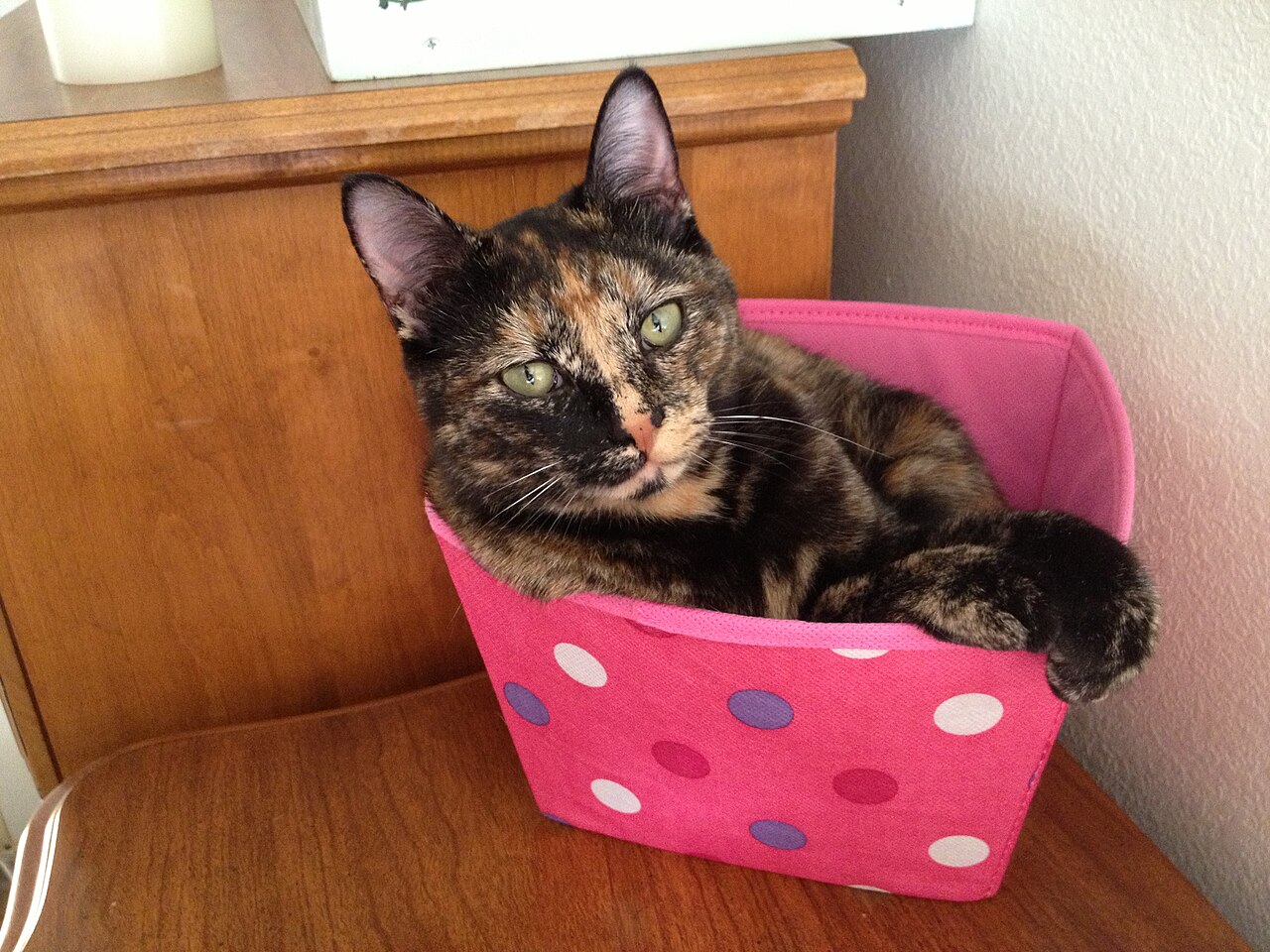
The tight squeeze is not a problem to solve. It is part of the reward. Pressing the body firmly against surfaces on all sides triggers a sensory response called thigmotaxis, the calming effect of sustained physical contact.
The sensation mimics the snug protection of the birth den and nursing alongside littermates. Watch a cat settle into a tight box and you will often see kneading and hear purring, behaviors associated with deep contentment. The compression itself reads as safety.
This also explains the liquid-cat phenomenon, the viral photos of cats poured into vases, drawers, and boxes that seem physically impossible. A cat's skeleton is built for squeezing: the collarbones are free-floating rather than locked to the shoulders, so if the head fits, the body usually follows.
The squeeze is not a struggle. It is the sensation they are after.
What the box tells you about your cat
Because hiding is the cat's stress response, how the box gets used is diagnostic. A cat with a healthy baseline uses the box like a favorite chair: in for a nap, out for food, back in to ambush a toy, abandoned for the sunny window. The box is one option among many, chosen freely.
A struggling cat uses the box differently. She stays in for most of the day, skips meals or eats fast and retreats, and flattens rather than curls.
That is not a cat enjoying boxes. That is a cat who found the one place the stressor cannot reach.
If hiding increases suddenly, or the cat stops eating, playing, or using the litter box normally, that is a signal worth acting on, not a quirk to laugh off. A vet visit rules out pain and illness first; environmental stressors come second.
Practical takeaways for cat owners
Keep the box, even a plain cardboard one. Rotate boxes when they get shredded, and place them in quiet spots rather than high-traffic hallways. A box near a favorite window combines enclosure with a view, which many cats prefer.
Do not drag the cat out of the box for attention. The box works because the cat controls entry and exit. Forcing interaction raises the stress the box was lowering.
Let the cat come to you. It will, more often, because lower baseline stress makes cats more willing to interact with people.
If you have a new cat, provide the box from day one. The Utrecht study's effect appeared within three days. A hiding place is one of the cheapest, most effective stress tools available, and it costs nothing more than the last delivery.
Cat box questions, answered
Do cats prefer boxes to expensive beds?
Often, yes, and the science says the box is doing real work: enclosure, warmth, and pressure contact. A plush open bed offers none of the three as strongly.
Will any box do?
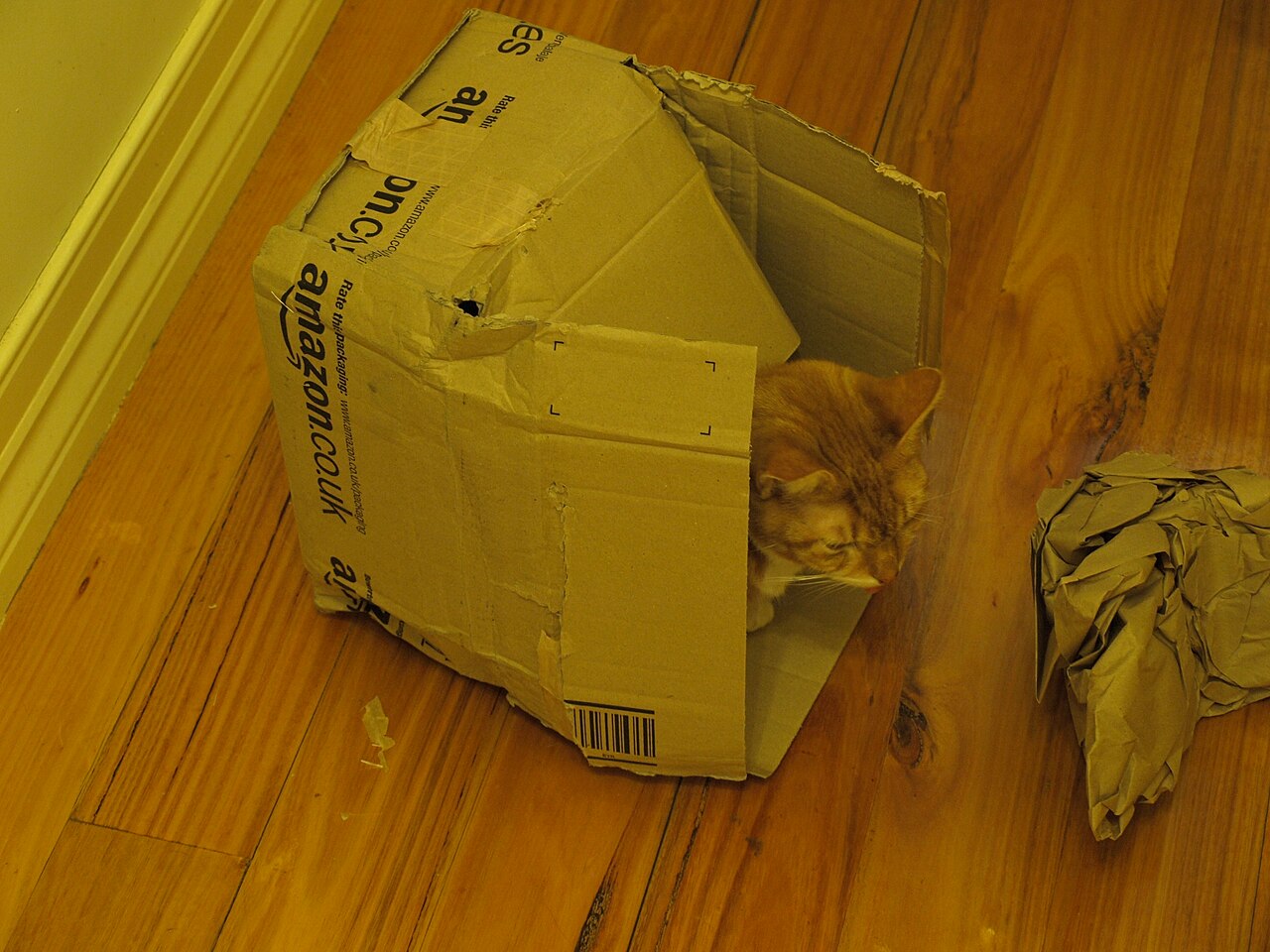
Any clean, dry box works. Size matters less than enclosure; cats regularly choose boxes that look too small. Avoid boxes with staples, tape residue, or chemical smells.
Is it bad if my cat hides all day?
Occasional hiding is normal. All-day hiding combined with appetite or behavior changes is a stress or health signal. Check with a vet if it persists beyond a day or two.
Do all cats like boxes?
Nearly all domestic cats show the preference, and the Kanizsa illusion study suggests even the suggestion of a boundary attracts them. Individual taste in box size and location varies.
The bottom line
Cats squeeze into too-small boxes because the box is a stress-reduction tool, a heat trap, and a hunting blind in one. The Utrecht study measured the calming effect in days, not weeks. The tightness is the feature: pressure on all sides tells a small predator that nothing can reach it from behind.
Leave the box on the floor.
Latest in Pets
- Why do cats purr and what does it mean?
- Why does your cat knead its paws?
- Why do dogs tilt their heads when you talk?
- Step-by-step guide to crate training a puppy
Subscribe for one pet-behavior explainer every morning.
Related stories

Why Does My Dog Eat Grass and Vomit?
A UC Davis study of 1,571 owners found grass eating is normal dog behavior, not self-medication: only 10% were ill first. What the science

Why Does My Dog Stare at Me While I Eat?
Dogs stare at you while you eat because it has worked before, and mutual gaze raises bonding hormones. Learn the reinforcement science
Foods toxic to dogs: the list, with reasons
Chocolate, xylitol, grapes, onions: common foods can harm dogs. Learn what makes each one toxic, the warning signs, and what to do if your