
Why dogs lick their paws so much, explained
By Rive News / Research desk | Rive News / Published October 28, 2026 at 9:00 AM PKT
Key takeaways
- Occasional paw licking is normal grooming, but constant or focused licking usually has a cause worth finding.
- Allergies are the most common medical driver, and they often affect more than one paw at once.
- A single paw points more toward injury, a foreign object, or local pain than toward allergy.
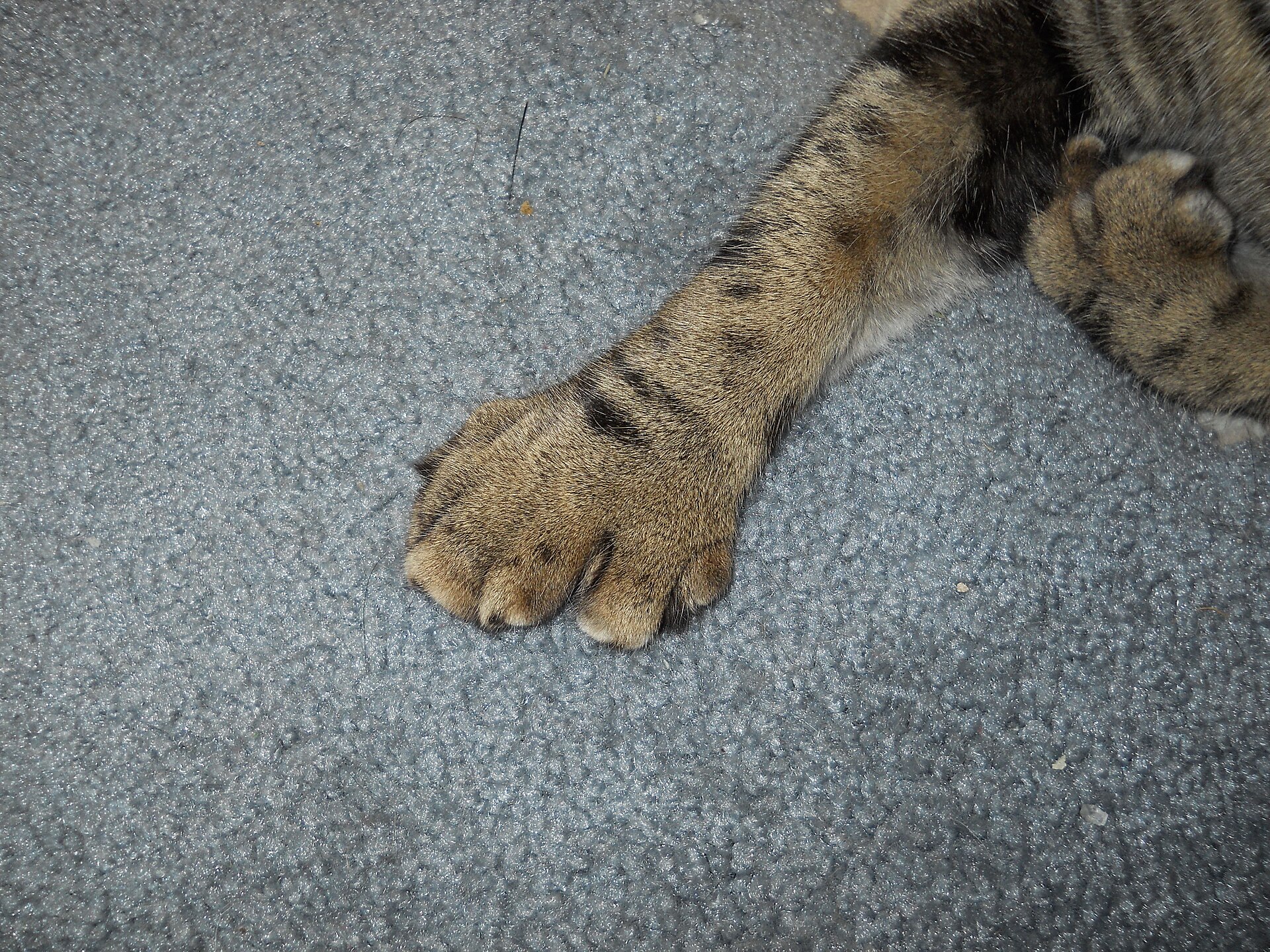
[A dog's paw, showing the pads and toes owners should check between.] Photograph: Wikimedia Commons contributor
Image Credits: Wikimedia Commons
Paw licking is one of the most common dog habits owners notice, and it covers a wide range of causes. A few licks after a walk are ordinary grooming. Licking that goes on for long stretches, happens every day, or leaves the paws red and sore is a different matter.
This article explains why dogs lick their paws so much, including allergies, infections, injuries, irritants, and habit, and it covers what owners can check at home and when a vet visit makes sense.
What counts as normal, and what does not
Dogs groom themselves with their tongues, and paws collect dirt, salt, and debris on every walk. A brief clean-up after coming inside fits that pattern. Vets draw the line at frequency and damage: licking that is constant, focused, or long enough to change the skin has usually moved past grooming.
The pattern matters more than any single episode. Licking between the toes on several paws suggests a widespread trigger such as allergy.
Licking one spot on one paw suggests something local. Keeping a short note of which paws, and when the licking flares, gives a vet a much clearer starting point.
Allergies are the leading medical cause
Allergies are the most common medical cause of heavy paw licking, according to veterinary sources including Vetster. Dogs can react to environmental triggers such as pollen, dust mites, and mould spores, to foods such as beef, dairy, chicken, and wheat, and to contact irritants on lawns and floors.
Environmental allergy, known as atopic dermatitis, shows up on the paws more than anywhere else in many dogs. Paoli Vetcare reports estimates of 3% to 15% of dogs affected, and cites a large United States survey of 31,484 dogs seen for skin problems in which 4.7% had allergic dermatitis.
One reason paws take the brunt is simple contact. Paws touch grass, pollen, dust, and treated surfaces with every step, and the thin skin between the toes stays warm and slightly damp. That combination lets irritants linger where the dog can reach them with its tongue.
Seasonal flare-ups are a useful clue. Licking that worsens in pollen season and eases in winter points toward an environmental trigger. Licking that stays steady all year, with no seasonal change, points more toward food allergy or a year-round indoor trigger such as dust mites.
Infections that follow the itch
Itchy skin invites a second problem. Once a dog licks a spot raw, bacteria and yeast can take hold in the warm, damp skin between the toes, and the infection then adds its own itch. That cycle is why a case that starts as allergy can look worse week by week.
The Dog Health Handbook cites a study of 300 dogs with inflamed paws, pododermatitis, in which allergies were the cause in 43.7% of cases. Secondary bacterial infection was found in 36% and yeast in 14%. Those figures show how often more than one problem is present at once.
Signs that infection may have joined in include redness, swelling, a smell from the paws, discharge, or dark staining of the fur from constant licking. These signs are a reason to seek veterinary care rather than trying another home remedy first.
One paw usually means something local
When a dog suddenly focuses on a single paw, the cause is often local rather than whole-body. Vets list cuts, torn nails, thorns, stones, grass seeds, and ice caught between the toes among the usual suspects. A grass seed is a particular worry after walks in long grass, because it can work its way into the skin.
Pain elsewhere in the leg can also show up as paw licking. Dogs with joint pain or a sore nail may lick the nearest reachable area. That is one reason a vet will examine the whole leg, not just the spot being licked.
A quick home check helps. Look between the toes and under the pads for cuts, swelling, or anything stuck in the fur.
Check nails for cracks or breaks. If the dog will not let you touch the paw, or is limping, that is a prompt to book a vet visit rather than persist.
Irritants from walks and floors
Not every trigger comes from inside the dog. Road salt and de-icing chemicals irritate paws in winter, and lawn treatments and cleaning products can do the same in summer. Hot pavement can burn pads, and rough or icy ground can crack them.
Rinsing paws after walks is a simple step that removes much of this residue. Dry the paws well afterwards, since damp skin between the toes stays vulnerable. Keeping nails trimmed also helps, because long nails change how the foot bears weight and can split.
Boredom, stress, and habit
Behaviour can drive licking too, but vets caution against jumping to that explanation. Vetster reports that anxiety-driven paw licking is uncommon, and that a vet will usually only consider it after skin disease and pain have been ruled out. Veterinarian Jo Myers, on the Vetster platform, said: "Allergies are the most common cause of excessive licking and scratching in dogs.
"
Still, under-stimulated dogs do develop repetitive habits. A dog left alone for long stretches, or given little play and walking, may lick as a way to fill the time. In those cases the licking often appears at rest, such as in the evening, rather than after walks or in a particular season.
Lick sores, known as acral lick dermatitis, show how habit and infection can combine. The Dog Health Handbook reports that about 90% of such lesions carry a deep bacterial infection, and up to 70% of cases may involve anxiety. Treating only the skin, or only the behaviour, often misses half the problem.
What a vet will usually do
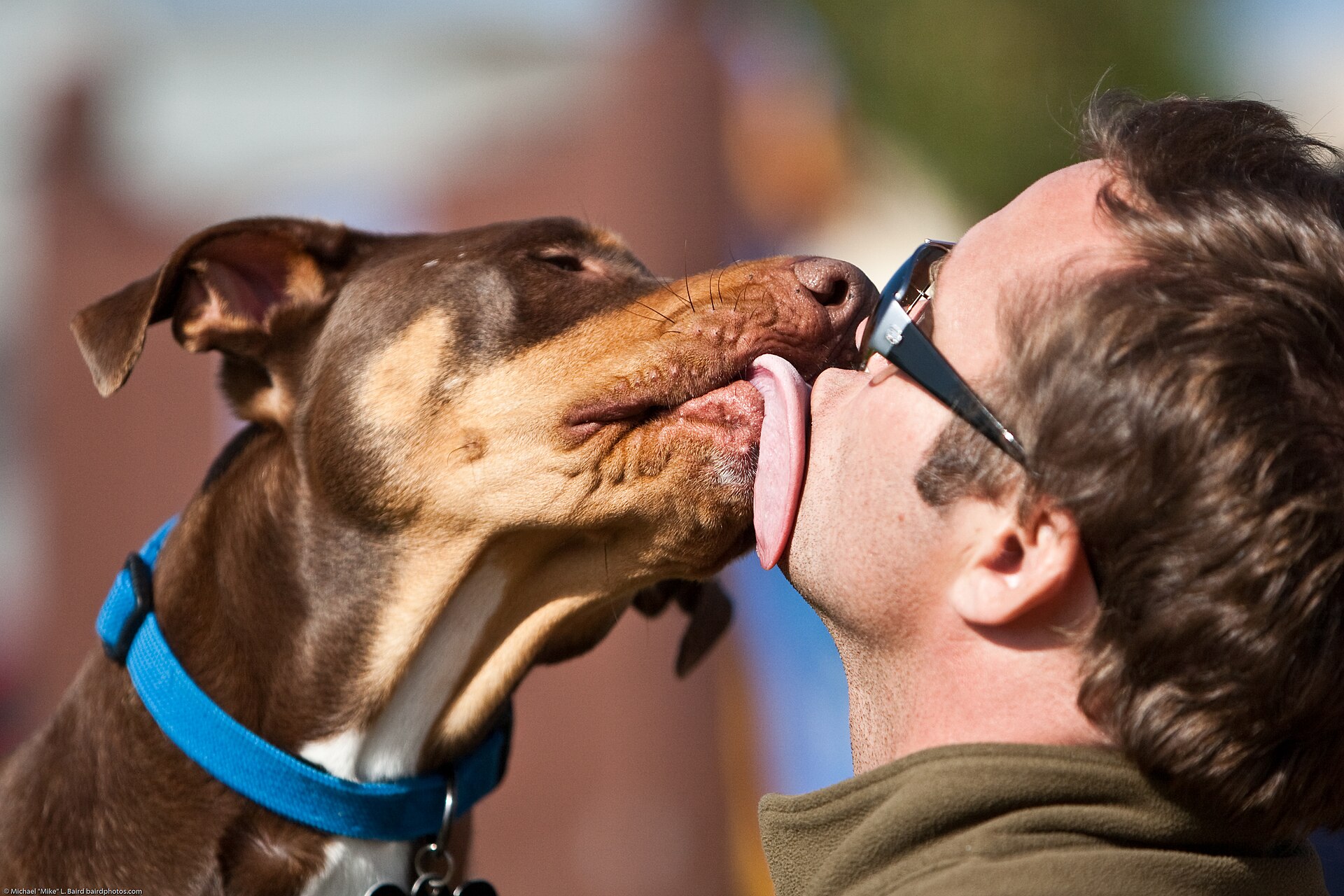
[A dog licks with its tongue out at a dog show in Morro Bay.] Photograph: Mike Baird
Image Credits: Wikimedia Commons
A vet visit for paw licking usually starts with the pattern: which paws, how long, and what else has changed. The vet may check for parasites, take skin samples to look for yeast or bacteria, and discuss allergy testing or a diet trial.
Food allergy is a minority cause, but it is testable. Across 28 studies, mostly at specialty clinics, food allergy was found in a median 18% of itchy dogs, according to figures cited by the Dog Health Handbook. An elimination diet fed for 8 weeks identifies more than 90% of food-allergic dogs, compared with about 80% at 5 weeks.
That timeline matters for owners. A diet trial that lasts only a week or two proves very little, and switching foods at random can make the picture harder to read. A vet-guided trial, with one controlled diet and no extra treats, gives a cleaner answer.
What owners can do at home
Start with observation before changing anything. Note which paws are licked, at what time of day, and whether the pattern follows walks, seasons, or meals. Photographs of the paws over a week or two can show change that memory misses.
Keep the paws clean and dry after walks, and remove visible debris gently. Avoid scented wipes or harsh cleaners on irritated skin. If the licking is new, sudden, and focused on one paw, check for injury first and seek veterinary advice promptly if you find swelling, a wound, or a limp.
If licking persists for more than a few days, spreads to several paws, or leaves the skin red, swollen, or sore, book a vet visit. Persistent licking is a sign to investigate, not a habit to simply discourage. This article is general information only; a vet who can examine the dog is the right person to judge any individual case.
When to seek a vet promptly
Some signs should not wait for a routine appointment. A dog that is limping, will not let you touch a paw, or has a swelling, lump, or draining wound between the toes needs prompt care. The same applies to paws that are bleeding, cracked, or smell strongly, and to any raw sore that will not heal.
Sudden licking after a walk in long grass also deserves a quick check, since a grass seed lodged in the skin will not resolve on its own. Early treatment is simpler than treatment after infection has set in.
Frequently asked questions
Why does my dog lick its paws at night?
Night-time licking often stands out because the house is quiet and the dog is at rest. It can reflect itching that was present all day, a habit that surfaces when the dog is bored, or soreness that becomes noticeable once activity stops. If night licking is new or intense, note whether the paws look red or swollen in the morning and raise it with a vet.
Can food cause paw licking?
Yes, food allergy can cause itchy paws, but it explains only a minority of itchy dogs. The reliable test is a vet-guided elimination diet lasting around 8 weeks, not a quick switch to a new brand. Random food changes without a plan rarely give a clear answer.
Is paw licking ever just grooming?
Yes, brief licking after walks or baths is normal grooming. It becomes a concern when it is frequent, long-lasting, or focused on one spot, or when it changes the skin. The shift from occasional to constant is the signal to investigate.
Should I stop my dog licking its paws?
Stopping the licking without finding the cause usually fails, because the itch or pain is still there. Distraction and bitter sprays may help briefly, but the useful step is identifying the trigger with a vet. Protective boots or a cone may be needed short-term while skin heals.
The bottom line
Most heavy paw licking has a findable cause, and allergies lead the list. The pattern gives the first clue: several paws point toward allergy, one paw toward injury or local pain, and evening licking toward habit or soreness that needs checking.
Clean, dry paws and a short log of the pattern help a vet reach the answer faster. If licking is persistent, spreading, or damaging the skin, a vet visit is the next step, not a wait-and-see approach.
Tags: dogs, paw licking, dog allergies, pet health
The Rive News research desk covers everyday science and pet behaviour from published veterinary and institutional sources, without first-hand testing claims.
Related
- Why your dog keeps licking its paws constantly
- Why your dog licks your face constantly
- How to tell if your pet is in pain
- How often you should bathe a dog
Subscribe to the Rive News newsletter for one clear explainer each morning.
Rive News publishes general information from named public sources. Corrections are welcomed and checked against those sources.
Related stories
Why Does My Dog Eat Grass and Vomit?
A UC Davis study of 1,571 owners found grass eating is normal dog behavior, not self-medication: only 10% were ill first. What the science
Why Does My Dog Stare at Me While I Eat?
Dogs stare at you while you eat because it has worked before, and mutual gaze raises bonding hormones. Learn the reinforcement science
Foods toxic to dogs: the list, with reasons
Chocolate, xylitol, grapes, onions: common foods can harm dogs. Learn what makes each one toxic, the warning signs, and what to do if your