
How Often Should You Bathe a Dog? Vet Guidance by Coat Type
Key takeaways
- Most vets land between monthly and quarterly baths. The ASPCA names once every three months as a baseline.
- Coat type sets the schedule: oily and hairless breeds need the most baths, double-coated breeds the fewest.
- Overbathing strips natural oils and causes dry skin, itching, and infections. When in doubt, brush instead of bathing.
Ask five vets how often to bathe a dog and you will get a range, not a single answer. That is because the honest answer depends on the dog: the coat, the skin, the lifestyle, and how dirty the animal actually gets. What the experts agree on is the direction of the error. Almost everyone bathes their dog too often, not too rarely.
This article lays out what veterinarians actually recommend, how the schedule changes by coat type, the signs of overbathing, and how to bathe a dog properly when bath day comes.
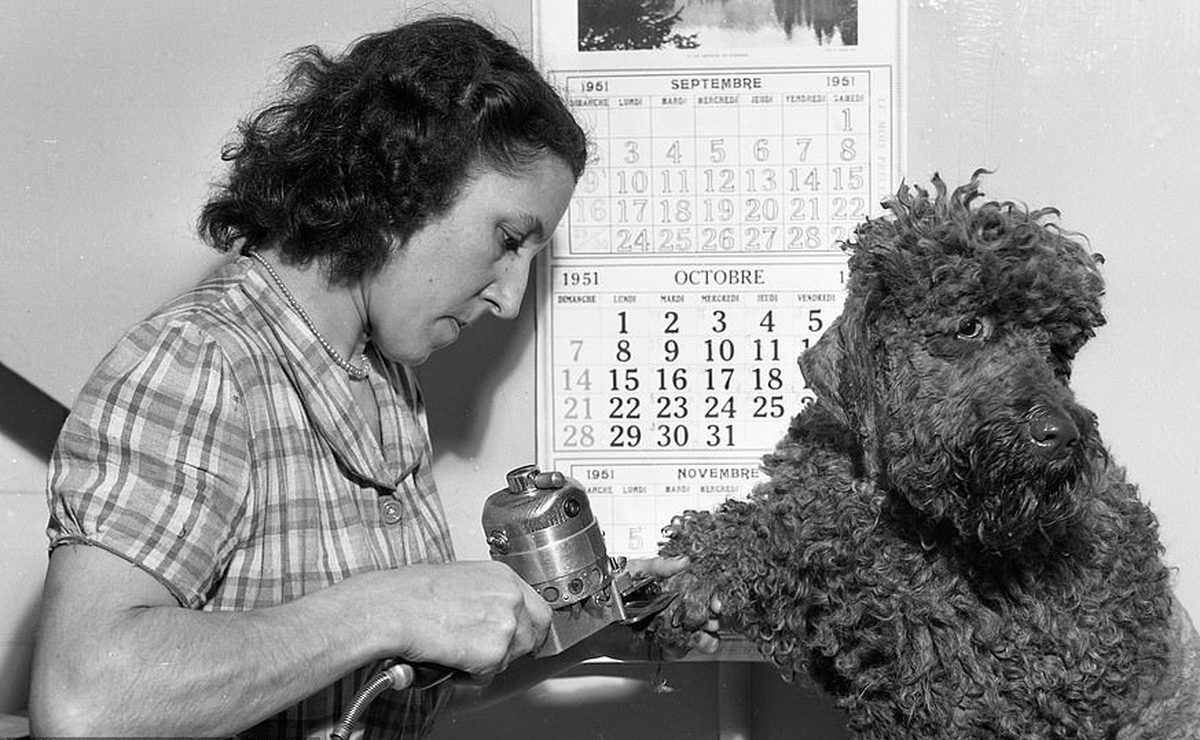
A historical pet grooming scene. Regular coat care is old advice; the modern question is how often water and shampoo should be involved.
Image Credits: Wikimedia Commons
What the vets actually say
Start with the numbers, because they are refreshingly concrete. Licensed veterinarian Dr. Joanna Woodnutt, with over 10 years of experience, told The Focus in June 2024 that she recommends bathing a dog no more than once a month. Her reasoning is direct: overdoing it strips away natural oils and can lead to skin issues. Her own dog gets one or two baths a year, usually because the coat starts to feel wrong or the dog has rolled in something disgusting.
The American Society for the Prevention of Cruelty to Animals sets its baseline even lower: once every three months is a good starting point for the average dog, as reported in the Beacon Journal's September 2024 guide. And veterinarian David Aldas goes further still, recommending as few as three to four baths a year for most dogs.
These are not contradictions. They are different points on the same spectrum, and every one of these vets adds the same qualifier: unless the dog has a skin condition with a vet-prescribed bathing routine, less is more. The UK charity Blue Cross puts it most bluntly: unless your dog gets dirty or "rolls in something a bit gross," it is better to leave their natural oils to do "all the hard work," noting that dogs are "pretty great at self-cleaning."
There is also a practical cost to overbathing that owners miss. Blue Cross points out that drop-on flea and worming treatments get washed away with every bath, which can leave gaps in parasite protection. So the question is not just cosmetic. It affects the dog's health routine.
Bathing frequency by coat type
Coat type is the biggest legitimate reason to stray from the baseline. A grooming guide compiled by Paws Local, consistent with American Kennel Club guidance, breaks it down this way:
Short, smooth coats (Beagles, Boxers) do well at every 6 to 8 weeks. These coats build up little oil and are easy to maintain with brushing. Double coats (Golden Retrievers, Huskies, German Shepherds) need the least washing: every 6 to 12 weeks. The American Kennel Club specifically warns that overbathing thick-coated breeds like Labradors, Golden Retrievers, and Siberian Huskies strips oil from the skin and can ruin the natural insulation of their bodies. For these dogs, brushing out the undercoat does most of the work.
Long coats (Shih Tzus, Afghan Hounds) run every 4 to 6 weeks, with regular brushing between baths to prevent matting. Curly and wiry coats (Poodles, Schnauzers) need washing every 3 to 4 weeks, since their continuously growing hair mats easily and often needs professional grooming anyway.
At the frequent end sit oily or hairless breeds: Basset Hounds, Bulldogs, and Chinese Cresteds may need weekly or biweekly baths, because oily skin builds up fast and leads to odor and irritation. Bulldogs and similar breeds with skin folds need the folds cleaned regularly no matter how often they get full baths. Always use a mild, vet-approved shampoo for these dogs.
Lifestyle shifts the schedule within these bands. A farm dog that swims in ponds needs more baths than an apartment dog that naps on the couch. Allergy-prone dogs may be on medicated bath schedules prescribed by their vet, which override all of the above. And seasonal shedding in spring and fall is a legitimate reason for an extra bath to loosen dead coat, paired with thorough brushing.
Signs you are bathing too often
The dog's skin tells on you before anything else. Dry, flaky skin is the first sign. Increased itching and scratching with no fleas in sight is the second. Redness, rashes, hot spots, and dandruff follow if the overwashing continues. The ASPCA cites excessive bathing as a leading cause of skin problems in dogs, and dogs bathed too often can end up needing veterinary treatment for secondary infections.
There is a counterintuitive trap here too. One veterinarian, posting as Pablo_Vet, cautions that frequent baths can push the skin to produce more oil to compensate, which makes the dog smell worse, which prompts more baths. If your dog seems to get smelly faster the more you wash them, the washing may be the cause. Try stretching the interval and brushing more instead.
The rule of thumb from nearly every source: bathe on condition, not on calendar. If you spot dirt, feel something sticky, or smell a funk, it is bath time. If the coat looks clean, lies flat, and smells neutral, skip it and brush instead. Brushing distributes oils, removes loose hair and debris, and tidies the coat without touching the skin's protective barrier.

A dog wash and grooming shop. Oily-coated and long-coated breeds are the main customers for frequent professional bathing.
Image Credits: Wikimedia Commons
How to bathe a dog properly
When bath day comes, technique matters as much as frequency. Brush the coat first, especially if it tangles. Wet tangles trap water against the skin and can cause irritation, and they are far harder to work out when wet.
Use lukewarm water, never hot. Choose a shampoo made for dogs, ideally on your vet's recommendation. Human shampoo is too acidic for dog skin and upsets its pH balance, a point the American Kennel Club stresses. Use less shampoo than you think you need. Leftover residue that is not fully rinsed out dries and irritates the skin.
Keep water and suds out of the ears and eyes. Dry the ears promptly after the bath, since trapped moisture invites infection. Have towels ready before you start: one on the floor, one for the dog. Afterward, dry thoroughly, especially in cool weather, and give the coat a final brush once dry to prevent matting.
For puppies, keep early baths minimal and gentle. Young puppies are still building their skin barrier, and most do fine with spot-cleaning until they are older. If you are raising a young dog, our crate training guide covers the rest of the early routine, and why dogs eat grass and vomit explains one of the classic pre-bath mysteries.
FAQ
Can I use human shampoo on my dog in a pinch?
Better not to. Human shampoos are made for human skin pH and are too acidic for dogs, which can dry and irritate their skin. Keep a bottle of dog shampoo on hand instead.
Does my dog need a bath after swimming?
A rinse with clean water is usually enough after a swim, especially in chlorinated pools or salt water. Save the shampoo for when the dog is actually dirty or smelly.
How often should I bathe a puppy?
Less often than an adult dog. Puppies generally need only occasional baths unless they get into something messy. Spot-clean with a damp cloth between baths.
My dog hates baths. What helps?
Go slow: treats, calm voice, lukewarm water, and short sessions. Never force or punish. Many dogs do better with a professional groomer, and some do fine with waterless foam shampoos between real baths.
The bottom line
For most dogs, a bath every one to three months is plenty, with the exact schedule set by coat type: wash oily and hairless breeds most, double-coated breeds least, and everyone else somewhere in between. Overbathing is the common mistake, and the fix is usually a brush, not a bath.
Check your dog's coat today. If it looks clean and smells neutral, cancel the bath and brush for five minutes instead. Your dog's skin will thank you.
---
Topics: dog grooming, dog bathing, pet care, dog skin health
Rive News is a research desk producing plain-language explainers from public sources. This article is for general information and is not veterinary advice. Ask your vet about skin conditions or medicated bathing schedules.
Latest in Pets
- Why does my dog follow me everywhere?
- Foods toxic to dogs: the list, with reasons
- How to stop a dog from pulling on the leash
Subscribe for one practical pet-care explainer in your inbox each week.
Rive News, 2026. Explainers are written from public sources and reviewed against our honesty checklist.
Related stories

Why Does My Dog Eat Grass and Vomit?
A UC Davis study of 1,571 owners found grass eating is normal dog behavior, not self-medication: only 10% were ill first. What the science

Why Does My Dog Stare at Me While I Eat?
Dogs stare at you while you eat because it has worked before, and mutual gaze raises bonding hormones. Learn the reinforcement science

Foods toxic to dogs: the list, with reasons
Chocolate, xylitol, grapes, onions: common foods can harm dogs. Learn what makes each one toxic, the warning signs, and what to do if your