
Why Dogs Sniff Each Other's Butts: The Science Explained
Rive News / Research desk
Research desk | Rive News
Key takeaways
- Dogs sniff each other's rear ends to read chemical messages from two anal sacs, which reveal identity, sex, health, diet, mood, and reproductive status.
- Dogs have up to 300 million scent receptors (versus about 6 million in humans) plus a Jacobson's organ that processes pheromones straight to the brain.
- A butt sniff is a polite, information-rich greeting; a few seconds of sniffing gives a dog more social data than minutes of watching.
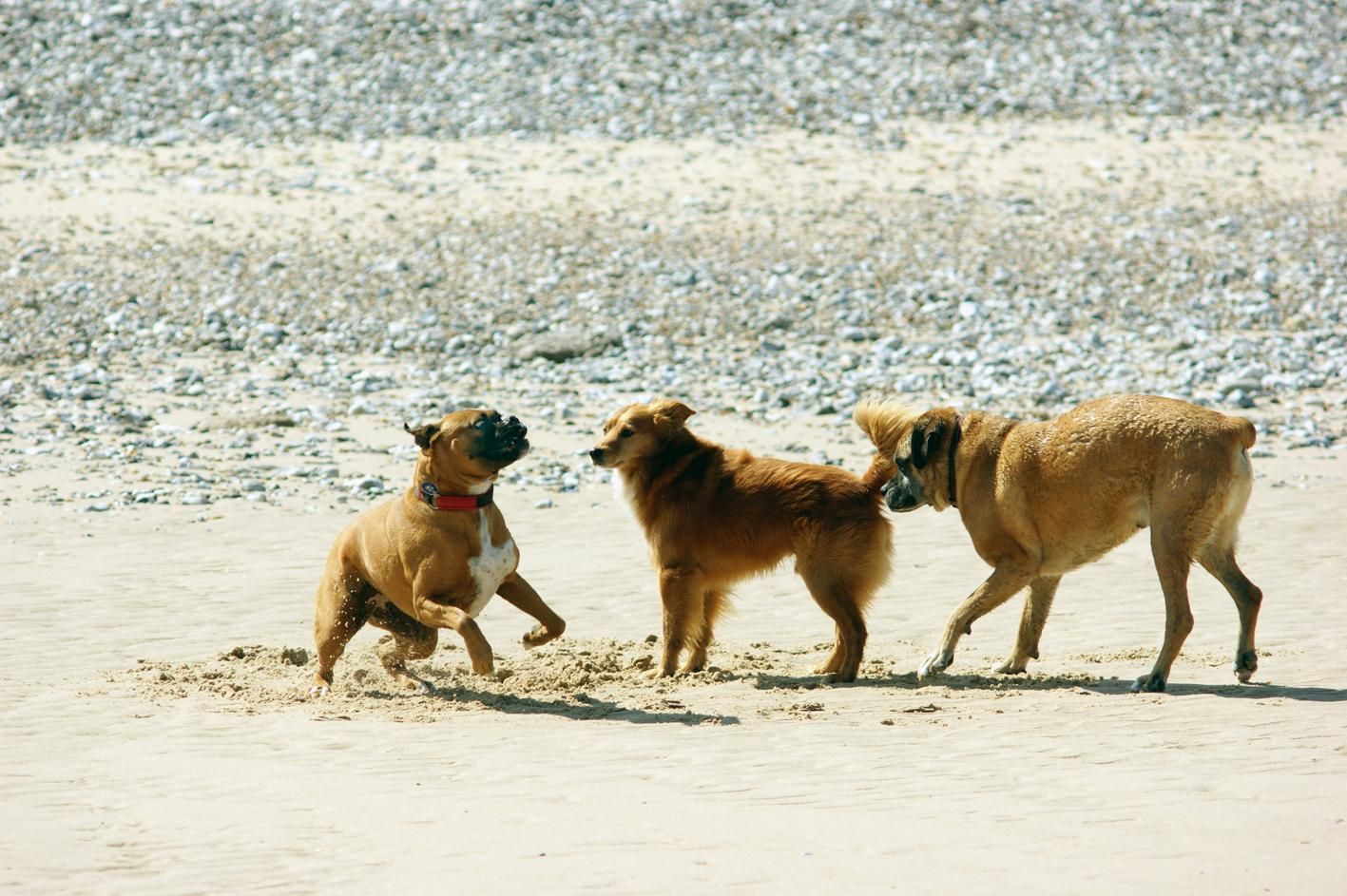
It is the most embarrassing moment in dog ownership: your dog marches up to a stranger's dog at the park and goes straight for the rear end. Humans shake hands. Dogs sniff butts. As awkward as it looks, it is not rude behavior and it is not random. It is a chemical conversation, and the rear end is where the most important information lives.
Dogs navigate the world mainly through scent, and the area around another dog's tail carries the densest concentration of social data on the body. This article takes a closer look at why dogs sniff each other's butts, including what is actually in the scent, how a dog's nose reads it, what information gets exchanged, and what the bottom line is for dog owners.
What is in the scent?
Two small, pouch-like sacs sit on either side of a dog's anus. These anal glands, also called anal sacs, secrete (release) a strong-smelling fluid that is unique to each dog. The walls of the sacs are lined with sweat and oil glands, and the secretion they produce carries pheromones (chemical scent signals) and other chemical signals, according to Dr. Vanessa Spano, a board-certified veterinary behaviorist at the Schwarzman Animal Medical Center in New York City, in an interview with Chewy.
The chemistry is specific. "For dogs, each rear end is potentially communicating some specific information about the dog in the scents coming from the anal glands inside the dog's rectum," said Rachel Salant, an animal behavior specialist with Veterinarians.org, in an interview with Reader's Digest. The anal sacs produce chemical compounds such as trimethylamine and a set of short-chain acids, which send out a sharp and powerful odor.
Humans mostly notice the unpleasant part of the smell. Dogs ignore it. The fecal odor is just background noise; what the dog is reading is the pheromone cocktail underneath. Apocrine glands, the type that produce these secretions, exist all over a dog's body, and humans have them too. But the two sacs near the tail are the easiest to access and the most concentrated, which is why greetings happen there and not at the ears.
Think of the secretion as a canine ID card. It is a scent signature no other dog shares, and it updates constantly with what the dog has eaten, how stressed it is, and where it is in its reproductive cycle.
How a dog's nose reads the message
The hardware behind butt-sniffing is extraordinary. While humans have about six million scent receptors, dogs can have up to 300 million, giving them a sense of smell thousands of times more acute than ours, according to Chewy's veterinary-reviewed coverage. But receptor count is only half the story.
Dogs also have a specialized structure called the Jacobson's organ, located inside the nasal cavity and opening into the roof of the mouth, with a direct line to the brain. It detects chemical signals, particularly pheromones, without interference from competing odors. This is why dogs often open their mouths while sniffing another dog's rear end: they are routing the sample through the Jacobson's organ, as veterinary behaviorist Dr. Barrett explained to Rover.
Once the organ detects pheromones, signals transmit rapidly to the brain and trigger an emotional reaction. That is why a dog can go from relaxed to tense, or from wary to playful, in the first second of a greeting. The chemical read happens faster than any visual assessment could.
Researchers have also found that dogs process new smells differently from familiar ones. Dr. Barrett told Rover that the right side of a dog's brain handles new information while the left side handles what is familiar, and dogs will switch which nostril they lead with depending on whether the scent is novel or upsetting. The greeting is not just data collection. It is active analysis.
What information gets exchanged
A few seconds of sniffing delivers a detailed profile. According to the veterinary experts cited by Reader's Digest, Adopt-a-Pet, and Rover, the scent around the rear end can communicate:
- Identity. Each dog's anal gland secretion is unique, like a fingerprint. Dogs recognize individuals by scent alone.
- Sex and reproductive status. A sniff reveals whether the other dog is male or female, and whether a female is in heat.
- Health status. Some medical conditions alter scent. Dogs can detect changes linked to stress, illness, and even diseases such as cancer.
- Diet. What the other dog recently ate shows up in the chemical profile.
- Mood and emotional state. Dogs smell adrenaline and stress hormones, picking up fear, anxiety, excitement, or calm.
- Age and temperament. The overall chemical picture helps a dog judge whether the other animal is a puppy, an elder, a potential playmate, or a threat.
That is a remarkable amount of social intelligence gathered in under three seconds. It explains why the sniff is so focused and why interrupting it can frustrate a dog: you are cutting off their introduction mid-sentence. Canine body language research consistently shows that allowing brief, mutual sniffing leads to calmer greetings than rushing dogs past each other, which is also why trainers advise against yanking a dog away the instant noses go south.
Should you let your dog sniff?
In most cases, yes, with supervision. Butt-sniffing is normal canine social behavior, and preventing it entirely can make a dog more anxious in social settings because they never get to complete the greeting ritual.
A few practical guidelines help. Keep the leash loose, since tension on the leash travels straight to the dog and can turn a friendly sniff into a tense standoff. Allow a few seconds, then call your dog along before the greeting drags on; lingering too long is when polite sniffing can tip into mounting or guarding. Watch both dogs' body language. Stiff bodies, hard stares, or raised hackles (the fur along the back) mean the chemical conversation is not going well, and it is time to move on.
There are exceptions. If either dog is showing signs of illness, is unvaccinated, or has a history of aggression, skip the close greeting. And if your dog is obsessively fixated on sniffing to the point of ignoring everything else, that fixation is worth discussing with a trainer, since healthy curiosity and compulsive behavior look different. The same judgment applies to other intense dog behaviors, like a dog that barks specifically at the mail carrier: context and intensity decide whether it is normal.
One more note for multi-dog households: dogs sniff each other constantly at home, not just at the park. That ongoing chemical check-in is how they track each other's stress and health day to day. A sudden change in how much attention one dog pays to another's rear end can occasionally be the first sign something is medically off, and it is worth mentioning to your vet.
Frequently asked questions
Why do dogs sniff butts instead of faces?
The rear end carries the densest concentration of scent information on the body, thanks to the two anal sacs. The face has scent glands too, but the chemical profile near the tail is richer and more distinctive. Dogs do sniff faces as well, especially with familiar dogs, but the butt is the fastest route to a full profile.
Can dogs really tell if another dog is sick by sniffing?
They can detect scent changes linked to health status, stress, and hormonal shifts. Some dogs can even detect diseases like cancer by smell. A sniff is not a diagnosis, but it is genuine chemical information about the other dog's body.
Why does my dog sniff my crotch?
For the same reason they sniff other dogs: humans have apocrine sweat glands in the groin area, and those glands carry individual scent information. It is embarrassing but biologically consistent. A calm redirect works better than punishment.
Is it bad to pull my dog away during a butt sniff?
A gentle, brief redirect is fine, but constantly yanking your dog away mid-greeting can increase social anxiety. Let the sniff complete for a few seconds, then move along cheerfully. If you are working on leash manners overall, the same patience helps with problems like leash pulling.
Do all dogs sniff butts, or just some breeds?
All dogs do it. It is species-wide behavior, not breed-specific. Puppies learn it as part of normal social development, and even the most dignified breeds will do it given the chance.
The bottom line
Dogs sniff each other's butts because the rear end is the richest source of chemical information on the body. Two anal sacs produce a unique pheromone signature carrying identity, sex, health, diet, mood, and reproductive status. A dog's 300 million scent receptors and Jacobson's organ decode that signature in seconds, making the sniff the most efficient greeting in the animal kingdom.
So the next time your dog goes in for the sniff at the park, do not be embarrassed. They are not being rude. They are asking, in the most information-dense way they know, "Tell me a little about yourself."
---
Topics: dogs, dog behavior, pet science, animal communication, scent
Author bio: Rive News is the research desk behind Rive News's evergreen explainers, covering pets, animal behavior, and veterinary science from public sources.
Latest in Pets
- Why Dogs Bark at the Mail Carrier Specifically
- Why Dogs Tilt Their Heads When You Talk
- Why Does My Dog Eat Grass and Vomit
Subscribe for one practical pet explainer each week, sourced from real veterinary reporting.
Corrections: spotted an error? Rive News publishes corrections at the top of the article. Standards: every factual claim links to a named public source; no invented quotes, statistics, or experts.
Related stories

Why Does My Dog Eat Grass and Vomit?
A UC Davis study of 1,571 owners found grass eating is normal dog behavior, not self-medication: only 10% were ill first. What the science r

Why Does My Dog Stare at Me While I Eat?
Dogs stare at you while you eat because it has worked before, and mutual gaze raises bonding hormones. Learn the reinforcement science and w

Foods toxic to dogs: the list, with reasons
Chocolate, xylitol, grapes, onions: common foods can harm dogs. Learn what makes each one toxic, the warning signs, and what to do if your d