
Why do dogs bark at the mail carrier specifically: the psychology
By Rive News
Research desk | Rive News
Key takeaways
- Dogs single out mail carriers because the daily routine rewards barking: the stranger arrives, the dog barks, the stranger leaves.
- The dog reads each retreat as victory, so the behavior strengthens and escalates toward lunging and biting.
- Break the loop by securing the dog away from the door and retraining a calm greeting with treats and leash work.
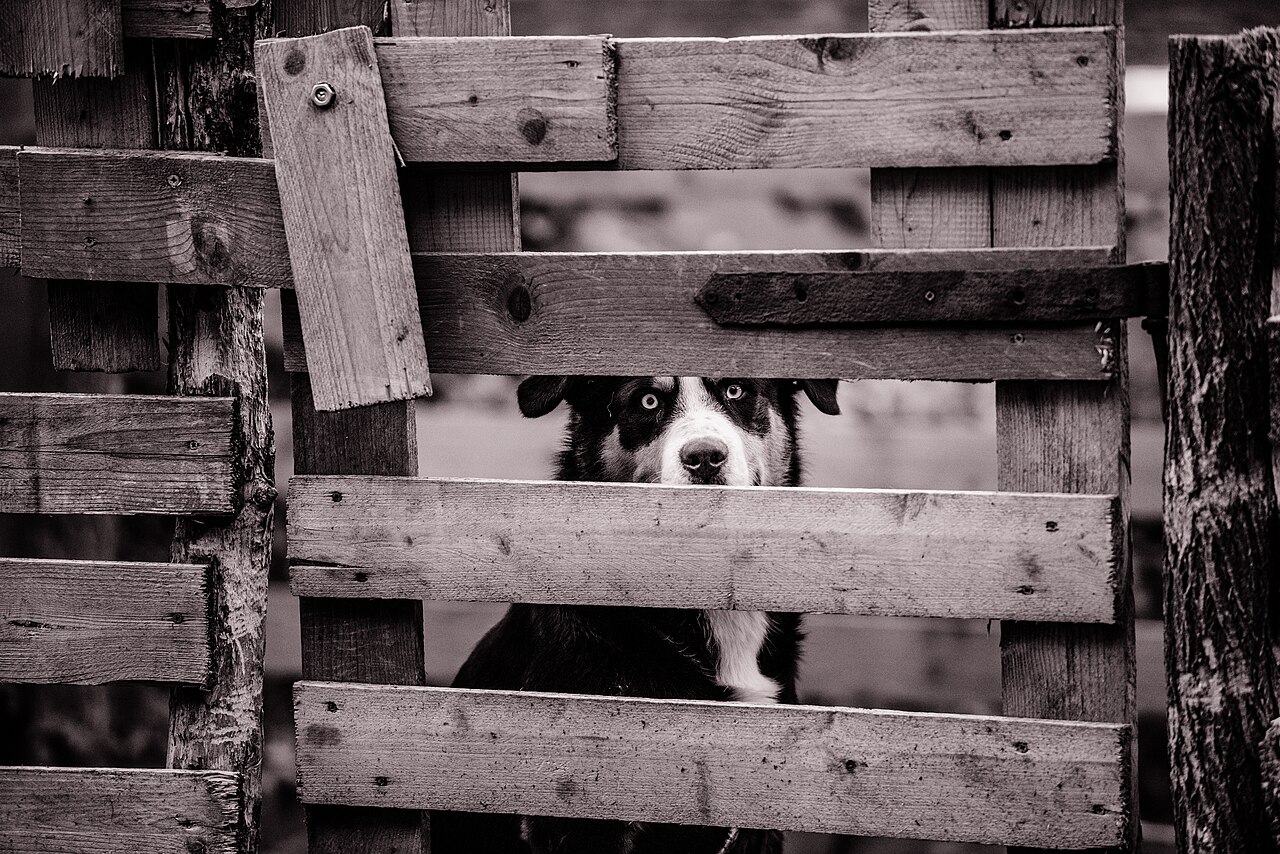
Every day at roughly the same hour, a stranger walks up to the house. The dog explodes. The stranger leaves.
In the dog's mind, the defense worked, and tomorrow it will work again, only louder.
Dogs do not reserve this treatment for mail carriers alone, but the mail carrier is the one visitor whose routine turns a natural instinct into a trained habit. Understanding why starts with one of the oldest jobs dogs were bred for.
This article explains why dogs target mail carriers specifically, breaks down the reward loop that escalates barking into aggression, and covers what owners can do about it.
What is happening when your dog barks at the mail carrier
The barking is territorial behavior, and it is ancient.
Stanley Coren, a professor of psychology at the University of British Columbia, wrote in Psychology Today that dogs appear to be doing one of the jobs they were originally domesticated for.
Wild canines that drove intruders away from the camp protected the food supply, and early humans kept the animals that sounded the alarm. Defending the threshold is, in Coren's framing, one of the reasons humans kept dogs at all.
The stakes are real for the people on the other side of the door.
The U.S. Postal Service reported more than 6,000 dog attacks on its employees in 2024, up from about 5,800 the year before, according to its 2025 National Dog Bite Awareness Campaign data. Los Angeles led all cities with 77 attacks, and California led all states with 701.
"Dog bite attacks on postal employees are preventable," said Leeann Theriault, the Postal Service's employee safety and health awareness manager. "Keep your dog secured and away from the carrier as the mail is being delivered."
What makes the mail carrier special is not the uniform or the mailbag alone. It is the schedule.
The carrier comes every day, which means the dog gets a daily rehearsal of the same sequence: stranger approaches, dog barks, stranger retreats. No other visitor shows up with that kind of regularity.
Why mail carriers specifically: the reward loop
Coren lays out the mechanism with unusual clarity.
"The postman arrives, the dog acts defensively, and the postman leaves. In other words, in the dog's mind, he attempted to defend his territory and it worked."
A rewarded behavior gets stronger and more likely, so the next delivery is met with more conviction. The carrier did not retreat because of the barking; the carrier left because the job was done. The dog cannot know that.
Over repetitions, the triggers spread.
Coren notes that cues tied to the arrival, the uniform, something carried in the hands, even the sight and sound of the delivery vehicle, can all start triggering the defensive response. The dog is not just reacting to a person anymore. It is reacting to the whole ritual of delivery.
The territorial-barking resource Wag Enabled describes the same cycle from the dog's point of view: the carrier encroaches (comes close), the dog barks to alert the household and drive the stranger off, the carrier keeps approaching, the dog escalates to lunging and louder barking, and then the carrier leaves. To the dog, the aggression caused the retreat. The behavior is self-reinforcing (it rewards itself), and the dog starts treating guardianship of the property as part of its daily chores.
There is also a simpler ingredient: novelty plus repetition.
Most guests arrive rarely and eventually come inside, which lets the dog learn they are safe. The carrier never comes in, never socializes, and always leaves right after the confrontation peaks. The dog never gets the proof that this particular human is harmless.
Why barking escalates over time
Here is the cruel part of the loop. The intruder always comes back.
In the dog's logic, that means yesterday's barking was not quite enough.
Coren describes what follows: the barks become more vigorous and sustained, then mix with snarls and growls, and finally with lunges and attempts to bite. The constant reappearance of the "intruder" gets paired with a conditioned set of negative emotions, and inbred distrust of the stranger hardens into outright antagonism.
That escalation arc matches the attack data. Most dogs never bite a carrier, but among dogs with daily rehearsal and no intervention, the trajectory points one way. Coren was once consulted by the Canadian Postal Service about exactly this problem. He found that the dangerous cases were usually not dogs safely behind closed doors but dogs kept behind gates in the front yard, right where the delivery path runs.
How to break the cycle
The fix has two halves: management, which stops the rehearsal, and training, which builds a replacement behavior.
Secure the dog before the carrier arrives. The Postal Service's own guidance is direct: keep dogs inside the house, behind a fence, or on a leash during delivery. Keep the dog in a separate room away from the door. If you go outside, close the door firmly so the dog cannot slip out. Never accept the mail in the dog's presence, and remind children not to take mail directly from the carrier, because the dog may read the carrier as a threat to the child. Most people know roughly when their carrier arrives, and USPS's Informed Delivery previews can pin down the timing further. Every delivery the dog watches from behind a closed door is one less rehearsal of the loop.
Teach an incompatible behavior. Coren's own method is disarmingly simple: keep a leash and treats by the door. When the dog barks, praise quietly, ask for a sit, clip the leash, and reward. Then let a willing visitor offer a treat so the dog learns that arrivals predict good things. The broader principle is standard in behavior work: train the dog to go to a mat or crate when someone approaches the door, and make that spot pay better than barking ever did.
Change the carrier's meaning. The veterinary guidance and Coren's postal-service consultation converge on the same idea: positive, supervised interactions between the dog and the carrier, with treats, can ratchet down the antagonism. Even a few friendly meetings can start rewriting the uniform's meaning from "daily intruder" to "treat person."
Do not punish the alarm. Yelling at a barking dog reads to the dog as joining in. Punishment after the fact teaches nothing about the carrier and can raise the dog's arousal (excitement level), which is the opposite of the goal. Redirect and reward instead.
One honest caveat from Coren's account: when he proposed treat-based cooperation to postal management years ago, it stalled on practical questions, including who would pay for the treats. The loop is easy to explain and harder to fix at scale, which is why the owner's management of the dog matters more than any carrier-side program.
FAQ
Do dogs actually hate mail carriers, or is it something else?
They do not hate the person. They are responding to a territorial trigger on a daily schedule, and the routine accidentally rewards the response. Most of these dogs are friendly with guests who come inside and stay awhile.
Why does my dog bark at the mail carrier but not other visitors?
Other visitors arrive rarely, and the dog eventually sees them accepted into the home. The carrier arrives daily, never comes in, and always leaves right after the barking peaks, so the dog never learns the carrier is safe.
Can a mail carrier refuse to deliver if my dog is aggressive?
Carriers can and do suspend delivery when they feel unsafe, and owners can be held liable for bites. Securing the dog is not just courtesy; it protects your mail service and your legal position.
Will getting a second dog make the barking worse?
Often, yes. Barking is socially contagious between dogs, and two dogs rehearse the loop together, each amplifying the other. Fix the behavior with the first dog before adding a second.
The bottom line
Dogs bark at the mail carrier because the schedule turns instinct into habit: stranger arrives, dog barks, stranger leaves, dog takes the credit.
Each repetition strengthens the behavior and spreads it to uniforms, trucks, and delivery sounds, and the daily return of the "intruder" pushes the dog to escalate.
The fix is unglamorous but effective. Secure the dog away from the delivery path, train a calm alternative like going to a mat, and let a few treat-laden meetings rewrite what the uniform means.
The loop took months to build; give the new pattern weeks to take hold.
Rive News's research desk covers animal behavior and pet care.
Latest in pets
- Why dogs bark at some strangers but not others
- Why dogs follow their owners everywhere
- Why dogs tilt their heads when you talk
- Why dogs sniff each other's butts
Subscribe for one practical pet explainer every week.
Rive News publishes explainers under standing editorial standards. Factual errors are corrected with a visible update note.
Related stories

Why Does My Dog Eat Grass and Vomit?
A UC Davis study of 1,571 owners found grass eating is normal dog behavior, not self-medication: only 10% were ill first. What the science r

Why Does My Dog Stare at Me While I Eat?
Dogs stare at you while you eat because it has worked before, and mutual gaze raises bonding hormones. Learn the reinforcement science and w

Foods toxic to dogs: the list, with reasons
Chocolate, xylitol, grapes, onions: common foods can harm dogs. Learn what makes each one toxic, the warning signs, and what to do if your d