
Why do hamsters stuff food in their cheeks? The hoarding instinct
By Rive News / Research desk | Rive News / Published October 24, 2026 at 9:00 AM PKT
Key takeaways
- Hamsters stuff their cheeks to hoard food, not because they are greedy: the word "hamster" comes from the German "hamstern," meaning "to hoard."
- A Syrian hamster can carry up to half its body weight in its cheek pouches, according to the RSPCA.
- Stuffing is normal; pouches that stay swollen, lopsided, or smelly need a vet, not a squeeze.
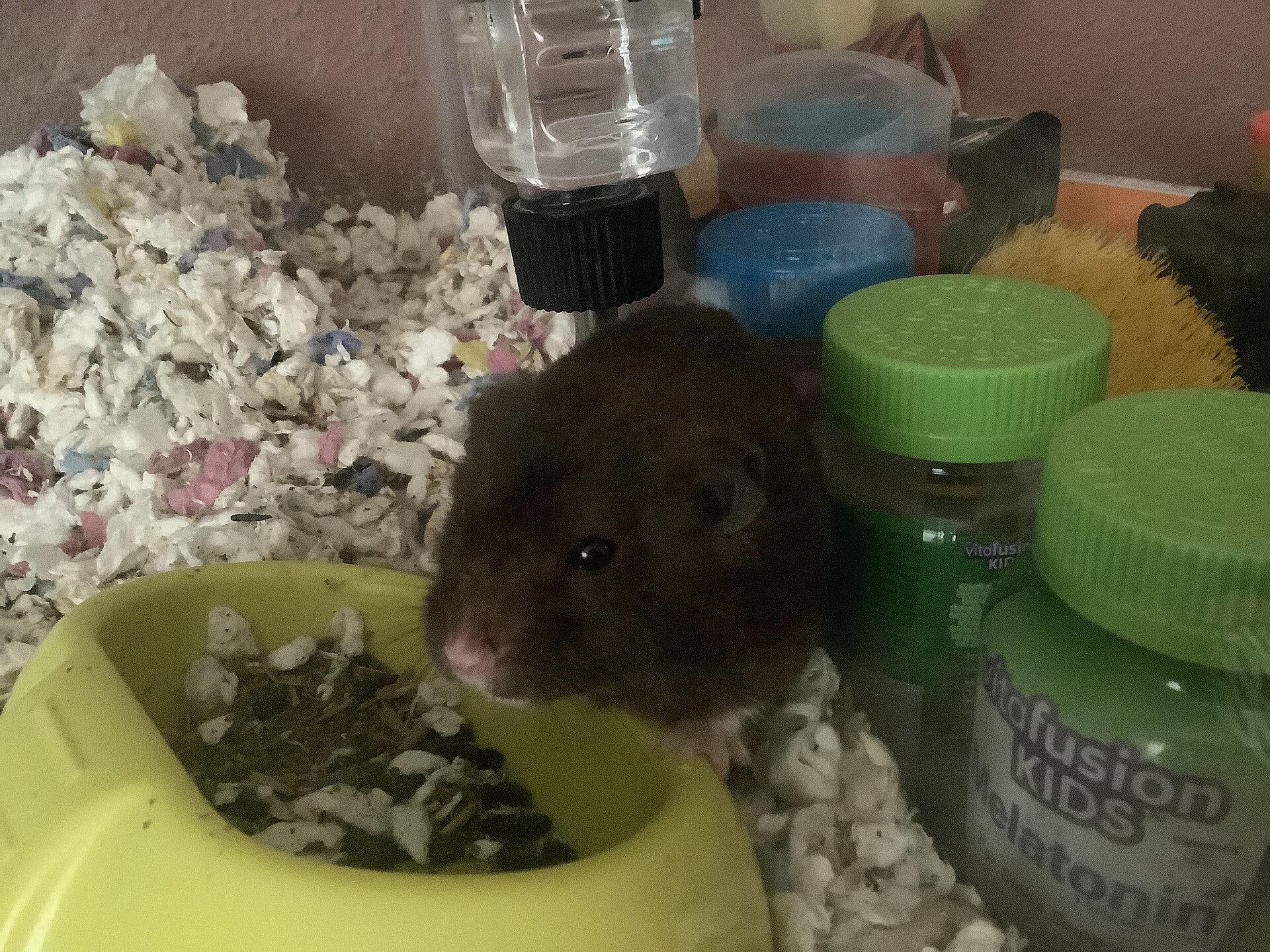
[A brown Syrian hamster sits alert in its enclosure. Its cheek pouches can stretch far back toward the shoulders when fully loaded. Photograph: a Syrian hamster]
Image Credits: Wikimedia Commons
A hamster with bulging cheeks looks like it is smuggling snacks. In a sense, it is. Those ballooning cheeks are expandable pouches the animal uses as shopping bags, and filling them is one of the most deeply wired behaviors a hamster has.
The stuffing is not greed and not a sign your pet is starving. It is a survival strategy millions of years old, still running at full strength in a living room cage. This article explains what the pouches are, why hoarding beats eating on the spot, how the instinct shows up at home, and when stuffed cheeks mean trouble.
What the cheek pouches actually are
Cheek pouches are not just loose skin around the mouth. They are expandable pockets that open inside the lips and stretch a remarkable distance backward. The MSD Veterinary Manual notes that a full pouch can extend behind the shoulder area, making the head and shoulders look more than twice as wide.
Chewy's pet behavior guide describes hamsters stuffing their cheeks "to the point of almost doubling their head size" so they can move large quantities of food to hiding spots in their bedding or cage tunnels. The pouches are dry inside, unlike the mouth, so food stays intact during transport instead of starting to digest.
Different species use them the same way. The RSPCA notes there are 24 hamster species in the family Cricetidae, and the five most common pets, including the Syrian and the dwarf varieties, all share the pouching habit.
Why hoarding beats eating on the spot
In the wild, a hamster foraging in the open is a snack for someone else. Owls, foxes, and snakes all hunt small rodents, so every extra minute above ground raises the risk. The winning strategy is grab and run: load the pouches in one quick trip, then retreat to the burrow.
Hoarding also solves the problem of unpredictable food. Wild hamsters live in dry regions where seeds and grains come in bursts.
The RSPCA explains that the Syrian hamster collects food in its pouches and stores it in its nest "as a survival strategy in the wild." One big haul during a good week feeds the animal through a lean one.
That is why the behavior has a name built into it. The RSPCA's hamster fact file points out that "hamster" comes from the German word hamstern, which means "to hoard." The animal is literally named after the habit.
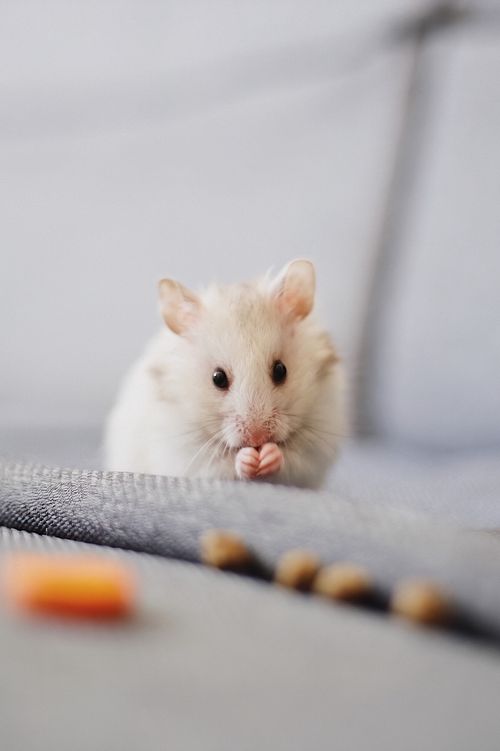
[A white hamster nibbles food on soft fabric. Even with a full food bowl nearby, the ancient drive to collect and cache keeps running. Photograph: a hamster eating]
Image Credits: Pexels
None of this switches off in captivity. A pet hamster with unlimited pellets will still rush to fill its cheeks when fresh food appears. The drive is hardwired, not learned, and no amount of regular feeding overrides it.
The "hamstern" instinct at home
Watch a pet hamster at feeding time and you will see the wild routine play out in miniature. It pouches the food, scurries to a corner or hideout, unloads, and returns for more. The Hong Kong Agriculture, Fisheries and Conservation Department notes that hamsters "will store food in their cheek pouches or hide food in a corner" as a matter of course.
Owners can work with the instinct instead of fighting it. Scatter-feeding, sprinkling part of the daily ration through clean bedding, lets the hamster forage the way its brain expects. It is enrichment, not just dinner.
A few safety rules matter. The AFCD warns against feeding sharp or sticky foods that could get stuck in or injure the cheek pouches. Peanut butter, sticky sweets, and sharp seeds are the usual culprits.
Never try to empty a full pouch by squeezing it. The tissue is delicate, and forcing food out can tear it or push material deeper. A healthy hamster unloads on its own schedule.
Also expect the occasional disappearing act with bedding. Hamsters sometimes pouch soft nesting material too, which is normal. It is all part of the same caching program.
When stuffed cheeks signal a problem
Normal pouching has a rhythm: fill, carry, unload, reset. Worry when the rhythm breaks. A pouch that stays inflated for hours, looks lopsided, or gives off a bad smell can mean impacted food, an abscess, or an injury from something sharp.
Other red flags: drooling, dropping food, eating on only one side, or a sudden loss of interest in food. These point to dental or pouch problems that need an exotic vet. Hamster teeth grow continuously, so dental trouble and pouch trouble often travel together.
Do not wait and hope with a swollen face. Small animals decline fast, and a vet can flush an impacted pouch safely, something an owner should never attempt at home. If your hamster's cheeks look wrong and the behavior changes with them, make the appointment.
Frequently asked questions
Is it normal for hamster cheeks to stay full for hours?
Often, yes. Hamsters routinely carry food for extended periods, especially if they feel exposed.
As long as the pouches eventually deflate and the hamster behaves normally, it is just the hoarding routine. Constant inflation with no unloading deserves a vet check.
Can hamsters choke on food stored in their cheeks?
Not in the usual sense. The airway stays open even with full pouches.
The real risks are impaction, where food gets wedged and infected, and injury from sharp items. That is why sticky and sharp foods are off the menu.
Should I clean out my hamster's food hoard?
Gently, yes. During cage cleaning, remove anything damp, moldy, or foul-smelling from the stash, but leave the dry hoard mostly intact. Stripping the whole cache at once stresses the animal, since from its perspective you just raided its winter supplies.
Why does my hamster pouch bedding too?
Same instinct, different cargo. In the wild, nesting material gets cached alongside food for burrow construction. A hamster stuffing bedding into its cheeks is running the identical program with whatever is at hand.
The bottom line
Hamsters stuff food in their cheeks because they are professional hoarders by design. The pouches let a small prey animal gather a huge haul in one risky trip, and the RSPCA's half-body-weight figure shows just how seriously evolution took the job. In your living room, the same software runs on a full food bowl.
Let the behavior happen, feed pouch-safe foods, and learn the difference between a working cheek and a sick one. Your hamster is not being greedy. It is being exactly what its name says: a hoarder.
Tags: hamsters, pet behavior, small pets, animal instincts
The Rive News research desk covers study methods, workplace skills, and everyday science, drawing on published research rather than folk wisdom.
Related
- Why Do Cats Chatter at Birds? Predatory Instinct Explained
- Why Do Parrots Mimic Human Speech: Syrinx, Brain, and Flock
- Why does your dog bark at every visitor? Causes and fixes
Get one practical pet-care tip in your inbox every morning.
Rive News publishes research-based explainers. Corrections: reply to any article and we will fix verified errors promptly.
Related stories
Why Does My Dog Eat Grass and Vomit?
A UC Davis study of 1,571 owners found grass eating is normal dog behavior, not self-medication: only 10% were ill first. What the science

Why Does My Dog Stare at Me While I Eat?
Dogs stare at you while you eat because it has worked before, and mutual gaze raises bonding hormones. Learn the reinforcement science
Foods toxic to dogs: the list, with reasons
Chocolate, xylitol, grapes, onions: common foods can harm dogs. Learn what makes each one toxic, the warning signs, and what to do if your